Rara National Park entry permit guide
What you need to enter Rara National Park: the park entry permit, TIMS, the guide position, army checkposts, park rules and where to confirm the current fee.
To trek to Rara Lake you need an entry permit for Rara National Park. The park is not a restricted area, so there is no Restricted Area Permit and no restricted-area group requirement, and the region page says the entry fee is paid at the park office or a checkpost. A TIMS card may be requested by the local office. The Nepal Tourism Board April 2023 rule requires a licensed guide in national parks and 2026 operator reports say checkpoints enforce it (checked 19 October 2026), and on this route a guide is sensible anyway because trails are poorly signed and lodges are few. That is the whole paperwork picture on the Rara region page and the Rara Lake Trek page, and it is lighter than for neighbouring Dolpo.
This article explains the pieces, the fee as of October 2026, what the checkposts are like and what the park rules expect from you.
Rara Lake Trek의 모집 중인 여행
파트너를 찾는 트레커들이 올린 실제 여행입니다.
The park and why a permit exists
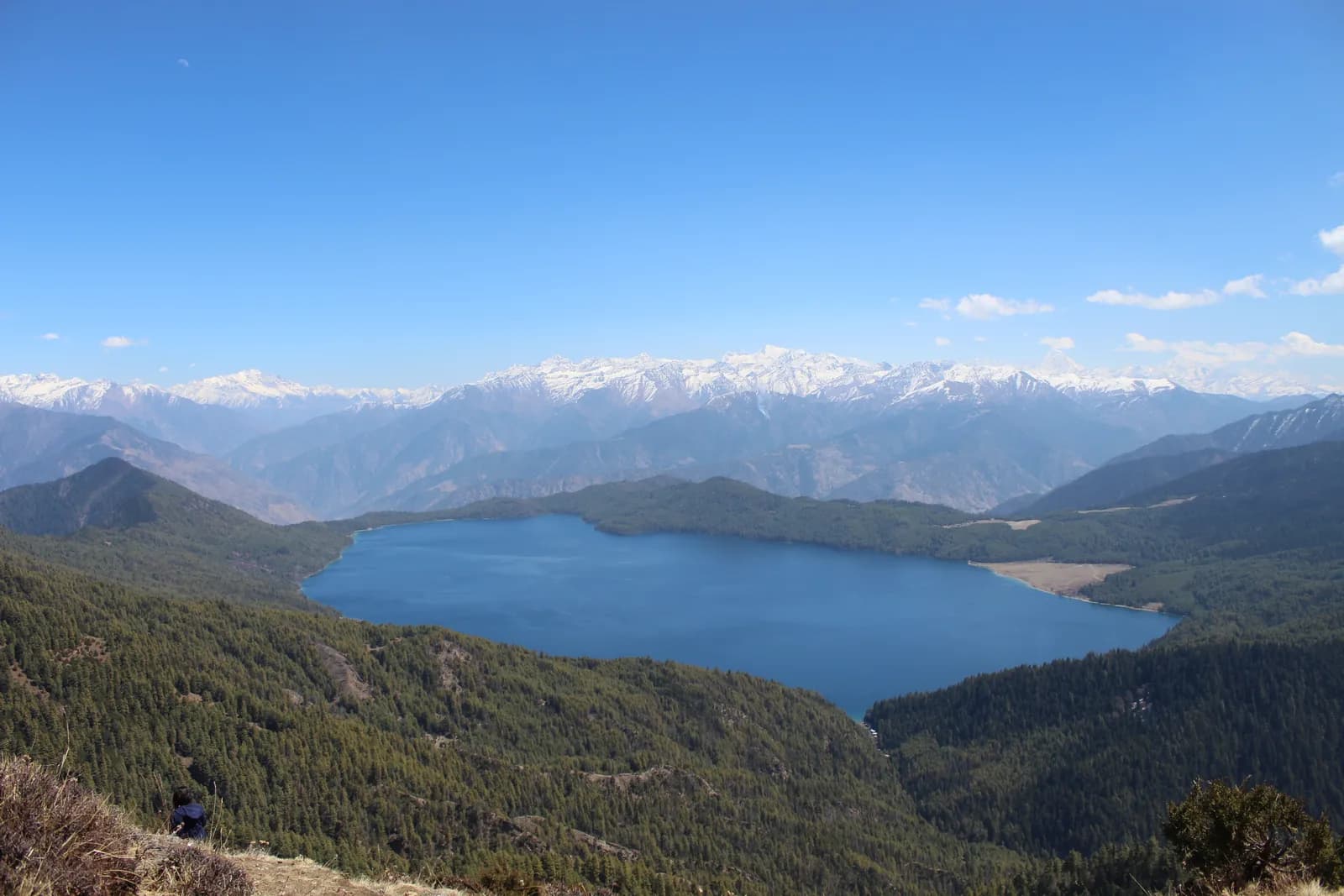
Rara National Park was established in 1976. At 106 km2 it is Nepal's smallest national park, and it protects Nepal's largest lake, which covers about 10.8 km2 and reaches 167 m deep, plus the forests of blue pine, spruce, fir and rhododendron around it. The park ranges from about 2,800 m to just over 4,000 m at Chuchemara Danda. The permit is the park's way of controlling entry and collecting a fee that supports the park, which is protected by the Nepali Army. In 1976 the villagers of Chapra and Rara were resettled to Nepalgunj when the park was created, so there is no permanent settlement on the lake shore, which is one reason the rules about shore behaviour are strict.
The entry permit
The park entry permit is for foreigners, SAARC visitors and Nepalis at different rates, according to the region page. It is bought at the park office or at a checkpost, or by your agency on your behalf. The route plan does not give a precise office location, and we cannot confirm one from an official page, so ask your guide which checkpost applies on your route. If you walk in from Jumla, you meet the park only near the lake, while a flight into Talcha puts you close to the Gamgadhi side. The Department of National Parks and Wildlife Conservation home page lists a Rara National Park office, and its online ticketing link may be relevant, but it did not state fees for foreigners when we read it; the figure comes from the Nepal Tourism Board park entry fees page.
The number: as of October 2026 (checked on 18 October 2026) foreigners pay NPR 3,000 per entry, about USD 22, SAARC visitors NPR 1,500, and children under 10 are free. Fees have been revised over the years, so ask your agency for a quote that lists the park fee separately, and check it with the park or the Department. If your agency says the fee is included, ask for a receipt number.
TIMS
The region page says a TIMS card may be requested by the local office. It does not say it is required, and the position has varied by area. Ask your agency whether it will arrange one, and do not pay for one that nobody asks for.
The guide position
The Nepal Tourism Board April 2023 rule is the reason a guide appears in the pack for Rara, and 2026 operator reports say checkpoints enforce it. Our guide rule explainer sets out what has been reported. On this route the practical reasons are stronger than the legal ones. Part of the trail follows the Karnali Highway and part follows footpaths and shortcuts, and signs are few. Lodges between Jumla and the lake are limited, so many agencies bring tents and a cook for the nights at Patmara and Chautha. The guide also manages the flights, which are the main source of risk on this trek. If you are travelling in a pair or group, a shared guide cuts the per-person cost, and our partner safety guide explains how to agree it.
Checkposts and the army
The park is protected by the Nepali Army, and you may pass checkposts, as the region page notes. Carry your passport and several copies of your permit and TIMS card if you have one. Be polite and patient, and let your guide do the talking. If a post asks for a payment, ask for a receipt.
What the permit does not include
The entry permit covers entry to the park. It does not include flights, which are the largest and least predictable part of a Rara trip, nor the guide, lodges, tents or porters. It also does not insure you. The nearest hospital is in Jumla or Gamgadhi, evacuation is by helicopter or by flight from Talcha when weather allows, and the region page says your insurance should cover trekking to 4,000 m and helicopter rescue. Check the policy wording before you pay the agency, because some policies exclude helicopter evacuation unless the insurer approves it first.
Because flights dominate the schedule, the permit dates matter less than a buffer. If the Jumla flight is cancelled you spend another night in Nepalgunj, and if the Talcha flight is cancelled you wait at the airstrip. Ask the agency how it handles extra days for the guide and porters, and whether any permit needs to be re-bought.
Fees: what to compare
When you compare quotes from two or three agencies, ask each to show the park fee, the guide per day, porters, accommodation or camping, flights and ground transport as separate lines. Rara is a short trek, so flights make up a large share of the total, and an agency that bundles everything makes it hard to see where the difference lies. Our trekking cost guide explains how to read a quote and the "What it costs" section of the Rara Lake route page adds the permit to the flights. At NPR 3,000 the permit is about 3% of a budget total that our data puts at NPR 84,500 to 120,400 for the 10-day plan, because Kathmandu to Nepalgunj (about USD 100 to 140 each way) and Nepalgunj to Talcha (USD 100 to 150 each way) dominate it.
Park rules to expect
The route page lists rules that matter more than the paperwork: do not swim in the lake, wash in it or leave rubbish; use refillable bottles and a filter; keep to the trail to protect the forest; no fires, no fishing and no drones without permission. Ask before photographing people, and do not feed wildlife. Breaking park rules can end a trek and attract a fine, and in any case the lake is held in high regard by local people.
Paperwork checklist
- Passport with enough validity and your Nepal visa.
- Park entry permit, either bought through the agency or at the park office or checkpost.
- TIMS card only if your agency says the local office asks for it.
- The guide's name and licence number, matching your booking.
- Copies of everything, kept separately from the originals.
- A note of the insurance policy number, because the nearest hospital is in Jumla or Gamgadhi and helicopter evacuation depends on weather.
How Rara compares
Rara asks for less than Kanchenjunga or Upper Dolpo, which both require a Restricted Area Permit through a registered agency (see the Kanchenjunga permits article and the Dolpo permits article). It is closer to Makalu, which also needs a national park permit and not a restricted-area one. For the wider picture use Nepal trekking permits explained.
Where this fits
After permits come flights. Read getting to Rara Lake for the Nepalgunj, Jumla and Talcha options, then the Rara itinerary and the region guide.