

Rara
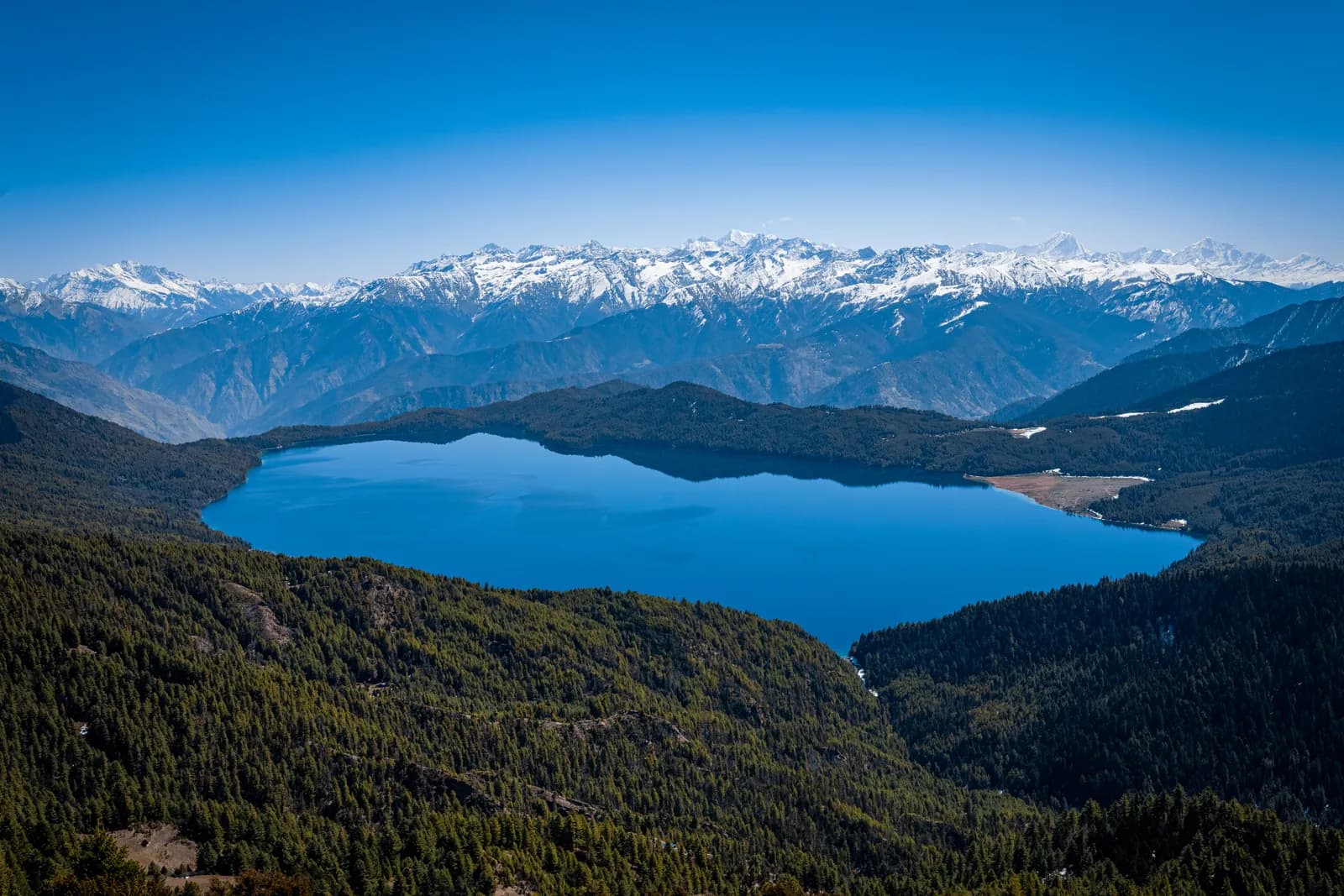
Rara is Nepal's quiet far-west lake trek: from Jumla through pine and rhododendron forest to Rara Lake, the country's largest lake at about 2,990 m, inside its smallest national park.
- Max altitudeMurma viewpoint above Rara Lake (about 3,630 m)
- Days8–12
- DifficultyModerate
- Best monthsApr–May, Sep–Nov
- Permits1 permit
Photo: Nirojsedhai · CC BY-SA 4.0
Check that your policy covers helicopter evacuation and trekking at this region's altitude. We don't sell insurance.
What to look forWritten by FindTrekkingPartner teamReviewed by FindTrekkingPartner teamHow we reviewFindTrekkingPartner
Rara is a trekking region of Nepal, with routes of 10 days that climb to 3,550 m. Foreign trekkers can find a partner for treks here on FindTrekkingPartner by posting a trip with their dates, budget and pace. Matches stay private until both trekkers agree, and the service is free. At mid-range rates a licensed guide costs about USD 76 per person over 10 days when four trekkers share, against USD 302 for one trekker alone. The best seasons are Apr–May, Sep–Nov. A licensed guide is required in practice here: the Nepal Tourism Board April 2023 rule is reported by 2026 operators to be enforced at checkpoints in national parks and conservation areas, with Langtang the strictest and Annapurna checking too (checked 19 October 2026). Hire a guide through a registered agency and confirm with them. Last verified: October 19, 2026. Sources: Nepal Tourism Board, DNPWC, Department of Immigration.
Sources:Department of Immigration, NepalNepal Tourism BoardDepartment of National Parks and Wildlife Conservation
- Find a partner for Rara Lake TrekNo open trips yet
Overview
- Licensed guide
- Required for foreign trekkers
- Minimum group
- 1 trekker
NTB rule (Apr 2023), enforced at checkpoints in national parks (2026 operator reports). Checked 19 October 2026; see /guide-rule-nepal.
Popular treks
Starting points
Kathmandu, Nepalgunj, Jumla, Talcha
Getting there
Fly Kathmandu to Nepalgunj (about an hour) and on to Jumla (about 40 minutes), or fly Nepalgunj to Talcha (Rara) airport beside the lake when flights run. The Karnali Highway links Jumla and Gamgadhi by a rough road, and flights are weather dependent.
Rara Lake lies in the remote Karnali region of far-west Nepal, on the border of Jumla and Mugu districts, at about 2,990 m. With a surface of 10.8 km2 and a depth of 167 m, it is Nepal's largest lake, and it is the centrepiece of Rara National Park, the country's smallest, at 106 km2. The trek from Jumla crosses rural villages, apple and rice terraces and forested ridges, and takes about five days on foot with the lake as the reward, then a flight out from Talcha. It suits people who want a quieter walk, lower altitude and an unusual region, rather than high passes. You need a Rara National Park permit and a guide is strongly advised. Flights to Jumla and Talcha are weather dependent, so allow spare days. April and May, and September to November, are the best months. This is a moderate trek, with long days and simple lodges.
Overview of Rara
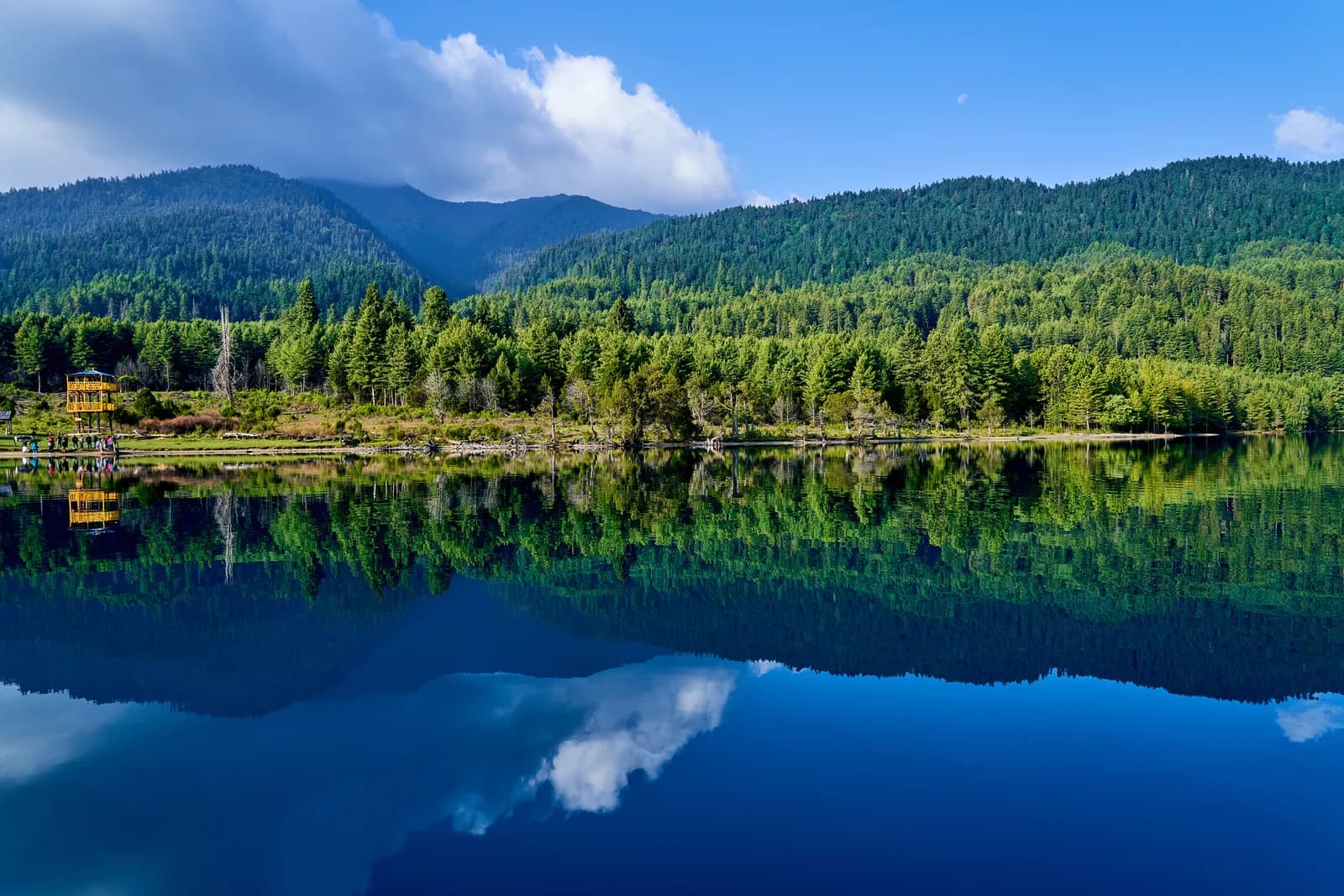
Rara National Park was established in 1976 and ranges from about 2,800 m to just over 4,000 m at Chuchemara Danda. The lake is 5.1 km long and 2.7 km wide, drains into the Mugu Karnali through the Nijar Khola, and was designated a Ramsar site in 2007. The water seems to change colour several times a day depending on the weather. Forested hills of blue pine, spruce, fir and rhododendron surround it, and the viewpoint at Murma, about 3,630 m above the western shore, gives the best view.
The park is home to Himalayan black bear, musk deer, red panda, goral, leopard and tahr, as well as the endemic Rara snow trout and the Rara frog. In 1976 the villagers of Chapra and Rara were resettled to Nepalgunj when the park was created, so the lake shore has no permanent settlement. The park is protected by the Nepali Army, and you may pass checkposts.
Jumla, the usual starting point, is a hill town at about 2,350 m known for apples, walnuts and Marsi rice, grown at one of the highest altitudes in the world. It is in Karnali Province, which has some of the lowest road density in Nepal.
Best time to trek, month by month
- March: cold nights and snow on the higher forest paths. The first rhododendron buds open in the lower forest.
- April: the best spring month, with rhododendron in bloom, clear mornings and the lake bright blue. Murma can still hold patches of snow.
- May: warmer and drier, with the lake at its calmest and the forest green. Pre-monsoon cloud can build late in the month.
- June to August: monsoon. Rain falls on the lower slopes, flights are unreliable and trails are slippery, but the lake and meadows are green and few people visit.
- September: the rains ease and the forest is very green. Mornings are clear, but landslides can still disrupt the roads.
- October: the most popular month, with clear skies, warm days and frosty nights. Autumn colours appear above the lake.
- November: cold and calm. Lodges close toward the end of the month and the lake begins to freeze at the edges.
- December to February: the lake can freeze over, and heavy snow closes some trails and flights. Only for experienced winter travellers.
Routes compared
| Trek | Typical days | Highest point | Character |
|---|---|---|---|
| Rara Lake Trek | 10 | Murma, about 3,000 m at the lakeside lodges | Quiet foothill trek to Nepal's largest lake, with flights each way |
You can walk the whole way from Jumla and return by flight from Talcha, as in the plan above, or add a few days in the Sinja valley, the old capital of the Khasa Malla kingdom. Combining Rara with Dolpo or Humla is a long expedition and needs separate permits.
Permits and rules
Rara National Park charges an entry fee payable at the park office or checkpost, and the area is not a restricted area. Fees for foreigners, SAARC visitors and Nepalis differ and have changed over time, so ask the agency for current amounts and check them with the park or the Department of National Parks and Wildlife Conservation. A TIMS card may be requested by the local office.
Guides. The Nepal Tourism Board April 2023 rule requires foreign trekkers to use a licensed guide in national parks and conservation areas, and 2026 operator reports say checkpoints enforce it in Annapurna (ACAP), Langtang (the strictest) and most other parks, but not in Khumbu, where the municipality opted out (checked 19 October 2026). See the guide rule by region. Reports on enforcement conflict, but in this region trails are poorly signed, local lodges are few and a guide helps with permits and route finding.
Getting there: flights and road
There are two usual access points. The first is a flight from Kathmandu to Nepalgunj in the Terai (about an hour) followed by a flight to Jumla (about 40 minutes), and then a walk of three to four days to the lake. The second is a flight from Nepalgunj to Talcha, the airstrip beside Gamgadhi, 1 to 3 hours on foot from the lake, when it operates. Flights are cancelled by cloud and wind, and Nepalgunj can be extremely hot, so plan a buffer.
The Karnali Highway connects Jumla with Gamgadhi and Rara by a rough road, and jeeps run on it. Trekkers use footpath shortcuts, ridges and village trails to avoid road sections.
Altitude and acclimatisation
The trek is moderate in altitude: Jumla is at about 2,350 m, Patmara about 3,000 m, and the lake at 2,990 m. Altitude sickness is less likely than on higher treks, but flying straight to Jumla and then walking to 3,000 m can cause mild symptoms in some people. Take the first day slowly, drink water, and consider a rest day at the lake.
Lodges, costs and food
Lodges and homestays exist in Jumla and at Pina, the lake area (Murma and the Rara Cultural Resort) and Gamgadhi, and basic meals are available in villages. Between them, there are few options, so many agencies bring tents and a cook for the nights at Patmara and Chautha. Dal bhat, noodles and eggs are standard, and apples and local trout may appear in the lake area.
Connectivity
Mobile coverage is patchy: Jumla and Gamgadhi have signal, and the villages between have it only at some spots. Some lodges sell Wi-Fi. Plan to be offline for much of the trek.
Safety
The region is remote. The nearest hospital is in Jumla or Gamgadhi, and evacuation is by helicopter or by flight from Talcha when the weather allows. Check the insurance includes helicopter rescue. Roads and streams are the main hazards in the monsoon, and in the lake area, cold nights and slippery paths are common.
What to pack
Broken-in boots, waterproof layers, a down jacket, a sleeping bag rated to about minus 10 C, gloves, a warm hat, sun protection, trekking poles, a headlamp, water purification and a first-aid kit. In the monsoon, bring a rain cover and leech socks. A swimsuit is not needed: swimming in the lake is discouraged.
History and culture
Jumla was the seat of the medieval Khasa Malla kingdom, and the valley of Sinja holds the ruins of its capital and its early Nepali-language inscriptions. The Karnali region has Hindu temples, such as Chandannath, and local festivals, and the Thakuri and Chhetri communities dominate. Many people in the area farm apples, buckwheat and potatoes.
Rara is held in high regard by local people, and the park rules keep settlement and farming away from the shore.
Wildlife and nature
The park holds 1,070 plant species and rich forests of blue pine, spruce, fir, juniper and rhododendron, with birch and oak at some elevations. Birdlife includes monal, koklass and snow pigeons. The Rara snow trout and Rara frog exist only here. In spring, wildflowers cover the meadows on the way up from Pina.
Responsible trekking
Do not swim in the lake, wash in it or leave rubbish. Use refillable bottles and a filter, and keep to the trail to protect the forest. Ask before photographing people, and buy supplies from local families. Do not feed wildlife.
Combining treks
Rara can be paired with a Phoksundo Lake trek from Nepalgunj and Dolpo, as both use the same flight hub. Shorter combinations are a day in Jumla, a visit to the Sinja valley, or the ridge walk above the lake to Murma.
Money, insurance and logistics
Bring cash from Kathmandu or Nepalgunj, because Jumla has limited cash machines. Insurance should cover trekking to 4,000 m and helicopter rescue. Flight baggage limits are tight, so use soft bags.
Arranging your trek
Choose a registered agency that holds the park permit, provides insured guides and porters, and has contingency plans for the flights. Ask about camping, rest days, flight changes and how long the lake stay will be, and agree the route and the flight out before you pay.
Jumla before you walk
Jumla is worth a half day. The bazaar in Khalanga sells local apples, dried fruit, walnuts and woollens, the Chandannath temple stands above the town, and the airport stays busy with traders, officials and a few trekkers. If you arrive early, you can still reach the first lodge the same afternoon, but it is wiser to rest, buy water and check the weather forecast for the next days. The Sinja valley, a day trip by jeep, holds the ruins of the Khasa Malla capital.
What to do at the lake
The shore path around Rara Lake takes a few hours and has no steep sections. The Murma viewpoint above the western shore is a short but steep climb, and the view over the lake and across to the Chuchemara ridge is the highlight, best in early morning. Swimming and boating are not part of the usual visit, so spend the time walking and watching. Birds are most active at dawn and dusk, and snow trout can be seen in the clear shallows near the shore.
Food and drink
Lodges serve dal bhat, noodles, fried rice, soup and eggs, with apples in autumn and local trout when the park allows it. Water must be boiled or filtered. Buy snacks in Jumla or Nepalgunj, because supplies at the lake are limited.
Practical tips from the trail
- Carry cash in small notes, because villages seldom have change.
- Take rain gear even in October. Afternoon showers are common in the ridges.
- Start walking early, so you arrive before cloud covers the views.
- Keep spare days in the schedule for flights, particularly at the end of the trek when the Talcha flight is the only way out.
- Respect park rules: no fires, no fishing and no drones without permission.
Kathmandu before and after
Spend at least one night in Kathmandu before the Nepalgunj flight, and keep a spare day in the schedule. Nepalgunj has hotels and restaurants, but expect heat and delays.
All routes in this region
Every standard route we cover here. Tap a route to open its day-by-day itinerary.
Compare routes
Sort the routes by length, height, difficulty or estimated cost to find your fit.
Sorted by Days ↑
| Route | |||||
|---|---|---|---|---|---|
| Rara Lake Trek | 10 | 3,550 m | Moderate | 74.1 km | from NPR 40,000 |
Cost is an estimate: the region's budget-style daily rate times the days, without flights or permits.
Best time to trek
Highlighted months are the recommended trekking seasons. Apr–May · Sep–Nov
Best seasonOther months
Live conditions
Notes entered by our team from the sources linked on each item. Conditions change quickly, so confirm with your guide or lodge before you set off.
Best seasons: Apr–May · Sep–Nov
Nothing recent on file. Check with your guide or lodge before you go.
Permits and fees
Fees are per person and depend on your nationality group.
| Permit | Foreigner | SAARC | Nepali |
|---|---|---|---|
Rara National Park entry permit | NPR 3,000 | NPR 1,500 | — |
- Where to buy
Department of National Parks and Wildlife Conservation
Daily costs
Per person per day on a teahouse trek. Guide and porter are per group/porter per day. As of October 2026.
Typical total for Rara Lake Trek, 2 trekkers sharing
- Budget
- $630–$900
- Mid-range
- $810–$1,200
- Comfort
- $920–$1,400
| Style | Per day | Guide / day | Porter / day | Sample total |
|---|---|---|---|---|
| Budget | NPR 3,100–4,400 | NPR 4,050 | NPR 2,750 | NPR 81,500–117,400 |
| Mid-range | NPR 4,000–5,800 | NPR 4,050 | NPR 2,750 | NPR 89,600–130,000 |
| Comfort | NPR 5,000–7,300 | NPR 4,050 | NPR 2,750 | NPR 98,600–143,500 |
Budget: Kathmandu to Nepalgunj flight USD 100 to 140 and Nepalgunj to Talcha USD 100 to 150 each way, or Kathmandu to Surkhet by bus then jeep (USD 70 to 110 one way).
Mid-range: Kathmandu to Nepalgunj flight USD 100 to 140 and Nepalgunj to Talcha USD 100 to 150 each way, or Kathmandu to Surkhet by bus then jeep (USD 70 to 110 one way).
Comfort: Kathmandu to Nepalgunj flight USD 100 to 140 and Nepalgunj to Talcha USD 100 to 150 each way, or Kathmandu to Surkhet by bus then jeep (USD 70 to 110 one way).
Rules and good practice
Guides
- All regions
Foreign trekkers must trek with a licensed guide in national parks and conservation areas (in force since April 2023). Enforcement varies by region, so verify the current rule before you go.
Permits
- All regions
Carry your permits at all times; they are checked at several checkpoints along every route.
Safety & altitude
- All regions
Buy travel insurance that covers helicopter rescue to at least 6,000 m.
- All regions
Climb high, sleep low: above 3,000 m, avoid raising your sleeping altitude by more than about 500 m per day, and add rest days.
Conservation
- All regions
Carry out all non-burnable waste (batteries, plastic, wrappers) and use a refillable water bottle.
Culture
- All regions
Respect monasteries: walk clockwise around stupas and mani walls, and remove shoes where asked.
- All regions
Ask before photographing people, especially at religious sites and ceremonies.
Drones
- All regions
No drones without prior permission from the relevant authority.
Photos
Frequently asked questions
Yes, the Rara National Park entry permit. The area is not a restricted area. Ask your agency for current fees and check them with the park office or the Department of National Parks and Wildlife Conservation.
The Nepal Tourism Board April 2023 rule requires foreign trekkers to use a licensed guide in national parks and conservation areas, and 2026 operator reports say checkpoints enforce it in Annapurna (ACAP), Langtang (the strictest) and most other parks, but not in Khumbu, where the municipality opted out (checked 19 October 2026). Confirm with a registered agency. Trails are poorly marked and lodges are few, so a guide is advisable.
Ten days from Kathmandu on this plan, including the flights to Jumla and from Talcha, with about five days of walking and a rest day at the lake. Delays can add days.
About 2,990 m. Wikipedia gives 2,975 m, and sources vary slightly with the survey.
It covers about 10.8 km2, is up to 167 m deep, and is about 5 km long. It is the largest lake in Nepal.
April and May, and September to November. The monsoon is wet, and the lake can freeze from December to February.
Fly Kathmandu to Nepalgunj and then to Jumla, then walk or take a jeep on the Karnali Highway, or fly Nepalgunj to Talcha, near the lake, when flights run.
It is moderate. The altitude is low, the days are long and the lodges are simple, so you need reasonable fitness but no technical skills.
Open trips
Guides about Rara
 Cover photo: Ummidnp, CC BY-SA 4.0
 Cover photo: McKay Savage from London, UK, CC BY 2.0
 Cover photo: Nirmal Joshi, CC BY 2.0
 Cover photo: Outlaw Django, CC BY-SA 4.0
 Cover photo: Axmc, CC BY-SA 4.0
 Cover photo: Gaurav Dhwaj Khadka, CC BY-SA 4.0
Sources
Ready to trek Rara?
Find a trekking partner for these dates or start planning your own route.