Teahouse versus camping trek cost in Nepal
Why camping treks cost more than teahouse treks in Nepal, which routes need tents, what the crew is and why our tables leave camping costs to agency quotes, with worked guide and porter totals for Dhaulagiri, Upper Dolpo and Kanchenjunga.
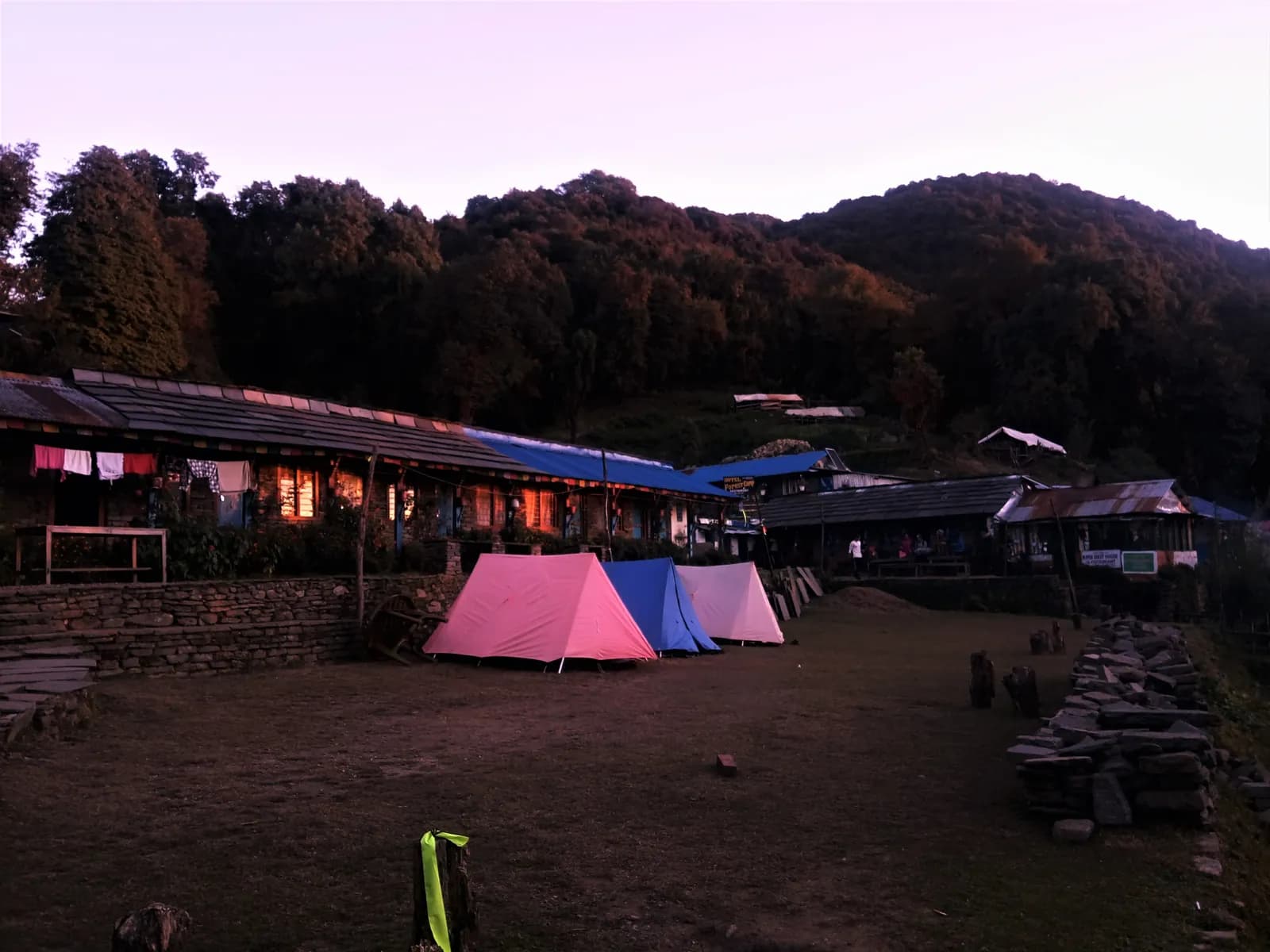
A camping trek in Nepal costs more than a teahouse trek of the same length because you pay for the things a lodge normally provides: shelter, a kitchen, food and fuel, and the people who carry and cook them. We cannot give you a single camping price, because our sources do not publish one and our route estimates deliberately leave the camp crew, tents, kitchen and food to the agency's quote. What we can do is show which routes need camping, how the lines of a camping budget are built and where the guide and porter figures we do have fit in. All figures are as of October 2026, from our cost tables verified on 18 October 2026.
For how teahouse pricing works, read teahouse prices by altitude. This guide is about what changes when there is no lodge.
Kanchenjunga Circuitの募集中トリップ
仲間を探しているトレッカーが投稿した実際のトリップです。
Which routes are camping routes
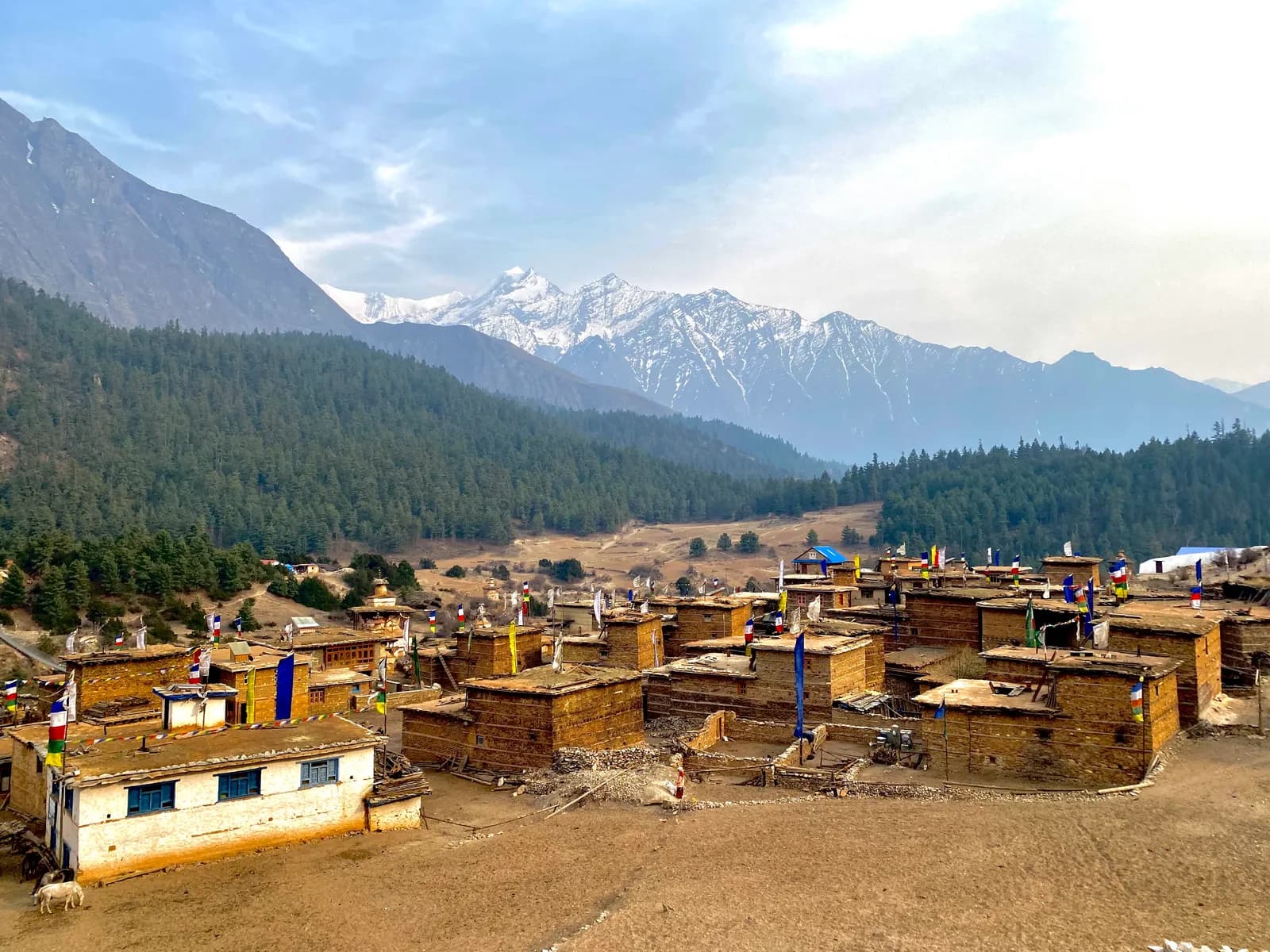
In our route data the following treks are marked as camping, with the crew, tents, kitchen and food "quoted by the agency and not in this estimate":
- Dhaulagiri Circuit, 17 days, up to about 5,360 m. The region page notes glaciers, two passes above 5,200 m and no villages for most of the length, so operators supply a guide and a camping crew.
- Upper Dolpo to Shey Gompa, 22 days, a restricted area.
- Limi Valley in Humla, 18 days, also restricted.
- Api Base Camp, 13 days, with homestays at Siti and Makarigaad.
- Khaptad National Park trek, where the plateau uses tents and the town nights use lodge rates.
Kanchenjunga is a middle case: the route page says many stops are basic lodges or camps, and Makalu's upper trail has basic lodges and some camping. On those, the nights split between lodge rates and camp costs.
By contrast, Everest, Annapurna and Langtang are teahouse treks with a lodge in every village. If you are comparing a Kanchenjunga circuit with a teahouse route, remember that the lodge nights in our table are priced but the camp nights are not.
What a camping budget is made of
Camping replaces one cheap line, a room-and-meals package, with several larger ones.
| Line | Teahouse trek | Camping trek |
|---|---|---|
| Room | Cheap or nominal if you eat in | Replaced by tents, mats and sleeping bags |
| Meals | Bought at the lodge from the menu | Cooked by a kitchen crew from carried food |
| Fuel and water | Included in the meal price | Carried and paid for by the agency |
| Guide | Day rate, per guide | Day rate, per guide |
| Porters | Carry your bag | Carry tents, kitchen and food as well |
| Cook and helpers | Not needed | Extra crew, paid per day |
| Permits | Per person | Per person |
| Transport | Per route | Often larger, with extra loads |
The guide and porter lines exist on both kinds of trek, and for them we have day rates. The cook, helpers, tents and food are the new lines, and their price is the agency's, so ask for a written quote.
The guide and porter lines we can show
Our cost tables use these day rates, from operator guides, in the three camping regions:
| Region | Guide, per day | Porter, per day |
|---|---|---|
| Dhaulagiri | NPR 4,000 to 6,000 | NPR 2,100 to 3,400 |
| Dolpo | NPR 4,000 to 6,000 | NPR 2,100 to 3,400 |
| Kanchenjunga | NPR 4,000 to 6,000 | NPR 2,100 to 3,400 |
These are Nepal-wide ranges because our sources do not name these regions. On the route pages the guide and porter days work out as follows:
| Route | Guide days | Guide total | Porter days | Porter total |
|---|---|---|---|---|
| Dhaulagiri Circuit | 16 | NPR 64,000 to 96,000 | 15 | NPR 31,500 to 51,000 |
| Upper Dolpo to Shey Gompa | 18 | NPR 72,000 to 108,000 | 18 | NPR 37,800 to 61,200 |
| Kanchenjunga Circuit | 19 | NPR 76,000 to 114,000 | 15 | NPR 31,500 to 51,000 |
These totals cover the guide and the porters in the route estimate only. A camping crew has more porters, a cook and helpers than that table counts, so the full cost is higher, and the difference is the number you must get from the agency. If an agency quotes much less than this table for a three-week camping trek, ask what is missing.
What drives the camping premium
- Crew size. Tents, a kitchen tent, food for several weeks and fuel need porters. The more days between villages, the larger the crew.
- Duration. Long routes such as Upper Dolpo and Kanchenjunga multiply every daily line.
- Remoteness. Flights to Nepalgunj and Juphal, or the long drives to Taplejung, carry crew and equipment as well as you. See internal flight costs.
- Permits. Restricted-area permits are charged per day or week in addition to the park or conservation area fee.
- Season. Short windows concentrate demand.
The guide rule on camping routes
Several camping routes are restricted areas, where a licensed guide through a registered agency is part of the permit. Dhaulagiri is not a restricted area, but our region page treats a guide and camping crew as the rule in practice because there are no villages for most of the route. As of 19 October 2026, a licensed guide through a registered agency is required in restricted areas, and, under the Nepal Tourism Board rule of April 2023, in national parks and conservation areas where checkpoints enforce it. Our guide rule page keeps the wording. Read the Kanchenjunga permit guide and the Dolpo permit guide for the permit lines.
How sharing changes the sum
Camping has large fixed costs: tents, kitchen, crew and food do not shrink when a trekker drops out. That is why a camping trek is the clearest case for finding partners. Two trekkers on the same crew pay roughly half the fixed cost each, and four pay about a quarter, with the per-person lines (permits, flights, insurance) unchanged. Use the trekking partner hub and read how to split guide and porter costs fairly. Agree in writing what happens if someone leaves early, because the crew is already paid for.
Questions to ask before you book a camping trek
- How many crew, and what are their roles?
- How many porters, and what is each porter's load?
- What are the tents, mats and sleeping bags, and who provides them?
- What food is carried, and how is it cooked and stored?
- How does the plan change if the weather closes a pass?
- What is included and excluded in the quote, including permits and flights?
- What insurance and equipment do porters have?
The what is included in a trekking package price guide goes through the lines in detail. For a comparison of the two styles beyond cost, our guide to choosing a trek is a good start, and our Nepal trekking cost guide puts the budget together. More budget topics are in the costs and budget hub.
How a camping quote is built
Imagine a camping trek with a guide, a cook, a kitchen helper and several porters, for a group of four. The agency's quote is the sum of several lines. Guide days times the guide rate. Cook and helper days times their rates. Porter days times the porter rate for the number needed to carry tents, kitchen gear, fuel, food and the group's bags. The cost of tents, mats and cooking equipment, either owned and amortised or rented. Food for the whole group and crew for every day. Fuel. Permits for each trekker and, in some areas, a fee for the crew. Transport, including flights for the crew and extra vehicles for the load. Insurance and equipment for staff. A margin for the agency.
Our tables price only the guide and porter lines for the route, which is the fraction of the quote that has a published rate. That is why we repeat that the rest comes from the agency. When you receive a quote, ask for these lines separately, and you will be able to see what a change in group size does to each.
Group size and the crew
Some camping costs scale with the number of trekkers, such as food and the porters who carry your personal bags. Others hardly change: one cook can feed four or six, and the tents are bought or rented per person. So the cost per trekker falls as the group grows until a second cook or more porters are needed. That is why camping quotes often show a price per person at several group sizes. If you are travelling as a pair, ask what the price would be for three or four, because finding one more partner may cut your share noticeably.
Lodge nights on a camping route
Some camping routes include nights in villages with lodges or homestays, which cost less than camp nights. Our Api Base Camp page mentions homestays at Siti and Makarigaad, and the Khaptad page notes that the town nights use lodge rates. Where a route mixes the two, ask for the split of nights, and compare the quote with our lodge bands for the lodge nights. If a quote charges camp rates for every night on a route that has lodges on some, ask why.
Comfort, weather and what to carry
A camping trek asks more of you than a lodge trek: a warmer sleeping bag, a good mat, a reliable shell and the willingness to wash in cold water. The agency usually provides tents and mats, but you may need your own sleeping bag; ask. The weather matters more, since a wet camp is miserable, and the schedule has less slack because villages are far apart. Our sleeping bag guide and packing list help you choose, and the renting versus buying guide explains how to handle the bag.
When teahouse routes cost more than you expect
Teahouse routes are cheaper per night than camping, but the nights at the highest villages are the most expensive on the trail, and a long route adds up. Compare a lodge route and a camping route on total cost per person and on what you value, not on the nightly rate alone. For the lodge side, see teahouse prices by altitude, and for how to choose between routes, which Nepal trek is right for you.
Cost and permit figures are approximate; verify them with your agency, the Nepal Tourism Board and the Department of Immigration.