Trekking permits for children and families in Nepal
Which Nepal permits children need and which are free under age 10 as of October 2026, what is unclear for restricted areas and the guide rule, and which low-altitude routes suit families.
Children are covered by the same permit system as adults in Nepal, with one useful difference: as of October 2026, our permit data lists children under 10 as free for national park and conservation area entry permits, including ACAP, MCAP and the Langtang, Sagarmatha, Rara and Shivapuri Nagarjun permits, while children aged 10 and over pay the adult foreigner fee. What is not clear from the official pages we checked is how restricted areas, the Khumbu trek card and the guide rule treat children, so those need a question to your agency or the checkpoint rather than an assumption.
This guide sets out the rules we can source, what we cannot, and how to choose a route that suits a family, using our route pages for distances and altitudes. It also covers the altitude advice for children from the CDC Yellow Book. For the wider system, see Nepal trekking permits explained.
Poon Hill Trek (Ghorepani)的開放行程
由正在尋找夥伴的健行者發布的真實行程。

What children pay
The Nepal Tourism Board park fees page and the NTNC e-permit page give the fees below as of October 2026, with the note that children under 10 are free:
| Permit | Foreigner adult fee | Children under 10 |
|---|---|---|
| Sagarmatha, Langtang, Makalu Barun, Rara, Shey Phoksundo and Khaptad National Parks | NPR 3,000 | Free |
| Shivapuri Nagarjun National Park | NPR 1,000 | Free |
| Annapurna Conservation Area (ACAP) | NPR 3,000, tax included | Free |
| Manaslu Conservation Area (MCAP) | NPR 3,000, tax included | Free |
| Gaurishankar Conservation Area | NPR 3,000 | Free |
| Kanchenjunga and Api Nampa Conservation Areas | NPR 2,000 | Free |
| Khumbu Pasang Lhamu trek card | NPR 3,000 | No exemption stated |
For ACAP and MCAP, online payment adds a 2.9% gateway charge and a permit issued at a check post costs double, so buy before you go. A family of two adults and two children under 10 on Poon Hill therefore pays NPR 6,000 for ACAP rather than NPR 12,000, a saving of NPR 6,000, about USD 45 at NPR 134 to the dollar. A child who turns 10 before you travel pays the adult fee, so check the age on the day you enter, not at booking.
What we could not confirm
Three areas have no published child rule in the sources we found:
- Restricted areas. The Department of Immigration issues Restricted Area Permits through a registered trekking agency, and they are priced per person and per day or week. Whether a child pays, and whether children are allowed on a given route, is a question for the agency, in writing.
- The Khumbu trek card. The municipality's page, which we could read only from its archive of 13 June 2026 because the live page returned an error on 18 October 2026, states no child exemption.
- The guide rule. The Nepal Tourism Board announced in April 2023 that foreign trekkers must use a licensed guide in national parks and conservation areas. We found no age exemption, and no separate Department of Immigration or park-authority notice for it. 2026 operator reports say checkpoints enforce it in Annapurna (ACAP) and Langtang, the strictest, and most other parks, but not in Khumbu (checked 19 October 2026). Plan on a guide for family treks in protected areas. In restricted areas a licensed guide is part of the permit. See the guide rule explainer.
A guide is no hardship for a family: on a four-day route like Poon Hill our data puts the guide at NPR 10,800 to 16,000 for the four days, and if four people share it, that is NPR 2,700 to 4,000 each.
Altitude and children
The CDC Yellow Book says children are as susceptible to altitude illness as adults, and that preverbal children with acute mountain sickness may show loss of appetite, irritability and pallor, which are easy to mistake for tiredness. For prevention it does not recommend dexamethasone in children. The sleeping-altitude advice is the same as for adults: once above 3,000 m, move sleeping altitude by no more than 500 m a day, with an extra acclimatisation day for each additional 1,000 m. Talk to a travel-medicine clinician before you go about medication and your child's health history, and read our altitude sickness basics.
The practical response is to stay low. Every route below keeps its highest night under 3,000 m, so the 500 m rule never comes into play, and a child who becomes unwell can be walked down or driven down quickly.
Routes that suit families
From our route pages, with daily walking times from the plan:
| Route | Days | Highest point | Daily walking | Permit |
|---|---|---|---|---|
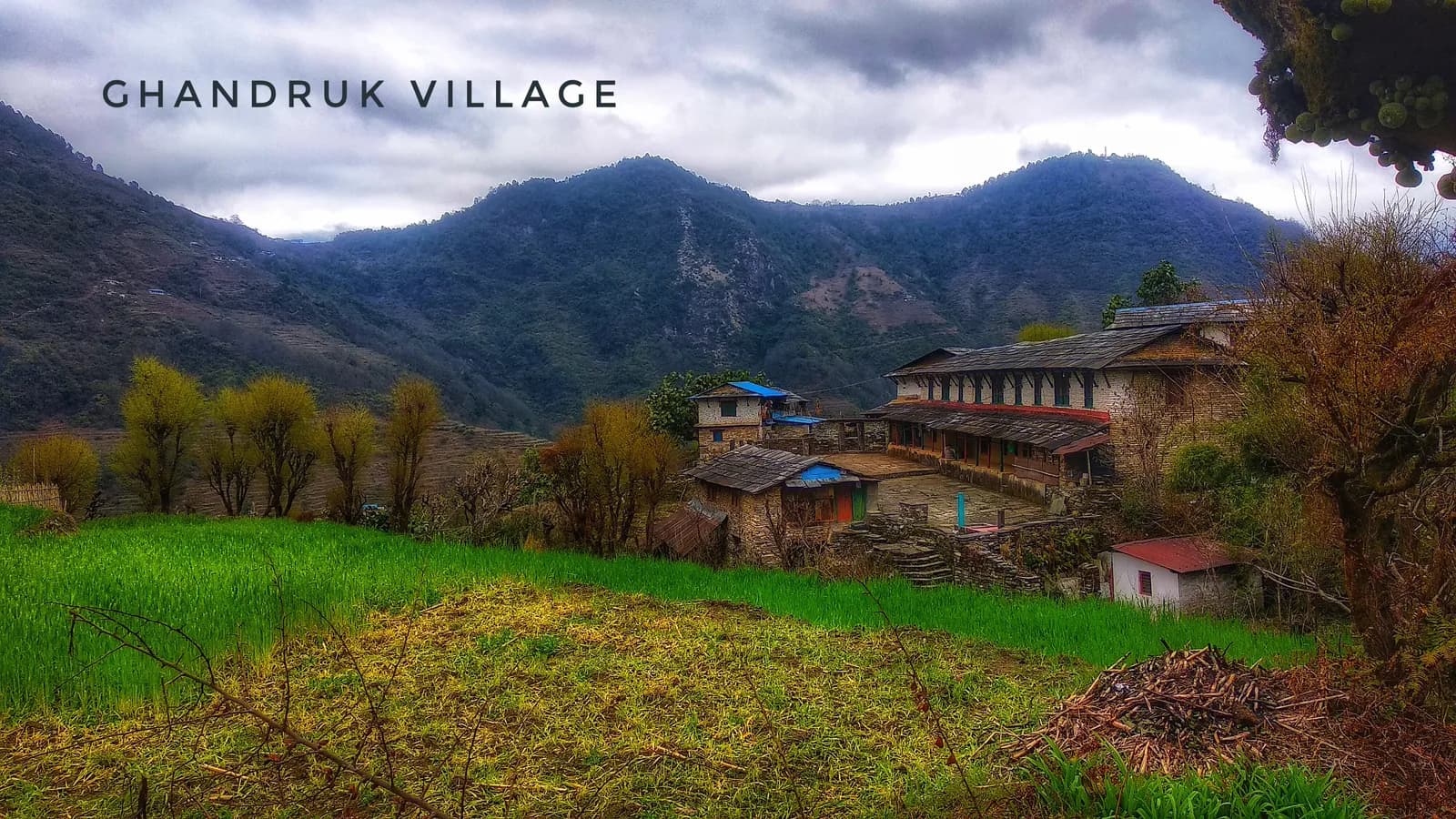
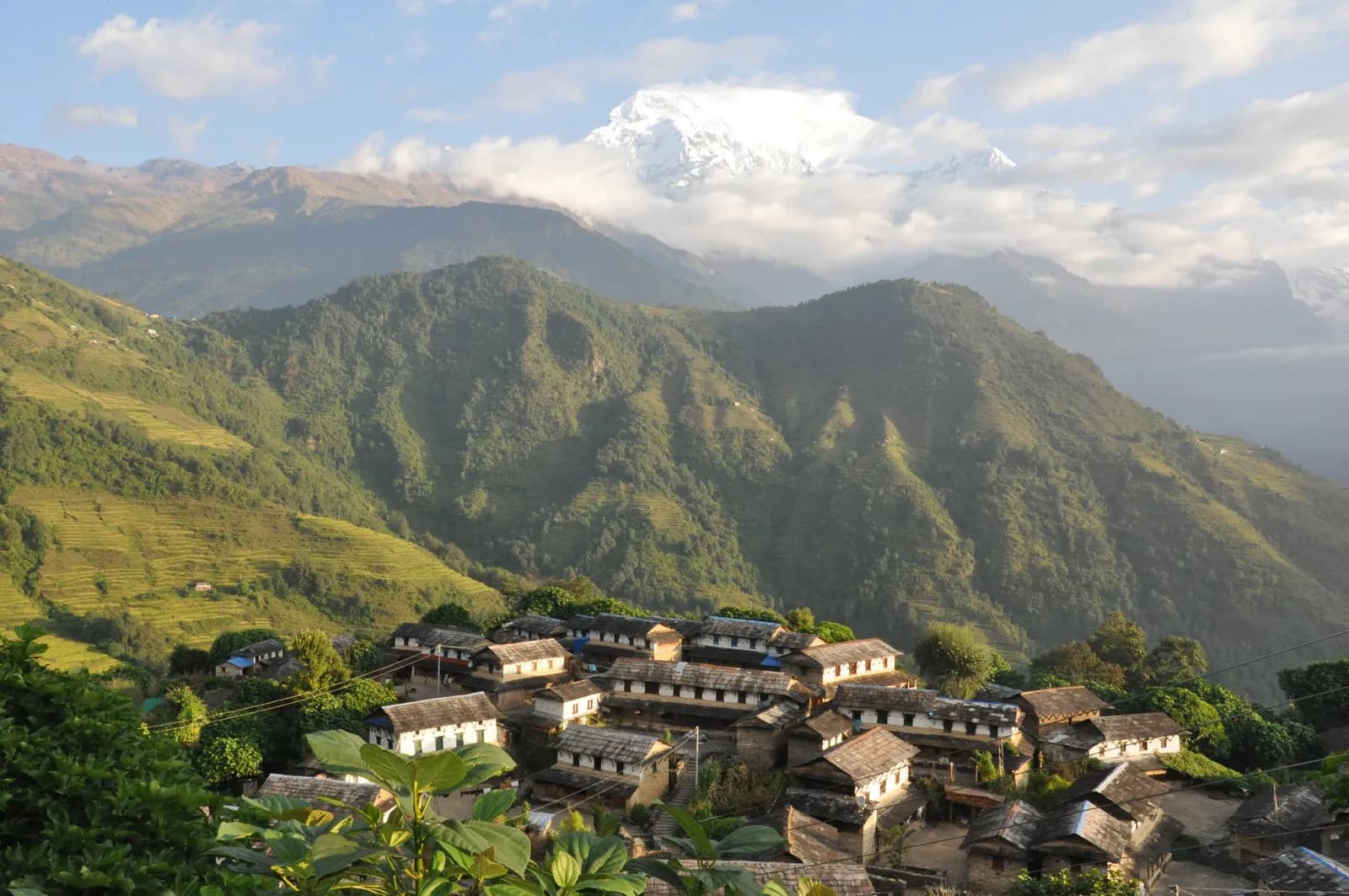
| Ghandruk village trek | 2 | about 2,050 m | 4 to 6 h on day 1, 2 to 3 h on day 2 | ACAP, free under 10 |
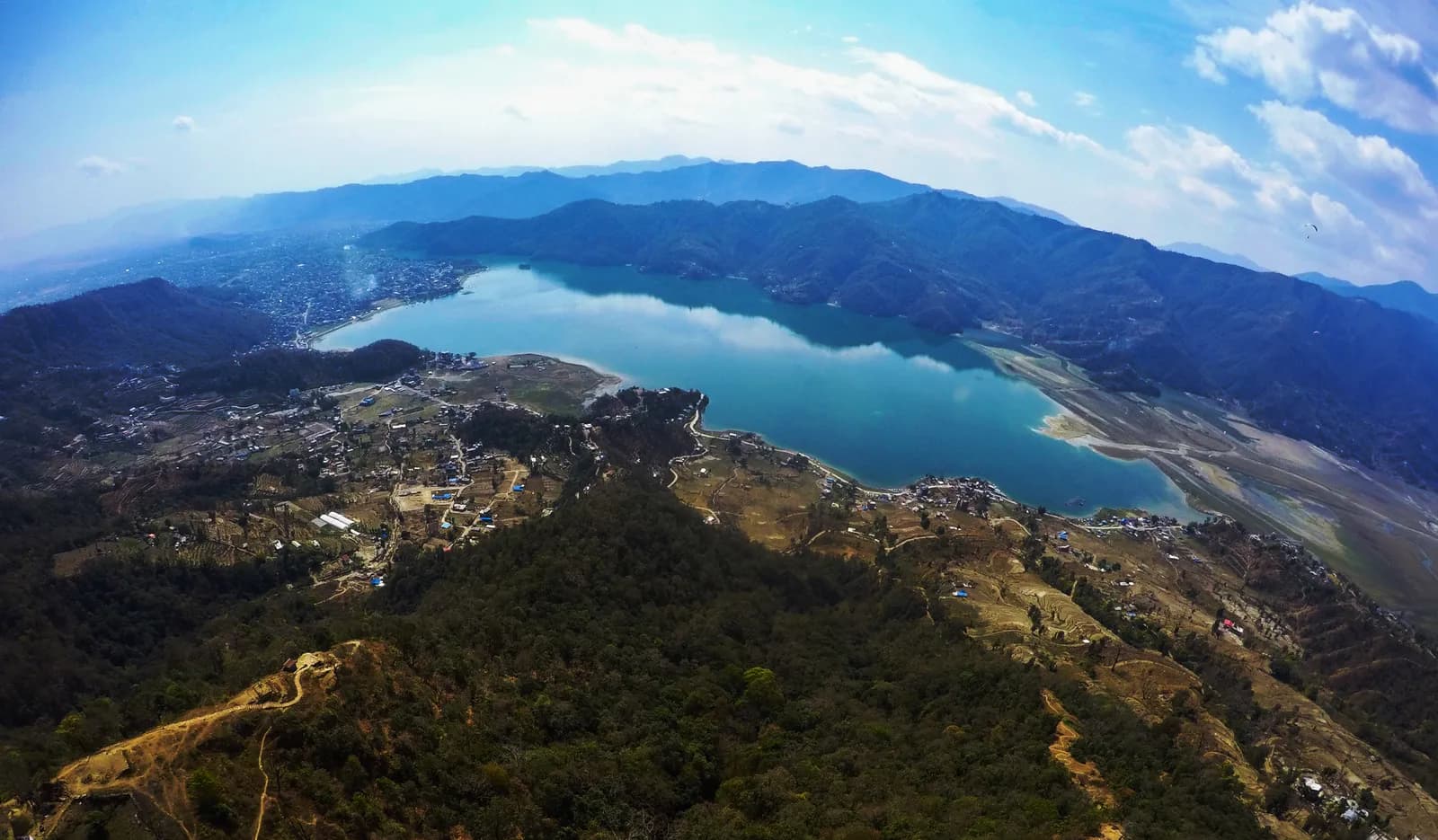
| Australian Camp and Dhampus | 3 | about 2,050 m | 2 to 3 h, then 3 to 4 h, then 1 to 1.5 h | ACAP; sources disagree for foothill walks, so confirm |
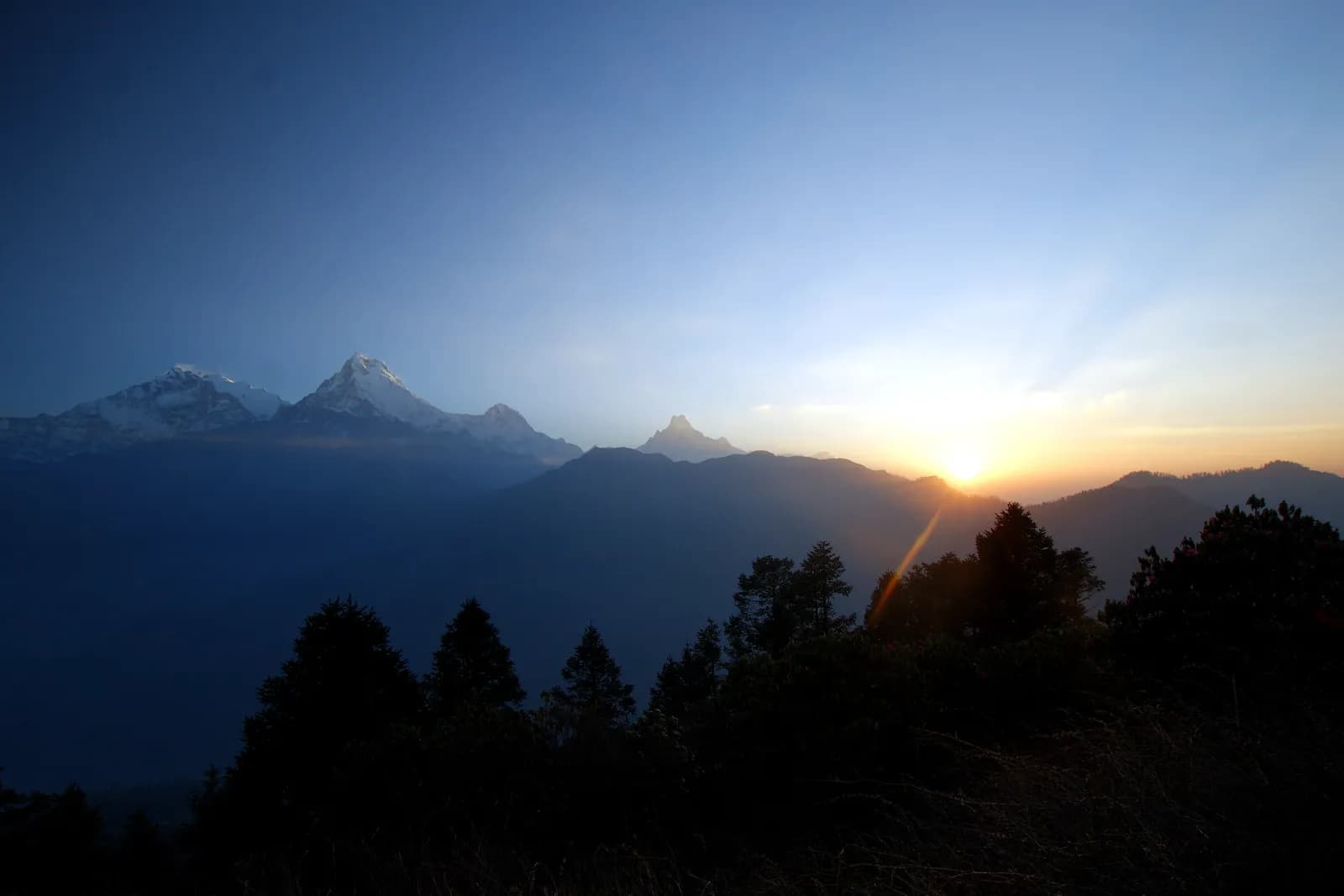
| Poon Hill | 4 | 3,210 m (sleeping 2,860 m) | 5 to 6 h, 4 to 5 h, 6 h, 3 to 4 h | ACAP, free under 10 |
| Chisapani to Nagarkot | 3 | about 2,175 m | 5 to 6 h, then 7 to 8 h | Shivapuri Nagarjun, free under 10 |
The Ghandruk and Dhampus walks are the gentlest, and our Ghandruk village trek guide and short treks from Pokhara explain them. Poon Hill adds a pre-dawn climb and the Ulleri stone steps, which our Annapurna region page calls steep and slippery when wet; day 3 is a six-hour walk, which is long for a small child. The Chisapani to Nagarkot route has a day of 7 to 8 hours, so families with small children may prefer to do only the first day, which our short treks from Kathmandu guide discusses. For day walks with no permit at all, the Pokhara day hikes roundup and the Kathmandu Valley rim hikes guide list options.
Paperwork to bring for children
Each child needs a passport, as an adult does. Our sources give no separate requirement for children's photographs, so ask your agency or the permit office when you book, and bring a few passport photos for each person as a precaution; our permit paperwork checklist lists the usual documents. For visas for children, see the visa guide and confirm the current rules on the Department of Immigration site. Travel insurance should list every family member and cover trekking to the altitude you will reach; check whether children are covered on the same policy and whether the policy covers evacuation by helicopter.
Lodging, food and pace
Our cost files give nightly prices per person for adults and do not publish a child rate, so ask each lodge how it charges for a child who shares a room or does not eat a full meal. Plan a pace that suits the youngest member: stop early, carry snacks and water, and leave a spare day for weather. The first-time trekking guide covers pace and preparation, and the guide-versus-porter guide helps you decide whether to hire a porter for a child's pack.
Questions to ask before you book
A short list of questions will settle most of the doubts above, and it is better to ask them before you pay than at a checkpoint:
- Does each child pay the permit fee, and from what age?
- Is a guide required for a family on this route, and does the agency or checkpoint expect one?
- What is the maximum group size, and does it include children?
- Which lodges on the route accept children, and do they charge for a child who shares a bed or does not eat a full meal?
- What is the emergency plan, and how quickly can a child be taken to lower ground or to a clinic?
- Does the travel insurance policy name each child and cover evacuation?
Our first-time trekking guide and the Himalayan Rescue Association clinics guide are useful background. For a family, the rule of thumb is to keep the route short and low, leave spare days and pick a guide who is comfortable with children.
Splitting the cost with other families
A guide or porter shared between families divides the daily cost. Two families of four on Poon Hill would share one guide at NPR 10,800 to 16,000 for four days across eight people, but you should confirm with your agency that the group size is allowed, because limits vary by operator. If you want to find another family or a group to share with, read how to find a trekking partner in Nepal safely and browse the Annapurna and Pokhara regions and the Poon Hill partner page. More rules guides are in the permits and rules hub.
規劃這條健行路線
- Annapurna地區指南
- Kathmandu Valley地區指南
- Pokhara地區指南
- Trekking partner for Poon Hill Trek (Ghorepani)
- Trekking partner for Ghandruk Village 2-Day Trek
- Australian Camp and Dhampus Trek trekking partners
- Find someone to trek Chisapani Nagarkot Trek with
- Poon Hill Trek (Ghorepani)行程
- Ghandruk Village 2-Day Trek行程
- Australian Camp and Dhampus Trek行程
- Chisapani Nagarkot Trek行程