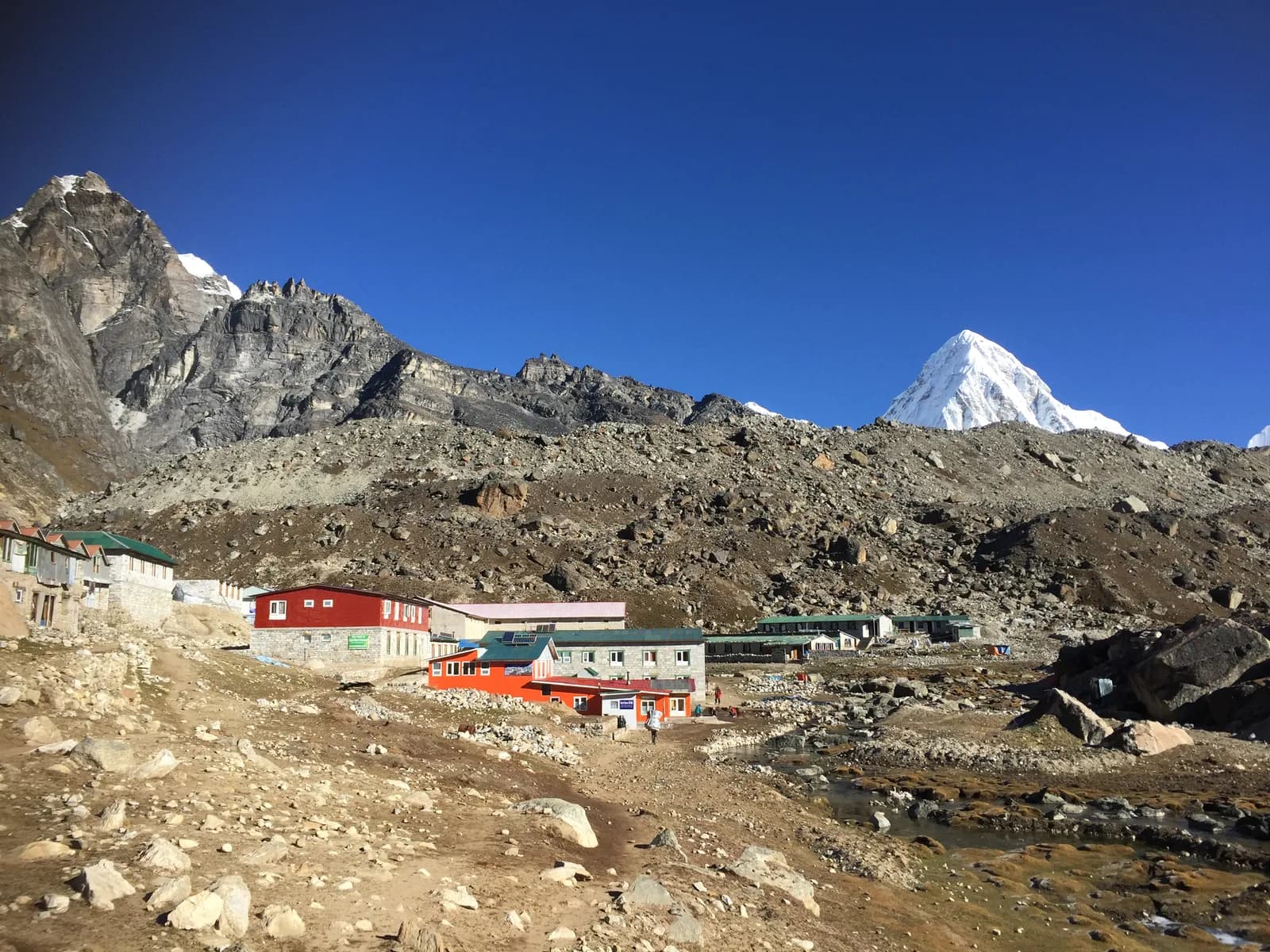
Trekking in Nepal in March
What March is like on the trail: clear days, cold nights, early rhododendron and snow that still lingers on high passes. Region by region guidance for Everest, Annapurna, Langtang and Manaslu.
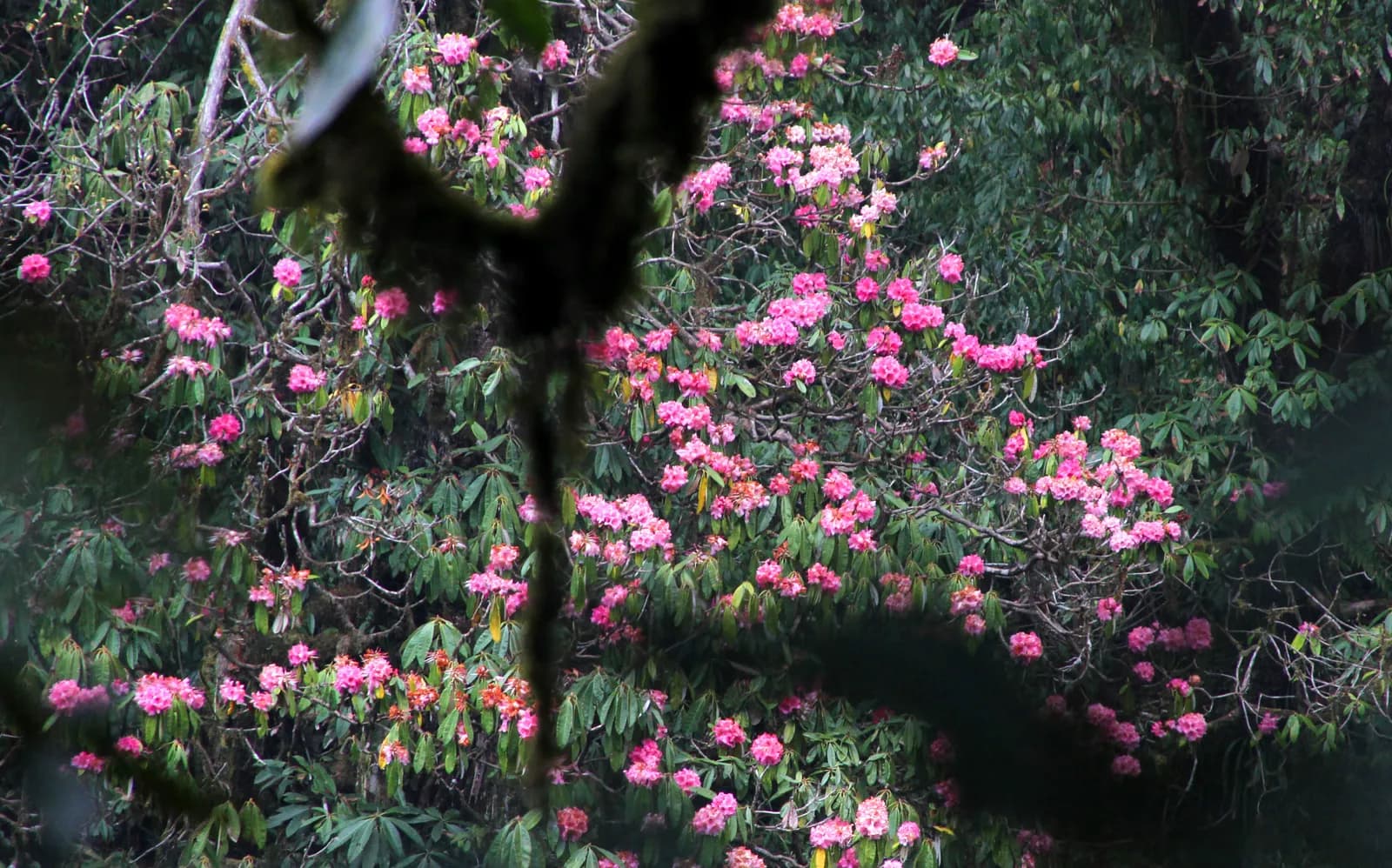
March is the month when Nepal's trails wake up after winter, and it rewards people who accept a trade: quieter paths, clear days and the first rhododendron blooms in exchange for cold nights and snow that has not yet left the high passes. At low and mid altitude, March is one of the best months of the year. Above 4,000 m it is still winter on many nights, and the question for each route is how much snow remains on the highest crossing.
The simple rule is to choose by altitude. Poon Hill, Ghandruk, the lower Everest valley to Namche and the Langtang valley as far as Kyanjin are good in March. The Annapurna Circuit's Thorong La and the Manaslu Circuit's Larkya La are the opposite: Larkya La may not be passable until later in the month, and Thorong La can hold deep snow. This guide goes region by region, then covers cold, crowds, flights and how to plan for a month that changes by the week.
Everest Base Camp Trek的开放行程
由正在寻找搭档的徒步者发布的真实行程。

What March is like
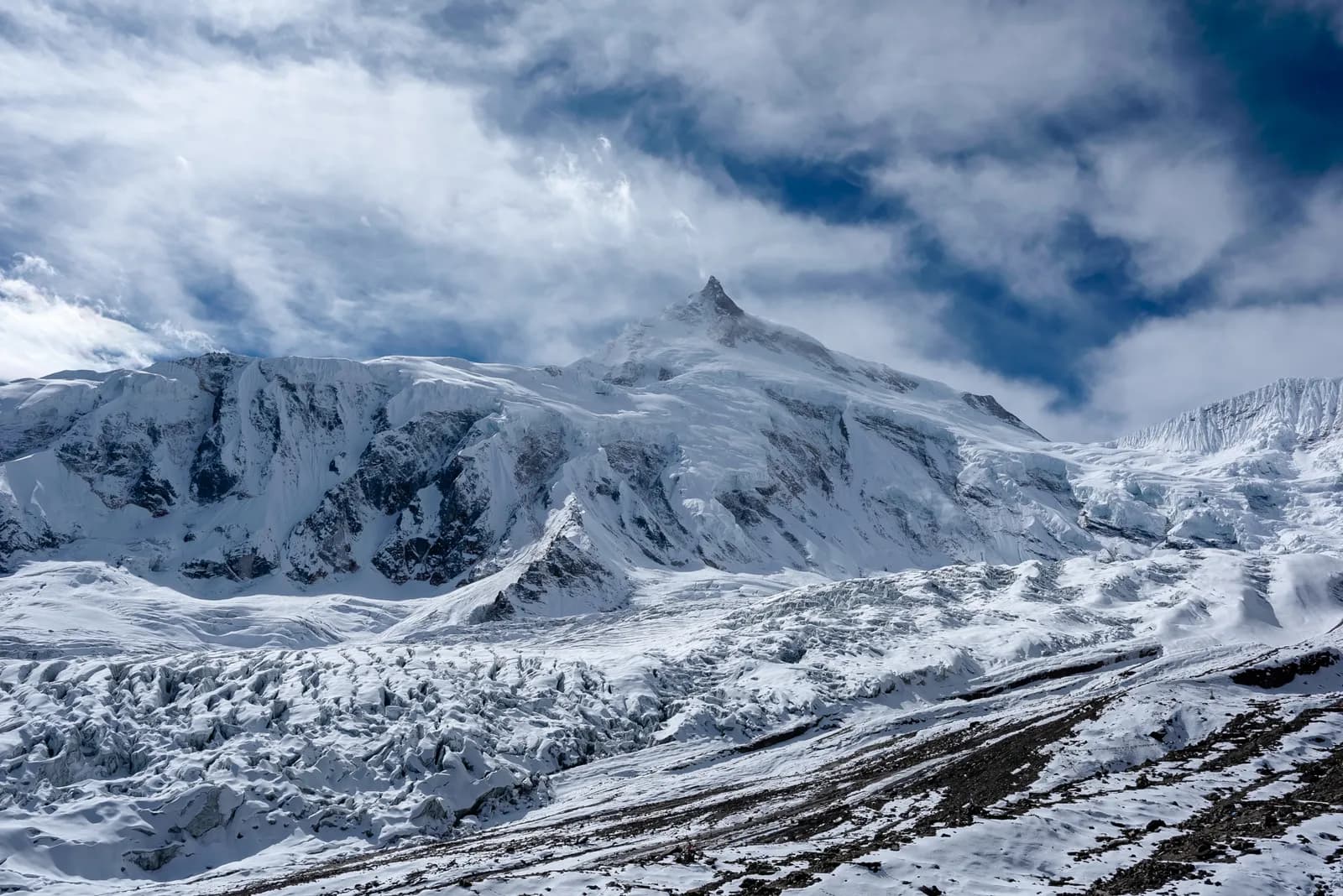
Our regional pages describe the same pattern in the Everest, Annapurna, Langtang and Manaslu regions. March is cold at night, with clear days, and rhododendron begin to flower low down. Higher passes can still hold deep snow. The weather is not yet the hazier, warmer pattern of May, and it is a long way from the monsoon, which Nepal's Department of Hydrology and Meteorology puts at a normal onset of 13 June.
What that means on the ground:
- Clear air. Views are often excellent, particularly in the first hours of the morning.
- Big temperature swings. A warm sun at midday and frost at night is normal. At altitude you wear all your layers at dawn and shed half by 10 am.
- Fewer people than April. The Everest page calls April the spring peak, with lodges filling from mid-month. March is the shoulder, so rooms and flights are easier to get, though not empty.
- Snow that varies from year to year. Late winter snowfall can leave snow on trails that look clear on a map. Ask lodge owners, not just forecasts.
Region by region
Everest
In March the Khumbu is cold at night with clear days, and the passes can still hold deep snow. That makes the Everest Base Camp trek a reasonable March choice and the Three Passes loop a risky one, because Cho La and the other high crossings change through the season and may need traction devices after snow. Our best time for Everest Base Camp guide has more detail.
The standard plan reaches Namche Bazaar (3,440 m) on day 2, Dingboche (4,410 m) on day 5, Gorak Shep (5,164 m) on day 8 and Kala Patthar (5,545 m) on day 9. In March the top three nights are the coldest part. Bring a sleeping bag rated for the coldest night you expect and a down jacket, and see the sleeping bag guide for how ratings work. Flights to Lukla in the morning mostly operate but can be delayed by cloud, so keep a spare day at the end. Our Lukla flight guide covers the Ramechhap option.
Annapurna
The Annapurna page gives March as cool, clear mornings and early rhododendron, with higher passes possibly still snowy. The south-facing slopes around Ghorepani and Ghandruk are the first to flower, so a Poon Hill trek in late March combines blossoms and mountain views. Mardi Himal works too, with the usual caution about snow and avalanche after a storm.
The Annapurna Circuit is the one to think hard about. Thorong La (5,416 m) is crossed on day 9 of the plan after nights at Yak Kharka (4,050 m) and Thorong Phedi (4,540 m). If March snow is on the pass the crossing is slower and colder, and a guide's judgement matters. Read the snow and high pass conditions guide and the best time for the Annapurna Circuit.
Langtang
The best-time table in our seasons guide lists Langtang in March as cold at night with snow that can linger. The Langtang Valley trek reaches Kyanjin Gompa at 3,870 m on day 4, so the cold is moderate, though avalanche paths cross the upper valley and the region page warns not to stop in them in winter and early spring.
Manaslu
The Manaslu region page says March is cold at altitude, with snow on Larkya La. Rhododendron flowers lower down, and the pass may not be passable until later in the month. The Manaslu Circuit crosses Larkya La (5,106 m) on day 11 after nights at Samdo (3,875 m) and Dharamsala (4,470 m). If you are set on March, ask your agency in writing what the plan is if the pass is closed, and consider Tsum Valley, whose highest point is 3,700 m. The best time for the Manaslu Circuit covers the pass in more detail.
Upper Mustang
In March Upper Mustang is cold and windy, with some lodges still closed, according to the month table in our seasons guide. The tourist season opens properly in April. If you want Mustang, shift to April or later.
Cold, altitude and sleeping
Cold nights tempt people to climb faster to reach somewhere warm. Resist it. Above 3,000 m the Wilderness Medical Society recommends, as quoted by the CDC, a sleeping-altitude gain of no more than 500 m per night, with an extra night for every 1,000 m. A March itinerary that includes the standard Everest rest days at Namche and Dingboche follows that logic. See our acclimatisation schedule guide and the altitude sickness basics.
Permits and costs
Permits are the same in March as in any other month. As of October 2026 the Sagarmatha National Park permit is NPR 3,000 and the Khumbu trek card NPR 3,000, ACAP NPR 3,000, and Manaslu's restricted-area permit is priced from December to August at USD 75 for the first week plus USD 10 per extra day, which is USD 125 for the 12 permit days our route plan assumes. That is lower than the September to November rate of USD 175. The Tsum permit is also lower off season, at USD 30 per week plus USD 7 a day, about USD 58 for 11 days. See the permits page for the full table.
How to plan a March trek
- Pick the route by its highest night. If the route sleeps above 4,500 m in March, plan for winter conditions.
- Book the flights and the first days, then stay flexible. Allow at least one buffer day.
- Pack for two seasons. A sun hat and sunscreen for the afternoons, and a down jacket and warm hat for the mornings.
- Check snow conditions two or three days ahead. Lodge owners and returning trekkers know more than a forecast.
- Choose the pass for the second half of the month if you can. Snow melts and the weather settles as March goes on.
Who March suits
March suits people who want clear weather and fewer crowds and who can adjust an itinerary to the snow. It is a good month for a first trek on a low route such as Poon Hill, for photographers who want crisp mornings and for anyone who finds April too busy. It is a poor month for anyone with a fixed date on a high pass. If your dates are fixed and your route is high, compare it with October, the month that offers the most predictable conditions.
规划这条徒步路线
- Everest (Khumbu)地区指南
- Annapurna地区指南
- Langtang地区指南
- Manaslu地区指南
- Trekking partner for Everest Base Camp Trek
- Trekking partner for Poon Hill Trek (Ghorepani)
- Trekking partner for Annapurna Circuit Trek
- Find someone to trek Manaslu Circuit Trek with
- Everest Base Camp Trek行程
- Poon Hill Trek (Ghorepani)行程
- Annapurna Circuit Trek行程
- Manaslu Circuit Trek行程