High season versus low season prices for Nepal treks
What changes in price between peak and off season on Nepal treks, and what does not: seasonal permit fees for Manaslu, Tsum Valley and Nar Phu, flight fares, demand for seats and lodges, with worked permit examples and the trade-offs of going off season.
Peak season is not a single price rise across Nepal; the lines that change by season are the restricted-area permits for Manaslu, Tsum Valley and Nar Phu, and the availability of flights and lodges, while the lodge, guide and porter rates in our tables do not change by month. That makes the honest answer to "is it cheaper off season?" a qualified yes: a few fixed fees fall, scarcity eases, but weather and closed lodges take back much of the saving. This guide shows which prices move, with worked examples from the permit rules on the Nepal Tourism Board pages, and which do not.
All figures are as of October 2026, from our cost tables verified on 18 October 2026. Where we have no seasonal data, we say so rather than inventing a discount.
Manaslu Circuit Trek का खुला ट्रिपहरू
साथी खोजिरहेका ट्रेकरहरूले पोस्ट गरेका वास्तविक ट्रिपहरू।
What does not change in our tables
Our region cost tables give one price band per altitude zone and one guide and porter range per region, with no monthly variation. Everest above 3,800 m is NPR 6,300 to 9,000 a night mid-range all year in our tables, and the Annapurna guide rate is NPR 2,700 to 4,000 a day all year. Those figures come from 2026 operator guides that do not split by season, so we cannot show a peak versus off-peak number, and we will not pretend to.
What you can expect in practice is a different matter: in the peak windows, popular lodges fill and may ask more for rooms, and in the quietest months many high lodges close. Both are things to confirm on the day or with your agency. Our teahouse prices by altitude guide explains how lodge prices work.
What does change: restricted-area permit fees
Permit fees for some restricted areas differ by season. These are the figures in our permit table, taken from the Nepal Tourism Board:
| Area | September to November | December to August |
|---|---|---|
| Manaslu | USD 100 per person per week, plus USD 15 per day beyond one week | USD 75 per week, plus USD 10 per day beyond one week |
| Tsum Valley | USD 40 per week, plus USD 7 per day beyond one week | USD 30 per week, plus USD 7 per day beyond one week |
| Nar Phu (Narpa and Nasho) | USD 100 per week, plus USD 15 per day beyond one week | USD 75 per week, plus USD 15 per day beyond one week |
A worked example for a 10-day Manaslu permit, by the same rules: September to November, USD 100 plus three extra days at USD 15 is USD 145; December to August, USD 75 plus three extra days at USD 10 is USD 105. The saving is USD 40 per person, which is real but small against a flight, a guide and a camp crew. For a Tsum Valley permit of ten days the figures are USD 61 and USD 51.
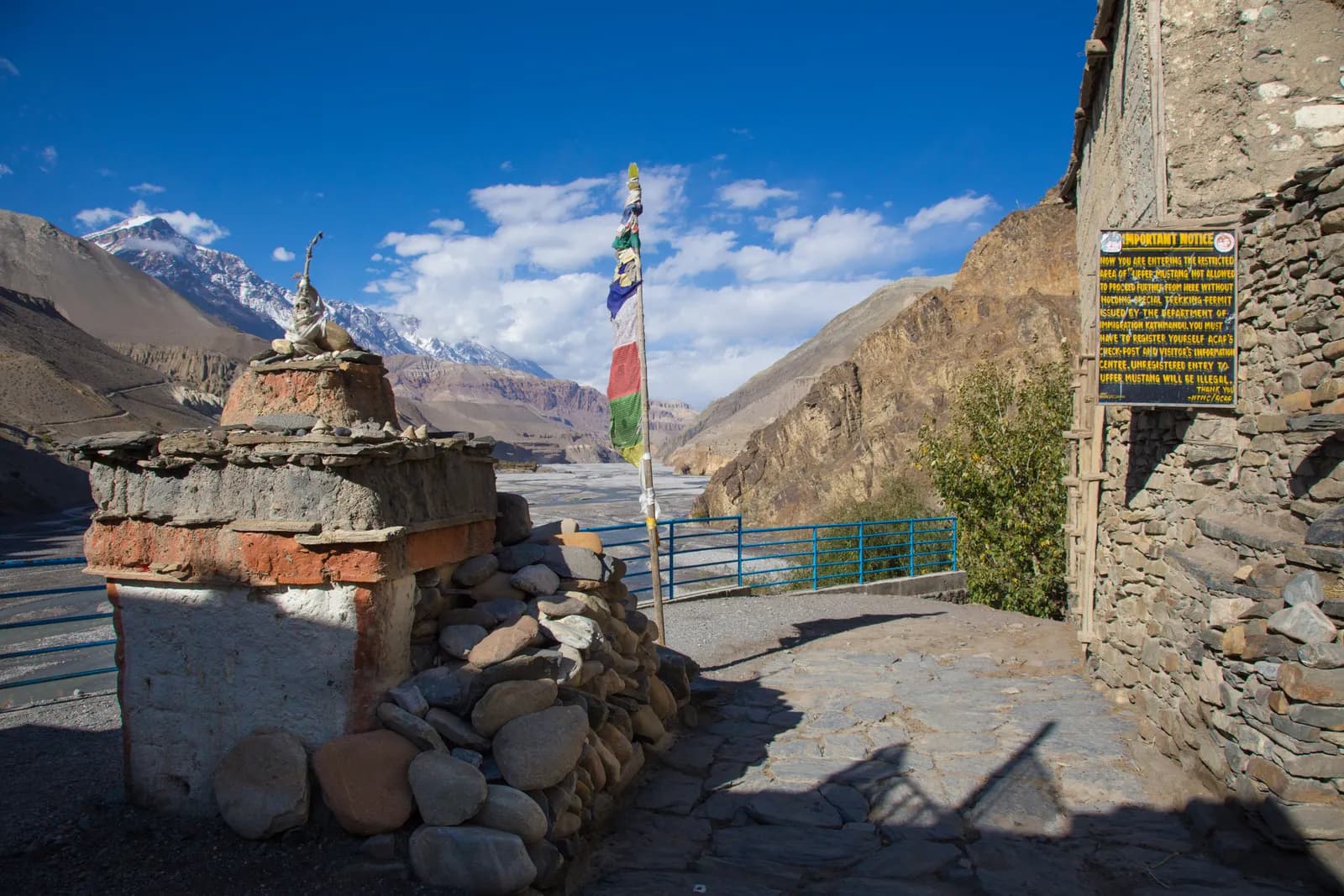
Not every restricted area is seasonal. Upper Mustang and Upper Dolpo are charged at USD 50 per person per day all year, per the Nepal Tourism Board, although the trade body TAAN lists a different structure, so confirm with your agency. Taplejung (Kanchenjunga), Sankhuwasabha (Makalu) and Dolakha (Rolwaling) permits are USD 20 per person per week, and Humla USD 50 for the first week. The Manaslu permit guide and Upper Mustang permit guide explain the rest.
Other permits are flat. The Annapurna Conservation Area permit is NPR 3,000 for foreigners all year, with an extra 2.9% gateway charge when paid online and a doubled price if issued at a check post, per the NTNC e-permit page. Park entry permits are NPR 3,000 in most national parks, and NPR 1,000 for Shivapuri Nagarjun, whatever the month.
Flights and seats
The big transport line is the domestic flight, and its price is set by the airline, not the season in our tables. Our Everest note records that Lukla fares rose on 1 March 2026, and the Lukla flight guide explains that in busy months many flights leave from Ramechhap, a 4 to 5 hour drive from Kathmandu. We do not have a monthly fare table, so the practical advice is to book early for the peak windows and check the fare for your actual date. See internal flight costs for the full fare list.
Scarcity matters more than price. In March to May and October to November, seats on Lukla and Jomsom flights, rooms in Namche and beds on the Annapurna Circuit's busiest nights are harder to get. In the quiet months seats are easy but the weather is less reliable. A cancelled flight in either season costs a night of room and food.
The trade-offs of going off season
| Factor | Peak (spring, autumn) | Off season |
|---|---|---|
| Permit fees | Higher for Manaslu, Tsum, Nar Phu in autumn | Lower from December to August |
| Seats and rooms | Scarce; book early | Easy to get |
| Weather | Most stable | Monsoon rain, winter cold and snow, or pre-monsoon haze |
| Views | Clearest in October and November | Often cloud in summer |
| Trails | Busy | Quiet |
| Lodges | Open, sometimes full | Some closed at height |
| Risk of delays | Moderate | Higher in monsoon |
The monsoon is the clearest off-season trade. On most Himalayan routes it brings rain, landslides, leeches and cancelled flights, and the saving does not justify it. Rain-shadow routes such as Upper Mustang, which our region page says can be walked from March to November, are an exception, and our monsoon trekking guide lists which routes work. Dolpo's best windows are May to June and September to October.
Choosing your window
For most trekkers, the best value is the shoulder of the peak window rather than the off season. The edges of March to May and October to November have fewer people than the middle, with a lower chance of a packed lodge, and the weather is still good. Our month-by-month guides and best time to trek in Nepal explain what each month feels like. If you are weighing a route, the region pages list best seasons: Manaslu, Everest, Annapurna and Langtang all list March to May and October to November.
Sharing makes the biggest difference in either season
Whatever the month, the largest lever on the bill is not the season but how many people share the guide and the vehicle. A restricted-area permit is per person, but the guide, porters and jeep are per group. Two people on the same Manaslu permit period pay the same fee each and half the guide each. That is why finding partners with matching dates matters more than chasing a lower permit. Use the trekking partner hub to find people who can travel in the same window, and see the partner pages for Manaslu Circuit, Tsum Valley and Upper Mustang.
For route detail, see the Manaslu Circuit, Tsum Valley and Upper Mustang pages.
A checklist before you book off season
- Confirm that the lodges on your route are open in your month.
- Ask the agency what happens if a flight or road is cut by weather.
- Check the permit season dates, because the fee changes on a calendar boundary.
- Allow more buffer days, not fewer; see buffer days and itinerary flexibility.
- Confirm your insurance covers delays; see our trekking insurance guide.
- Pack for the cold; winter nights at altitude are severe.
A month-by-month check using region windows
Our region notes give best seasons rather than month-by-month prices, which is itself useful. Everest, Annapurna, Langtang and Manaslu list March to May and October to November. Dolpo lists May to June and September to October. Upper Mustang lists March to November. Humla lists April to June and September to November. Rara lists April to May and September to November. If your travel dates fall outside the listed windows, check why: it may be the monsoon, winter snow on a pass or lodges closed at height. Match your dates to the window before you look for a saving, and use the permit calendar for the restricted areas.
Booking early or late
In the peak windows, book flights and the best lodges early, because the saving from waiting is smaller than the risk of finding nothing. In the quiet months, you can book later and often find seats easily, but you should still book the flights early on the sectors that have few departures. If you are building a plan around a restricted-area permit with a seasonal fee, pick your dates first and confirm the fee for that date with the agency.
What a saving looks like in context
A permit saving of USD 40 on a ten-day Manaslu permit is real money, but compare it with the lines that dominate a budget. The guide, the porters, the lodges and the road add up to far more. If a lower fee tempts you into a month with worse weather, you may pay for it in delays and lost days. The best saving is usually a matching set of dates with a partner, since the guide and vehicle halve. Our cost guide lists the lines in order of size.
Weather risk and insurance
In the off season, check your insurance for weather delay and curtailment cover, and keep a margin in your return plan. Cancellations are more likely in the monsoon and in winter storms, and a policy that does not cover delays can leave you paying for several extra nights. See our insurance guide for what to ask.
For all the cost lines, see the Nepal trekking cost guide and the costs and budget hub. Fees change; confirm them with the Nepal Tourism Board, the Department of Immigration and your agency.
यो ट्रेकको योजना बनाउनुहोस्
- Everest (Khumbu) क्षेत्र गाइड
- Manaslu क्षेत्र गाइड
- Upper Mustang क्षेत्र गाइड
- Find someone to trek Manaslu Circuit Trek with
- Trekking partner for Tsum Valley Trek
- Trekking partner for Upper Mustang Trek (Lo Manthang)
- Manaslu Circuit Trek यात्रा तालिका
- Tsum Valley Trek यात्रा तालिका
- Upper Mustang Trek (Lo Manthang) यात्रा तालिका