Best time for the Manaslu Circuit, month by month
The best months for the Manaslu Circuit, what each month means for Larkya La, the lower valley and the lodges, and how the monsoon and winter change the trek.
The best months for the Manaslu Circuit are October and November, with April the best of the spring window. Plan to cross Larkya La (about 5,106 m) in a settled spell between late September and mid-November, or between late March and mid-May. Outside those windows the route is still walkable on some days, but the combination of monsoon rain in the lower valley, snow on the pass and closed lodges makes it harder and less predictable.
This guide goes month by month, then explains how the pass, the valley and the lodges change. The day-by-day plan is in the Manaslu Circuit itinerary, the permits in the restricted-area permit guide and the broader view in the Manaslu region guide.
Manaslu Circuit Trek的开放行程
由正在寻找搭档的徒步者发布的真实行程。
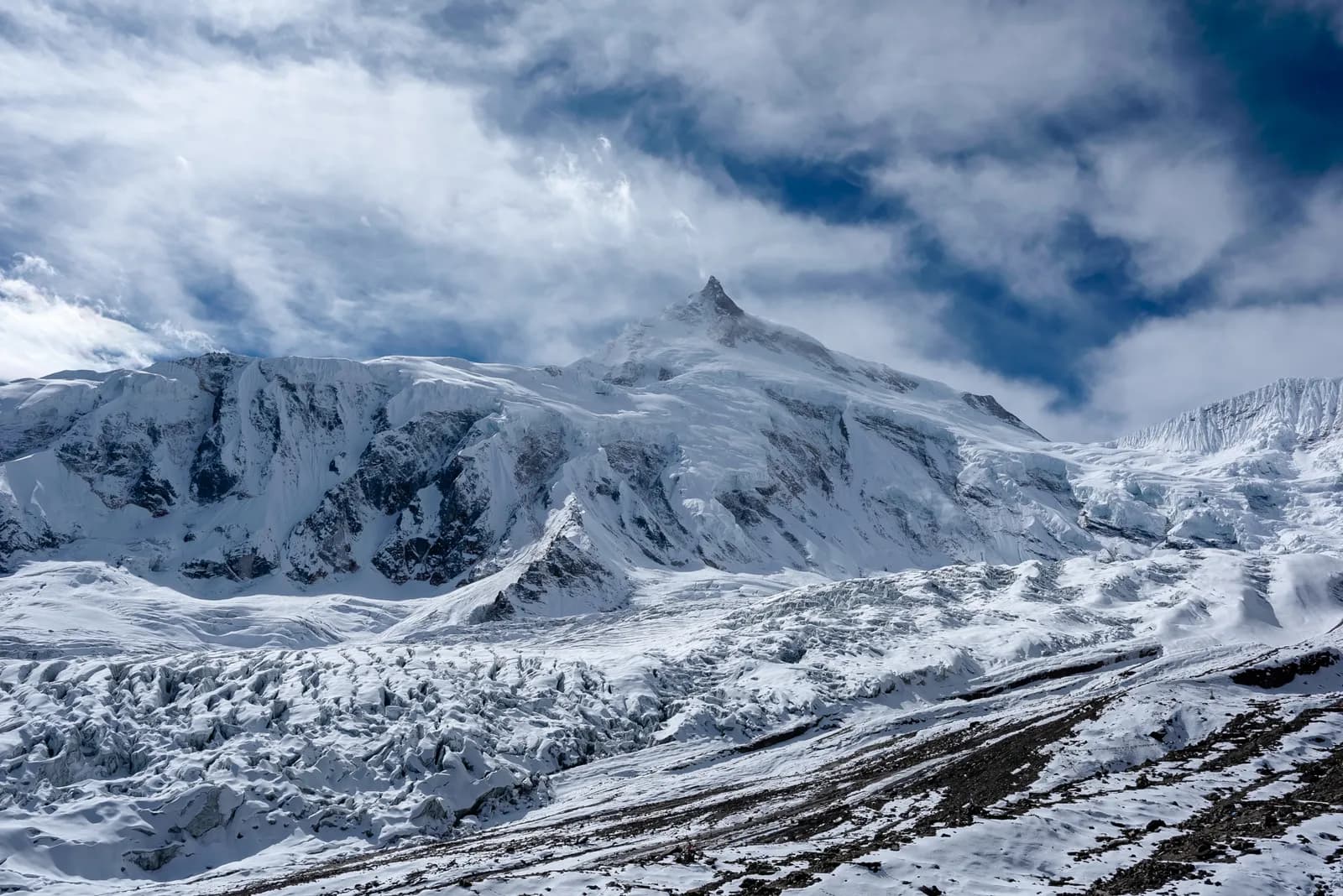
The year at a glance
| Month | Lower valley (Machha Khola to Deng) | High valley (Samagaun, Samdo) | Larkya La | Verdict |
|---|---|---|---|---|
| January | Cool, dry | Very cold, snow likely | Snow, often hard | Experienced only |
| February | Cool, dry | Very cold | Snow, can be crossable | Experienced only |
| March | Warming, dry | Cold nights, snow lingering | Snow, improving late month | Possible |
| April | Warm, rhododendron | Cool, clear mornings | Usually crossable | Good |
| May | Hot, hazy | Mild, afternoon cloud | Crossable, less snow | Good, early May best |
| June | Hot, wet, leeches | Cloudy, wet starts | Cloud, rain or snow | Avoid |
| July | Very wet, landslides | Cloudy | Poor visibility | Avoid |
| August | Very wet, landslides | Cloudy | Poor visibility | Avoid |
| September | Lush, wet early | Clearing late month | Often clear from mid-month | Good late |
| October | Dry, warm days | Cold nights, clear | Best conditions | Best |
| November | Dry, cool | Very cold nights | Good early, snow risk late | Good early |
| December | Dry, cold | Very cold, lodges close | Snow common | Experienced only |
This is a pattern, not a forecast. Every season varies, and the Department of Hydrology and Meteorology and your guide's local knowledge are better than any table on the day.
The geography that drives the seasons
The trek starts low and warm. Machha Khola is about 870 m, Jagat about 1,340 m and Deng about 1,860 m, so the first days are in river valleys with forest, terraced fields and waterfalls. By Namrung (about 2,630 m) and Samagaun (about 3,530 m) the climate is alpine, and the route crosses Larkya La before dropping to Bimthang (about 3,720 m) and Dharapani (about 1,860 m).
The monsoon (roughly June to September) soaks the south-facing lower valleys most, and the high valley is somewhat drier. That is why the lower section is the main problem in summer, with landslides across the trail and, at lower altitudes, leeches. In winter the reverse is true: the low valley is fine, and the high valley is under snow and ice.
Spring: March to May
March. Cold in the high valley, with fresh or old snow on the trail above Samagaun. The pass often has heavy snow in early March, and crossing depends on whether people have broken a trail. Lodges at Samdo and Larkya Phedi may still be shut or opening. The lower valley is warm and quiet.
April. Reliable, with rhododendrons flowering in the forest between Jagat and Namrung and a stable pass in most years. Skies are clear in the morning and build cloud in the afternoon. It is busier than March but quieter than October.
May. The pre-monsoon build-up. Lower valley days become hot and hazy, and afternoon thunderstorms are common. Early May still works well; by late May cloud arrives earlier each day and views fade.
Monsoon: June to August
The lower valley is the problem. Landslides block the trail, streams become impassable at times and leeches are common below about 2,500 m. Visibility in the upper valley is often poor. Agencies seldom run the circuit in these months, and rescues are harder. If you are set on a monsoon-season trek, other regions fit better; see monsoon trekking and rain-shadow routes.
Autumn: September to November
September. The monsoon is easing but not over. The trail is lush, and the early part can still be wet and landslide-prone. Skies clear in the second half and the high valley is beautiful. It is a good month for those who accept some risk of rain in return for fewer people.
October. The best month. Stable weather, clear skies, comfortable days at low altitude and cold, bright nights above Samagaun. Larkya La is generally in good condition. The cost is crowds at the lodges and a busy permit office, and the Dashain and Tihar festivals fall in this period, which disrupts transport and increases demand for rooms. Check the festival dates for your year.
November. Cooler and still clear. Early November is excellent; later in the month snow on the pass becomes more likely and the nights at Samdo and Larkya Phedi can be bitterly cold. Some lodges begin to close for the season.
Winter: December to February
Possible but demanding. The lower valley is open and dry. Above Samagaun the trail can be covered in snow, nights are well below freezing, and some lodges close. The pass can be blocked or dangerous, and crossing depends on recent snowfall. A winter trek needs warmer gear (see the packing list), extra buffer days and an agency with winter experience.
The pass day
Larkya La is a long day. From Larkya Phedi (Dharamsala, about 4,470 m) you start in the dark, usually between 4:00 and 5:00, gain around 650 m to the pass and descend steeply to Bimthang over many hours. The weather window is narrow: wind typically builds late morning and fresh snow makes the glacier-side stretch slower. Your guide may postpone or abort if conditions are poor, so leave a spare day in the schedule. Read about conditions in snow and high-pass conditions and consider microspikes in the shoulder months.
Crowds and logistics
Manaslu is quieter than Annapurna or Everest, but October is the exception. Because the permit is restricted and a guide is compulsory, the number of trekkers is limited, though lodges in Samagaun and Samdo can fill. Book in advance, ask for room guarantees from your agency and keep a spare day.
Choosing your month
- Want the best chance of a clear pass? October.
- Want flowers and fewer people? April.
- Want to avoid crowds? Late September or early May, accepting more cloud.
- Experienced and well equipped? Early December or late February, with a flexible schedule.
For the permit steps, see the permit guide. For other regions and months, the best time to trek in Nepal is the hub.
What to carry by season
| Season | Add to the standard kit |
|---|---|
| Spring | Sun hat, sunscreen, light rain shell for afternoon storms, a sleeping bag rated for freezing nights |
| Monsoon | Full waterproofs, leech socks, dry bags; not recommended for the full circuit |
| Autumn | Warm layers for nights below freezing, gloves and hat for pass day, headlamp for the pre-dawn start |
| Winter | Down jacket, a warmer sleeping bag, insulated boots, microspikes or crampons by agreement with your guide |
Shared items such as a first-aid kit and a water filter are worth splitting with partners; see how to find a trekking partner safely if you need one.
Daylight and pacing
Days are shortest in December and longest in May. In late November you have roughly ten and a half hours between sunrise and sunset, so a long stage such as Samdo to Larkya Phedi or the pass day itself leaves little margin; in April or May there are more hours of light but afternoon cloud arrives earlier. Plan the stage lengths to finish by mid-afternoon in any season, because the temperature drops quickly once the sun leaves the valley.
If your dates are fixed
If your only available window is in a poor month, there are sensible adjustments:
- Add two buffer days around the pass in any shoulder month.
- Shorten the circuit by finishing at Samagaun and walking back down, or by choosing a lower-altitude trek instead. The route choice guide compares the options.
- Switch region. In the monsoon, a rain-shadow route is a better use of the same time than a circuit with a pass.
Check the forecast in the days before you leave and again at Samagaun, and be willing to wait a day for the weather to clear.
Route pages: Manaslu Circuit and the Manaslu region.