Getting to Rara Lake: Nepalgunj, Jumla and Talcha
How to reach Rara Lake: the Nepalgunj hub, flights to Jumla and Talcha, the Karnali Highway, why schedules slip and how to build spare days into a far-west trek.

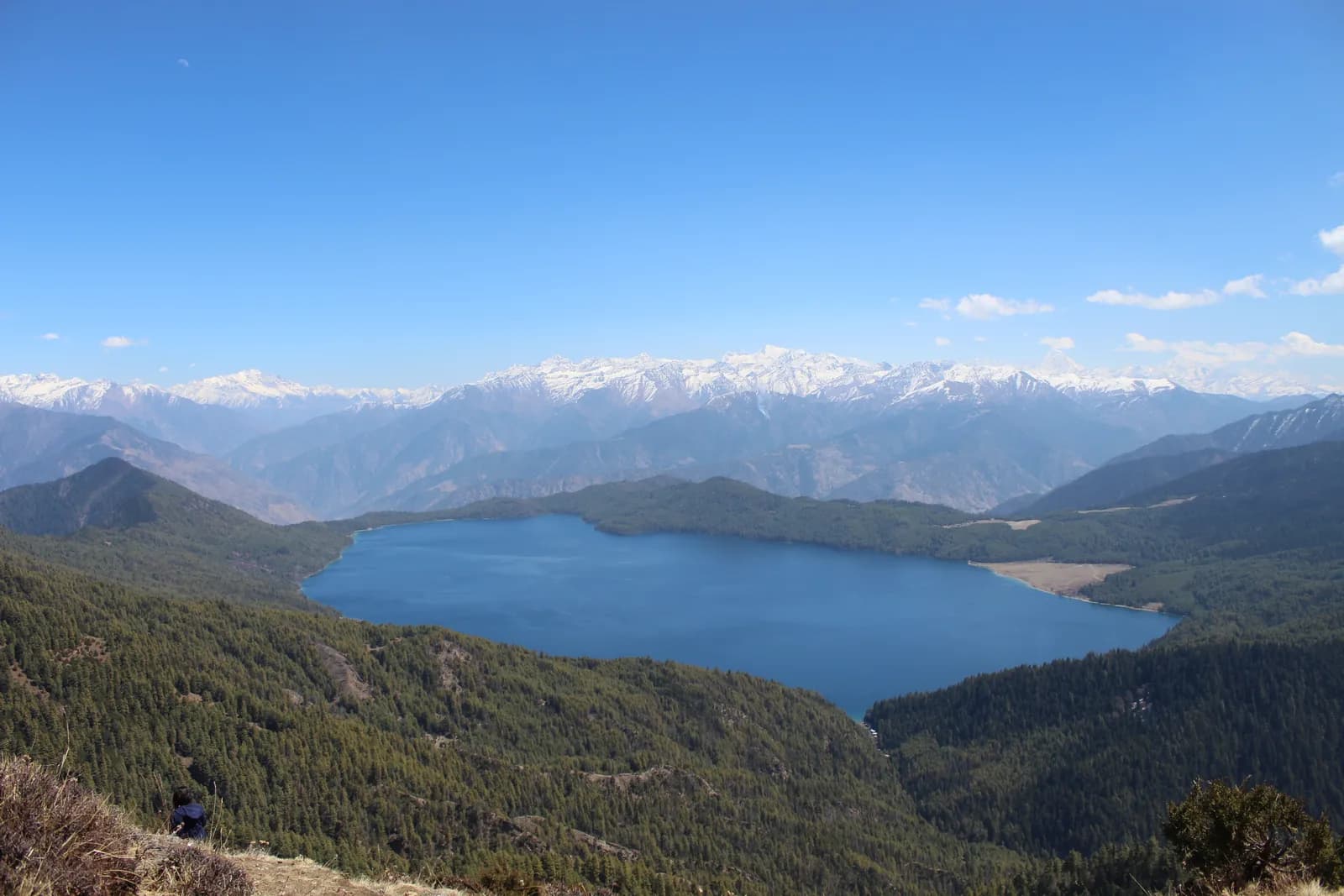
You reach Rara Lake by air, via Nepalgunj. The standard plan flies from Kathmandu to Nepalgunj in the hot Terai (about an hour), then on to Jumla (about 40 minutes), walks to the lake over five days and leaves from Talcha, the airstrip beside Gamgadhi, with a flight back to Nepalgunj (about 40 minutes) and on to Kathmandu. A road exists, the Karnali Highway between Jumla and Gamgadhi, but it is rough, and the flights set the pace of the whole trip. Everything on the Rara Lake Trek page assumes that sequence, and the Rara region page lists Kathmandu, Nepalgunj, Jumla and Talcha as the start points.
This article covers each leg, what the sources say about the Talcha service, and how to schedule so that one cancelled flight does not ruin the trek.
Chuyến đi đang mở tại Rara Lake Trek
Các chuyến đi thật do người trekking đăng để tìm bạn đồng hành.
Leg 1: Kathmandu to Nepalgunj
Nepalgunj is a Terai town near the Indian border at about 160 m. The route plan says it is the hub for flights to Jumla, Talcha and Juphal (the Dolpo airstrip), and that it can be very hot and humid. Most trekkers arrive in the afternoon, check permits with the guide and repack, because the Jumla flight leaves early in the morning and depends on the weather. Our region guide notes Nepalgunj can be extremely hot in the monsoon. Take light clothes for the wait and keep a day bag with your warm layers, because the temperature change on arrival at Jumla (about 2,350 m) is large.
Leg 2: Nepalgunj to Jumla
The morning flight takes about 40 minutes on a small plane over forested hills and, on clear days, the snow peaks of the far west. Jumla airport sits at about 2,350 m, and the town is known for apples, walnuts and Marsi rice. If the flight is cancelled, which happens with cloud and wind, you spend another night in Nepalgunj. Small aircraft have strict baggage limits, so pack soft bags, and be ready for bulky items to travel separately. We found no dated timetable or fare for Jumla flights, so ask your agency for the current schedule and the fallback.
Leg 3: walking from Jumla
The trek begins on day 3 with a 4.5 to 6 hour walk to Patmara. The first part shares the road with jeeps, so keep an eye out. If you have time in Jumla, the bazaar and the Chandannath temple are worth a visit, and the Sinja valley, a day trip by jeep, holds the ruins of the Khasa Malla capital.
Leg 4: the Talcha flight and its uncertainty
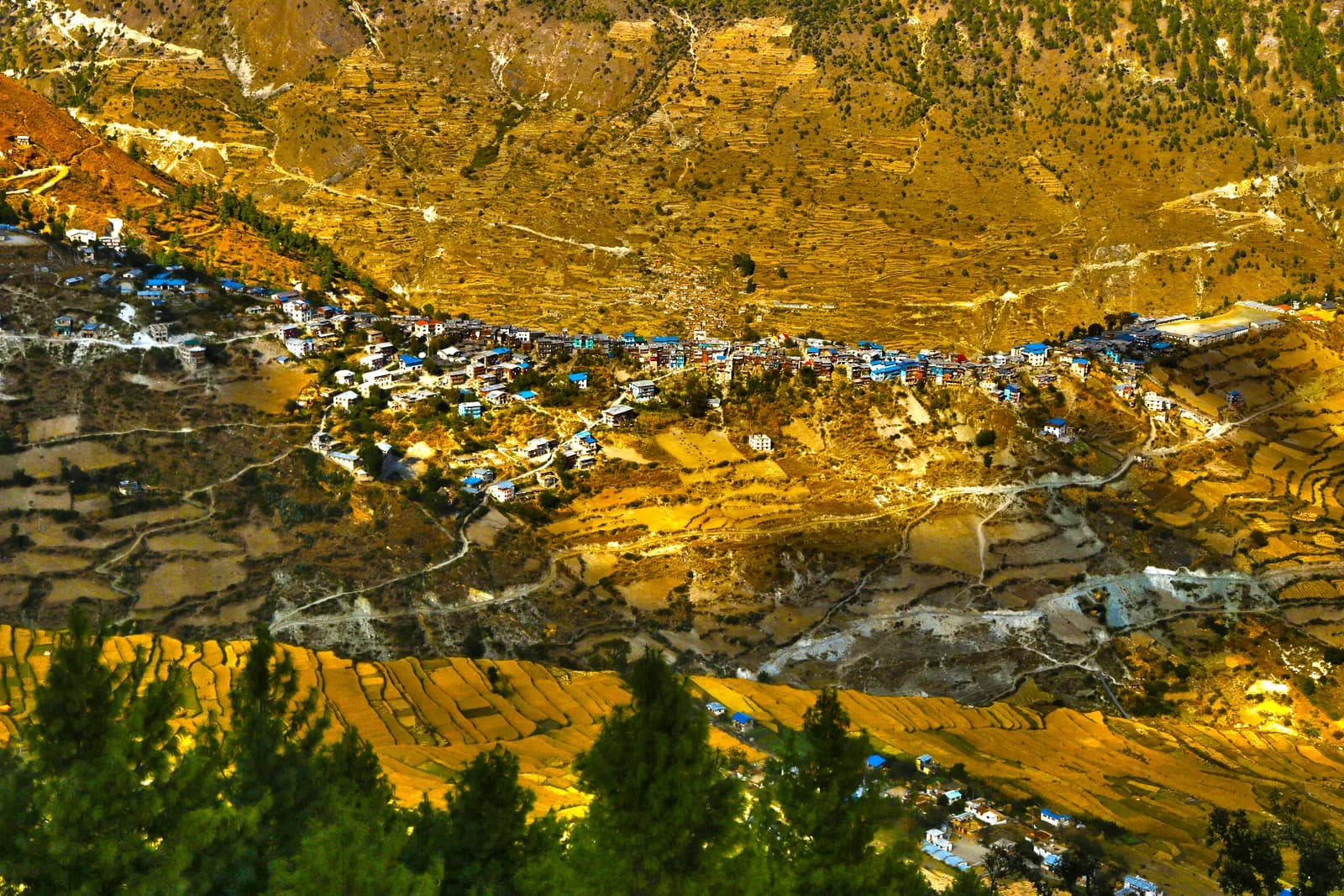
Talcha, also called Rara Airport, lies in Karkibada Municipality in Mugu District, with Gamgadhi about 4 km to the south according to Wikipedia. The same article gives the runway as short, at 570 m, and lists Sita Air, Summit Air and Tara Air among operators on Nepalgunj-Rara routes. Our route plan has you walk about 14 km from Murma past the lake's eastern end and Gamgadhi to the airstrip on day 8, in 4.5 to 6 hours. The region page says the airstrip is 1 to 3 hours on foot from the lake when it operates, and Wikipedia says about 2.5 hours, so the distances differ with the starting point on the lake shore; ask your guide where you start.
The more important point is how often it flies. A September 2025 report said Nepal Airlines resumed flights to Rara Airport after a four-month hiatus, and that the flights had been thrice-weekly services until the previous April or May. We found no 2026 timetable and no confirmation of the current service, so treat Talcha as intermittent. The route plan itself says flights from Talcha are often delayed by cloud and wind, so keep a spare day. If the airline cancels, the options are a longer walk or a jeep on the Karnali Highway, and you should ask your agency which one it will use and what it costs before you leave.
Seasons and flight risk
Every month has its own flight problem. In the monsoon, from June to August, the route page says flights are unreliable and Nepalgunj is extremely hot. April and May are the best spring months for the trek, and September to November are the autumn window, with October the most popular and lodges closing toward the end of November. From December to February heavy snow closes some trails and flights. The pattern to plan around is that the trekking seasons are the seasons when flights are most likely to run, but even then cloud and wind cancel them, so the buffer days belong in every season, not only the monsoon.
Connecting to your onward travel
The last leg is Talcha to Nepalgunj and then Nepalgunj to Kathmandu. The route plan notes that if the Kathmandu flight is on the same day you connect at the airport, and otherwise you rest at a hotel. A same-day connection is tempting, but if the Talcha flight is late it can fail, and then you are in Nepalgunj with an international flight to catch. Do not book an international departure for the day after the planned return. Our first-timer notes explain why a spare day at the end of any Nepal trek is cheap insurance.
The Karnali Highway
The highway connects Jumla with Gamgadhi and Rara by a rough road and jeeps run on it. Some trek sections follow it, and trekkers use footpath shortcuts, ridges and village trails to avoid road stretches. Karnali Province has some of the lowest road density in Nepal, so do not expect a quick overland alternative to the flight: the region page offers none with a time, and we have not found a reliable one.
Building in slack
Because both ends of the trek depend on small-plane flights, the schedule needs buffer days. A practical set:
- One spare day at the start, in Nepalgunj, in case the Jumla flight is cancelled.
- One spare day at the lake, or at the Talcha airstrip before the flight.
- One spare day in Kathmandu before your international flight.
- A written agreement with the agency about extra nights for the guide and porters.
- A check of flight schedules a few days before you leave, because the Talcha service has changed in the past.
The region page recommends at least one night in Kathmandu before the Nepalgunj flight and a spare day in the schedule.
Combining with Dolpo
Nepalgunj is also the hub for the Juphal flight to Dolpo, which is why Rara and Phoksundo are sometimes combined. The Dolpo access guide covers that leg. Combining the two is a long trip with extra flight risk, so only do it if you have several weeks.
Money and cash
Jumla has limited cash machines, so bring cash from Kathmandu or Nepalgunj, in small notes. Villages seldom have change, and there are no services at the lake beyond lodge payments.
Checklist
- Book the Nepalgunj and Jumla flights through your agency and ask for the fallback if they are cancelled.
- Confirm whether the Talcha flight is running for your dates and what happens if it is not.
- Pack soft bags within the small-aircraft allowance.
- Carry cash, a copy of your passport and permits, and a warm layer for Jumla.
- Keep spare days at both ends.
For the wider picture of flights, buses and jeeps, return to the trailheads guide, and for what Rara involves once you arrive read the Rara region guide and the itinerary.