

Wildlife Safety on Nepal Treks: Dogs, Monkeys and Mountain Animals
What wildlife you may meet on a Nepal trek, from village dogs and monkeys to tahr, monal and the rarely seen snow leopard, what the CDC says about rabies, how to behave, and the law on wildlife products.
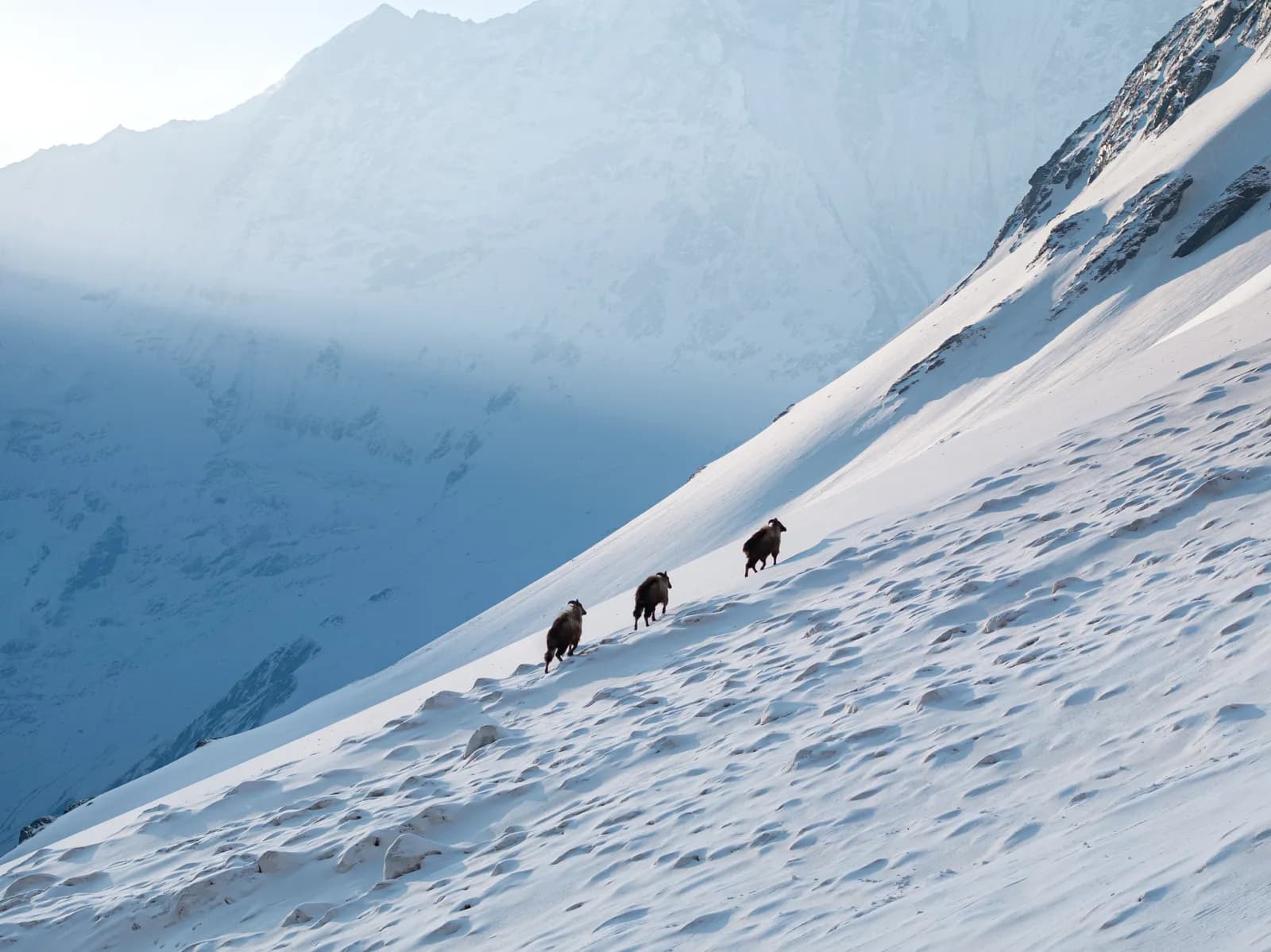
The animal most likely to cause you a problem on a Nepal trek is a village dog, and the most serious problem is rabies. The CDC says rabid dogs are common in Nepal and that post-exposure vaccine may only be available at larger urban facilities, so do not touch or feed dogs, keep food out of reach of dogs and monkeys, and treat any bite or scratch as an emergency: wash it well and get medical care fast. The wild animals people dream of seeing, tahr, pheasants and, very rarely, a snow leopard, are not dangerous to a walker who keeps to the trail. This guide separates the real risks from the myths, and explains the law on wildlife products.
This is general information, not medical advice. For vaccines and pre-exposure rabies decisions, talk to a travel clinic; our vaccinations and health prep guide sets out the CDC's list.
Langtang Valley Trek का खुला ट्रिपहरू
साथी खोजिरहेका ट्रेकरहरूले पोस्ट गरेका वास्तविक ट्रिपहरू।

The real risk: dogs and rabies
Dogs live in almost every village and at lodges, and they are mostly friendly or indifferent. The CDC's Nepal page is blunt: rabid dogs are common in Nepal and post-exposure vaccine may only be available at larger urban facilities, and it says that pre-exposure vaccination depends on activities, so ask a healthcare provider. On a trek, the issue is distance: a bite on the third day of the Annapurna Circuit or the Langtang Valley may be a day or more from a clinic. Do not pet, feed or play with dogs. Do not walk through a village alone at night; carry a torch and a pole. If a dog barks and approaches, stand still, avoid eye contact, and back away slowly; do not run, since that can trigger a chase. Keep food and rubbish out of reach, and keep your door shut at night.
If you are bitten or scratched
Wash the wound for several minutes with soap and clean water. Cover it. Tell your guide and your partners. Get to a medical facility as soon as you can, because treatment after a possible rabies exposure is urgent, and tell the doctor when and where it happened and what kind of animal it was. Do not wait to see if the animal falls sick. Call your insurer, who will help arrange care, and follow the emergency steps. If you have had a pre-exposure course, you may still need further doses, so tell the doctor. A scratch from a monkey or a cat is treated the same way. In short, a bite is an emergency even if it looks small.
Monkeys and food
Rhesus and langur monkeys live in the lower valleys and near temples, and they know that tourists carry food. They steal bags, open zips and snatch snacks, and a startled or cornered monkey can bite. Keep food in a closed bag, do not eat in front of monkeys, do not feed them, and do not wave sticks or stare. If one grabs a bag, let it go. Keep your room closed, because monkeys enter lodges, and close windows when you leave. In Langtang National Park, researchers have published work on langurs, among other species, and on red pandas, which are shy and almost never seen by trekkers. Treat any monkey bite as you would a dog bite.
Mountain animals: tahr, pheasants and the snow leopard
Higher up, the animals are shy, and the rules are about courtesy. The Wikipedia article on Sagarmatha National Park lists Himalayan tahr, Himalayan serow and musk deer among the ungulates, and says the park hosts 208 bird species, including the Impeyan pheasant, the bird more often called the Himalayan monal and Nepal's national bird, along with bearded vulture, snowcock and alpine chough. You will see tahr on steep slopes above the trail, often at dawn or dusk, and monal in rhododendron forests. Keep your distance, do not approach for photos, use a zoom, do not feed and do not follow. The same article says the snow leopard inhabits elevations above 3,500 m; sightings are very rare and no trekker should plan on one. If you hear a cat's call, do not try to find it. Stay on the trail, keep your voice down and enjoy the moment.
Yaks and other livestock
The animals you are most likely to meet at close range are not wild: yaks, dzopkyo, mules, donkeys, goats and cattle. Most are used to people, but a loaded yak on a narrow path is a hazard. Our yaks, mules and bridges guide covers the uphill rule, bridge etiquette and what to do if animals panic. Keep away from calves and herders' dogs, which are guard animals and can be aggressive in pastures. If a herder's dog runs toward you, stop, stay calm and wait for the herder to call it.
Insects, leeches and small things
Lower valleys in the monsoon have leeches, mosquitoes and biting flies. The CDC says that malaria prophylaxis is advised only in certain low-elevation areas, mainly Sudurpashchim and Karnali provinces below 2,000 m, and that there is no malaria transmission in Kathmandu, Pokhara or on typical Himalayan treks, so for most treks it is a matter of comfort. Wear long sleeves and trousers at dusk in the lowlands, use repellent and check yourself in the evening. Our guide to monsoon trekking covers what to expect, and the first aid kit guide lists antiseptic and dressings for small bites.
Wildlife and the law
The UK FCDO notes that it is illegal to buy, sell, kill or capture any wild animal or trade its parts without a licence, and that buying or trafficking protected wildlife goods can bring a fine or prison sentence. Do not buy fur, horn, bone, skins, bear or tiger products or anything that looks like it, and do not accept them as gifts. Do not collect plants, eggs or feathers in national parks. Respect park rules about staying on trails and about drones, and pay the national park entry fees, as our permits guide explains. Taking photos is allowed; taking animals is not.
Camp, lodge and night
Most trekkers sleep in lodges, which are safe from animals if you keep food out of the room and the door latched. On a camping trek, keep food away from the tent, store it in a sealed bag hung or placed away from where you sleep, and do not leave rubbish. Use a torch if you go outside at night, and watch for dogs. In a lodge, the dog that sleeps in the kitchen is part of the family; the one that roams the village at night is not. Do not leave shoes outside where animals might take them. Report any unusual or aggressive animal behaviour to the lodge owner, who will know whether it is a problem.
Partners and animals
Agree three habits with your partners: nobody feeds or pets dogs, food stays in sealed bags and anyone who is bitten or scratched says so at once. Check each other's vaccination decisions before the trek, and share the clinic's advice. If someone is bitten, the whole group changes plans: the patient goes to care, and the others decide whether to wait or continue; see what if your partner cannot continue. To find people for a route with village and monkey country, see the Langtang Valley, Everest Base Camp and Annapurna Circuit partner pages. The partners and safety hub lists the rest of the series.
यो ट्रेकको योजना बनाउनुहोस्
- Everest (Khumbu) क्षेत्र गाइड
- Annapurna क्षेत्र गाइड
- Langtang क्षेत्र गाइड
- Find someone to trek Langtang Valley Trek with
- Trekking partner for Everest Base Camp Trek
- Trekking partner for Annapurna Circuit Trek
- Langtang Valley Trek यात्रा तालिका
- Everest Base Camp Trek यात्रा तालिका
- Annapurna Circuit Trek यात्रा तालिका


