Upper Mustang region guide: the old Kingdom of Lo explained
What Upper Mustang is, why it works in the monsoon, how the restricted-area permit and guide rule apply, how the Kagbeni to Lo Manthang road changes the trek and what to expect at altitude and in the wind.
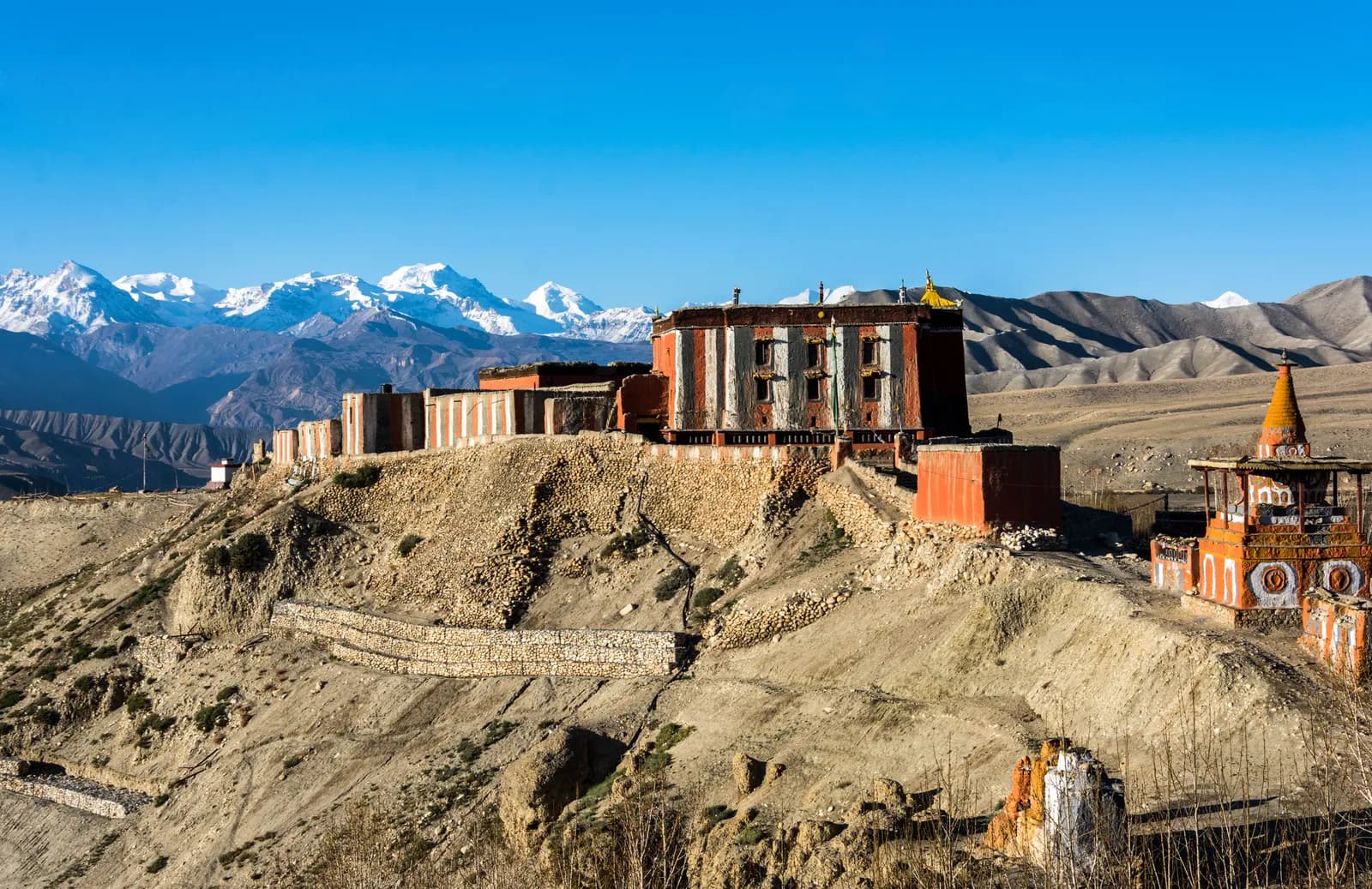
Upper Mustang is the northern part of Mustang District, the former Kingdom of Lo, a dry landscape of red cliffs, cave dwellings and Tibetan Buddhist monasteries centred on the walled city of Lo Manthang (3,840 m). It has been open to foreigners only since 1992 and still needs a restricted-area permit and a licensed guide through a registered agency. The standard loop takes 12 days from Pokhara, with flights to Jomsom, and because the region sits in the rain shadow it can be walked even in the monsoon.
This guide explains what you are signing up for: how the permit and guide rule work, how the road has changed the trek, what the altitude and wind are like and when to go. The day-by-day plan is in the Upper Mustang itinerary.
Upper Mustang Trek (Lo Manthang) का खुला ट्रिपहरू
साथी खोजिरहेका ट्रेकरहरूले पोस्ट गरेका वास्तविक ट्रिपहरू।
A different kind of Himalayan trek
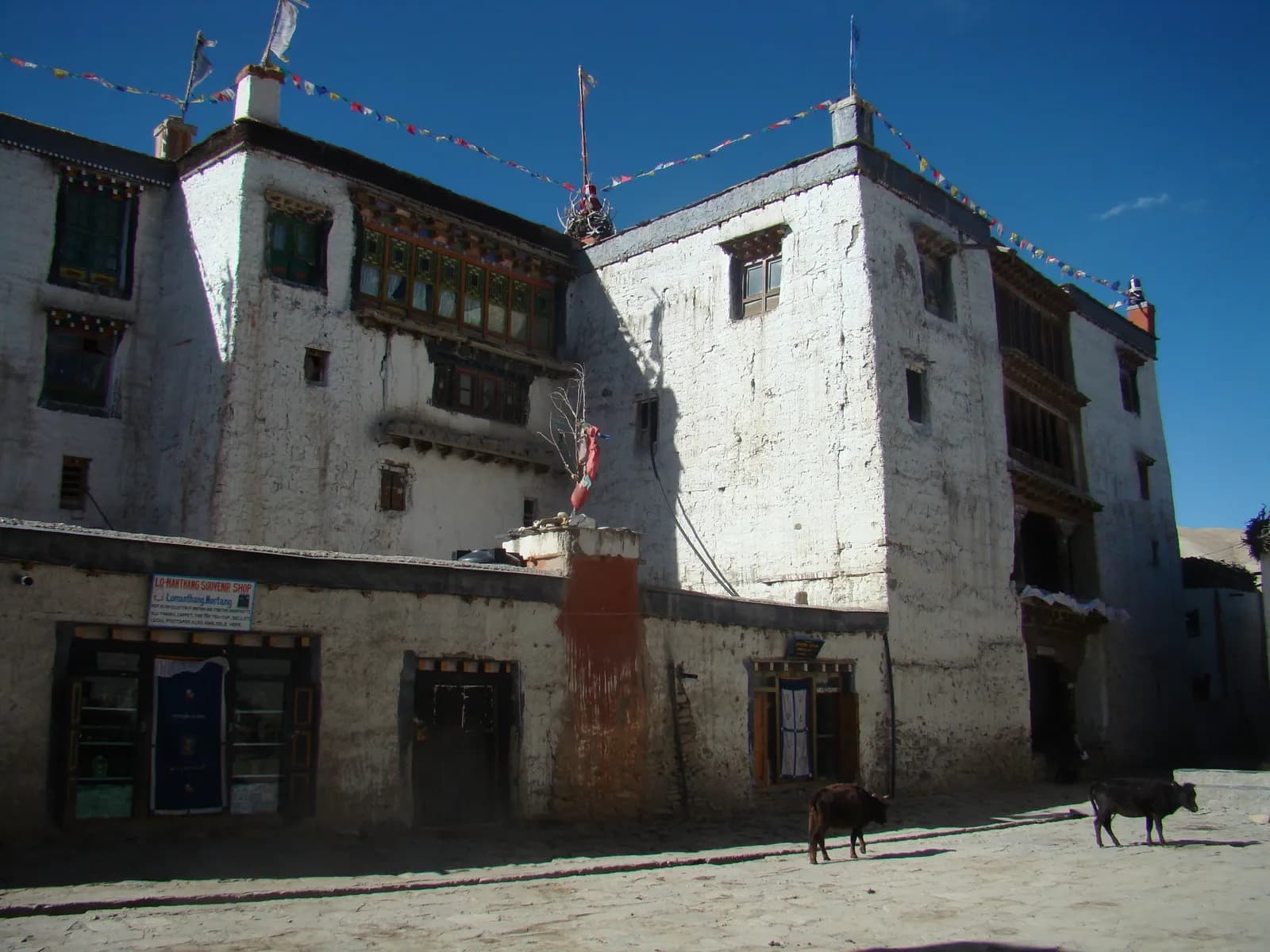
Most Nepal treks climb into green valleys toward snow peaks. Upper Mustang is a high desert. The Himalaya shelter it from the monsoon, so it receives roughly 250 to 400 mm of precipitation a year, and the Kali Gandaki, which runs through it, has carved one of the deepest gorges in the world south of Kagbeni. The colours are ochre, rust and white, the villages are whitewashed blocks against brown hills, and the sky is often cloudless.
Wind defines the day. It rises almost every afternoon, so you start early and aim to arrive by early afternoon. A windproof layer, a hat, sunglasses with side protection and lip balm matter more here than a heavy down jacket during the day.
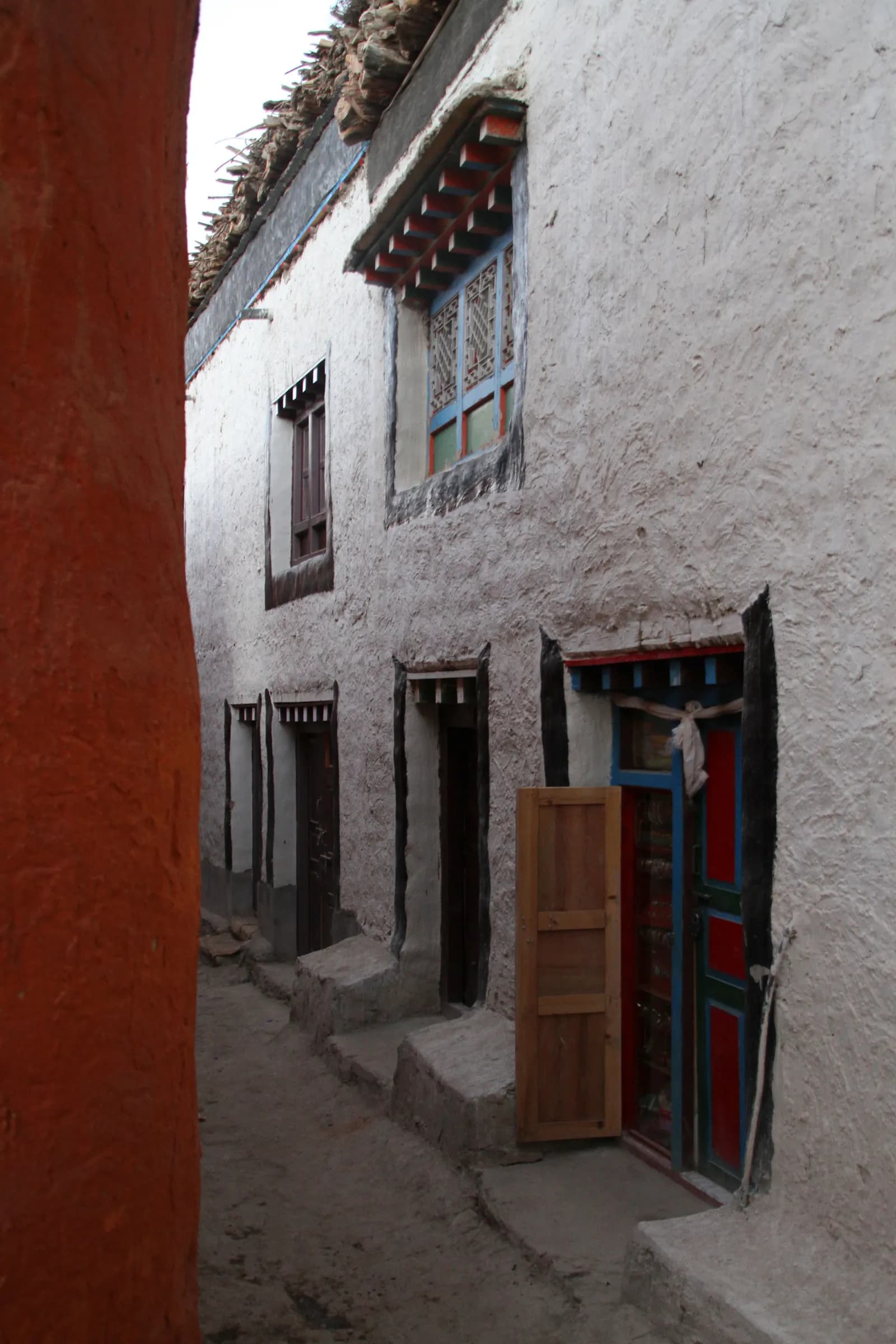
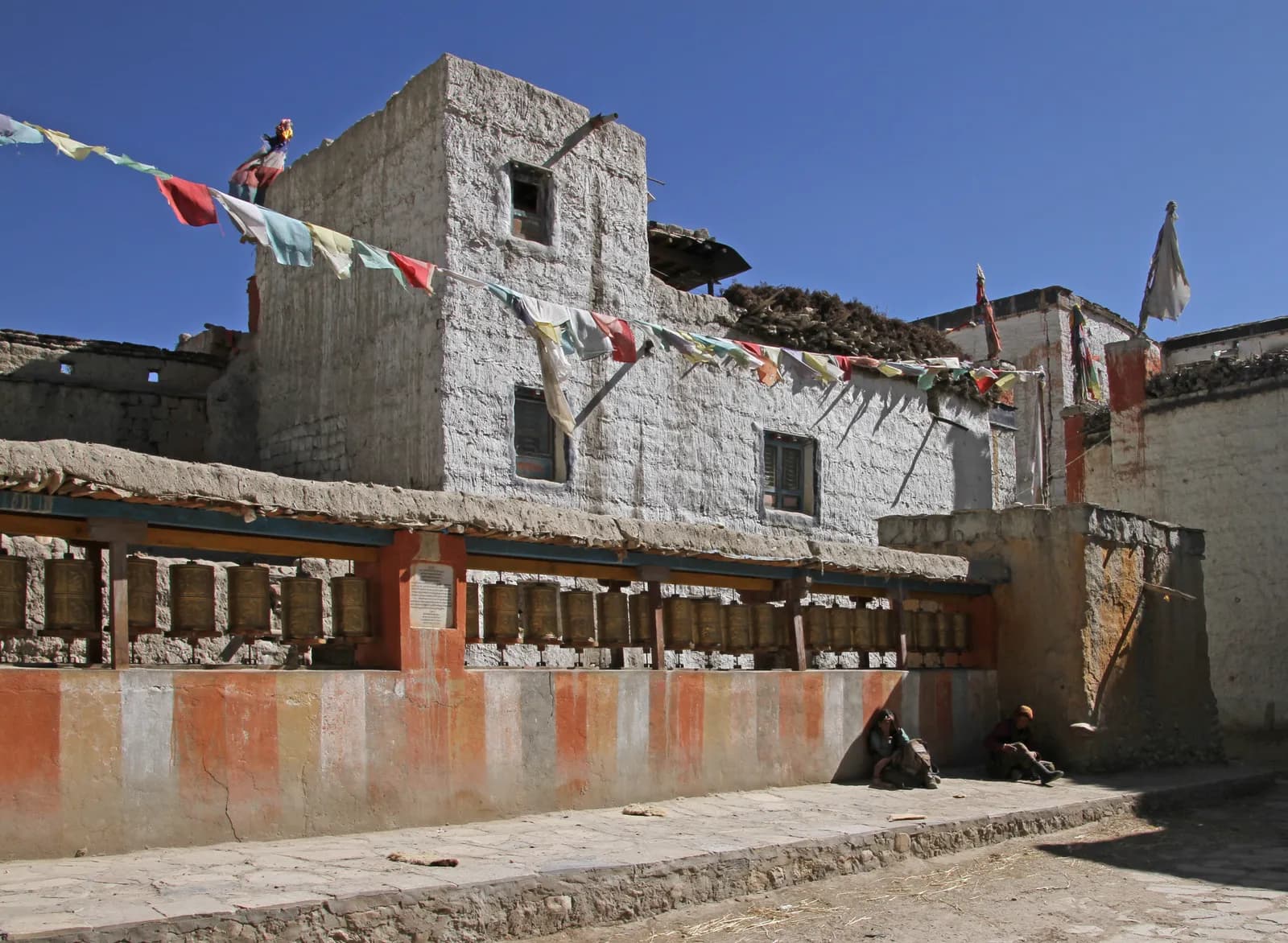
Lo Manthang was founded in 1380 by Ame Pal. The walled city holds a five-storey palace built around 1400, three great monasteries (Jampa Lhakhang, Thubchen and Chode) and mud-brick houses. The monarchy was formally abolished in 2008. The people are Tibetan-speaking Loba, and almost every village has a monastery, a mani wall and chortens. The Tiji festival, held at Lo Manthang in spring, is the best-known festival in the region, and its dates follow the Tibetan calendar and change every year, so confirm them before planning around it.
The permit and the guide rule
Upper Mustang is a restricted area. The permit is issued by the Department of Immigration through a registered trekking agency, and you also need an Annapurna Conservation Area (ACAP) entry permit. As of October 2026 ACAP costs NPR 3,000 for foreigners, with children under 10 free. A TIMS card may be requested too, and the Nepal Tourism Board lists it at NPR 2,000 for foreigners (SAARC nationals NPR 1,000), plus any agency service charge.
The restricted-area fee is where sources disagree, so here are both. As of October 2026 the Nepal Tourism Board lists USD 50 per person per day (for Lomanthang, Lo-Ghekar Damodarkunda and Baragung Muktichetra). The trade body TAAN lists USD 500 for the first 10 days and USD 50 for each extra day, which is the same total for a 10-day stay. Days count from entry at Kagbeni, so a trek that spends only a few days inside costs less than one that lingers. Our Upper Mustang restricted area permit guide works through the arithmetic.
On the guide rule, the wording is exact. A licensed guide through a registered agency is required in restricted areas, and the Department of Immigration reminded stakeholders of this in June 2026. Individual foreigners have been able to apply for a restricted-area permit since 22 March 2026, where a group of two was the old minimum, but the guide and the agency are still required. Press reports are the main source for the March change, so check with the Department of Immigration or your agency before you book. See the guide rule by region for the sources.
Getting there, and the road
Most trekkers fly from Pokhara to Jomsom, a flight of about 20 minutes that runs in the morning because of the wind. As of October 2026 the cost data gives the flight at about USD 120 to 200 each way. Flights are often delayed or cancelled by wind or cloud, so keep a spare day at both ends, and read Pokhara to Jomsom: flight versus jeep before you choose. The alternative is a long jeep ride from Pokhara via Beni, which takes a day or more, and which the cost data leaves unpriced.
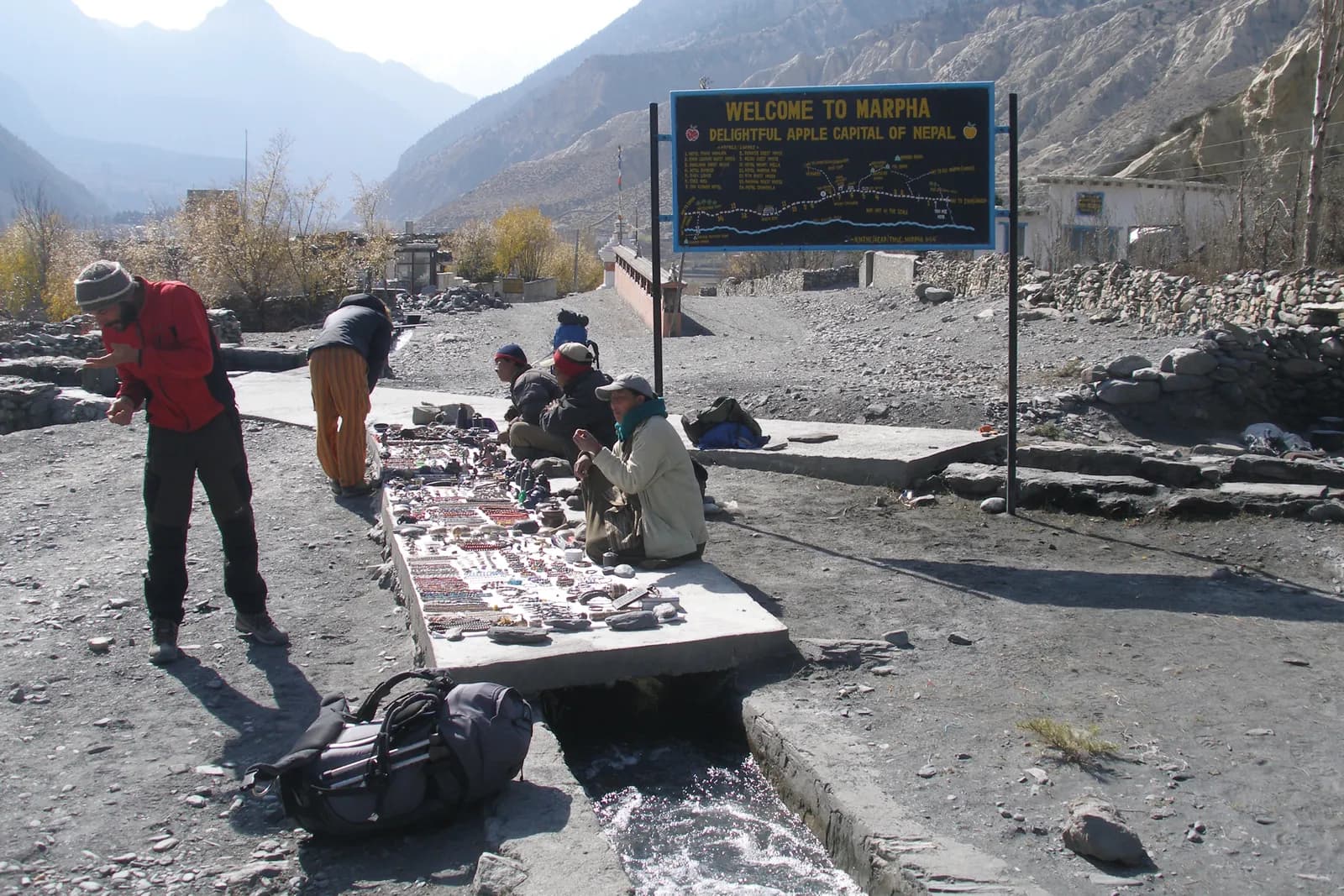
From Jomsom you walk or drive to Kagbeni (2,810 m), where the restricted area begins. A road now runs from Kagbeni to Lo Manthang and on to the Chinese border. That changes the trek in two ways. First, some itineraries use jeeps for a leg out or back, which shortens the trip. Second, the footpaths and the road run side by side in places, so you will share the trail with dust and vehicles on some stretches. The standard 12-day plan walks out via Chele, Syangboche, Ghami and Tsarang to Lo Manthang, spends a rest day there for the monasteries and the Chhoser caves, and returns by a different route through Ghar Gompa, Dhakmar, Ghiling and Chhusang to Jomsom. Ask your agency which stretches are on foot and which by vehicle.
Altitude, in numbers
| Stop | Altitude |
|---|---|
| Kagbeni | 2,810 m |
| Chele | 3,050 m |
| Syangboche | 3,800 m |
| Ghami | 3,520 m |
| Tsarang | 3,560 m |
| Lo Manthang | 3,840 m |
| Dhakmar | 3,820 m |
| Chhusang | 2,980 m |
| Jomsom | 2,720 m |
The route stays between about 2,700 m and 4,300 m, with a pass of about 4,200 m on the way back past Ghar Gompa and the Marang La at about 4,280 m as the highest point. That is gentler than Everest or Annapurna, but the climb from Chele to Syangboche takes you to 3,800 m on day three, and if you jeep sections you can gain height faster than your body likes. Use the standard guidance from the CDC Yellow Book and the Wilderness Medical Society: sleep modestly higher, add a rest day, never ascend with symptoms. The rest day at Lo Manthang is part of the plan, not a bonus. Our acclimatisation schedule explains the thinking.
When to go
The standard answer is March to November, with September and October the most popular. March is cold with strong wind and some lodges closed early. April opens the season in earnest, with mild days and clear skies. May is warm. June to August is monsoon in the south but largely dry in Upper Mustang, and the desert colours are at their best, although flights can be disrupted by cloud over the south. September is clear and stable. October is the busiest month. November has cold nights and strong winds, and lodges begin to close late in the month. December to February is very cold with possible heavy snow, and most lodges close, so it is not recommended. Our best time for Upper Mustang goes through the months.
Food, lodges and money
Lodges at Kagbeni, Chele, Syangboche, Ghami, Tsarang and Lo Manthang are simple, with stove-heated dining rooms. Menus include dal bhat, thukpa, Tibetan bread, momos and tea, and apples and dried fruit from the Kali Gandaki are sold in many villages. Prices are higher than in lowland Nepal because of the distance. As of October 2026 the cost data gives a dal bhat of NPR 700 to 1,500 between 2,500 and 3,800 m, and NPR 1,100 to 1,800 above 3,800 m. Guide days are NPR 4,000 to 5,400 and porter days NPR 2,100 to 3,400, as operator market ranges rather than official rates. Carry rupees, because there are limited machines in Jomsom and none beyond Kagbeni.
What to bring against the wind and dust
A windproof jacket and trousers, layers for cold mornings, a down jacket for the evenings, a sun hat, sunglasses with side protection, strong sunscreen and lip balm, and a buff or scarf for dust. Add waterproof boots, poles, a headlamp, water purification and a sleeping bag rated to about -10 C. Dust gets into everything, so bag your electronics and keep a lens cloth handy. The Nepal trek packing list covers the rest, and the sleeping bag guide explains ratings in sleeping bag temperature ratings for Nepal.
Culture to respect
The monasteries of Lo Manthang hold some of the finest Tibetan Buddhist wall paintings in Nepal, and restoration work has been going on for years. Walk clockwise around chortens and mani walls, remove your shoes in monasteries, dress modestly and never photograph wall paintings or interiors without permission. Ask before photographing people. The cave dwellings in the cliffs, including the Chhoser caves near Lo Manthang, are part of local history rather than a theme park, so leave everything where it is. Read monastery etiquette, prayer wheels and mani walls before you go.
Sharing the cost
The guide and a private vehicle are shared costs; the permit is per person. A guide costs the same for one trekker as for two, so a partner changes the numbers. Post your dates on the Upper Mustang partner page and read what to agree with trekking partners before you book so the permit days and the flight plan are settled before you leave.
Is it for you
Upper Mustang suits cultural travellers and photographers who want a high trek without a high pass. It is a poor fit if you want green forests, a strict schedule or any certainty about the Jomsom flight. Check the data on the Upper Mustang region page, compare it with others in the region guides category and the regions overview, and book the permit through an agency well in advance.
The route page for the 12-day loop is Upper Mustang.