Toilets and hygiene on Nepal treks: what to expect and what to carry
Honest guidance on trail toilets, from squat and western-style lodge toilets to what to do between villages, plus handwashing, water, menstrual hygiene and the kit that keeps you well.
Toilets on Nepal treks are basic: shared squat or simple western-style toilets, usually flushed with a bucket of water, often outside or at the end of a corridor, with toilet paper rarely provided and facilities that get simpler as you climb. Bring your own paper, hand sanitiser and a bag for used items, wash your hands before every meal, drink only boiled or treated water and carry out what you cannot dispose of properly. This guide explains what to expect, what to carry and how to manage toilets, hygiene, periods and the stomach upsets that catch many first-timers.
Poon Hill Trek (Ghorepani) का खुला ट्रिपहरू
साथी खोजिरहेका ट्रेकरहरूले पोस्ट गरेका वास्तविक ट्रिपहरू।

Toilets in lodges
Most lodges have a shared toilet block. At lower altitude, some rooms have an attached bathroom with a squat or a western-style seat and a tap or bucket. Higher up, the toilet is typically a small hut or a room at the end of a corridor, with a squat pan or a seat over a pit. Flushing is usually by pouring water from a bucket, and there may be a jug or a barrel of water next to the toilet. In some lodges there is a bin for used paper. In others, you put it in the pan. Follow the sign or ask.
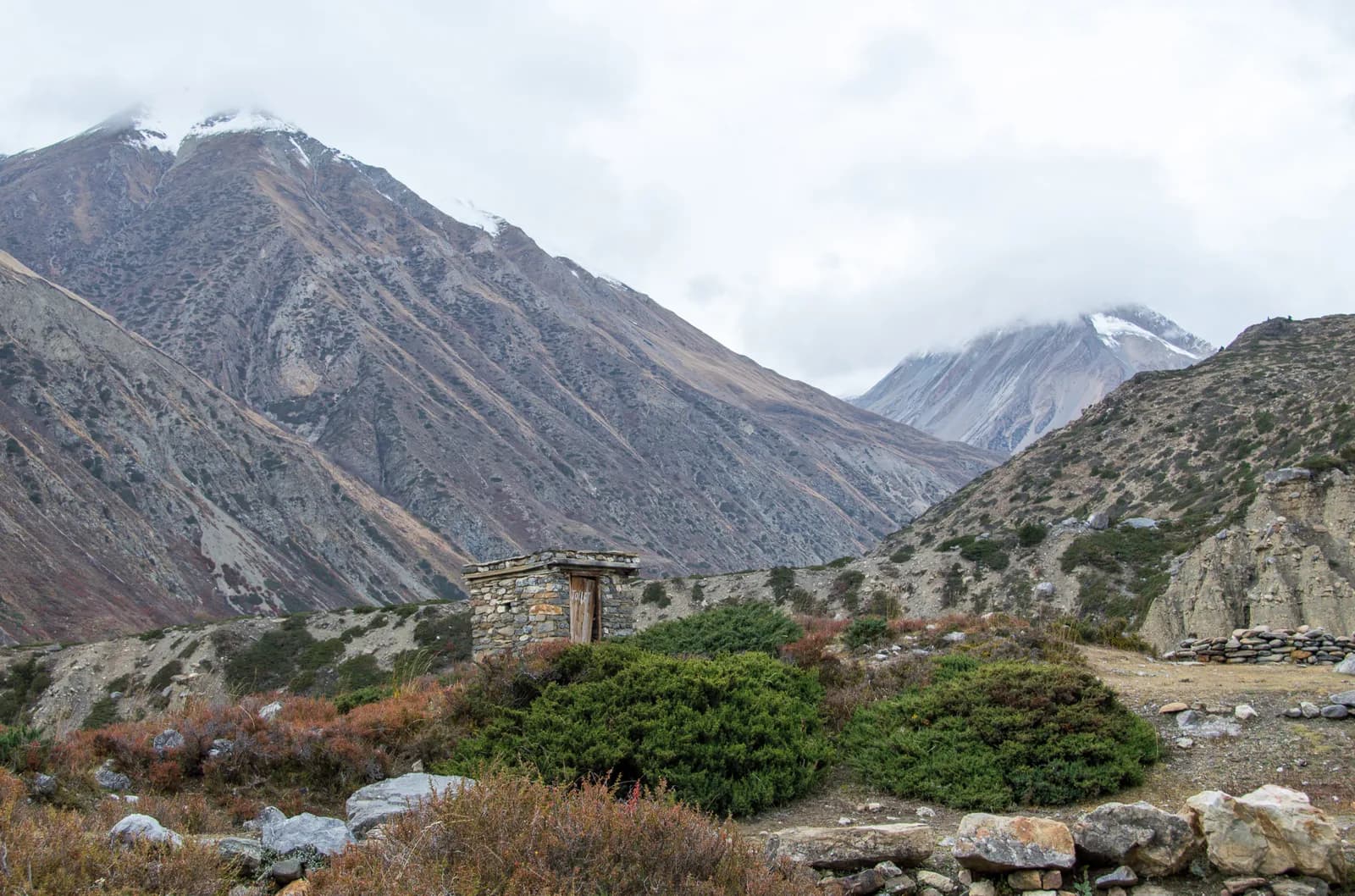
Expect no lock, a bare light bulb or none and sometimes a long queue at peak times. In freezing weather, going outside at night is a real effort. The small stone toilet hut beside the trail in the photograph above is typical of what you find in a high, dry valley: a shelter, a pit and a view.
The squat is easier than it looks, and practice at home helps. Wear loose trousers, keep your daypack off the floor and hold your headtorch in your mouth or hang it from a hook. Do not lean on walls that may be damp.
Toilet paper and waste
Carry a roll of toilet paper in a waterproof bag, because many lodges do not provide it. Use only as much as you need. Do not flush paper unless the lodge says so; many systems block. Put used paper in the bin if there is one. If there is none, put it in a small sealed bag and take it to the next village. Hand sanitiser and wet wipes are useful, but wipes are not biodegradable; carry them out rather than putting them in the toilet or the bin if it will be burned.
Sanitary products, wipes, nappies and other non-biodegradable waste should be carried out whenever possible. Mountain villages have no waste collection, and bins are often burned or dumped. Our guide to supporting local businesses covers reducing plastic and waste.
Between villages
On most routes you will be within an hour or two of a lodge, but sometimes you need to go on the trail. The standard Leave No Trace approach is to:
- Walk well away from the trail, campsites and any water source, at least 60 m (about 200 feet) from streams and lakes.
- Choose a spot out of sight, on soil rather than rock.
- Dig a small hole 15 to 20 cm deep, and cover it afterwards with soil.
- Pack out toilet paper and wipes in a sealed bag.
Do not go beside a path, near a stream, in a water channel or close to a shrine or a mani wall. Water that people downstream use for drinking comes from those streams. Campaigns against open defecation have been run in Nepal, such as the sign in the photographs above that reads that open defecation is a social crime and urges a toilet in every household, and a respectful visitor should follow local norms and use a toilet where there is one.
Washing your hands
Handwashing is the single most effective way to avoid an upset stomach. Wash your hands with soap and water, or use an alcohol-based sanitiser, after the toilet and before every meal. Lodges have a tap, a bucket or a basin, and some have soap; carry a small bar or a bottle of liquid soap. The photograph of a public water tap in Bumburi above is the sort of simple standpipe you will find on lower trail sections. In winter, taps freeze and water is scarce, so a small bottle of sanitiser matters.
Keep your nails short, avoid touching your face and do not share cups or utensils. Wash your cup or bottle with boiled water if you have it.
Water and food
The NHS Fit for Travel page for Nepal and the CDC's travel health information give the same standard precautions: drink only boiled, filtered or chemically treated water, avoid ice, eat hot, freshly cooked food and be cautious with salads and unpeeled fruit. Lodges sell boiled or filtered water and hot water in flasks, which is cheaper than bottled water and creates less plastic waste. A filter bottle, purification tablets or a UV pen are alternatives; each has limits, so read the instructions and use one reliably.
Our dal bhat and the teahouse menu says more on what to order.
Periods and menstrual hygiene
Carry your own menstrual products, a small waste bag and wipes. Supplies are scarce and expensive above the lower trail, and disposal options are limited. A menstrual cup, reusable pads or period underwear reduce waste and what you carry, but practise with them before you go and plan how you will clean them (boiled water, a private place). If you use disposable products, carry them out in a sealed bag. Do not put sanitary products in lodge toilets, which are not designed for them.
Some Hindu households observe restrictions around menstruation, and our guide to women in the mountains explains the context. If you are uncomfortable, speak to a female guide or ask the woman who runs the lodge for advice.
Stomach trouble and what to do
Travellers' diarrhoea is common. Most cases are mild and settle in a day or two. Drink plenty of fluid, ideally with oral rehydration salts, eat plain food and rest. Tell your guide, because dehydration at altitude is dangerous and diarrhoea can be confused with altitude symptoms. If you have a high fever, blood in your stool, severe pain or cannot keep fluids down, or if symptoms last more than a few days, arrange to descend and see a clinic. The Himalayan Rescue Association aid posts and health posts on some routes can help; our guide to HRA clinics says where they are. Carry oral rehydration salts, and discuss any medication with a doctor before you travel.
A short hygiene kit
- Toilet paper in a waterproof bag, plus a spare sealed bag for used paper.
- Hand sanitiser and a small bar of soap.
- Wet wipes (carry the used ones out).
- Oral rehydration salts.
- Water treatment: filter, tablets or UV pen.
- Menstrual products and a waste bag.
- A headtorch and a small trowel if you expect to go between villages.
- A microfibre towel.
Respect for villages
Villages along trekking routes depend on springs and streams for water, and their sanitation is under strain in the busy seasons. Be careful with water, do not wash in or near drinking sources, and take waste out. Do not use a stream above a village for washing. Be patient with queues and basic facilities. A smile and a thank-you to the lodge owner for the facilities go a long way.
Read more in the first-time trekking guide, rooms, bathrooms and bedding and the first-timers hub. For routes with a gentle start, see the Langtang Valley itinerary, the Poon Hill itinerary and the Everest Base Camp partner page.
यो ट्रेकको योजना बनाउनुहोस्
- Everest (Khumbu) क्षेत्र गाइड
- Annapurna क्षेत्र गाइड
- Langtang क्षेत्र गाइड
- Trekking partner for Poon Hill Trek (Ghorepani)
- Find someone to trek Langtang Valley Trek with
- Trekking partner for Everest Base Camp Trek
- Poon Hill Trek (Ghorepani) यात्रा तालिका
- Langtang Valley Trek यात्रा तालिका
- Everest Base Camp Trek यात्रा तालिका