Local drinks on the trail: chiya, butter tea, raksi and tongba
What you will be offered to drink on Nepal treks, from sweet milk tea and salted butter tea to home-distilled raksi and tongba served in a wooden pot, with etiquette and caution.
You will be offered something to drink in every lodge, and what you are offered changes with the region and the altitude. Most of it is tea: sweet milk tea in the hills, black tea with lemon at altitude, salted butter tea in the Tibetan Buddhist valleys. The drinks with more to say for themselves are tongba, a warm fermented-millet drink you sip through a straw, and raksi, a clear spirit that is often distilled at home. This guide explains each, how to drink it, when to say no and how alcohol and altitude interact, so you can try the local drinks with a clear head.
Kanchenjunga Circuit का खुला ट्रिपहरू
साथी खोजिरहेका ट्रेकरहरूले पोस्ट गरेका वास्तविक ट्रिपहरू।
Tea first: chiya, black tea and lemon tea
Nepali chiya is milk tea boiled with sugar, and often cardamom, ginger or other spices, served in a small glass. It is the national drink and the first thing you are handed in many homes. Lodges also sell black tea, lemon tea, ginger tea and hot water by the flask. Hot lemon with ginger and honey is the standard trekker's comfort drink above 3,000 m, and flasks of hot water are the cheapest way to stay hydrated: a flask of hot water is usually much cheaper than a bottle of mineral water, and it avoids plastic.
Tea is boiled, which makes it safe to drink. That is the main practical point: tea, coffee and anything made from boiled water carry far less risk than raw salads or cold juice. If you are sensitive to caffeine, ask for herbal options such as mint tea or ginger tea, which most lodges offer. Prices rise with altitude, which our teahouse prices guide explains.
Butter tea in the high valleys
In Khumbu, Langtang, Manang, Mustang and Dolpo you will meet butter tea, known in Tibetan as po cha. It is made from strong tea, salt and butter, traditionally from yak or dri milk, churned until it blends into a thin, savoury liquid. If you expect sweet tea, it can be a shock; think of a salted broth. It is meant to supply fat and salt in a cold, dry climate, and families drink many cups a day.
If you are offered a cup in a home or monastery, accept it with both hands and take a sip. Hosts usually refill the cup after each sip, so if you do not want more, leave the cup full. This is a gentle way to refuse without offending anyone. You do not have to finish it. In the Langtang Valley, a cup at a lodge near Kyanjin Gompa goes well with a slice of the local yak cheese, which we cover in our piece on regional specialties.
Tongba: a warm millet drink with a straw
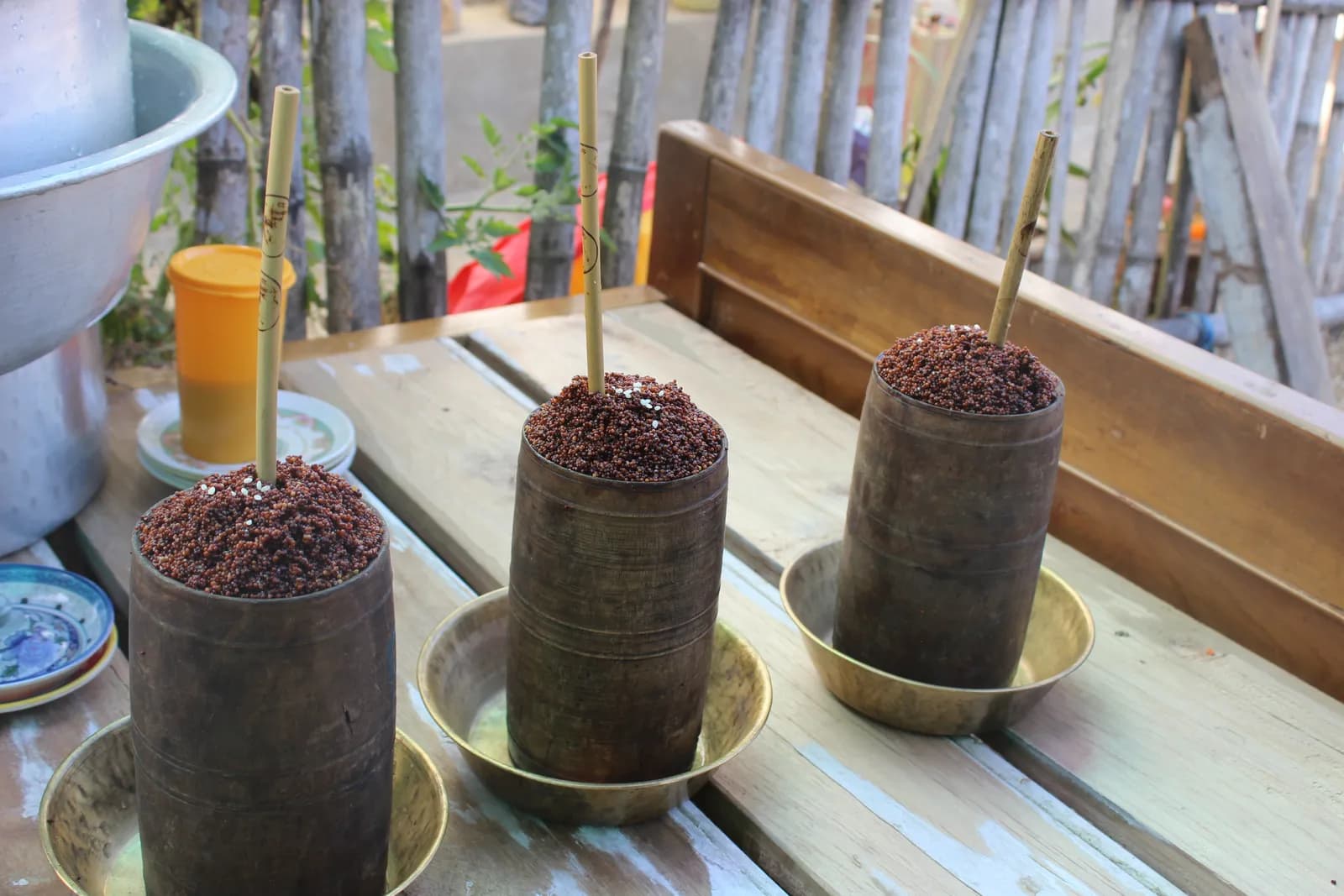
Tongba (sometimes spelled tumba) is made from fermented millet. The millet grains are kept in a wooden or metal vessel, hot water is poured over them, and you sip the liquid through a thin bamboo or metal straw, which has a filter at the bottom so you do not swallow grains. After a few minutes you refill the water, usually three or four times, and the drink gets weaker each time. It is mildly alcoholic, warm and slightly sour, and it comes with a small spoon for eating the soaked millet at the end.
Tongba is closely associated with the Limbu people, and with the Rai, in eastern Nepal. The Kanchenjunga region, in Taplejung district, is its heartland, and on the Kanchenjunga circuit you will be offered it in villages where it is simply part of hospitality. You will also find tongba on menus in Kathmandu and Pokhara, and in some teahouses elsewhere. Order a single vessel and see how you feel; one is a gentle introduction. Ask the price before you order, as it varies by lodge and region. Do not pass the vessel around to friends; the straw is personal.
Tongba is usually served as a set: the vessel, the straw and a flask of hot water. Keep the water topped up and stop when it runs clear and flavourless. This is a drink for the evening in a warm room, not for the walk.
Raksi: the village spirit
Raksi is a clear spirit distilled from millet, rice or sometimes maize, and often made at home in a copper or aluminium still. In Newar communities it is also called aila, and it is used in rituals and festivals. It is fiery, sometimes smoky and sometimes sweet, and it varies a great deal from household to household. In many villages it is simply part of hospitality: a glass offered to a guest, a drink at a festival or after a day in the fields.
The honest caution is that much raksi has no label. You cannot tell how strong it is, whether it has been cleanly distilled or whether anything has been added. Drink small amounts, buy from a lodge or bottle you trust, and refuse if it looks cloudy or smells of chemicals. Do not take a bottle you cannot identify. If you want to try it, one small glass in the evening after you are well acclimatised and have eaten is plenty. The pots in the photo are the sort of simple still used in a village yard.
Alcohol and altitude
On your first nights above 3,000 m, alcohol is a poor choice. It dehydrates you, disturbs sleep and can mask the early signs of altitude sickness such as headache and nausea. Trekkers who drink in the evening often feel worse the next morning and cannot tell whether it is the drink or the altitude. The CDC's Yellow Book guidance on high-altitude travel sets out how to ascend gradually and recognise symptoms, and our altitude sickness basics and acclimatisation schedule walk through the rules. The practical rule is to keep alcohol for rest days or the lower end of the trek, and never to drink when you have symptoms.
Alcohol also affects judgement on narrow trails and in cold weather. A drink does not warm you; it makes you feel warmer while you lose heat. Do not drink before walking, and do not drink if you are sharing a room with someone who is unwell.
Other drinks you will meet
- Chhaang: a thick, milky fermented barley or rice drink, found in Sherpa and Tibetan communities, usually mild and sweet-sour.
- Hot chocolate and coffee: widely available, sometimes instant, and often more expensive than tea.
- Apple cider and brandy: from orchards in Marpha and other apple-growing villages.
- Bottled water and soft drinks: priced higher at altitude because everything is carried up by porter or mule.
- Hot water: the cheapest and most useful thing to order.
How to accept and refuse
Hospitality in Nepal is real, and you will be pressed to eat and drink. Accept a first cup of tea or tongba with both hands or your right hand, with your left hand touching your right forearm as a mark of respect. Take a sip, say thank you, and you have done your duty. If you do not want alcohol, tell your host that you are tired, that you are walking early tomorrow or that you need to stay clear for altitude, and ask for tea instead. No one expects you to explain more. If your guide is with you, let them help you decline gracefully.
If you are travelling with a partner, agree beforehand how you will handle offers, so one of you is not left to explain.
A short guide to what to order
| Drink | Where you see it | Notes |
|---|---|---|
| Chiya | Everywhere | Sweet milk tea, boiled |
| Butter tea | Khumbu, Langtang, Manang, Mustang | Salty, savoury, takes getting used to |
| Lemon, ginger, honey | Every lodge | The standard comfort drink |
| Tongba | East Nepal, Kathmandu, some lodges | Warm millet, sipped through a straw |
| Raksi | Villages and festivals | Often home-distilled; small sips |
| Hot water | Every lodge | Cheapest way to stay hydrated |
For more on what to eat alongside, see our guide to dal bhat and the teahouse menu and the wider culture hub. If you are planning the Kanchenjunga or Langtang routes, use the Kanchenjunga partner page or the Langtang Valley page to find walking companions, and read how to behave on the trail before you go.