Donations and school visits done responsibly on Nepal treks
How to help in trail villages without teaching children to beg, disrupting classes or funding harm, with practical rules for gifts, school visits, orphanages and money.
If you want to help in the villages you walk through, the most useful thing is to spend money locally and give through proper channels rather than handing things to children on the path. That means no sweets, pens or cash to kids, no drop-in visits to classrooms, no orphanage tours, and any larger gift made through a school committee or registered organisation after you ask what is needed. This guide explains why, what works instead, and how to arrange a school visit that does not disrupt anyone.
Poon Hill Trek (Ghorepani) का खुला ट्रिपहरू
साथी खोजिरहेका ट्रेकरहरूले पोस्ट गरेका वास्तविक ट्रिपहरू।

Why handing things out causes harm
It feels kind to give a child a sweet or a pen. In practice, the repeated experience of trekkers handing things out teaches children that foreigners are a source of gifts, and in some villages along busy trails children now ask for sweets, pens or money as you pass. This pulls them away from school and chores, and sugary sweets are bad for teeth in places where dentists are days away. Teachers and parents often say the same thing: please do not hand things to the children.
A related problem is photography. Taking photographs of children without their parents' knowledge, offering sweets in exchange for pictures or posting identifiable faces online is intrusive, and it is not a favour. Ask first, accept a no, and do not give anything in return for a photograph.
How to give in a way that helps
The most effective help is almost always indirect and local.
- Spend in the village. Stay in family-run lodges, eat dal bhat, buy from shops and handicraft stalls, and tip your guide and porters. In most trail villages the money from trekkers is the main cash income, and spending it locally builds more than any single gift.
- Ask what is needed. If you want to give to a school, ask your guide to introduce you to the head teacher or the school management committee, and ask what the school needs. It may be books, a water filter, a roof repair, a teacher's salary or nothing at all.
- Give through a committee or organisation. Make donations to the school committee or a registered local organisation, ask for a receipt and ask for a short written report of how the money was used. Avoid giving cash to an individual you have just met.
- Buy locally. If the school needs supplies, buy them in Kathmandu, Pokhara or the district market, rather than carrying them from home. This supports local shops and avoids loading porters with extra weight.
- Follow up. If you decide to support a project, keep in touch and ask how it is going. A one-off gift that vanishes helps less than a small steady contribution.
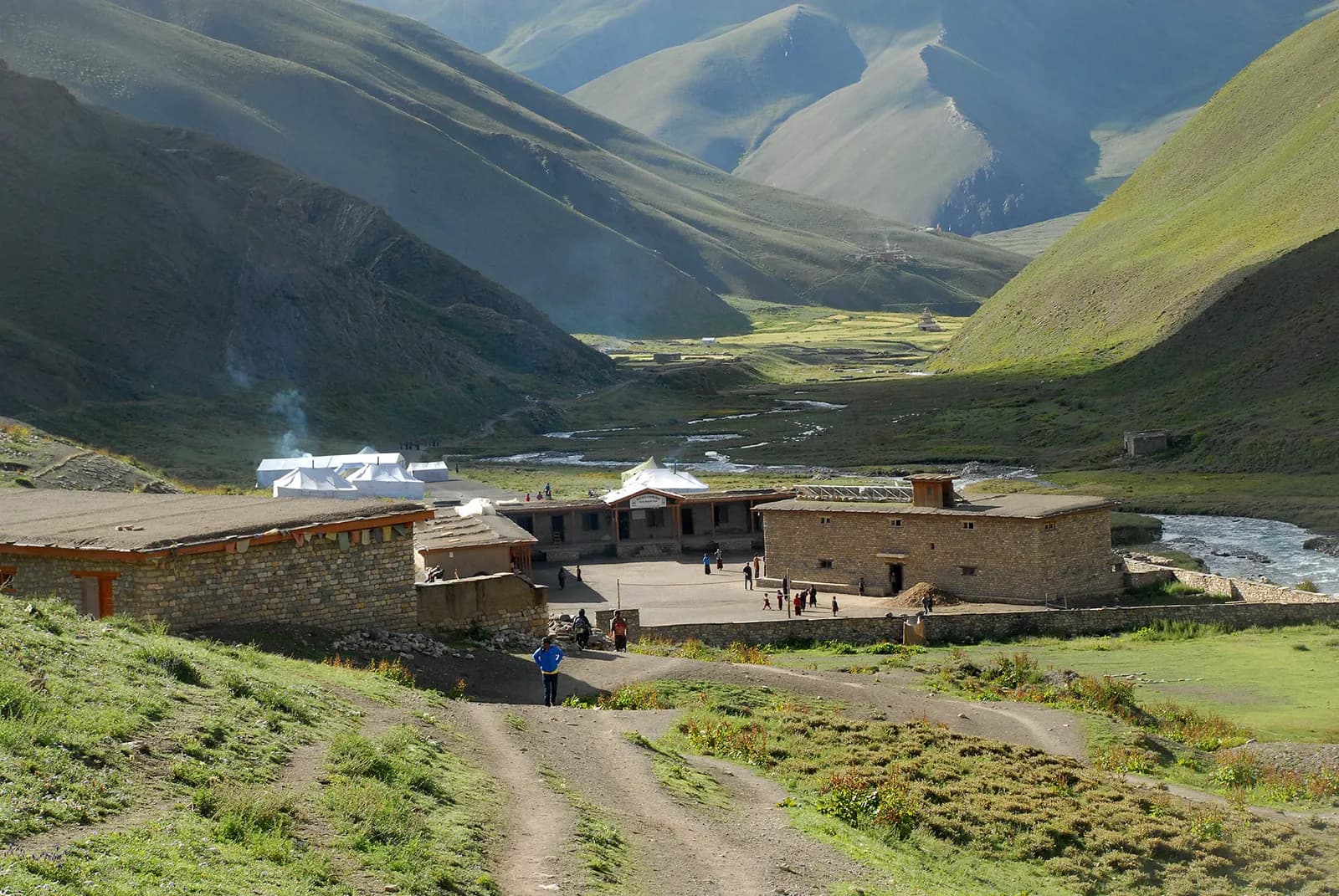
The Crystal Mountain School at Dho Tarap in the cover photo is a reminder that even remote valleys have schools with real running costs. A visitor who wants to help there should ask the school what it needs, not arrive with a bag of pens.
Visiting a school on the trail
Many trails pass schools, and children are often curious about visitors. A visit can be a pleasant exchange when it is invited and brief. Treat it as you would visiting a place of work.
- Ask first. Ask your guide to arrange the visit with the head teacher, ideally the day before.
- Choose your time. Visit outside lessons or at a time the school proposes, and never walk into a classroom unannounced.
- Keep it short. Twenty minutes is plenty. Bring a few photographs of your home or a map to show, and be ready to listen.
- No gifts to children. If you want to leave something, give it to the head teacher for the school as a whole.
- Photographs. Ask the head teacher before taking pictures, and do not post identifiable photographs of children online.
- Respect the teacher's time. Do not offer to teach a class unless the teacher invites you, and do not interrupt lessons.
On the Poon Hill trek and in the Langtang Valley, village schools are common, and your guide will know which are open to visitors and which are not. If the school is in session, walk past respectfully.
Orphanages and volunteering
Visiting an orphanage is not a good way to help. Child-protection groups report that many children living in tourist-facing orphanages in Nepal have at least one living parent, and the demand created by visitors and volunteers can encourage families and recruiters to place children in institutions. Child-protection organisations advise against visiting or donating to orphanages, and against short-term volunteering with children. If you want to volunteer, look for a programme that is run by a registered local organisation, uses your skills for a stated need, asks for a background check and has a long enough placement to be useful. The broader debate about short-term volunteer travel is summarised in sources such as the Wikipedia article on voluntourism, and our own advice is simple: if a programme lets you meet children with no vetting, walk away.
Giving after the earthquake and after disasters
After the April 2015 earthquake, many trekkers wanted to help, and the usual advice from relief organisations is that money given to registered local groups, school committees and rebuilding projects with transparent accounts works better than goods shipped from abroad. The same applies now. If a village in Langtang or elsewhere is rebuilding, ask your guide which groups are active and whether they publish accounts, and give through them. Our piece on earthquake recovery and community tourism goes into this in more detail.
Porters, guides and fair pay
Giving responsibly begins with how you hire. A porter who is paid fairly, equipped with proper boots and warm clothing, insured and given a safe load does more good than a gift at the end of the trek. The International Porter Protection Group sets out standards for porter welfare, including a maximum load and proper shelter, and responsible agencies follow them. Ask your agency in advance how porters are paid, insured and equipped, and tip at the end, agreeing the amount with your group beforehand. Our guide to splitting guide and porter costs shows how to share tips fairly.
What to carry and what to leave behind
If you want to bring something small to give, bring things that are useful and shared: a few pencils or notebooks given to a teacher, a first-aid kit donated to a lodge, a donation to a local school fund. Do not bring bulk. A few kilograms of school supplies are more weight for a porter than they seem, and they may not be what the school needs. Do not bring old clothes unless you have been asked, as many villages receive more than they can use.
Do not give medicine to villagers, even when asked. You are not equipped to diagnose, and the wrong medicine can do harm. If someone is ill and you can help, tell your guide and point them to the nearest health post. The Himalayan Rescue Association clinics are described in our guide to HRA clinics at Manang and Pheriche.
A short checklist
- Do not give sweets, pens or cash to children.
- Spend in family lodges and local shops; tip guides and porters.
- Ask the head teacher what the school needs before you give.
- Give through a school committee or registered organisation, with a receipt.
- Visit schools only by invitation, briefly and outside lessons.
- Skip orphanage visits and short-term volunteering with children.
- Choose an agency that pays and protects porters.
More on the same theme is in our guides to supporting local businesses while trekking and trail etiquette, and in the culture and customs hub. If you are planning a first trek, the Langtang Valley partner page is a good place to look for companions who share your approach.