Dolpo permits: Upper and Lower Dolpo
Which permits Lower Dolpo and Upper Dolpo need: the national park permit, the Restricted Area Permit, checkposts at Juphal and Sulighat, the agency and guide rules and where to confirm fees.

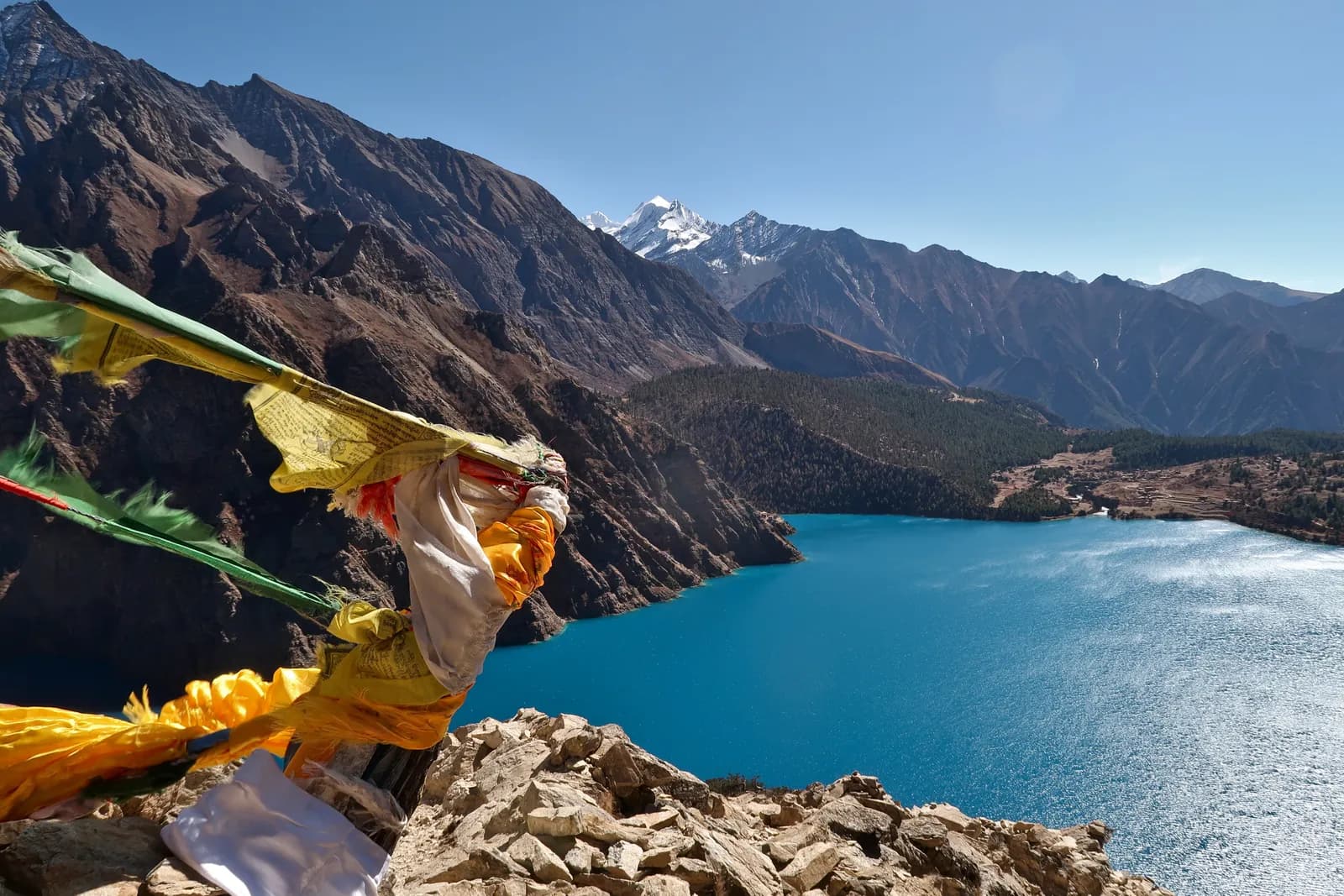
Dolpo has two permit systems. Lower Dolpo and Phoksundo Lake need the Shey Phoksundo National Park entry permit, which is bought at the Juphal or Sulighat checkpoint, although the agency usually handles it. Upper Dolpo, beyond Phoksundo, is a restricted area: you need a Restricted Area Permit from the Department of Immigration through a registered trekking agency, the national park permit, a TIMS card where required, and a licensed guide who stays with you. The restricted-area permit is charged by the number of days spent in the area. These are the positions recorded on the Dolpo region page, the Phoksundo Lake route and the Upper Dolpo route.
This article explains what each document does and what it costs as of October 2026. The fees below were checked on 18 October 2026 against the Nepal Tourism Board pages for park entry and restricted-area trekking permits; the Department of Immigration's own site would not load securely for us, so confirm the final figure and the days charged with your agency. Our permits page keeps the current table.
Trip terbuka di Phoksundo Lake Trek (Lower Dolpo)
Trip sebenar yang disiarkan oleh pendaki yang mencari rakan.
Lower Dolpo: the national park permit
Shey Phoksundo National Park, established in 1984, is Nepal's largest national park at 3,555 km2. Anyone entering needs its entry permit. For Phoksundo the checkpoints are Juphal and Sulighat, the park entrance on the trail from Dunai to Chhepka. Fees for foreigners, SAARC nationals and Nepalis differ. Ask the agency to show the park fee as a separate line, and check it with the park office or the Department of National Parks and Wildlife Conservation. The park entry permit is NPR 3,000 per foreigner per entry as of October 2026 (SAARC nationals NPR 1,500, children under 10 free). A TIMS card is listed as "where required"; the Nepal Tourism Board lists it at NPR 2,000 for foreigners (SAARC nationals NPR 1,000), plus any agency service charge, so ask the agency whether it is needed and what it costs.
Upper Dolpo: the Restricted Area Permit
Restricted areas are places where Nepal controls independent foreign access. In Upper Dolpo the permit is issued by the Department of Immigration, applied for by a registered trekking agency, and charged by the number of days you spend inside the area. That charging method has two consequences. First, a longer itinerary costs more in permit fees, so the extra rest and spare days you want for safety matter to the bill. Second, the number of days you declare should match your plan, so ask the agency how it counts days and what happens if a flight delay pushes you past the permit dates.
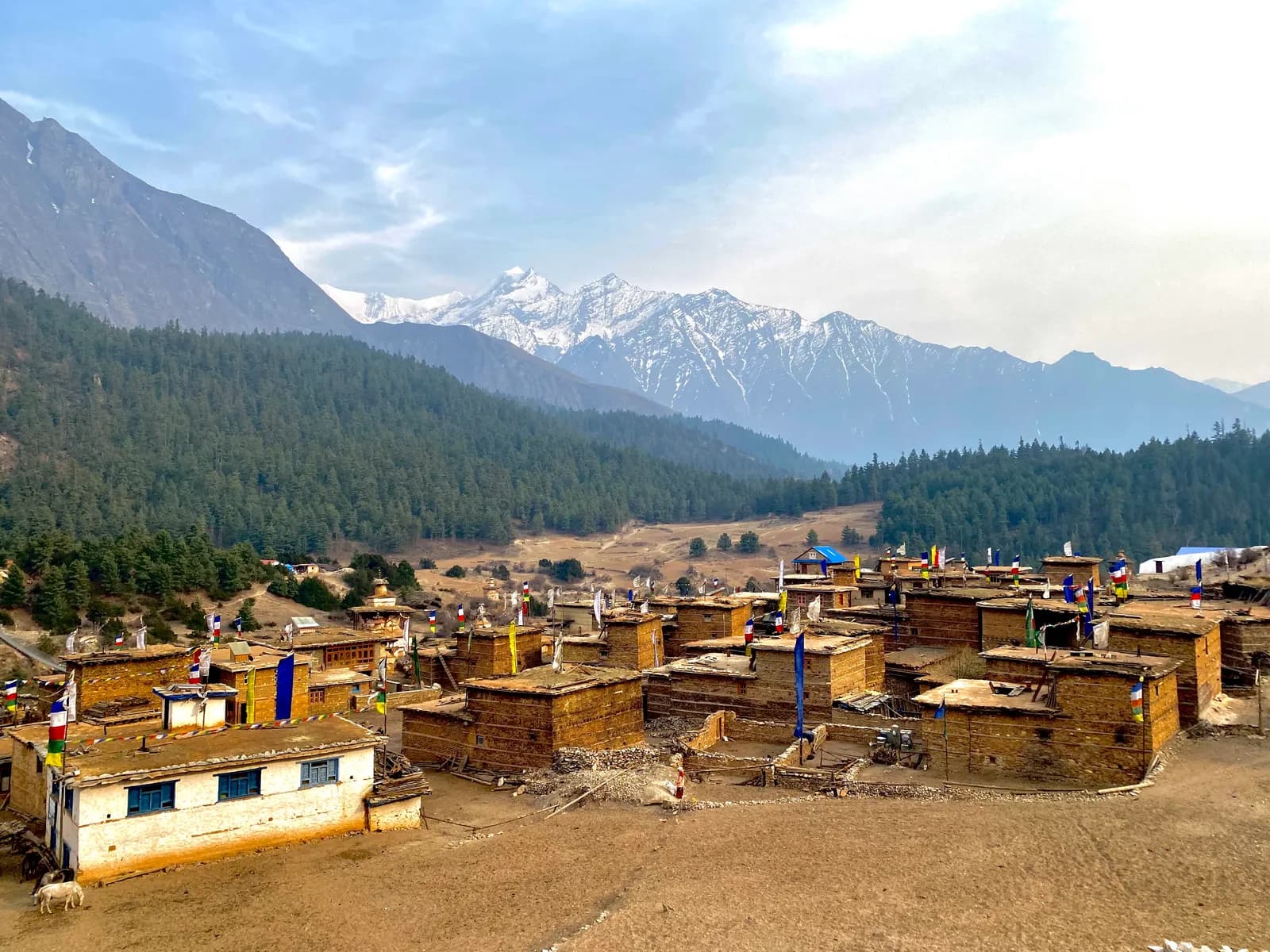
The route plan assumes camping, a cook and a kitchen tent for most nights in Upper Dolpo, with homestays at Saldang and Namgung. The agency has to handle the camping side too, because lodges operate only at Dunai, Chhepka and Ringmo.
The guide rule
In restricted areas a licensed guide is compulsory. For Lower Dolpo, which is a national park but not a restricted area, the Nepal Tourism Board April 2023 rule requires foreign trekkers to use a licensed guide in national parks and conservation areas, and 2026 operator reports say checkpoints enforce it in Annapurna (ACAP), Langtang (the strictest) and most other parks, but not in Khumbu, where the municipality opted out (checked 19 October 2026). Our guide rule explainer and the guide rule by region summarise what is known. For Lower Dolpo, the legal position is the less clear one. For Upper Dolpo there is no doubt. In both cases the practical reasons are strong: in Upper Dolpo there are no hotels in most villages, trails are poorly marked and the Kang La is a long, exposed day, so a guide and camping arrangements are essential. If you are comparing agencies, ask to see the guide's licence card, as covered in the explainer.
Checkposts
The Upper Dolpo route page names check posts at Juphal and Sulighat. Expect your permits to be inspected at both. Carry your passport and several copies of every permit, and keep a set in your day bag, not only with the porters, who may be hours behind you on the trail.
What changed in 2026, and what we could not confirm
A Kantipur article dated 6 May 2026 is headlined as covering restrictions on trekking for foreigners in controlled areas of 13 districts, with permits mandatory. The text we could read did not name the districts or the effective date, and the English page was machine translated, so we cannot say whether it touches Dolpa. Reports of a March 2026 notice about Kanchenjunga also say individuals may now apply for restricted-area permits, which suggests that the group-size rules may be shifting, but we have no official text for Dolpo. If your agency states a minimum group size or says individuals are welcome, ask which notice it relies on. Follow the rule, because Upper Dolpo needs a licensed guide through a registered agency whatever the group size.
Fees: what Dolpo costs, as of October 2026
For Upper Dolpo expect these lines on a quote: Restricted Area Permit (per day in the area), park entry, possibly TIMS, guide, cook, porters or animals, camping equipment, food, and the two Nepalgunj flights and two Juphal flights. The region page says permits, food, camping gear and flights make it one of the more expensive treks in Nepal. The permit line is the big one. At USD 50 per day, the 16 days our Upper Dolpo route plan counts come to USD 800 (about NPR 107,000), plus NPR 3,000 for the park: roughly NPR 110,000 per person before the guide, cook, camping gear or flights. The flights are Kathmandu to Nepalgunj at about USD 100 to 140 each way plus the Nepalgunj to Juphal leg, whose fare we could not find, and guides are quoted at NPR 4,000 to 6,000 a day in this region. Because the permit is per day, a group of two or four shares the guide, cook and camping costs but each person pays their own permit lines. Ask for each line separately so you can see which scale with group size. Our cost guide explains the general pattern, and our sharing costs example shows the arithmetic with invented numbers. The "What it costs" section of the route page adds these lines up for one, two and four people.
Flights, spare days and permit days
The permit logic in Dolpo collides with the flight logic. The route plan says flights to Juphal depend on weather and are often delayed, and recommends two spare days. How your agency counts the first day (from the flight or from entering the area) is something to ask. A delayed departure can leave you at Juphal with a permit that is nearly used up and a guide and cook still on the payroll. Ask the agency in advance who pays for extra days and whether the permit period can be extended. We have not found an official statement on extensions, so we cannot say it is possible.
Questions to ask the agency
- Which permit lines are in the price and which do I pay on the trail?
- How many days will you declare for the restricted area, and do they include my rest days?
- Who is the guide, what is the licence number, and what happens if the guide falls ill on the Kang La?
- Who carries the camping gear and food, how many porters or animals will there be, and are they insured and equipped for altitude?
- What is the plan if the Kang La is snowbound, and does it change the permit days?
- Are you aware of any new rule for controlled areas in Dolpa since May 2026?
A good agency answers these in writing and without irritation. If it will not, that tells you something about how it will behave when a pass is closed.
Booking sequence
- Decide Lower or Upper Dolpo, and the route (out and back over the Kang La, or the full circuit to Dho Tarap).
- Choose a registered agency with Dolpo experience and ask for written permit lists and the guide's name and licence number.
- Send passport scans and dates early.
- Confirm the flights and how many spare days are built in. Our getting to Dolpo guide explains why this matters.
- Ask what happens to permit days if the Juphal flight is cancelled.
- Check your insurance covers rescue above 5,000 m and helicopter evacuation.
Comparison with other restricted treks
The model is the same as on Manaslu and Upper Mustang: an agency applies, a guide is compulsory and fees are charged by area and days. Kanchenjunga follows it too, as the Kanchenjunga permits article explains. The difference in Dolpo is the heavy reliance on camping and flights. For the national picture see Nepal trekking permits explained.
Rancang trek ini
Foto
Soalan lazim
Sumber
- Department of Immigration, Nepal
- Nepal Tourism Board: Trekking Permit (restricted areas)
- Nepal Tourism Board: Park Entry Fees
- Department of National Parks and Wildlife Conservation, Nepal
- Shey Phoksundo National Park (Wikipedia)
- Restrictions on trekking for foreigners in controlled areas of 13 districts (Kantipur, 6 May 2026)