Camping trek gear for Kanchenjunga and Dolpo
What to bring and what to ask your agency to supply on a camping trek in Kanchenjunga, Upper Dolpo or Dhaulagiri: sleeping bag and mat, clothing for minus 15 C, gaiters, a day bag for when porters are hours behind, and how the crew, cook and tents work.

On a camping trek in Kanchenjunga, Upper Dolpo or Dhaulagiri, the agency normally provides the tents, kitchen, cook and crew, and you provide the things that are personal: a sleeping bag warm enough for the coldest camp, clothing for minus 15 degrees, boots that are already broken in, and a day bag you never let out of your sight. The biggest mistake is to assume the agency has you covered: ask for a written list of what it supplies, check the quality of the crew's own kit, and carry anything you cannot do without in your day bag. This guide covers the equipment, the questions to ask and how camping changes the packing list we use for teahouse routes.
The general checklist lives in the Nepal trek packing list. Here we assume you have read it and concentrate on what changes when you sleep in a tent at 4,000 m or higher, using the route and region pages for Kanchenjunga, Dolpo and Dhaulagiri.
Kanchenjunga Circuit의 모집 중인 여행
파트너를 찾는 트레커들이 올린 실제 여행입니다.
Why these routes are camping routes
Camping is not a style choice on these treks; it is how the logistics work.
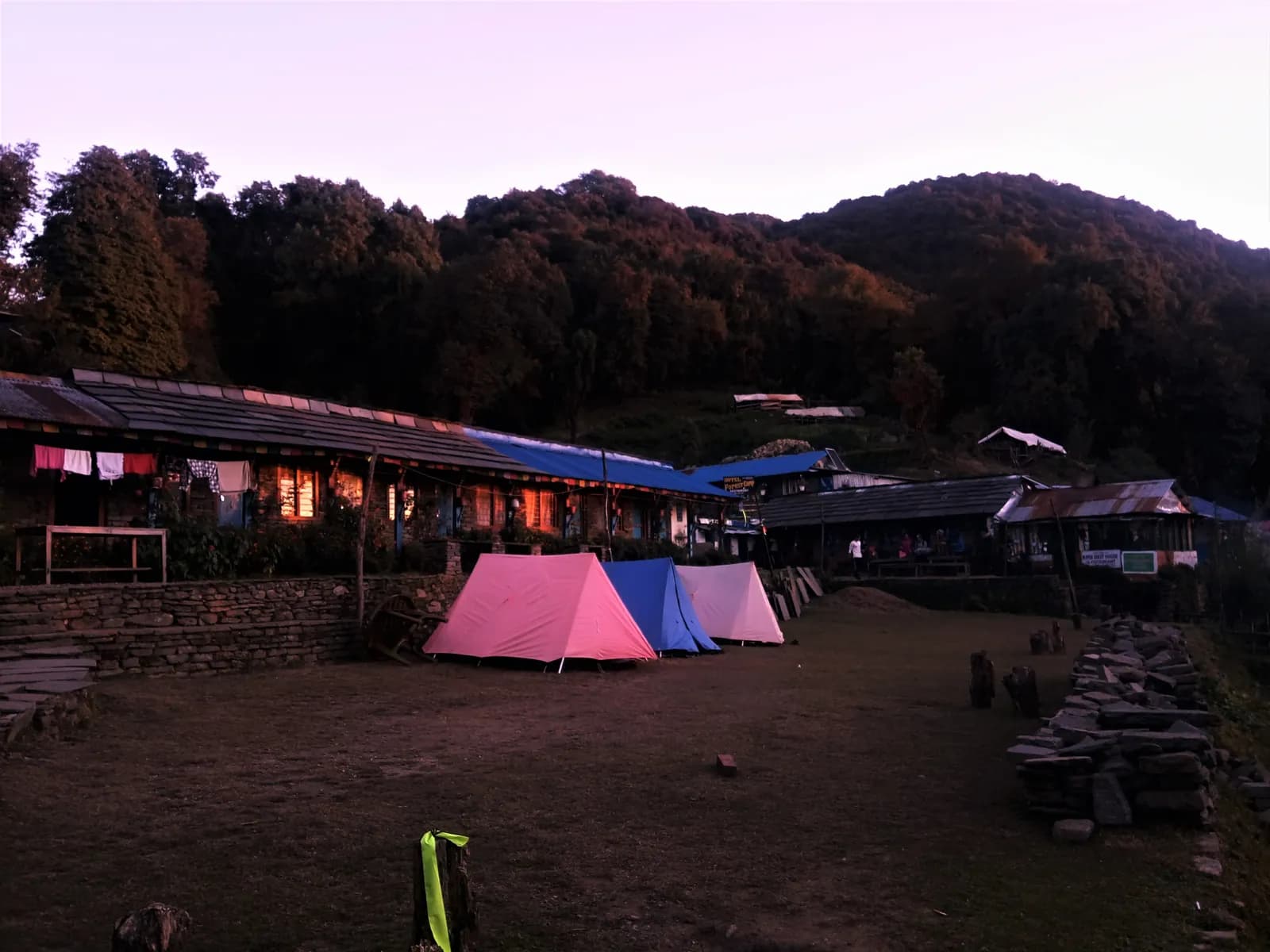
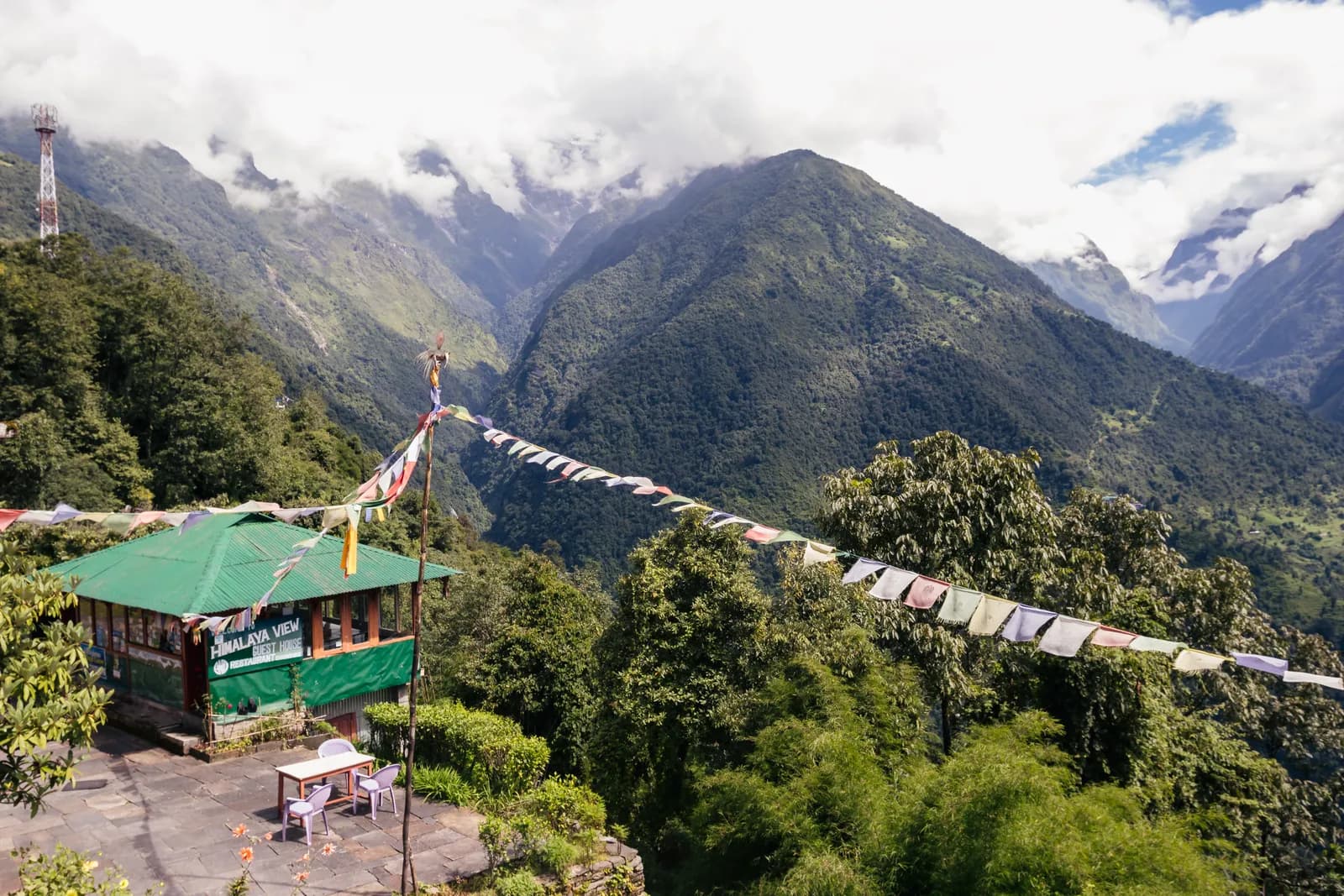
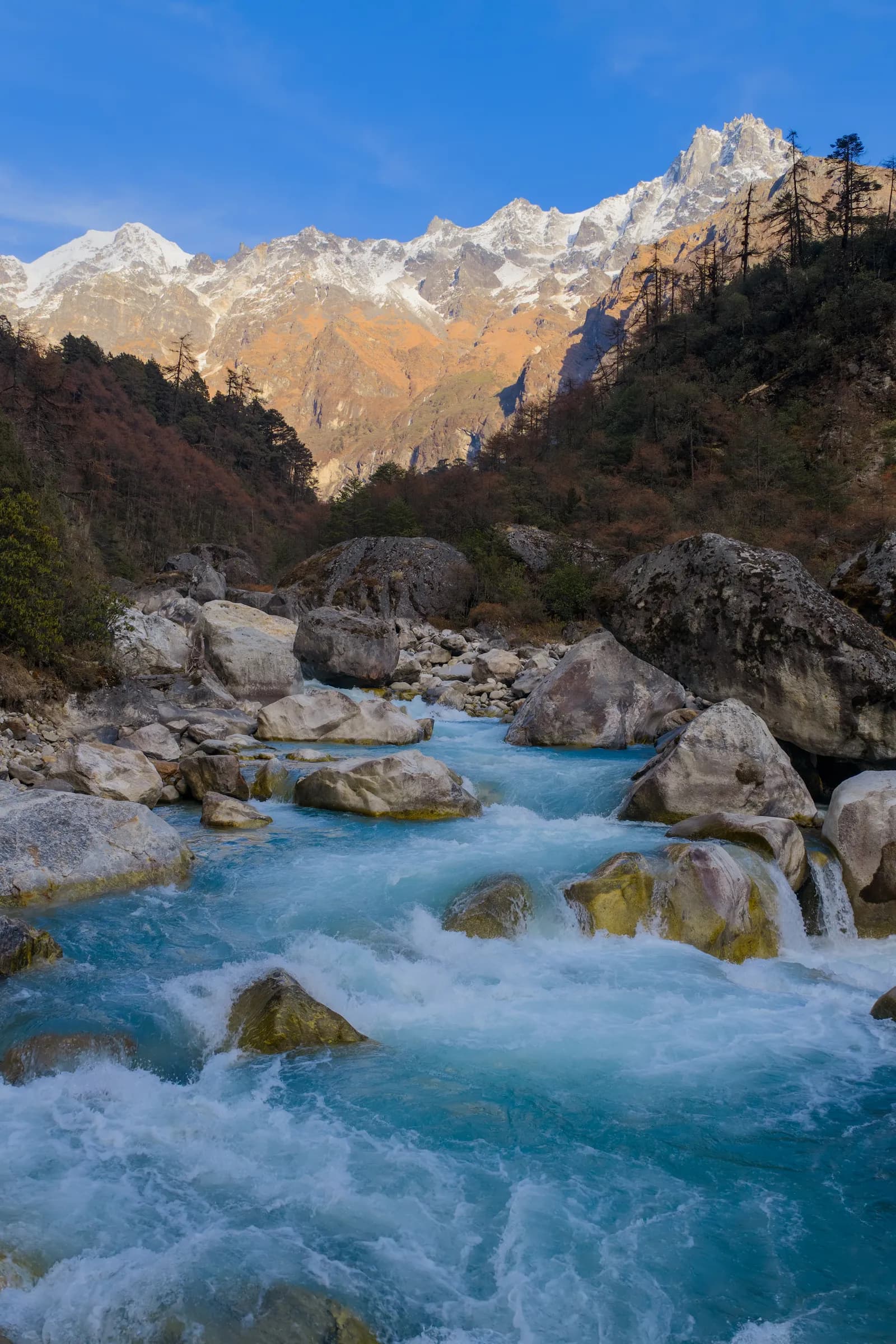
- Kanchenjunga. The region page says lodges at Sekathum, Amjilosa, Gyabla, Ghunsa and Kambachen serve dal bhat, noodles, eggs and tea in simple rooms, while Lhonak, Selele, Tseram and Ramche have small seasonal lodges or camps with basic facilities and short menus. Many agencies carry tents and a cook for the passes, and in the shoulder seasons you should not count on a bed at every stop. The Kanchenjunga Circuit runs 21 days, reaches Pangpema at about 5,140 m and crosses three passes between about 4,640 and 4,709 m according to OpenStreetMap.
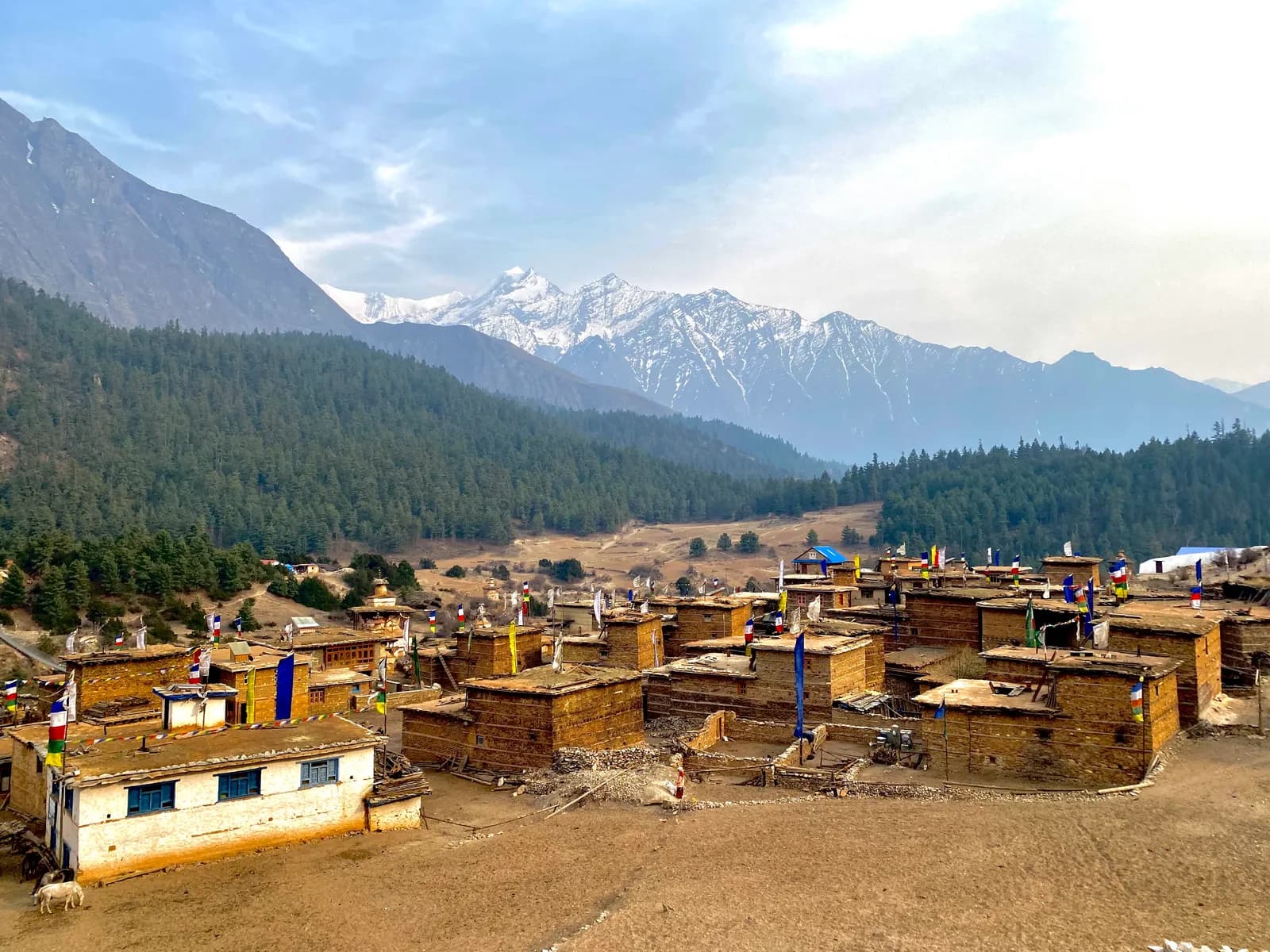
- Upper Dolpo. Our Dolpo region page says there are no hotels in most villages and trails are poorly marked, so a guide and camping gear or homestay arrangements are essential. Only a few families host guests, and most itineraries use tents and a cook, so food is carried in and costs more. The Upper Dolpo route is 22 days and crosses the Kang La at about 5,360 m.
- Dhaulagiri. The Dhaulagiri Circuit is described as a 17-day camping trek with unsupplied camps, glacier travel and nights near minus 15 degrees; the crew carries everything and all camps are tented.
Kanchenjunga and Upper Dolpo are restricted areas, where a licensed guide through a registered agency is part of the permit; Dhaulagiri is remote and run by agencies in practice. Our guide rule explainer has the details and the date of our last check.
What the agency should provide
Ask for a written list, and compare it between agencies. Check whether the package includes each of these:
- sleeping tents, usually two-person, with a ground sheet,
- a dining tent with table and chairs or stools,
- a kitchen tent or shelter, stoves and fuel, and a cook and helpers,
- a toilet tent,
- insulated mats, or a clear statement that they are not included,
- food for the whole trek, water boiling and, often, drinking water,
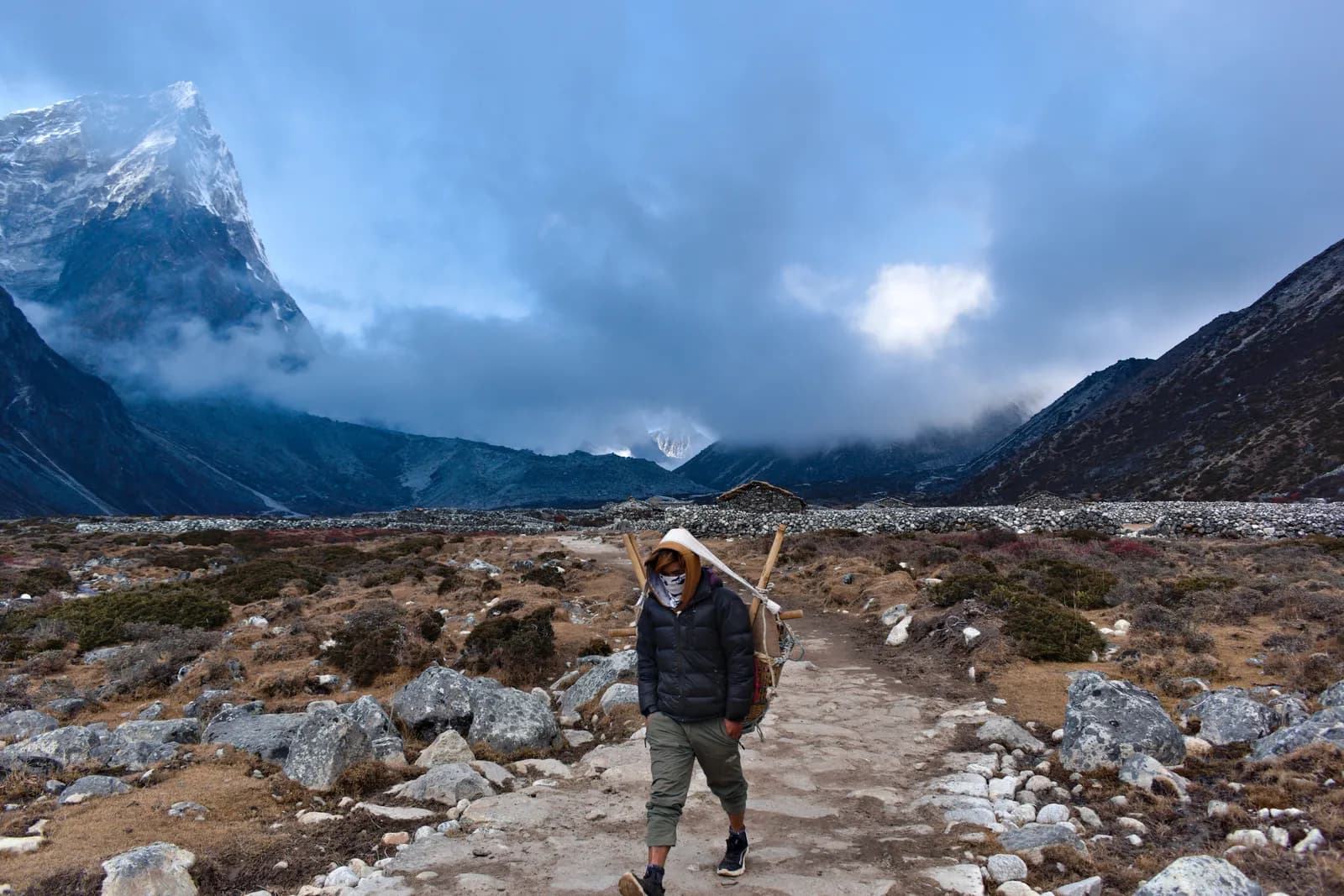
- porters, mules or yaks for the gear, with proper clothing, insurance and shelter for the crew.
The Upper Dolpo page and the Kanchenjunga page both say to check that your agency provides proper clothing, insurance and shelter for porters and that loads are limited to about 20 to 25 kg. That matters for your own comfort as well: a crew that is cold, badly equipped or overloaded is a crew that struggles on pass days, and it is not ethical to travel with. We cover the ethics in porter welfare and ethical trekking.
Questions to put to the agency before you pay:
- What tents, mats and stoves do you supply, and when were they last replaced?
- Is the sleeping tent for two, and do I pay a supplement for a single?
- What do the crew sleep in, and what do they wear?
- How many rest and spare days are built in, and what happens if a pass is closed? The Kanchenjunga and Dolpo pages both say to ask this.
- Do you carry a satellite messenger or radio, and what is the rescue plan?
Your sleeping system
The bag and the mat together keep you warm. Our region pages give the targets:
- Kanchenjunga: the region page says to dress for minus 15 C at Lhonak and Ramche in autumn and spring and to carry a down jacket and a four-season sleeping bag. The route page lists a bag rated to about minus 15 C.
- Upper Dolpo: the route page lists a bag rated to about minus 15 C. The Phoksundo Lake page, a lower-altitude trek, lists a bag rated to about minus 10 C.
- Dhaulagiri: the route page says to bring a sleeping bag for minus 15 degrees.
Read the rating as a limit rather than a promise. Our guide to sleeping bag temperature ratings for Nepal explains the difference between comfort and limit ratings and how to add a liner for more warmth. Whatever you choose, pair the bag with a mat that insulates from the ground; the agency may supply one, but ask to see it. A warm hat and dry socks at night make a large difference, and a bottle of hot water in the bag is a very old and very good trick.
Clothing for a camp at minus 15
Camp life means long evenings outside a warm dining room and early starts in the cold.
- Down jacket with a hood, the warmest you can carry. Our down jacket guide helps you decide whether to rent.
- Base layers of wool or synthetic fabric, two sets.
- Insulating layer, such as a fleece or light synthetic jacket.
- Waterproof shell jacket and trousers.
- Hat, buff and warm gloves, plus a spare pair of gloves. Mittens over liners are warmer than gloves.
- Sun protection: sunglasses with side protection, a sun hat and strong sunscreen; the Dolpo plateau is bright and dry.
- Gaiters for scree and snow; the Dolpo and Kanchenjunga pages both list them.
- Boots that are well broken in and warm enough for cold mornings.
- Camp shoes or insulated booties for the evening.
Our socks, blisters and foot care guide applies in full: a long pass day is no place for a new pair of boots.
The day bag: carry what you cannot lose
The Dolpo region page says to keep a day bag with a warm layer, water, sun cream and snacks, because your porters may be hours behind. That is the single most important rule of camping treks. Your duffel, tent and sleeping bag travel with animals or porters on a different schedule, and they may reach camp long after you. In your day bag, carry:
- a down jacket or a warm insulating layer and a waterproof shell,
- hat and gloves,
- water and a means of treating it (see water bottles, filters and tablets compared),
- snacks and lunch if the crew has not given you a packed lunch,
- sunscreen, lip balm and sunglasses,
- your headlamp with spare batteries, as explained in headlamps and night gear,
- a first-aid kit with blister care,
- your passport copies, permits and insurance details,
- money and your phone or radio.
The pass days are long. The Upper Dolpo page says to start early on the Kang La day with food, water and warm layers in your day bag, and the Kanchenjunga page says there are no stops between Selele and Tseram, so you must carry lunch.
Poles, crampons and the passes
The passes decide what traction you carry. The Kanchenjunga page lists gaiters for snow on the passes, microspikes for early or late snow and trekking poles. The Dhaulagiri page says to bring microspikes or light crampons and poles for the glacier and the Dhampus descent. Check the conditions with your agency before you leave; our guide to crampons and microspikes for high passes explains what each tool is for and how to decide.
Power, light and communication
On a camping trek you have no lodge to charge in, and the Dhaulagiri page says to pack a power bank because camp charging is limited. Ask your agency which satellite messenger or radio the guide carries, and leave your itinerary with someone at home. Our charging guide covers power banks, cold batteries and how to save power, and offline maps, GPX and navigation explains how to carry your route on a phone.
Food, water and hygiene
The cook carries rice, lentils, vegetables and eggs for the plateau days, according to the Dolpo region page. Carry your own favourite snacks, because plateau lunches can be repetitive, and tell the agency about dietary needs in advance. Water is boiled by the crew, but ask how, and carry your own filter or tablets for refills on the trail. Use the toilet tent, carry out paper and rubbish and follow the park rules: the Dolpo route page says to avoid wood fires in the national park, and the Kanchenjunga page says to choose lodges that use kerosene or other fuel at the higher camps. Our Leave No Trace guide covers the principles.
A short packing summary
Carry in your duffel: a four-season sleeping bag rated to about minus 15 C, a liner, a warm hat, two sets of base layers, a down jacket, spare socks, camp shoes, and a change of clothes. Carry in your day bag: shell, warm layer, gloves, water and treatment, snacks, sun protection, headlamp, first-aid kit, power bank, documents and money. Ask the agency to supply: tents, mats, stoves, a cook and crew gear.
Sharing a camping trek
Camping treks are expensive: the Dolpo region page says permits, food, camping gear and flights make Upper Dolpo one of the more expensive treks in Nepal, and the crew costs the same whether one person or four trek. That is why partners matter here. A shared camping team cuts everyone's share, and a shared tent halves the bulk. Use our Kanchenjunga partner page or the Dolpo partner page to find people planning the same dates, and read splitting guide and porter costs fairly between partners before you agree anything. For the other checklists, go back to the gear and packing hub.