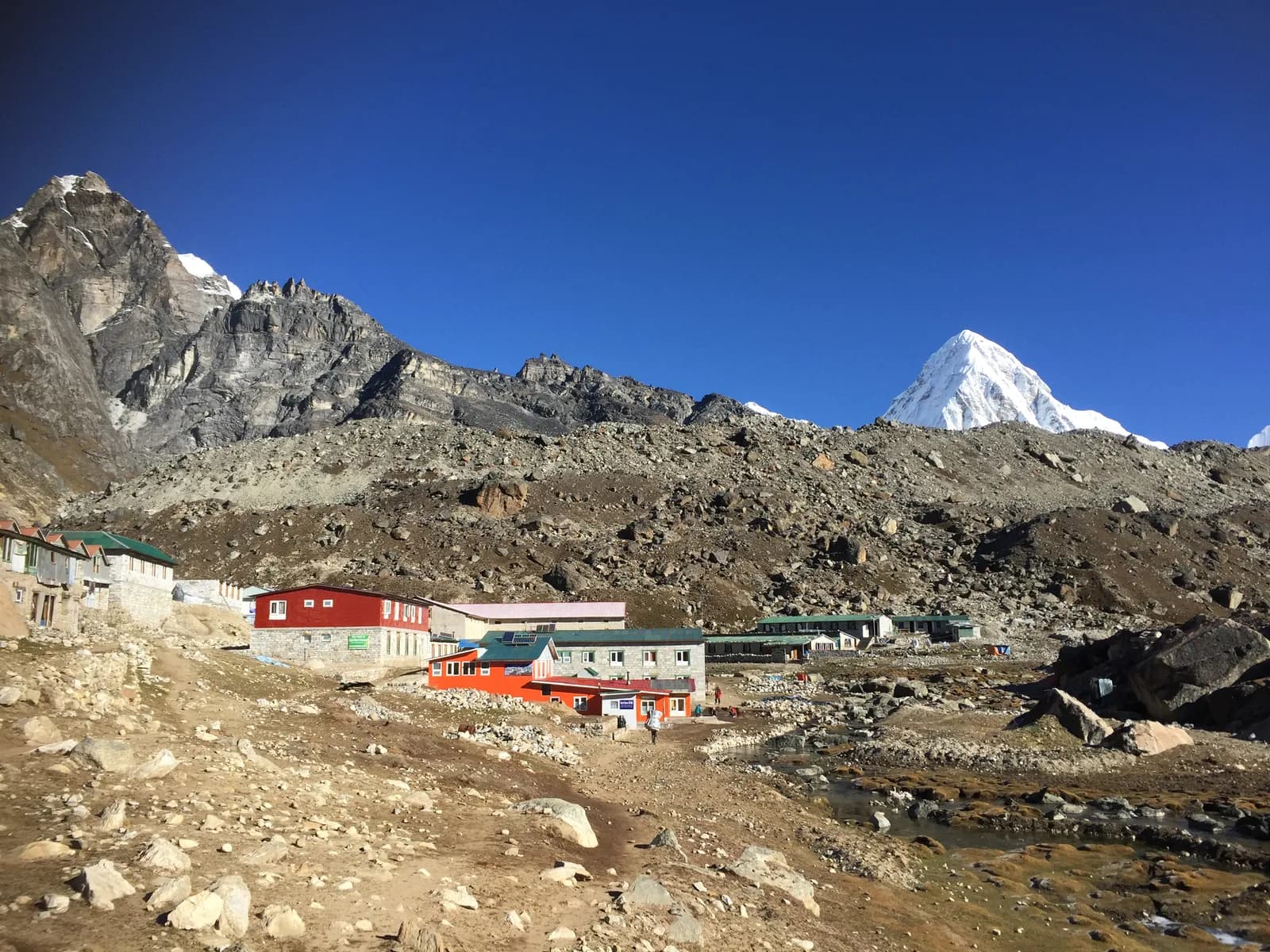
Headlamps and night gear for early starts on Nepal treks
Which headlamp to take on a Nepal trek and why: the pre-dawn climbs on Poon Hill and Annapurna Base Camp, the before-dawn starts on Thorong La, Larkya La and the Three Passes, batteries in the cold, red light, and what else to carry in the dark.

Take a headlamp that is comfortable, bright enough for steep stairs, water-resistant, easy to use with gloves and backed up with spare batteries, because several of the best-known days on Nepal's treks begin in the dark. Our route pages are explicit: a headlamp is "essential for the sunrise walk" on Poon Hill, the Thorong La and Larkya La crossings begin before dawn, and Everest Three Passes days "start in the dark". A phone torch does not replace a headlamp, and a headlamp with a dead battery is just weight. This guide covers which routes need one, what features matter, how to look after batteries in the cold and what other gear belongs in your pocket when you walk before sunrise.
Open trips on Poon Hill Trek (Ghorepani)
Real trips posted by trekkers looking for partners.

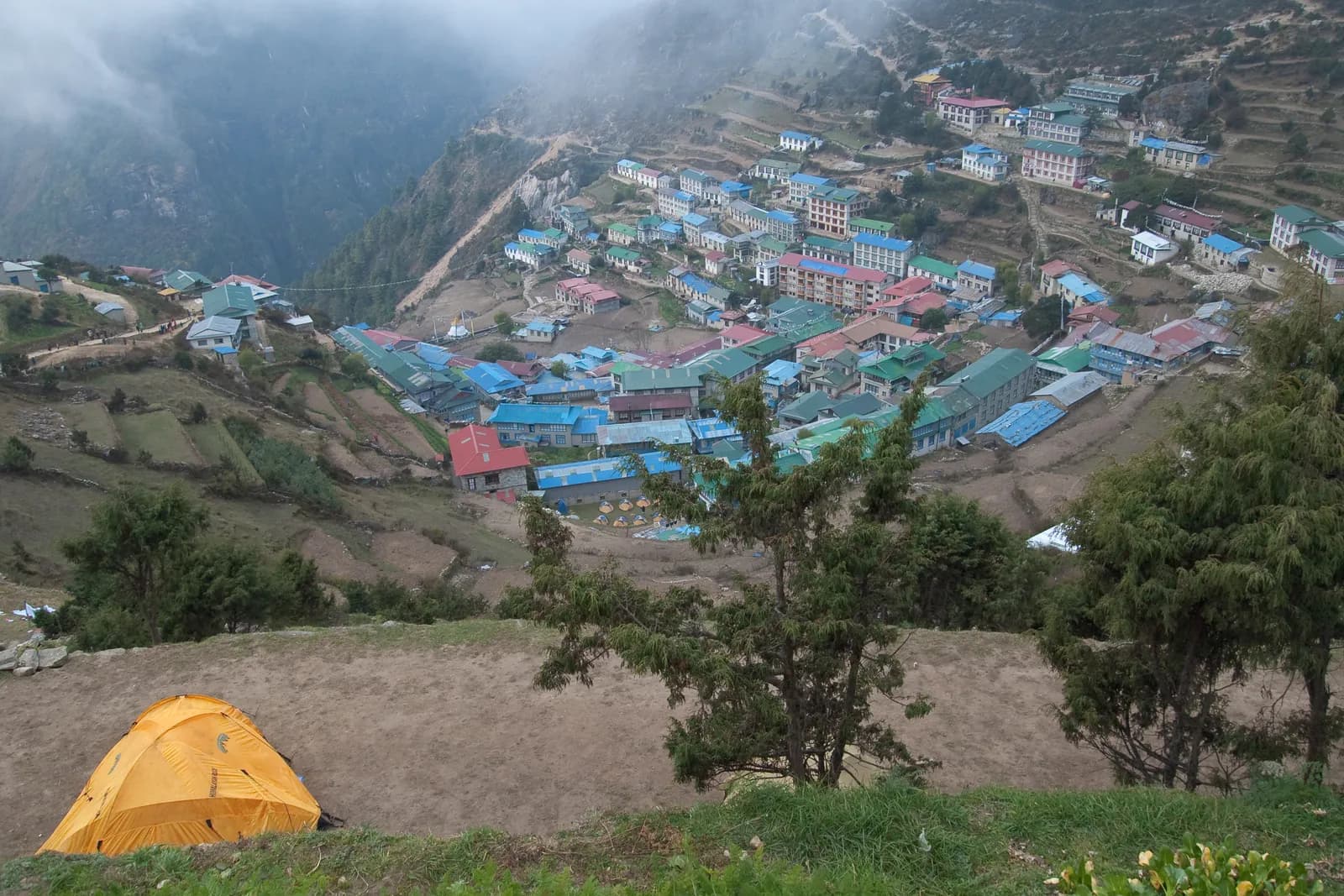
Which days start in the dark
It is not only the high passes. These are the days our route pages describe as pre-dawn:
- Poon Hill. The Poon Hill itinerary climbs to the 3,210 m viewpoint before dawn from Ghorepani. The route page says to bring a headlamp for the sunrise climb because the path is steep and dark, to dress warmly because it is below freezing before dawn in winter, and to arrive at least 20 minutes before first light.
- Annapurna Base Camp. The ABC page says to bring a headlamp for the pre-dawn walk to see the sunrise from base camp.
- Annapurna Circuit. The crossing of Thorong La begins before dawn, climbs about 1,000 m to the top and descends 1,600 m to Muktinath, a long day of eight to ten hours, according to the Annapurna Circuit page.
- Manaslu Circuit. Larkya La also begins before dawn from Dharamsala at about 4,470 m, climbs on moraine and snow and descends steeply to Bimthang at about 3,720 m, according to the Manaslu Circuit page.
- Everest Three Passes. The Three Passes page says pass days start in the dark and are physically and emotionally demanding, and advises you to start well before dawn and aim to be over the top by late morning.
- Everest Base Camp. Kala Patthar is walked at sunrise for the closest view of Everest, Nuptse and Pumori.
On all of them, the headlamp is part of the safety margin: the walking is on stone steps, moraine, ice or snow, and you need both hands for poles. For route-specific notes on passes in cold months, see snow and high pass conditions and crampons and microspikes for high passes.
What to look for in a headlamp
Comfort. You will wear it for hours. Choose a soft, adjustable band that fits over a hat and does not press on your forehead. Try it on with a beanie and a hood.
Beam. Look for at least two settings: a wide, low-power floodlight for the dining room, lodge corridors and close-up tasks, and a narrower, brighter beam for steep stairs and paths. We do not quote a lumen figure because brand claims vary; test the beam outside at night in a shop or at home. It should show the next few steps clearly without glare in fog.
Red light. A red setting protects night vision and does not dazzle people in a shared dormitory or tent. It is also useful at a sunrise viewpoint where people are setting up cameras.
Lock mode. A lock stops the lamp switching on in your bag. A drained battery is a common trouble on the first cold morning.
Controls with gloves. A big button or a tap-to-change switch is easier to use with gloves than a tiny one. Try it with your gloves on.
Weather resistance. Snow, spindrift and rain are real. Choose a lamp with a water-resistance rating, and keep it dry after use.
Weight and tilt. A light lamp with a tilting head is comfortable and lets you point the beam at the ground without bending your neck.
Batteries in the cold
Cold shortens battery life, as we explain in the charging guide, and it matters most on the nights and mornings when you need light. A few habits help:
- Keep batteries warm. An inside pocket by day, your sleeping bag at night. A lamp left on a cold floor will be weak by morning.
- Choose your cell type. Lithium primary (non-rechargeable) batteries are often more reliable in the cold than alkaline ones. Rechargeable cells can lose capacity quickly in the cold, so keep them warm and carry a spare set.
- Charge before the day, not after. If your lamp is rechargeable, top it up in a lodge when the electricity is on, not on the morning you leave. Lodge charging may be slow or paid, as the Everest page says.
- Carry spare cells in a bag you can reach. A spare in the porter's duffel is no use on a pass day. Keep them in your day bag.
- Use the low setting where you can. Save the high beam for the steep part.
- Do not leave the lamp on in your pack. Use the lock mode, or take out a battery.
A second headlamp for pass days is a sensible backup if you are on a long route; two light lamps weigh little. If you are trekking with a partner, agree who carries a spare.
Night gear beyond the lamp
A pre-dawn start needs more than light.
- Warm layers in your day bag. You will be cold when you start and warm when you climb, then cold again at the top. Our packing list has a layering example for a pass day: a base layer and thin fleece under a windproof shell, the down jacket in your daypack for the first hour, a warm hat and mittens before you feel cold.
- Hat, gloves and a spare pair of gloves. A lost glove above 5,000 m is a real problem.
- Poles. Hands full of pole and a lamp on your head are better than a torch in one hand.
- Water and a flask. Keep a bottle inside your jacket so it does not freeze; a flask of hot tea is a joy at the top.
- A whistle on your pack strap, and a note of your guide's phone number.
- Sunglasses or goggles in a pocket, because the sun comes up fast on snow.
- A small tripod or stable support if you want to photograph the sunrise, as the Poon Hill page suggests.
Walking in the dark: simple rules
- Stay with your group. On a pass day, the guide sets the pace and the turning-back time. Do not walk ahead alone.
- Aim the beam at the ground, not into other people's eyes. Switch to red when you are close to someone.
- Slow down on stone steps. The stairs at Ulleri and Ghorepani are steep and slippery when wet, according to the Annapurna region page, and dark makes it worse.
- Agree a turning-back rule before you start, with your guide, and keep to it.
- Do not leave the path to take a shortcut in the dark.
- Tell the lodge when you leave and when you expect to return.
Read the section on weather and snow in the relevant itinerary before you decide to start. If conditions are bad, a late start or a rest day is better than a rush.
Lodge life after dark
Most teahouses have electric light only in the dining room and sometimes none in the rooms, depending on solar power. Our Manaslu and Upper Mustang pages say electricity depends on solar, so a headlamp is also your room light, your toilet light and your reading light. Hang it where you can find it, and keep it with your boots so you can reach both in the dark. A small spare light, such as a little clip lamp, is useful for the toilet.
Packing and sharing
Pack your headlamp, spare batteries and a small cloth in your day bag, in a place you can find with gloves on. If you are trekking with a partner, share a spare set, but each person carries a lamp. See what to agree with trekking partners before you book for shared kit. If you are still looking for someone to walk the pass with, our Annapurna Circuit partner page and Poon Hill partner page list people planning those routes. The full checklist is in the Nepal trek packing list, and the rest of the series is in the gear and packing hub.
The short version
Carry a headlamp you have tried with gloves and a hat, a spare set of batteries kept warm, a red light setting, a lock mode and a backup plan. Charge or replace batteries before each pass day. Keep warm layers, water and a whistle in the day bag. Start when your guide says, stay together, and turn back when you agreed to. The dark walk is part of the reward: when the light comes, you will have earned the view.
Plan this trek
- Everest (Khumbu) region guide
- Annapurna region guide
- Manaslu region guide
- Trekking partner for Poon Hill Trek (Ghorepani)
- Trekking partner for Annapurna Circuit Trek
- Trekking partner for Everest Three Passes Trek
- Poon Hill Trek (Ghorepani) itinerary
- Annapurna Circuit Trek itinerary
- Everest Three Passes Trek itinerary