Kathmandu to Pokhara: bus or flight before a trek
Kathmandu to Pokhara takes 6 to 8 hours by road or about 25 minutes by air. This guide compares the tourist bus and the flight on cost, time, reliability and what each does to your trek schedule, with a decision rule and a buffer plan.
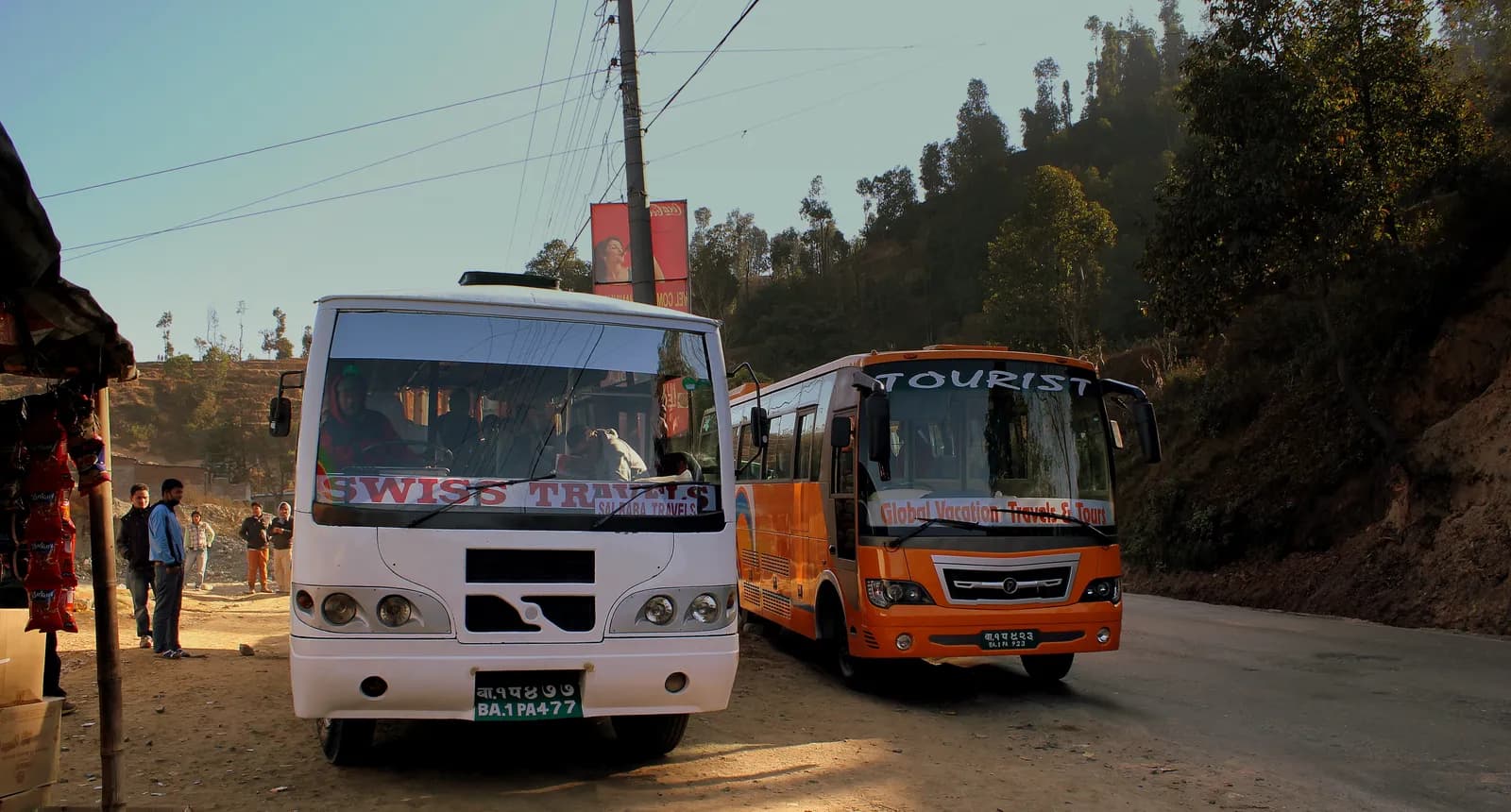
Kathmandu to Pokhara takes 6 to 8 hours by road and about 25 minutes by air, and for most trekkers the right choice depends on whether a spare day or a spare rupee is scarcer. The tourist bus costs NPR 800 to 2,500 each way in our Annapurna cost notes and is not affected by flight cancellations; the flight is far faster but we have no verified fare to quote and it is a weather-dependent small-aircraft hop. This guide compares them on the things that matter before a trek: cost, time, reliability, comfort with luggage and what each does to your schedule.
Pokhara is the start or end point of most Annapurna region treks, including Poon Hill, Annapurna Base Camp and Mardi Himal. Our region data lists Kathmandu, Pokhara and Besisahar as the start points for the Annapurna region. For the wider picture of how to reach each trailhead, read the getting to Nepal trailheads guide.
Poon Hill Trek (Ghorepani)の募集中トリップ
仲間を探しているトレッカーが投稿した実際のトリップです。

The comparison at a glance
| Tourist bus | Flight | |
|---|---|---|
| Time | 6 to 8 hours on the road (about 7 per our Pokhara note) | About 25 minutes in the air |
| Cost | NPR 800 to 2,500 each way | No verified fare in our tables; ask for a quote |
| Weather risk | Landslides and road closures, mostly monsoon | Cloud and visibility can delay or cancel |
| Luggage | Stowed under the bus; normally easy | Weight limits on small aircraft; see baggage limits |
| Where it leaves | Tourist bus parks | Domestic terminal, with city transfers either end |
| Best for | Flexible schedules, tight budgets, groups with bulky gear | Tight schedules, those who dislike long road days |
The 800 to 2,500 range in our table is wide because it spans different classes of bus; ask what the ticket includes, such as a seat number, a rest stop or an air-conditioned coach.
The road day
The highway between the two cities follows river valleys and winding hill sections, and journey time varies with traffic, roadworks and weather. Our region notes give 6 to 8 hours, and you should treat the top of that range as the planning number, not the bottom. A typical tourist bus leaves in the morning and stops at roadside restaurants for a meal, which adds comfort and time. Bring water, a layer, a charged phone and something to read. If you are prone to motion sickness, sit towards the front and take your own remedy.
Buses arrive at a tourist bus park in Pokhara, from which you take a taxi to Lakeside or your hotel. Agree the fare before you get in; no fixed taxi fare is published in our sources. Our Pokhara accommodation guide explains where to stay.
Road safety is a real consideration on this highway; see our road and jeep safety guide and the UK Foreign, Commonwealth and Development Office safety page for Nepal. Prefer daylight travel and reputable tourist services.
The flight
The flight takes about 25 minutes, which is the whole appeal. In practice the time saving is smaller than it looks: you need to reach the domestic terminal, check in, wait and then get from the Pokhara airport into the city. Even so, it turns a lost day into half a morning. Flights can be delayed or cancelled by weather, so a flight is not a guarantee, and a flight cancellation can leave you with fewer options than a bus, because seats on the next flight may be full.
We do not quote a fare because our cost tables have none that we can verify. Ask an airline or agent for the price on your date, then add the airport transfers at both ends, and compare the total with the bus. Baggage rules on small aircraft are strict, so check your allowance before you book; see our domestic flight baggage limits guide.
Choosing
Use these rules of thumb.
- You have a spare day and a tight budget: take the bus. It is the cheaper default, and the lost time is a day you planned to have anyway.
- You start trekking the morning after you arrive in Pokhara: fly, and still keep a buffer. A road delay would cost you the start.
- You are travelling in the monsoon: think hard about road closures. Check conditions, and if the road is unreliable choose the flight or delay the trip. See monsoon trekking in Nepal.
- You are carrying a lot of gear or rented kit: the bus has fewer weight limits.
- You are travelling with partners: a bus ticket is per person, and the savings multiply; the flight does not get cheaper in a group. Taxi transfers at either end are shared.
Planning around the connection
The most common mistake is stacking the transfer tight against a trek start or a flight home. The return is just as important as the outward journey. If you finish a trek in Pokhara and must be in Kathmandu for an international flight, do not take the last possible bus or flight; give yourself a day. Our buffer days guide explains the logic, and our Kathmandu and Pokhara pre-trek costs guide shows how to count the nights.
A plan that works for a Poon Hill trip, for example: arrive in Kathmandu, spend a night or two on permits and gear, take the morning bus to Pokhara, spend a night in Lakeside, then start the trek the next day. That uses no flights, keeps costs low and leaves a margin if the road is slow.
Permits and paperwork on the Pokhara side
Treks from Pokhara into the Annapurna Conservation Area need the ACAP permit, NPR 3,000 for foreigners, with an extra 2.9% gateway charge if paid online and a doubled price if issued at a check post, per the NTNC e-permit page. Some routes also list a TIMS card. The Nepal Tourism Board rule of April 2023 requires a licensed guide in national parks and conservation areas, and as of 19 October 2026, 2026 operator reports say checkpoints enforce it in Annapurna. See our guide rule page and Nepal trekking permits explained. Sorting permits in Kathmandu before you leave, or on your first day in Pokhara, is easier than at a check post.
Sharing the journey
If you are travelling with a partner found through our trekking partner hub, you can share taxis at either end, which halves those fares. Agree the plan in writing: which transport, which date and who books. Our guide to what to agree before you book covers it. The route partner pages, for example Poon Hill, show who else is planning that trip.
A short checklist
- Choose bus or flight using the rules above.
- Book a day early in busy months.
- Allow a buffer for roads or weather.
- Confirm where the bus or flight arrives and how you reach your hotel.
- Keep documents and valuables in your daypack.
- Check the guide rule and permits for your route.
A worked decision for three travellers
A pair on a budget with a spare day. Take the tourist bus: the cost is NPR 800 to 2,500 each, they lose a day they planned to have anyway and they avoid the airport. Sit towards the front, take snacks and arrive in the afternoon with time to find a room.
A solo trekker with a fixed start date. If your trek starts the morning after you reach Pokhara, a road delay would cost you the start. Fly, and still keep a spare half-day. If you cannot afford the flight, travel a day earlier by bus.
A group of four with lots of gear. The bus carries luggage without the weight limits of a small aircraft, and the per-person cost is low. If the group wants more comfort, consider a private vehicle and compare it with the bus fare, as in our private vehicle guide.
The first hour in Pokhara
Whichever way you arrive, the first hour is about getting to your hotel without a fuss. Agree a taxi fare before you get in, or have the hotel send a car. Drop your bags, drink water and take a short walk by the lake. Then check the next day's arrangements: the taxi to the trailhead, the permit and any gear you still need. Our where to stay in Pokhara guide lists what to check in a hotel.
Coming back the other way
After a trek that ends in Pokhara, the same choice applies in reverse, with a harder deadline if you must catch an international flight. The bus is cheap but can be slow, and the flight is quick but can be cancelled. The safest plan is to return to Kathmandu at least a day before your flight home. If you are travelling in the monsoon, check road conditions the day before. Our buffer days guide explains why a spare day is the best insurance.
Budgeting the whole connection
Add up the connection as a whole: the bus or flight, the taxi to and from the terminal at each end, a meal on the way and a margin for a night's delay. Compare the totals, not just the headline fares. For the other costs of the city stay, see Kathmandu and Pokhara pre-trek costs.
More logistics topics are in the transport and logistics hub. Figures and times are approximate; confirm fares and schedules with the operator before you travel.