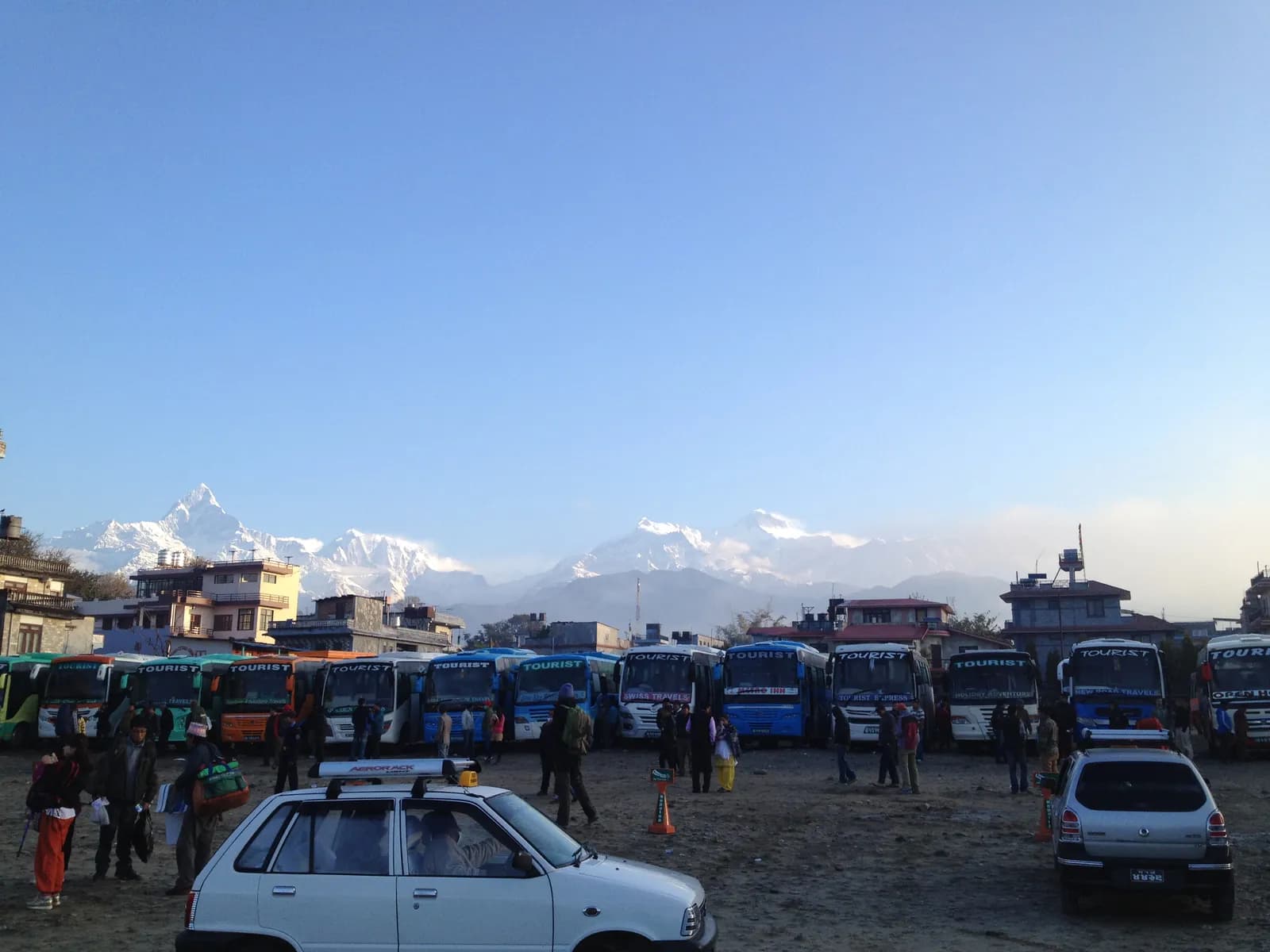
Kathmandu to Besisahar for the Annapurna Circuit
How to get from Kathmandu to Besisahar and on to Dharapani for the Annapurna Circuit: bus, shared or private jeep, dated fares, the 9 to 10 hour first day, walking starts, monsoon risk and the way out.

Getting to the start of the Annapurna Circuit is a day on the road, not a flight, and the details of that day change how the first part of your trek feels. Besisahar is about 7 to 9 hours from Kathmandu by road, and our Annapurna Circuit plan stretches the first day to 9 to 10 hours by driving on to Dharapani at 1,860 m on jeep track. You can go by bus, shared or private jeep, and you can start walking at Besisahar or Bulbule if you want an easier first day. What you cannot do is treat it as a short hop.
This guide explains the options, what each costs according to our dated figures, how the road affects the first days of the trek, what changes in the monsoon and how to plan the exit when you finish. It is about the road to the Circuit's eastern start. If you are starting from Pokhara or Jomsom instead, see Pokhara to Jomsom: flight versus jeep, and for the whole region read the Annapurna region guide.
Annapurna Circuit Trekの募集中トリップ
仲間を探しているトレッカーが投稿した実際のトリップです。
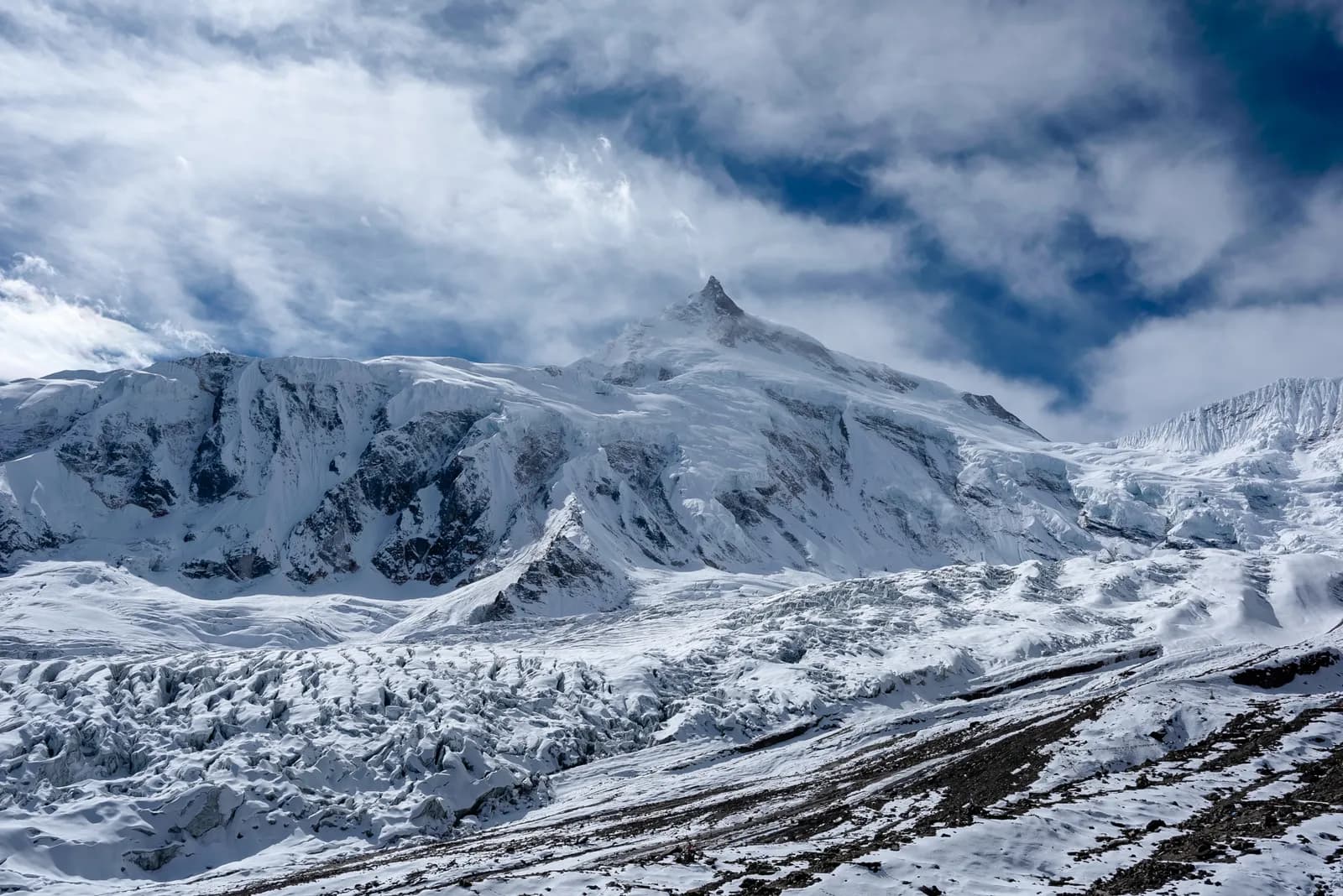

The route in brief
From Kathmandu the road to Besisahar follows the Trishuli and Marsyangdi valleys. Our Annapurna region page gives Besisahar as around 7 to 9 hours from Kathmandu by road, with jeep roads now reaching Dharapani, Chame, Manang and beyond. The route page for the Annapurna Circuit starts with a drive from Kathmandu via Besisahar to Dharapani, a long day of nine to ten hours on winding roads, with the valley steep and green and the road continuing beyond Besisahar on jeep track. Dharapani is at 1,860 m and is the junction with the trail to Manaslu.
If you want an easier first day, the route page says you can begin walking at Besisahar or Bulbule instead. The region page adds that roads have changed the Circuit: many trekkers skip the road sections by driving the first day or two, or walk higher variants such as the upper Pisang to Ngawal route. Check which sections are trail and which are road before you plan, because the answer changes the trek's length and character.
Your options for the road
| Option | What it is | Cost per our dated data |
|---|---|---|
| Local or tourist bus | Seat to Besisahar | About USD 10 to 20, NPR 1,300 to 2,700 per person |
| Private jeep | Whole vehicle, can continue to Dharapani | USD 150 to 220, NPR 20,000 to 29,500 per vehicle |
| Besisahar to Dharapani jeep | Local or arranged jeep on the track | No published fare in our sources |
| Walk from Besisahar or Bulbule | Replaces the jeep | No transport cost |
These figures come from the transport lines in our dated Annapurna cost data, as of October 2026, drawn from 2026 operator guides. Fares change with season and fuel, and a foreigner's price may differ from a local's, so confirm with your agency or the operator before you pay. The Besisahar to Dharapani jeep has no published fare in our sources, which is why the cost model for the route leaves it out of the total instead of guessing.
Bus
The cheapest way is a bus. It is slower and less flexible, since it leaves when the operator decides and stops where it stops, and your daypack may be on your lap. It suits a lean budget and a flexible schedule. Keep valuables with you, carry the duffel's contents in dry bags and consider asking your agency about a tourist-class bus if comfort matters.
Private jeep
A private jeep costs per vehicle, so the price per person falls with the group. At USD 150 to 220 a vehicle, a group of four pays about USD 38 to 55 each, against USD 10 to 20 for a bus seat. What you buy is control: you can leave early, stop when you need to and go on to Dharapani without changing vehicles. The jeep is the default for agency packages. If you are putting a group together, this is one of the lines that gets cheaper with partners; see splitting guide and porter costs fairly between partners for how to divide it.
Walking from Besisahar or Bulbule
Starting on foot from Besisahar or Bulbule adds a day or part of one, and replaces a long day of sitting with walking. It also lets your body begin at about 760 m, which is where Besisahar is, according to the Manaslu Circuit's final-day notes. The cost is that the road is shared with jeeps in places, and some trekkers find that the first days feel more like a road walk than a trek. Ask your agency what the first sections look like in the current season.
Which vehicle makes sense for your group
The choice is mostly arithmetic. A private jeep at USD 150 to 220 a vehicle costs about USD 75 to 110 each for two people, USD 50 to 73 each for three, USD 38 to 55 each for four and USD 25 to 37 each for six, assuming the vehicle holds your luggage as well. Against a bus seat at USD 10 to 20, the jeep premium is the price of leaving when you want, not queueing at a bus park and not changing vehicles at Besisahar. For a solo trekker the bus is the obvious value choice; for a group of four or more the jeep's per-person price narrows and its convenience grows. Whichever you choose, the cheaper vehicle is not the cheaper trek if it makes you miss a day, so weigh the price against how tight your schedule is. If you are looking for people to share the vehicle with, our guide to finding partners safely explains how to do it without paying a stranger in advance.
The first days at altitude
The drive to Dharapani puts you at 1,860 m on the first night, and the route continues to Chame at 2,670 m on day 2 and Upper Pisang at 3,300 m on day 3. Starting low is helpful for acclimatisation, and it is one reason the standard plan goes on to Manang (3,540 m) for a rest day. See rest days on the Everest and Annapurna routes and the acclimatisation schedule.
A very long drive on the first day has one practical effect: you arrive tired, and the next morning is the first full day of walking. Eat well, drink water, and go to bed early. If you are starting from Besisahar by bus and the vehicle is late, accept a night in Besisahar instead of pushing on in the dark.
The monsoon and the road
The Annapurna page says landslides can close roads in the monsoon, and the route page says the monsoon months are wet in the south but much drier in the north. The practical consequence is that the first day is the vulnerable one. If you travel between June and September, leave a spare day at the start, ask the agency about the road the day before and be ready to wait. Our July guide and the monsoon trekking guide explain the pattern.
Coming out
The Circuit ends at Jomsom or further south, and the plan continues through Tatopani and Ghorepani to Pokhara on day 14, with the Poon Hill sunrise as the last climb. Pokhara to Kathmandu by tourist bus is about NPR 800 to 2,500 per person, according to our dated data, and the Tatopani to Pokhara bus or jeep leg has no published fare. Do not book an international flight for the same evening you reach Kathmandu. The Manaslu route's final day carries the same warning for the same road: it is a long drive that can run slowly.
If you finish the Manaslu Circuit and exit via Dharapani, the route page notes a jeep to Besisahar of about three hours and then six to seven hours to Kathmandu; see the Manaslu road guide.
What to carry for the road day
- Passport and permits within reach, because you may pass checkpoints.
- Water and snacks, because stops are limited.
- A warm layer and a rain shell, as the valley is cooler and may be wet.
- Motion-sickness remedies if you are prone; the road winds.
- Cash for tolls, tea and tips.
- Your daypack with essentials, not the duffel.
Booking and checking
- Decide where you will start walking. Besisahar, Bulbule or Dharapani changes the transport you need.
- Ask your agency what is included. Whether the jeep to Dharapani and the return from Tatopani are in the package.
- Check the road the day before. Especially from June to September.
- Keep a buffer day at both ends.
For the trek itself, see the Annapurna Circuit day-by-day itinerary and best time for the Annapurna Circuit. For the overview of all trailheads, read getting to Nepal's trailheads.