

Camera and phone gear for a Nepal trek: what to carry
What camera kit makes sense on a Nepal trek: phone versus camera, the one lens that does most of the work, protection from dust, cold and rain, batteries and memory cards, best light, and rules on drones and photographing people.
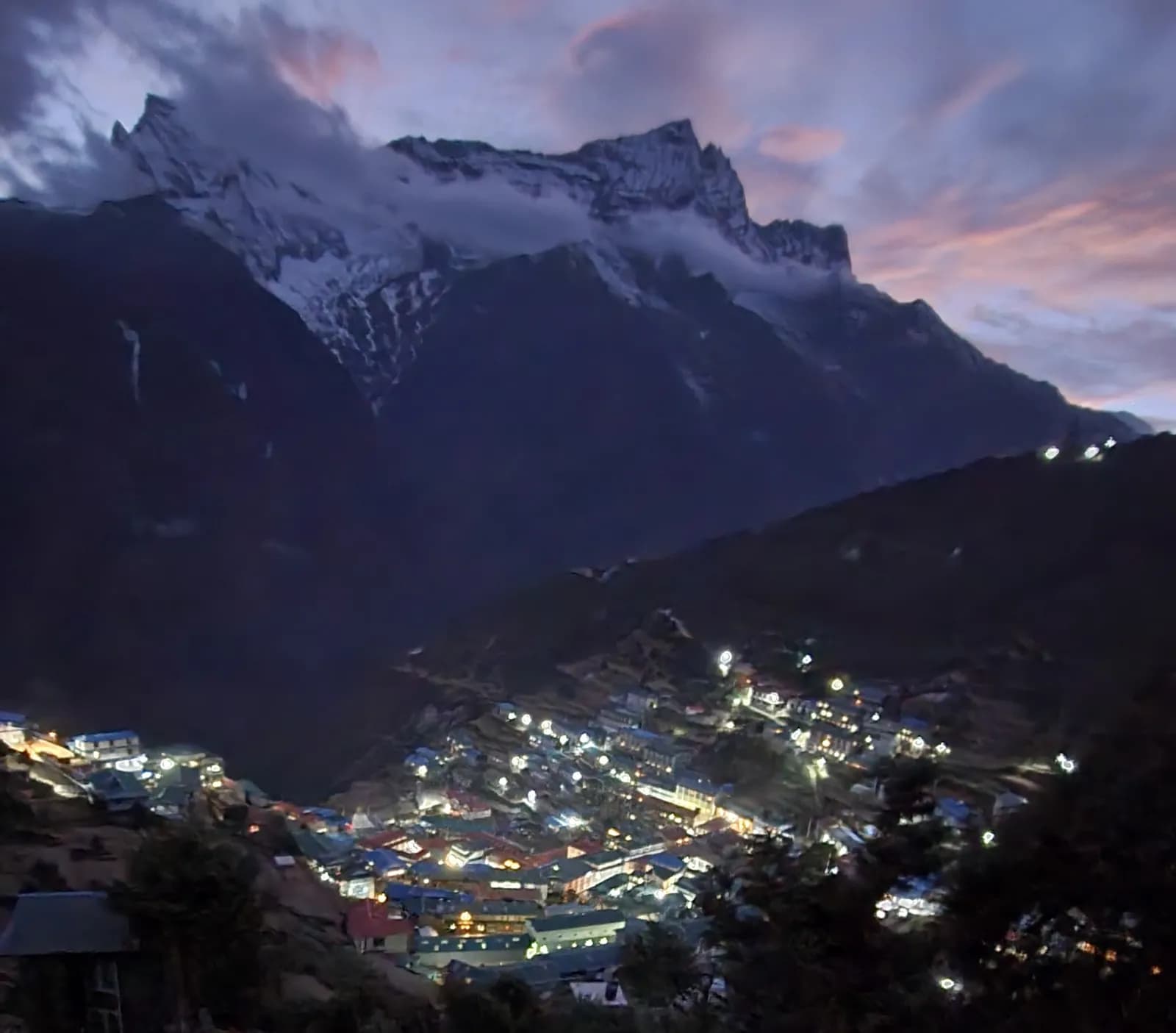
For most Nepal treks the best camera is the one you will actually carry and use, which for many people is a modern phone. A dedicated camera earns its weight only if you want long lenses, low-light interiors or the pleasure of shooting properly. Decide by how much you care about photography, not by the trek: a phone with a good case, a spare power bank and a cloth for the lens covers the classic routes, and a camera with one versatile zoom covers the rest. What matters more than the body is how you protect it from dust, cold and rain, how you manage batteries, and how you behave with people and monasteries. This guide covers all of that, with the rules our route pages give on photography and drones.
Upper Mustang Trek (Lo Manthang)の募集中トリップ
仲間を探しているトレッカーが投稿した実際のトリップです。

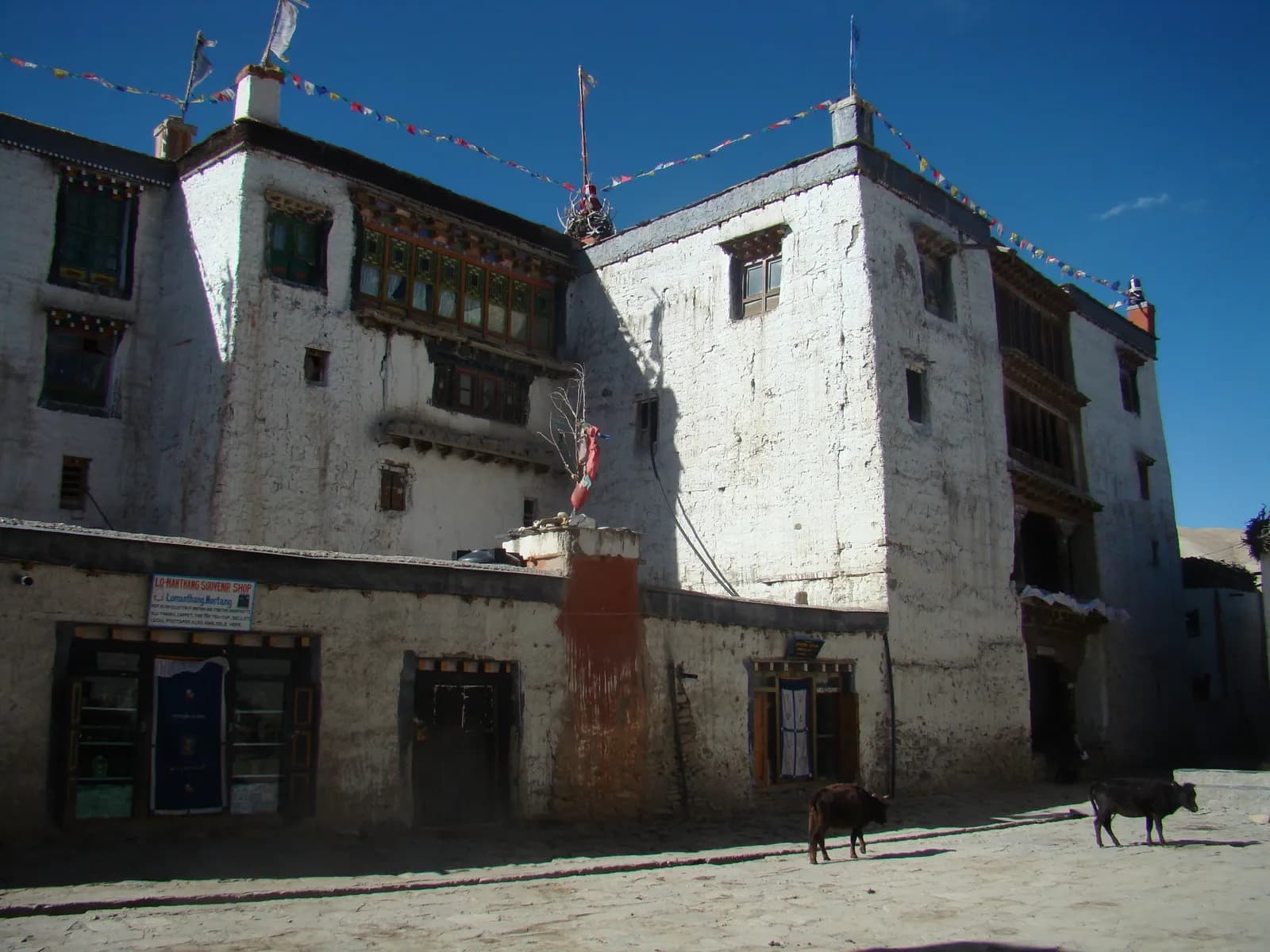
Phone or camera?
A phone has real advantages on a trek. It is always in your pocket, it is waterproof enough in light rain with a case, it doubles as a map, torch and notebook, and the weight is already in your pack. The trade-offs are small sensors, limited zoom, and a battery that drains quickly in the cold. A dedicated camera has a larger sensor, optical zoom and a battery that is easier to swap, but it adds weight, a bag, lenses and the worry of damage.
A fair rule:
- Choose a phone only if you are on a short route such as Poon Hill, you are travelling light, and your goal is snapshots and sharing.
- Add a compact camera or mirrorless body if you want longer reach, better results at dawn and dusk or good interior shots, and you are comfortable carrying 500 g to a kilo extra. Many trekkers find a small mirrorless camera with one zoom lens a good middle ground.
- Skip a heavy DSLR kit unless photography is the point of the trip. Weight is paid for on every step above 4,000 m.
Whichever you choose, power is the constraint, not megapixels. Read charging your phone on a Nepal trek before you pack.
The one lens that does most of the work
If you carry a camera, one lens beats a bag of them. Changing lenses on a dusty trail or in wind lets grit onto the sensor, and every extra lens is weight. A zoom that goes from wide to short telephoto covers:
- narrow village lanes and monastery courtyards at the wide end,
- peaks and valley views in the middle,
- portraits taken from a polite distance, and distant details such as prayer flags and cliff monasteries at the long end.
A second, lighter prime lens for low light is a luxury, not a need. If you want wildlife, you will want something longer, but be honest about how much of your trek will be spent looking for animals rather than walking.
Light, season and where it shines
Our route pages repeat a simple rule: the best light is early and late. The Upper Mustang page says the light is best early and late, when the cliffs glow red and gold, and that a polarising filter helps with dusty glare in the middle of the day. On the Upper Mustang trek the afternoon wind is strong, so start early, and that fits the photography too. On the Everest route the climb to Kala Patthar (about 5,550 m above Gorak Shep) is what most people photograph, and cold mornings test batteries. The Poon Hill sunrise is the classic short-trek photo, and it needs a pre-dawn start; our headlamps and night gear guide explains what to carry for that.
Spring and autumn give the clearest skies, but haze builds in May and the monsoon clouds the south-facing routes. The best time to trek in Nepal guide lists the conditions by month.
Protecting kit from dust, cold and rain
The Himalayan environment is hard on electronics.
- Dust and wind. The Upper Mustang page says to protect your camera from dust and wind with a cover or a bag. Change lenses only in a sheltered spot, and keep a blower and a microfibre cloth in your day bag.
- Cold. Batteries lose charge faster in the cold. Keep spare batteries in an inside pocket, warm the camera inside your jacket before use, and shut the phone off at night. When you bring a cold camera into a warm dining room, let it warm up inside a closed bag so condensation forms on the bag, not on the lens.
- Rain and snow. A rain cover for a camera and a zip-lock bag for a phone are cheap insurance. Dry gear before you pack it away.
- Knocks. A padded pouch inside your daypack beats a camera dangling on a strap, which swings into rocks on narrow steps.
- Lenses. A UV or clear filter on the front of each lens protects the glass; clean it with a cloth, not your shirt.
A porter can carry your main bag, but you should keep camera gear in your daypack, because your porter may be hours ahead or behind you and a jolt in a duffel can break lenses. Our guide to guide versus porter roles explains what a porter does and does not carry.
Batteries, cards and backups
- Batteries. Carry at least one spare per camera, fully charged, and rotate them. Charge at lodges when you can, but expect fees for charging, as our Everest page says: charging a phone or battery usually costs extra, and it is slower and more expensive higher up.
- Cards. Carry more card space than you think you need, and use two small cards instead of one big one so one failure does not lose everything.
- Backups. Copy your photos to a second device or a cloud service whenever you have power and a good connection, for example in Pokhara, Namche or Kathmandu. Do not rely on lodge Wi-Fi for large uploads; it is slow, and priced by time or data in many lodges.
- Cables and readers. Pack a short cable and a card reader in your day bag, along with a multi-way adapter.
Phone photography on the trail
If your phone is your camera:
- Use a rugged case and a screen protector, and carry a spare cable.
- Set the phone to airplane mode when you have no signal, because searching for a network drains the battery quickly.
- Download offline maps before you go; see offline maps, GPX and navigation for Nepal treks.
- Clean the lens often. Fingerprints and dust cause hazy photos that you will blame on the weather.
- Hold still at dawn. Night mode on a phone needs steady hands, so brace your elbows or use a rock.
- Back up by sharing in lodges with Wi-Fi only if the connection is good enough; otherwise copy files at the end of the trek.
People, monasteries and drones
Photographs of people and religious places carry responsibility. Our route pages are consistent: ask before photographing people, ceremonies and the inside of monasteries. The Upper Mustang page asks you not to touch paintings, never to use flash on wall paintings and to avoid disturbing caves and monasteries. The Tsum Valley and Upper Dolpo pages say never to give sweets or money to children and to ask before taking pictures. For a fuller treatment, read photography etiquette: people and monasteries and monastery etiquette.
Drones are different. Our Upper Mustang permit guide says drones need separate permission and are usually not allowed over religious or military sites, our Sagarmatha entry guide says drone use inside the park is restricted, and the Rara route page lists no drones without permission. Drone rules also differ by area and change, so ask your agency before you pack a drone, and do not fly one near monasteries, villages or people. A drone confiscated at the airport or on the trail is a bad start to a trek.
What a sensible kit looks like
For a short trek: a phone in a rugged case, a power bank, a spare cable, a cloth for the lens and a zip-lock bag for rain. For a classic route such as Everest Base Camp: the same, plus a small camera with one zoom lens, two batteries kept warm, two cards, a lens cloth and blower, a padded pouch and a rain cover. For Upper Mustang: add a polarising filter, a dust cover and a plan to shoot early and late. In all cases, keep everything in your day bag.
Sharing the load with a partner
If you are trekking with a partner, you can share some gear: one power bank, a single tripod or a shared lens cloth and blower. Agree who carries what, and do not make your partner the permanent photographer. Our guide to what to agree with trekking partners before you book covers shared kit. If you are still looking for a partner, the Upper Mustang partner page and the Poon Hill partner page are good starting points. For the rest of the checklist, return to the gear and packing hub.
Final checks
Before you leave: clean the lens and sensor, format your cards, charge every battery, update your phone's storage, write your name inside the camera bag, and photograph your permits as a backup. On the trail: shoot early and late, ask before you photograph a person, keep the camera inside your jacket on cold mornings and give your eyes some time without a screen. The pictures that people remember are usually the ones they took while they were paying attention to the place, not to the settings.


