The guide rule for foreigners, explained
Do foreigners need a guide to trek in Nepal? A licensed guide is required in restricted areas; in national parks the April 2023 NTB rule is enforced unevenly and Khumbu does not enforce it. Rule by region, checked 19 October 2026.
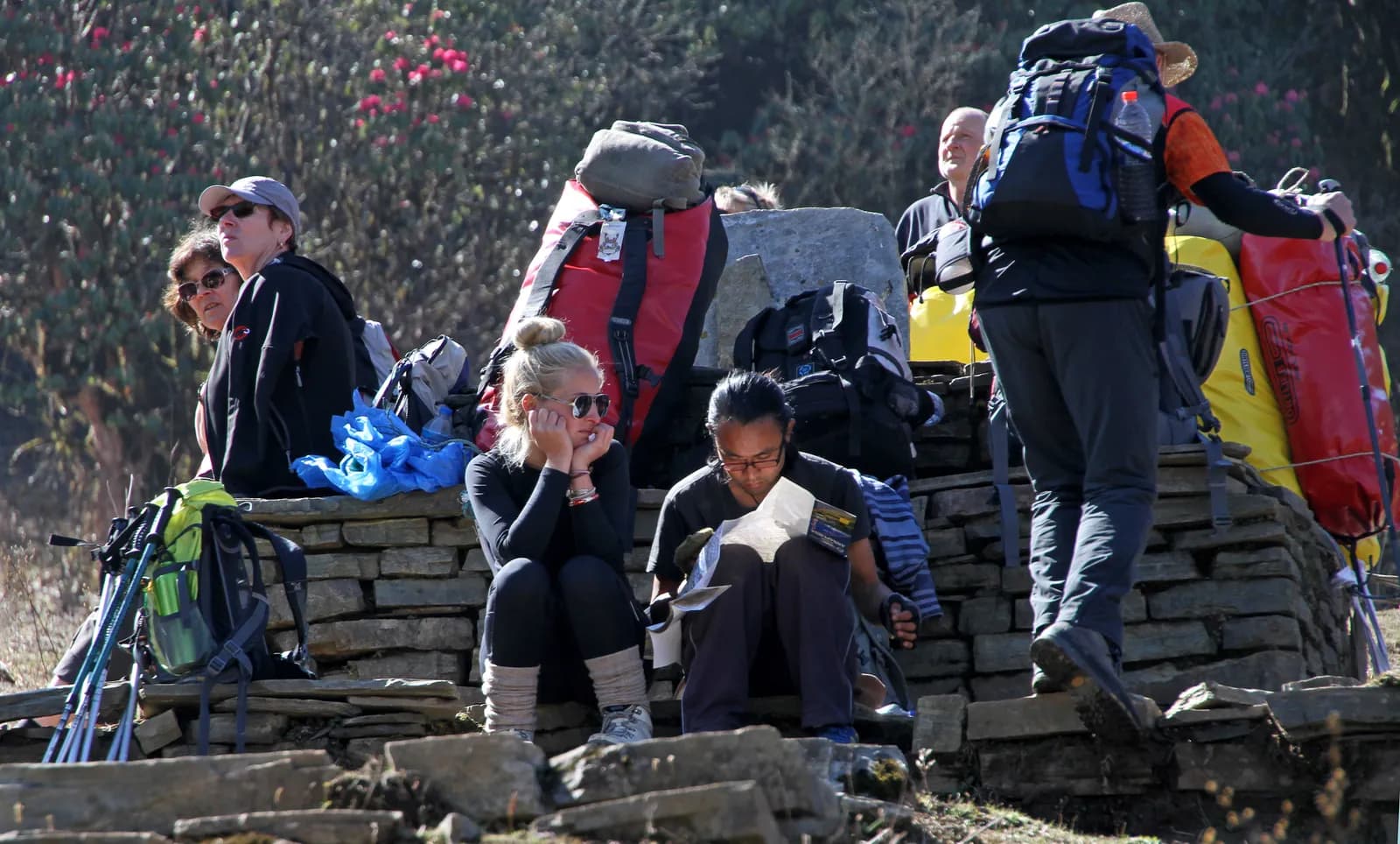
Foreign trekkers need a licensed guide in restricted areas, and in practice in most national parks and conservation areas. The written rules and what checkpoints do are not the same thing, so this article keeps them apart. This page was checked on 19 October 2026; see also the guide rule by region.
The short, honest answer to "do I need a guide?" is: yes in restricted areas (Immigration rules), yes in practice in national parks and conservation areas (the Nepal Tourism Board rule of April 2023, enforced at checkpoints in Annapurna and Langtang), and no in Khumbu, where the municipality opted out. This article explains each case, so you can plan without relying on a rumour.
Trip terbuka di Manaslu Circuit Trek
Trip nyata yang diposting trekker yang mencari teman.
What the rule says
Written rule.
- Restricted areas: a licensed guide through a registered agency is part of the permit under Department of Immigration rules, which it restated in June 2026 (Diplomat Nepal, 13 June 2026). Since 22 March 2026 individual foreigners can apply, but the guide is still required.
- National parks and conservation areas: the Nepal Tourism Board announced in April 2023 that foreign trekkers must hire a licensed guide through a registered agency. We found no separate Department of Immigration or DNPWC notice.
- The restricted-area rule does not apply to Nepali citizens.
Enforcement in practice (2026 operator reports, not official notices). Most 2026 reports say checkpoints check for a guide at ACAP (Birethanti, Besisahar) and in Langtang, which is described as the strictest, and at most other parks, and that TIMS checks vary: checked in Langtang, mixed in Annapurna. These reports are operator blogs, for example Awesome Holidays Nepal and Trekkers Nepal, and they disagree on dates, so verify with your agency. Khumbu is the exception: the Khumbu Pasang Lhamu municipality said within days of the announcement that a guide is not mandatory and requires its own trek card instead (Kathmandu Post, 3 April 2023; Himalayan Times, 27 March 2023). A guide is still strongly advised there.
Enforcement has varied over time. Travel writers reported that in late 2024 and early 2025 permit forms on popular routes contained guide fields that staff did not always insist on filling in, and the Everest region has its own municipality permit system. A May 2026 Kantipur report describes a new Department of Immigration permit system for foreigners in controlled areas of 13 districts. Treat all of this as moving: never assume a rule has been dropped because someone online said so, and never assume it applies the way an older blog described.
Rule by region
| Region | Guide position |
|---|---|
| Manaslu Circuit | Restricted area: guide and registered agency are part of the permit |
| Upper Mustang | Restricted area: guide and registered agency are part of the permit |
| Everest region | National park plus local municipality trek card; reported not to be checked in Khumbu, guide strongly advised |
| Annapurna region | Conservation area; NTB rule (April 2023), reported enforced at ACAP checkpoints |
| Langtang region | National park; NTB rule (April 2023), reported enforced at checkpoints, strictest |
Why the rule exists
The stated reasons for guide rules are safety and local employment. Every year solo trekkers get lost, injured or seriously ill with altitude sickness. A licensed guide knows the trail, the weather and the warning signs, and can arrange a rescue. Guides also keep income in mountain communities.
What a licensed guide does
A good guide will:
- navigate, and adjust the route for weather and trail conditions,
- manage acclimatisation and spot altitude sickness early (see our altitude sickness basics),
- arrange teahouses, permits and checkpoints,
- translate and explain local culture,
- coordinate rescue and evacuation in an emergency.
Ask to see their licence card and book through a registered agency so someone is accountable if things go wrong.
Sharing a guide: the arithmetic
A guide is normally charged per day for the whole group, not per person, which is why sharing cuts the cost sharply. The table uses an invented rate of 100 units per day purely to show the shape of the saving; replace it with the quote you actually receive. Do not treat it as a market price.
| Group size | Guide per day | Per person | Saving vs solo |
|---|---|---|---|
| 1 | 100 | 100 | none |
| 2 | 100 | 50 | 50% |
| 3 | 100 | 33 | 67% |
| 4 | 100 | 25 | 75% |
On a 14-day Manaslu Circuit the guide line alone is paid for 14 days, so a trekker who splits it four ways pays a quarter of what a solo trekker does. The saving shrinks as the guide starts to need an assistant for a larger group, and it does not apply to items that are per person, such as meals and lodge rooms. Our costs guide shows which lines scale with group size and which do not.
Handling checkpoints on open routes
If your route is outside a restricted area, you will meet three possible situations. Plan for the strictest.
- The checkpoint asks for guide details. Have the guide's name, licence number and agency ready, and make sure they match the permit.
- The checkpoint does not ask. That does not change the safety case. On the Annapurna Circuit the Thorong La day is 8 to 10 hours and starts in the dark, and a guide who knows the weather signs is genuinely useful.
- The rule is applied more strictly than last year. If you have booked a guide in advance, nothing changes for you. A trekker who relied on the old enforcement may lose a day or more sorting it out in the nearest town.
Booking a guide also gives you a named person who is responsible for acclimatisation decisions. In a group of strangers that matters: nobody wants to be the first to say the pace is too fast, and a guide can say it for everyone.
Agency or freelance guide?
Registered agencies handle permits, insurance for staff and replacement guides if someone falls ill, and can be held to a written agreement. A freelance guide may cost less but cannot always obtain restricted-area permits alone, and you carry more of the risk if they are unavailable at the last minute. For restricted areas, an agency is not optional. For open routes, ask any freelance guide for the licence card and for the name of the agency or association they are registered with, and look for reviews from people you can contact.
Checking the rule before you book
- Read the current notices on the Nepal Tourism Board and Department of Immigration sites.
- Ask your agency to put the guide arrangement and permits in writing, with the dates.
- Re-check a week before you fly, because rules have changed at short notice before.
Porters and porter-guides
- A porter carries a load, typically for two trekkers. Check that the agency provides proper clothing, equipment and insurance for them, and never overload them.
- A porter-guide carries a lighter load and guides. If the rule applies on your route, check that they hold a guide licence.
- Tip fairly and ask the agency what the porter's daily wage is, not only what you pay.
How FindTrekkingPartner helps
A guide costs the same for one trekker or four, so the simplest way to cut your share is to find trekking partners in Nepal before you book.
- Every trip shows its guide plan: already booked, will hire together, or undecided.
- The cost splitter divides the guide's daily rate between members and updates when people join or leave.
- You can filter trips by guide plan to find groups that already have a guide.
Questions to ask before you hire
- Is the guide licensed, and can I see the licence card?
- Is the agency registered, and does it have an office I can visit?
- What does the daily rate include: the guide's food, lodging, insurance and transport?
- How much experience does the guide have on this route and at this altitude?
- If someone gets altitude sickness, who decides to descend, and how is a rescue arranged?
- How are extra days charged if weather or illness delays the group?
Agree the answers in writing before the trek, and make sure every member of the group sees them.
What we will not do
We do not promote illegal solo trekking, and we do not act as an agency. Arrange guides and permits through registered agencies and never send money in advance to someone you met online. Our permits explainer shows which permits sit behind each route.