Best time for the Langtang Valley trek, month by month
The best months for the Langtang Valley trek, how conditions change from Syabrubesi to Kyanjin Gompa each month, and what to expect in monsoon and winter.
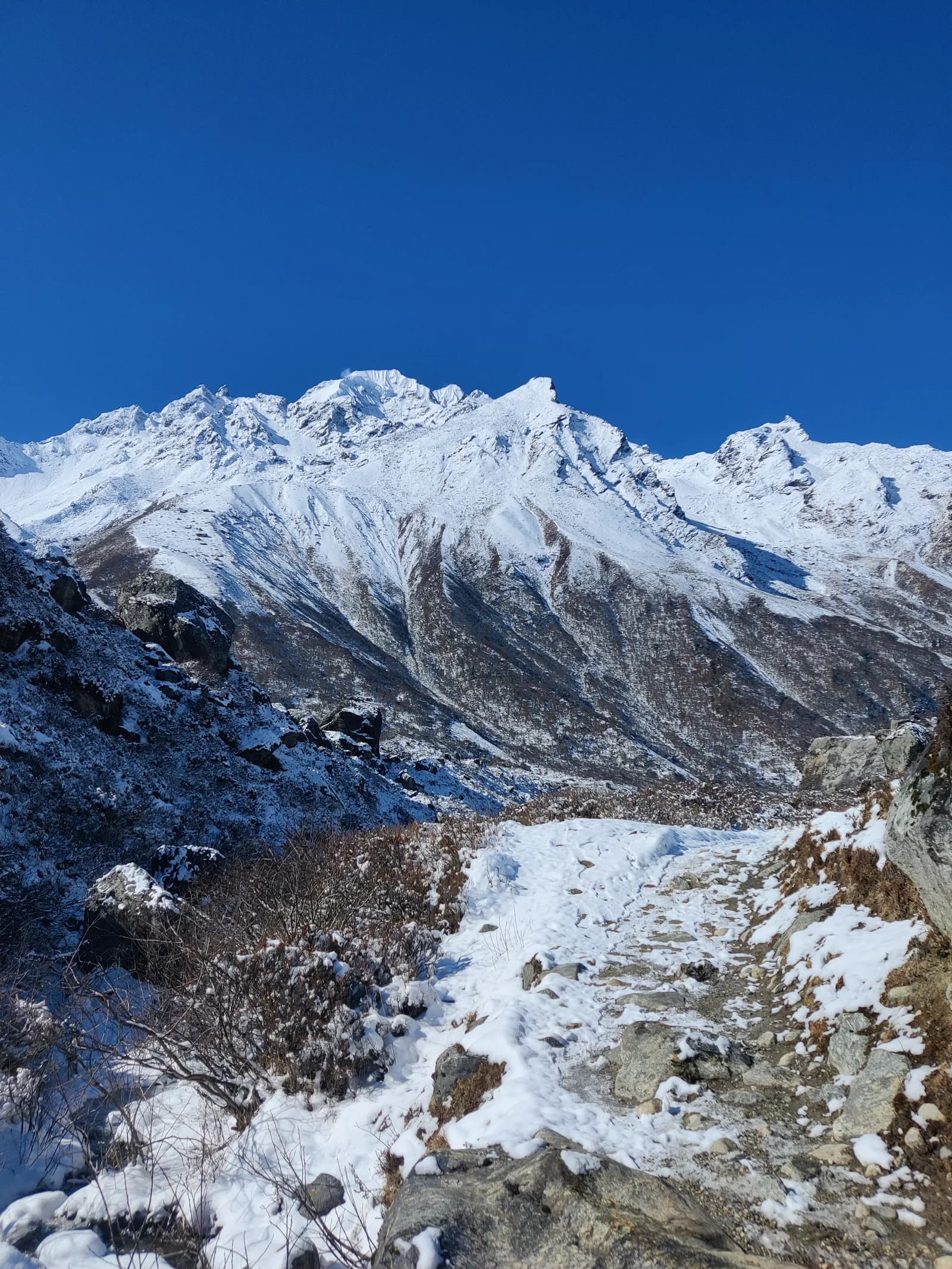
The best time for the Langtang Valley trek is October to November, followed by March to May. In those months the sky over Kyanjin Gompa (about 3,870 m) is mostly clear, the trail is dry and the upper viewpoints, Kyanjin Ri (about 4,773 m) and Tserko Ri (about 4,984 m), are reachable. Winter works for the well equipped, and the monsoon is the one season to avoid.
This guide goes month by month, then covers what changes in the lower and upper valley. The day-by-day plan is in the Langtang Valley itinerary, the Langtang region page gives the geography and the Langtang Valley route page lists the days.
טיולים פתוחים בLangtang Valley Trek
טיולים אמיתיים שפרסמו מטיילים שמחפשים שותפים.
The valley and its weather
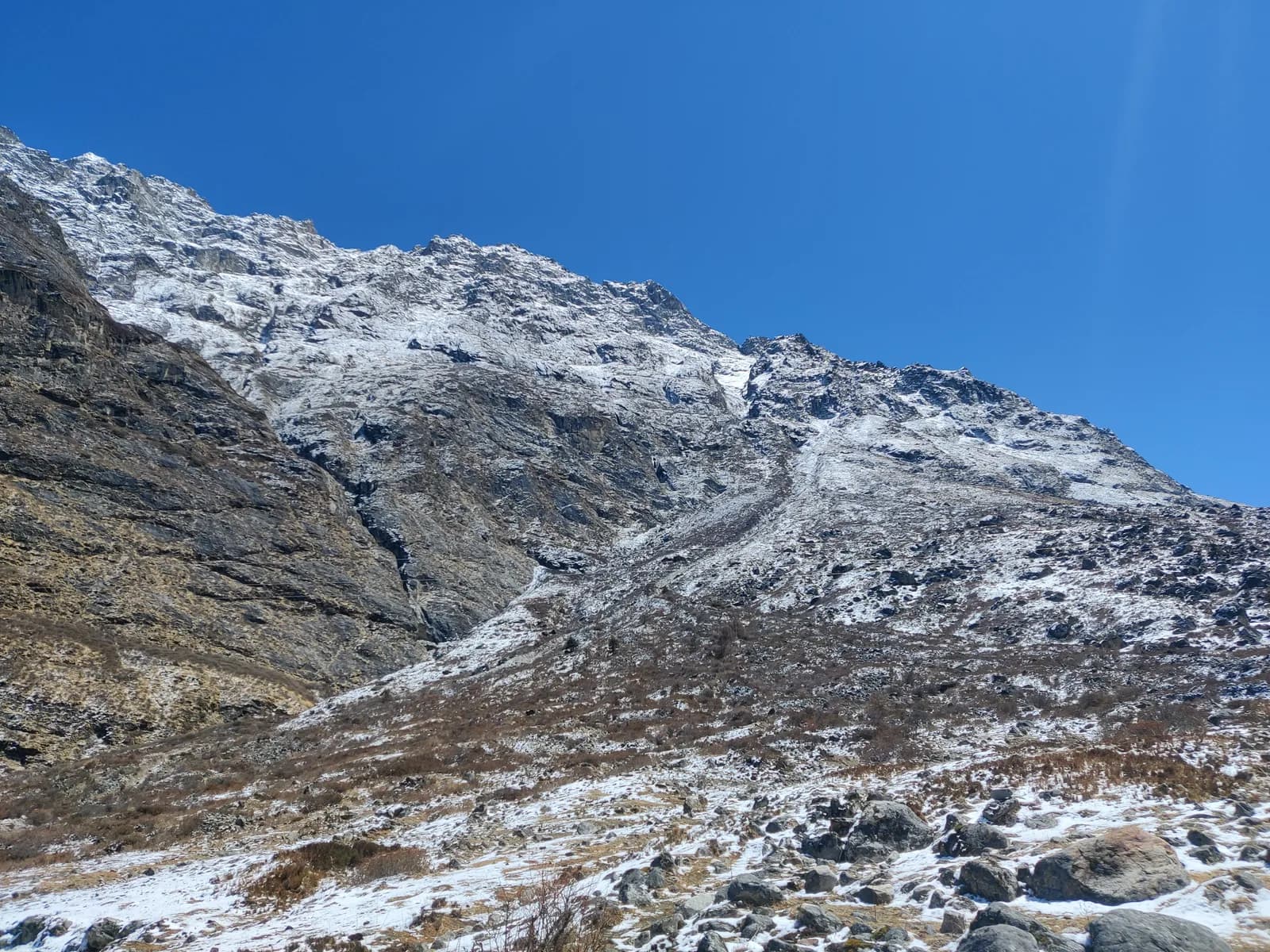
The trek starts at Syabrubesi (about 1,460 m), climbs through forest beside the Langtang Khola to Lama Hotel (about 2,470 m), passes Langtang village (about 3,430 m) and ends at Kyanjin Gompa. Langtang National Park was established in 1976 and is Nepal's first Himalayan national park. The valley is close to the Tibetan border, with high peaks at its head and a strong monsoon on its southern side.
That geography matters because the lower valley is forested and humid, while the upper valley is open and cold. The lower section catches most of the monsoon rain, and the upper section holds winter snow. The 2015 earthquake and avalanche destroyed Langtang village, and the area has been rebuilt; see the culture guide for how to travel respectfully.
The year at a glance
| Month | Lower valley | Kyanjin Gompa | Viewpoints | Verdict |
|---|---|---|---|---|
| January | Cold, dry | Very cold, snow | Snow, possible with care | Experienced only |
| February | Cool, dry | Very cold | Often clear | Possible |
| March | Cool, clearing | Cold, clear mornings | Good late month | Good |
| April | Warm, rhododendron | Cool | Clear mornings | Very good |
| May | Warm, humid | Mild, afternoon cloud | Early starts needed | Good |
| June | Wet, leeches | Cloud and rain | Mostly hidden | Avoid |
| July | Very wet, landslides | Cloud | Hidden | Avoid |
| August | Very wet, landslides | Cloud | Mostly hidden | Avoid |
| September | Wet early, drying | Clearing | Improving | Fair, late month better |
| October | Dry, mild | Cold, clear | Best | Best |
| November | Dry, cool | Very cold nights | Clear | Very good |
| December | Dry, cold | Very cold, snow | Clear but icy | Possible |
As elsewhere, treat this as a guide rather than a forecast.
Spring: March to May
March brings cold mornings and the first warm days in the lower valley. The upper valley may still have patches of snow, and some trails are icy early in the day. Clear mornings are common.
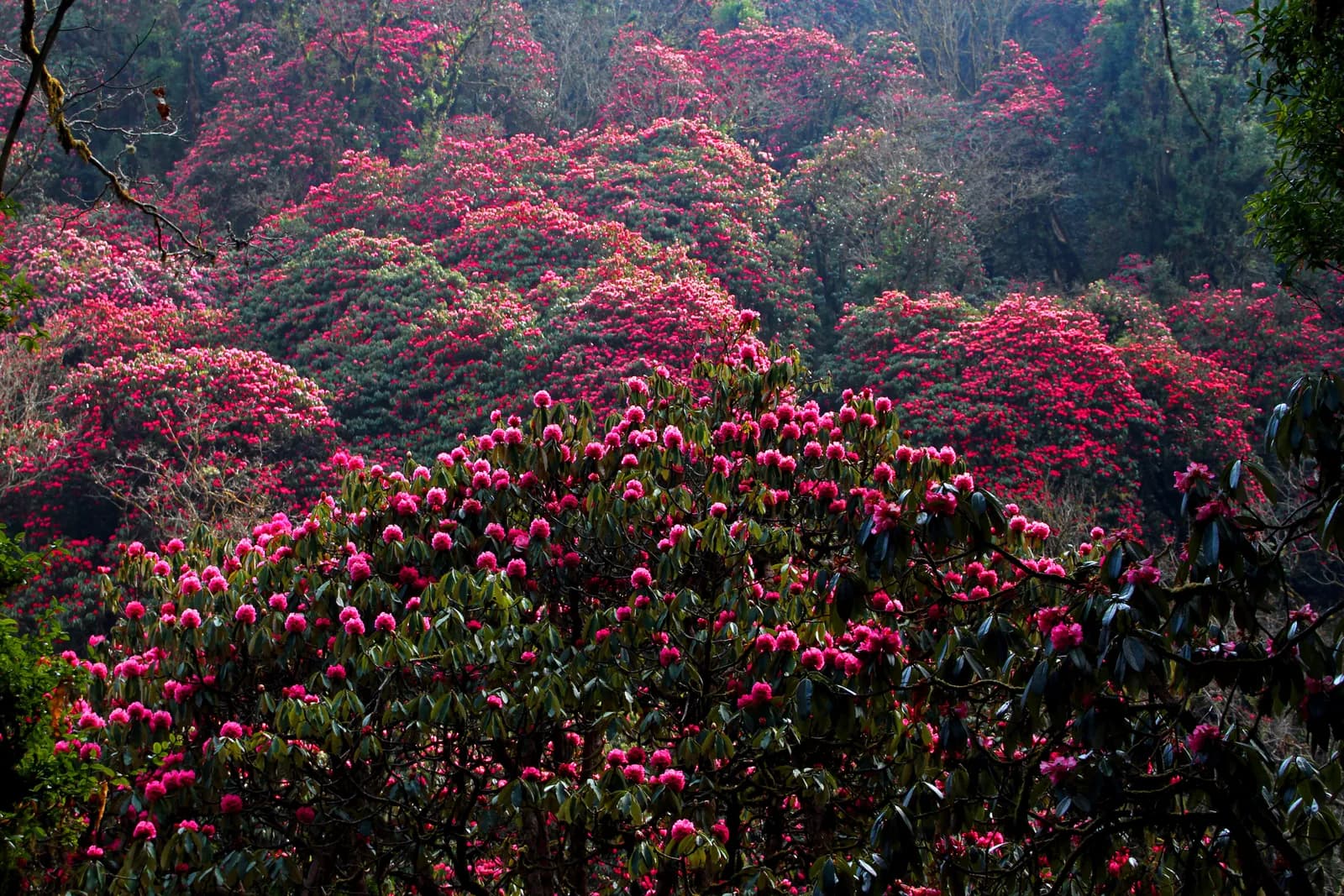
April is a strong month, with rhododendron flowers in the forest above Syabrubesi and between Bamboo and Lama Hotel, warm days and clear views before noon. The valley is busier than March but quieter than October.
May is warm and humid in the lower valley, with afternoon cloud in the upper valley. Start viewpoint climbs very early. By late May the monsoon build-up arrives and views fade.
Monsoon: June to August
The lower valley turns wet. Landslides are common on the trail and on the road to Syabrubesi, streams flood and leeches appear in the forest. Clouds often hide the peaks. Lodges operate with fewer guests, and getting in and out can mean waiting for roads to clear. If you want to trek in these months, consider a rain-shadow route; see monsoon trekking in Nepal. For landslide and flood hazards on any route, see the partners and safety hub.
Autumn: September to November
September is a transition month. The first half can be wet, and the second half dries out with fresh, green hillsides. Leeches decline through the month.
October is the best month for stability and views, with clear skies and dry trails. It is also the busiest, so book your bus or jeep and your lodges ahead, especially around the Dashain and Tihar festivals, which usually fall in late September to early November.
November is cooler and often clear, with cold nights at Kyanjin and fewer people. Early November is excellent; late November brings the first winter chill.
Winter: December to February
Langtang is a good winter trek for experienced, well-equipped trekkers. Days in the upper valley are often sunny and the trails are quiet. Nights at Kyanjin Gompa are severe, fresh snow can slow the walk to Kyanjin Ri, and the road to Syabrubesi is open most of the time but can be icy. Not all lodges stay open at the top of the valley, so confirm before you go.
Viewpoints and side trips
Kyanjin Ri and Tserko Ri are the two classic high points. Kyanjin Ri is a steep half-day climb from Kyanjin Gompa, and Tserko Ri is a longer day to almost 5,000 m. Both require clear weather and good acclimatisation; the acclimatisation schedule explains the pacing. The best conditions are early morning in October, November and April.
Access by season
Syabrubesi is reached by road from Kathmandu via Dhunche, a full day by bus or jeep. In the monsoon, landslides can block the road for hours or days; in winter, ice and snow near Dhunche can slow the journey. Read Kathmandu to Syabrubesi for Langtang for timings and options.
Choosing your month
- Clear views and stable weather: October or early November.
- Flowers, warmth and fewer crowds than October: April.
- Quiet and cold: February or early December, with proper gear.
- Avoid: June to August.
For other regions and months, the best time to trek in Nepal is the hub.
What each stage feels like through the year
| Stage | Altitude | Spring | Autumn | Winter |
|---|---|---|---|---|
| Syabrubesi to Lama Hotel | 1,460 to 2,470 m | Warm, flowering forest | Dry, mild, busy | Cool, quiet, shaded and cold at dawn |
| Lama Hotel to Langtang village | 2,470 to 3,430 m | Mild days, cool nights | Clear, cold nights | Frozen mornings, some snow patches |
| Langtang village to Kyanjin Gompa | 3,430 to 3,870 m | Cold nights, afternoon cloud | Cold, clear | Severe nights, snow likely |
| Viewpoints | 4,700 to 5,000 m | Clear early, cloudy later | Best of the year | Cold, icy, short days |
The lower forest is the stretch that benefits most from spring, since the rhododendrons and warm light make it the prettiest, while the upper valley is at its best in autumn when the air is cleanest.
Gear by season
- Spring: a light rain shell for afternoon showers, a sun hat and a sleeping bag rated for just below freezing.
- Autumn: warm layers, a hat and gloves for the viewpoints, and a headlamp for early starts.
- Winter: a proper down jacket, a sleeping bag suited to deep frost, insulated boots and traction devices for icy sections.
- Monsoon (if you go): full waterproofs, leech protection and dry bags for your electronics.
The Nepal trek packing list covers the shared kit and how to build a layering system.
Buffer days and flexibility
Langtang is short enough that a spare day is easy to build in. Consider one buffer day at each end: one before the trek in case the bus to Syabrubesi is delayed, and one after in case the return is blocked or you want a second day at Kyanjin. In the monsoon, add two. If your trek is part of a larger itinerary, such as a Gosaikunda extension, plan the combination using the route comparison guide, since conditions at the Laurebina pass differ from the valley floor.
Crowds and lodges
Langtang does not see the volume of Everest or the Annapurna Circuit, but October and April are clearly busier. Lodges at Langtang village and Kyanjin Gompa are small, with shared bathrooms and a communal dining room. In peak weeks, send a message ahead through your guide or the lodge owner and arrive before mid-afternoon. In winter some lodges close; in the monsoon a few reduce their menu.
A quick decision guide
- Choose by what you want to see. Flowers, pick April; clear peaks, pick October.
- Choose by risk tolerance. If you cannot afford a delay, avoid June to August and late December.
- Choose by company. If you are looking for a partner to share a guide and jeep, October and April have the most people in Kathmandu and Pokhara who are looking; see how to find a trekking partner safely.