
Tilicho Lake trek in winter: is it possible and who should go
Tilicho Lake in winter: why most trekkers wait for October to November or March to May, what snow does to the landslide section and Thorong La side, and how a partner and shared guide change the decision. Dated October 2026.
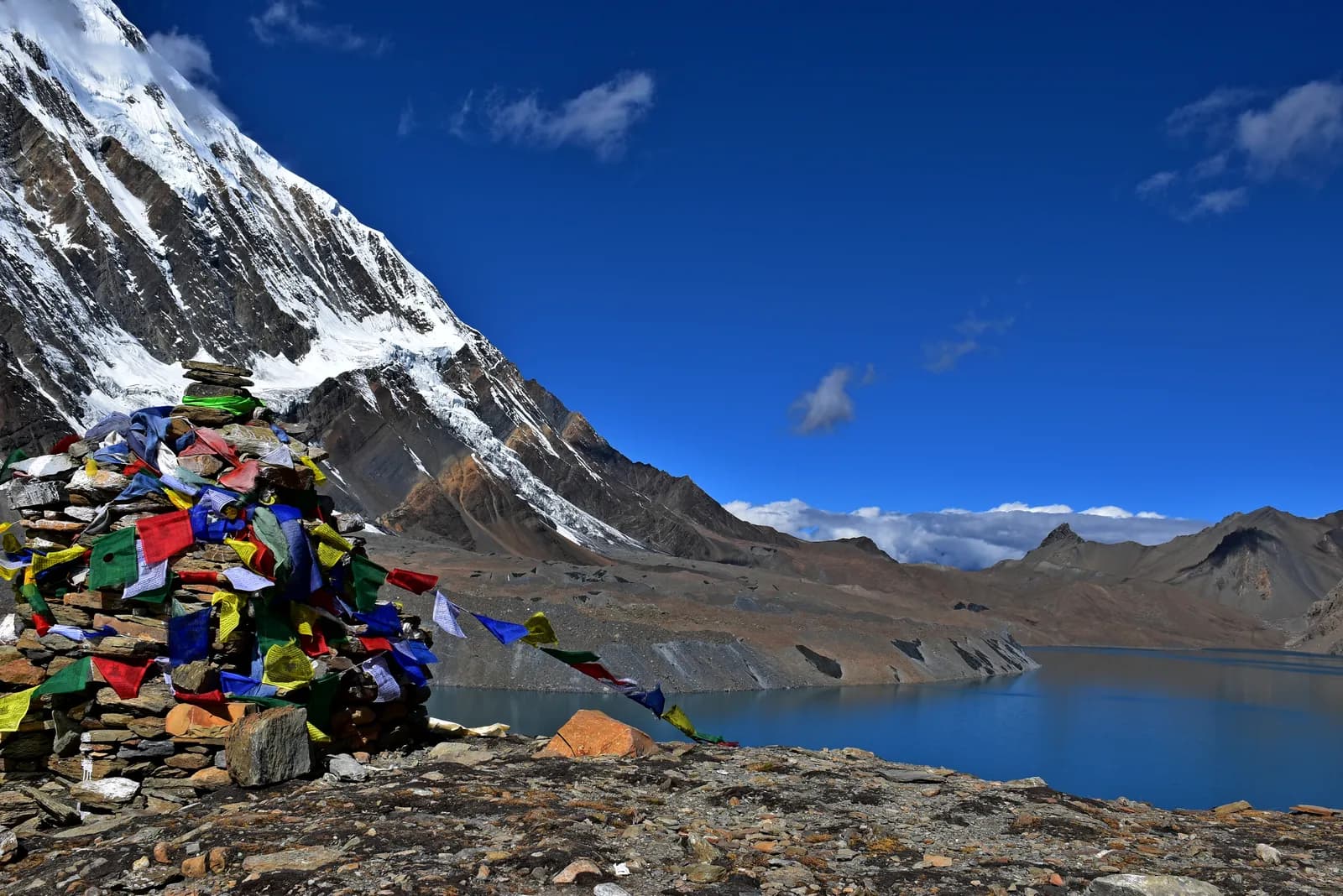
Tilicho Lake is among the highest big lakes you can reach on foot in Nepal, and in winter it is a poor choice for most people. Our Tilicho Lake pages give the windows as October to November and March to May, say snow can block the high sections in early spring and late autumn, and say winter closes the route for most trekkers. If you have only a January or February gap, a gentler Annapurna walk is the better plan; if you still want Tilicho, you need a licensed guide, a partner, spare days and a willingness to turn back at the landslide section.
This guide is the honest version of the winter question. It sets out what snow does to the route, what the days look like, what a shared guide costs and how to find someone to go with when the season opens again. Facts come from our route page and its sources, checked in October 2026. Conditions change week to week, and the Himalayan Rescue Association team and lodge owners in Manang know the current state better than any article.
Open trips on Tilicho Lake Trek
Real trips posted by trekkers looking for partners.

Why winter is different on Tilicho
The route is a side trip from the Annapurna Circuit. Our 10-day plan sleeps at Dharapani (1,860 m), Chame (2,670 m), Upper Pisang (3,300 m), Ngawal (3,600 m) and Manang (3,540 m, two nights), then Khangsar (3,750 m), Tilicho Base Camp (4,140 m) and a day to the lake at about 4,920 m before returning to Manang. Three things change in winter:
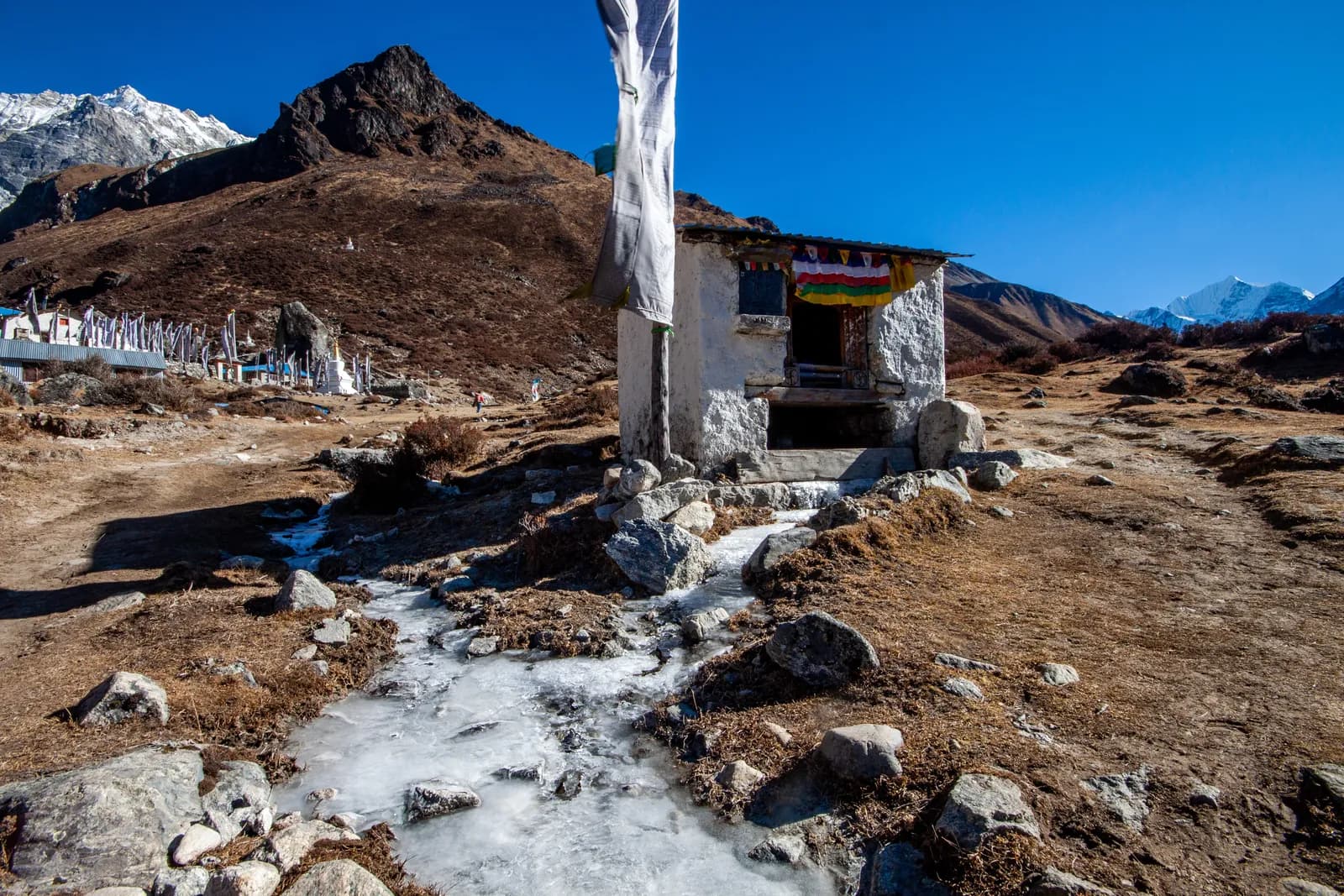
- Snow on the upper stages. The base camp and the lake sit well above 4,000 m, where snow is deeper and lingers. Fresh snow hides the trail and slows the day.
- The landslide section. The route data says one section between Shree Kharka and Base Camp crosses a landslide zone, open but risky, with wind and rockfall later in the morning. Snow and ice make an exposed traverse harder, and a day that begins in the dark has little margin in short winter daylight.
- Cold and closed lodges. Teahouse bedrooms are not heated, and our winter pages say lodges at the top of valleys may be closed. Check with your agency before you plan a night at Base Camp.
Our Tilicho Lake itinerary has the full day plan, and the Annapurna region guide covers the wider area. For the passes in winter read snow and high-pass conditions; Thorong La can be closed from December to February, and the access days up the Marsyangdi are cold even before the lake.
Winter days are short
By our calculation Kathmandu has about 10.4 hours of daylight in mid-December and 10.6 in mid-January, and valley walls cut it further. On a route where the key day starts before dawn and crosses a landslide zone before the late-morning wind, short daylight leaves less room for delay. Our daylight guide shows how to plan stages around it. Read also cold health, frostbite and hypothermia and altitude sickness basics; at 4,920 m both matter.
If you still want Tilicho in winter
Treat it as an expedition, not a holiday:
- Go with a licensed guide. The route is inside the Annapurna Conservation Area, where 2026 operator reports say checkpoints enforce the guide rule (checked 19 October 2026).
- Add spare days. Our plan has no slack. A snow day at Manang or Khangsar needs to be affordable.
- Check the landslide section. Ask in Manang, at the HRA post and with lodge owners; see Himalayan Rescue Association clinics in Manang and Pheriche and checking trail status after landslides and snow.
- Be ready to stop. The lake is an out-and-back day from Base Camp. Turning back costs a view, not a life; see the turn-back rules.
- Carry real winter kit. See the winter gear list and crampons and microspikes guide.
If any of this sounds like too much, plan Tilicho for the spring window. Our best time for the Annapurna Circuit post compares the shoulders and explains why March and November are quieter but colder.
What a partner and a shared guide change
In winter the guide is both the biggest cost and the most important person on the trek, which is why sharing is attractive. Our cost data uses NPR 2,700 to 4,000 a day for Annapurna region guides (operator guides such as Himalayan Partner, 10 February 2026). The plan has 10 guide days, so the guide is NPR 27,000 to 40,000 in total.
| Trekkers sharing one guide | Guide share each (NPR) | About (USD, at NPR 134) |
|---|---|---|
| 1 | 27,000 to 40,000 | 201 to 299 |
| 2 | 13,500 to 20,000 | 101 to 149 |
| 3 | 9,000 to 13,333 | 67 to 100 |
| 4 | 6,750 to 10,000 | 50 to 75 |
Permits are the ACAP entry permit at NPR 3,000 for foreigners and a TIMS card where required, the same as the circuit; see the ACAP guide. Lodging, food and the jeep legs from Kathmandu do not fall when you share. For the full arithmetic use the cost calculator and the Annapurna Circuit cost breakdown, which shares the access days.
A partner is more than a cost saving here. Two people can check each other for headaches and cold, and the decision to turn back at the landslide section is easier if you have agreed a rule before you reach it. Agree the rule, the spare days and how shared guide days are split if one of you stops; see what to agree with partners and what if your partner cannot continue.
Getting there in winter
The plan starts with a bus or jeep from Kathmandu to Besisahar and a jeep on to Dharapani, and it returns from Manang to Besisahar by jeep. Our route data prices the Kathmandu to Besisahar bus at NPR 1,300 to 2,700 per person (local or tourist bus USD 10 to 20, private jeep USD 150 to 220 per vehicle), and the two jeep legs have no published price in our data. Winter road conditions can change quickly, so ask your agency about the road to Manang before you book; see Kathmandu to Besisahar for the Annapurna Circuit and jeep and bus costs to Nepal trailheads.
Safer winter options on the same side of the mountains
Our Annapurna region page says the lower sections and the Poon Hill and Ghandruk area stay walkable in winter. The Poon Hill route is four days from Pokhara and reaches 3,210 m; see Poon Hill itinerary and trekking in Nepal in January. They give you a winter trek and a partner without the lake.
Where sources are silent
- Winter condition reports for the landslide section. We have none for this winter, so ask in Manang.
- Open lodges. We have no list of lodges open at Khangsar or Base Camp in winter.
- Partners. No source counts winter partner-seekers for Tilicho, and we do not publish such a number.
Post your dates for Tilicho
If your window is spring, post your dates now; partners for March and April often start planning in winter. The page for Tilicho Lake in January 2027 shows how a month is laid out, and the Tilicho partner page covers the route. Read finding a trekking partner for Tilicho Lake for how to choose someone, and the partner hub for how matching works. We are a free matching site, not a trekking agency: we do not sell treks, employ guides or handle money, so you book your own licensed guide, transport and beds.