Annapurna Circuit vs Manaslu Circuit: Which to Choose
Annapurna Circuit or Manaslu Circuit? Compare altitude, passes, permits, roads, crowds, seasons and dated costs side by side, with advice on which suits you and how the two connect at Dharapani.
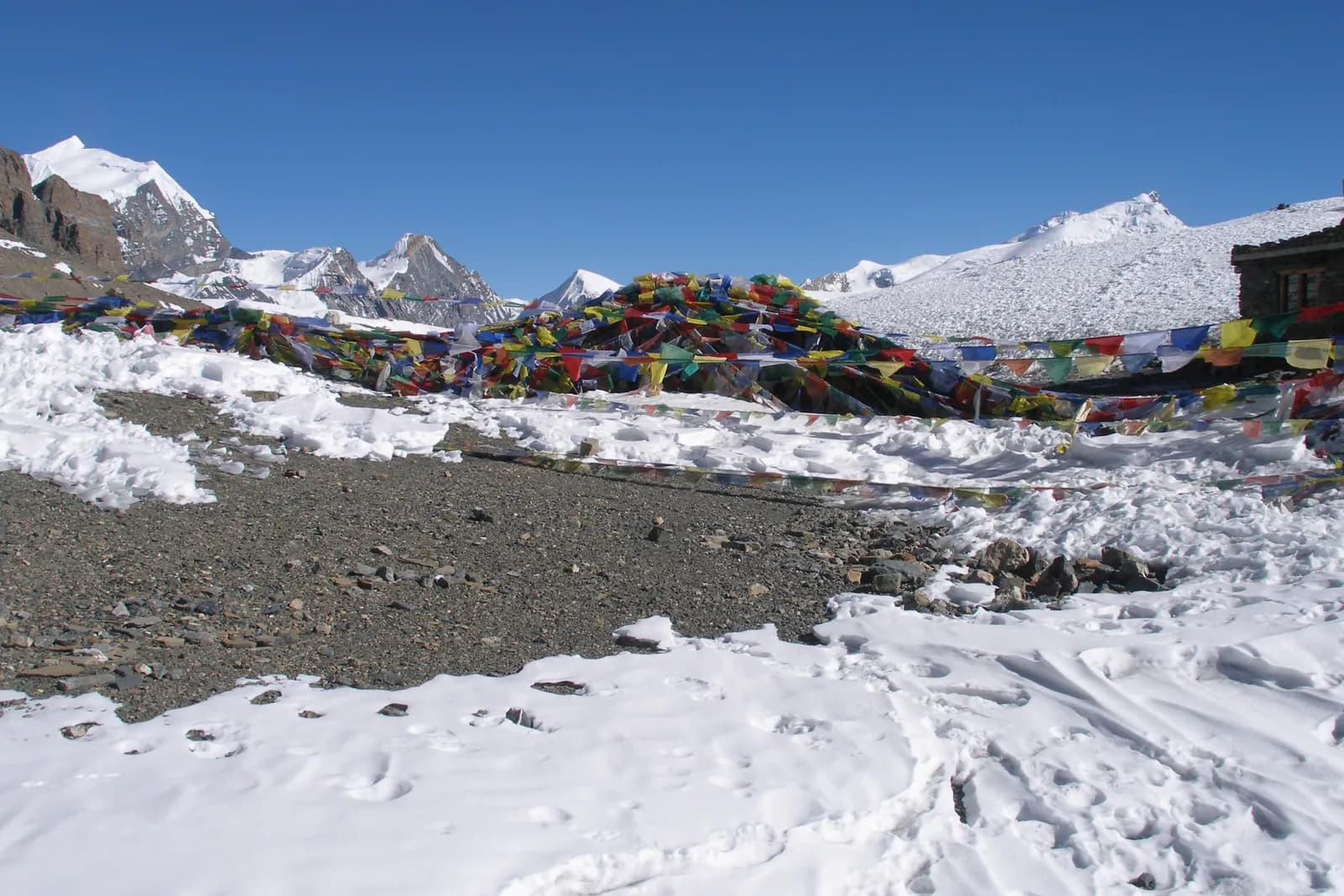
Both are 14-day circuits that cross a high pass and end near Dharapani or Besisahar, and they get compared constantly. The Annapurna Circuit is the bigger, more varied and better-served trek, crossing Thorong La at 5,416 m with lodges, ATMs and jeep roads along much of the way. The Manaslu Circuit is the more remote and more expensive one, a restricted-area trek over Larkya La at 5,106 m that needs a registered agency and a licensed guide. If you want variety and flexibility, choose Annapurna. If you want remoteness and a Tibetan-Buddhist valley with few other trekkers, and you accept the permit and cost, choose Manaslu.
Our route and cost pages give the facts for a fair comparison: days, altitudes, permits, roads and what each trek costs as of October 2026. This guide sets them side by side, then helps you decide by season, fitness and how you like to travel.
Open trips on Annapurna Circuit Trek
Real trips posted by trekkers looking for partners.

Side by side
| Annapurna Circuit | Manaslu Circuit | |
|---|---|---|
| Days in our plan | 14 | 14 |
| High pass | Thorong La, 5,416 m | Larkya La, 5,106 m |
| Difficulty on the route page | Hard | Hard |
| Start | Drive to Dharapani, 9 to 10 hours | Drive to Machha Khola, 8 to 9 hours |
| Finish | Pokhara, via Tatopani and Poon Hill | Besisahar and Kathmandu |
| Permits | ACAP | Restricted Area Permit, MCAP and ACAP, through an agency |
| Guide | Required in practice (NTB rule, enforced at ACAP checkpoints) | Required with the permit (Immigration rules) |
| Rest days | Manang | Samagaun and Samdo |
| Roads | Jeep tracks follow much of the Marsyangdi and Kali Gandaki | No road beyond the trailhead; no air access |
Landscape and culture
The Annapurna Circuit changes character more than almost any trek in Nepal. It climbs from green Marsyangdi valley villages, past Chame (2,670 m) and Upper Pisang (3,300 m), to Manang (3,540 m) and then over Thorong La to Muktinath (3,800 m), drops into the dry Kali Gandaki valley through Kagbeni and Jomsom, and finishes in the forest and rhododendron of Ghorepani and Poon Hill. You see Gurung and other hill villages, Tibetan-influenced Buddhist communities in the north and Hindu pilgrimage at Muktinath. The region page notes apple pie in Marpha and hot springs at Tatopani as rest stops.
The Manaslu Circuit is more focused. The lower Budhi Gandaki is settled by Gurung and other hill communities, and above Namrung the villages are Tibetan-speaking and Buddhist, with monasteries, long mani walls, chortens and prayer wheels. Samagaun, Samdo and Lho are old trading communities, and the people of Samdo are of Tibetan origin. The region page says snow leopard, Himalayan tahr and musk deer live in the conservation area, and tahr are often seen above Samagaun. The trek feels more remote because it is: lodges at Samagaun, Samdo and Dharamsala are smaller and more basic than on the Annapurna or Everest routes, and there are no cash machines.
Altitude and the passes
Both have two rest days and a big pass day. On the Annapurna Circuit you sleep at Manang (3,540 m) for acclimatisation, then Yak Kharka (4,050 m) and Thorong Phedi (4,540 m), and cross the 5,416 m pass in an 8 to 10 hour day to Muktinath, which is a 1,600 m descent on the far side. On the Manaslu Circuit you climb through Lho (3,170 m) to Samagaun (3,530 m) for a rest day, then Samdo (3,875 m) for another, then Dharamsala (4,470 m), and cross Larkya La (5,106 m) in an 8 to 10 hour day to Bimthang (3,720 m).
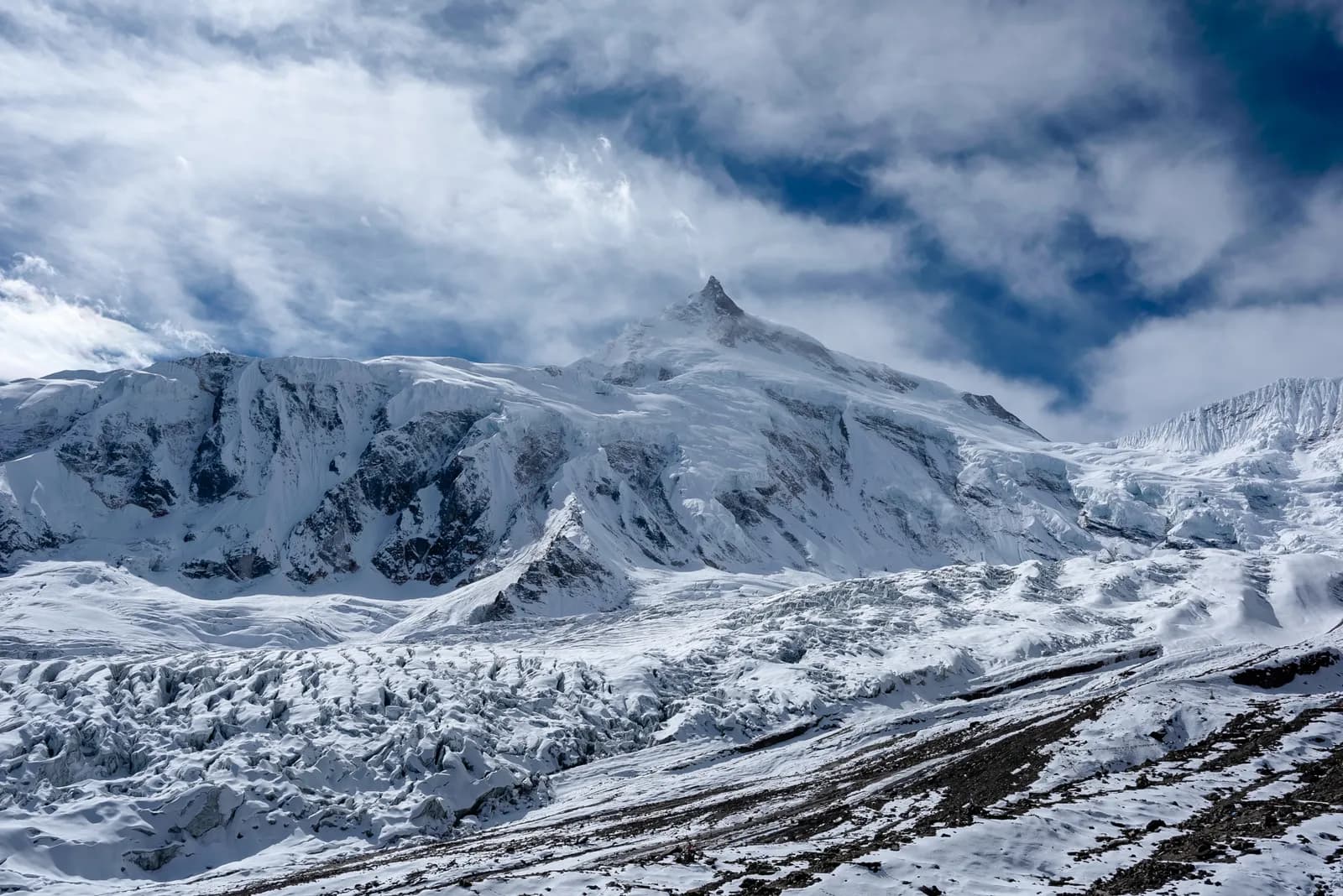
Thorong La is higher, and the descent after it is steeper. Larkya La crosses a glacial moraine and snow, and weather can close it; the region page says to start before dawn and keep the group together. Both follow the same principle: above 3,000 m, a sleeping-altitude gain of no more than 500 m a night with an extra night for every 1,000 m gained, per the CDC. Our acclimatisation schedule shows the Annapurna nights, and the Manaslu itinerary shows its own.
Permits and rules
This is the clearest difference. The Annapurna Circuit needs an ACAP entry permit, which you can buy yourself in Kathmandu or Pokhara, plus a TIMS card where required. The Manaslu Circuit needs a Restricted Area Permit from the Department of Immigration through a registered agency, a Manaslu Conservation Area permit and an ACAP permit for the final stretch, and a licensed guide. As of October 2026 the numbers are:
| Permit | Annapurna Circuit | Manaslu Circuit |
|---|---|---|
| ACAP | NPR 3,000 | NPR 3,000 |
| MCAP | none | NPR 3,000 |
| Restricted Area Permit | none | USD 100 per week plus USD 15 per extra day (September to November); USD 75 plus USD 10 (December to August) |
For the 12 permit days in our Manaslu plan the restricted-area permit is USD 175 in the autumn season and USD 125 in the rest of the year. See the Manaslu permit guide, the ACAP guide and our permits page.
Cost
Our dated cost model, which converts at NPR 134 to the dollar and includes lodging, listed transport, permits, a guide and porters but not international flights, insurance, hotels or tips, gives these per-person totals as of October 2026.
| Style | Annapurna Circuit | Manaslu Circuit |
|---|---|---|
| Budget lodges, guide, one trekker | USD 630 to 920 | USD 830 to 1,200 |
| Mid-range, two sharing | USD 730 to 1,100 each | USD 990 to 1,450 each |
| Mid-range, four sharing | USD 620 to 920 each | USD 820 to 1,250 each |
The gap is the permit set and, above all, the guide, because Manaslu requires one for the whole 14 days and the transport sections are priced per vehicle. The Annapurna figure leaves out the Besisahar to Dharapani and Tatopani to Pokhara jeep fares, which have no published figure in our sources. See the cost guide. Splitting costs with partners reduces the Manaslu total more than the Annapurna one.
Crowds and seasons
Both have the same two main seasons, March to May and October to November. The Annapurna Circuit is much busier, with lodges in every village, jeep traffic on parts of the road and the busiest period in autumn. The Manaslu Circuit has far fewer people, which is much of its appeal. In winter the Manaslu pass has deep snow and the upper villages are often empty, and the Annapurna Circuit's pass can close. In the monsoon the Annapurna Circuit's northern section is much drier than the south, while Manaslu is wet and landslide-prone, with few people trekking. See best time for the Annapurna Circuit and best time for the Manaslu Circuit, and snow and high pass conditions.
Logistics
Annapurna starts with a long drive via Besisahar to Dharapani and ends with the Poon Hill sunrise and a drive from Nayapul to Pokhara. Manaslu starts with a rough jeep drive via Arughat and Soti Khola to Machha Khola and ends with the jeep from Dharapani to Besisahar and a 6 to 7 hour drive to Kathmandu. Our guides to Kathmandu to Besisahar and Kathmandu to Machha Khola cover them.
Who each trek suits
The Annapurna Circuit suits trekkers who want to decide as they go. You can start walking at Besisahar or Bulbule, skip road sections by jeep, finish at Jomsom and fly or drive to Pokhara, or continue to Tatopani and Poon Hill as the plan does. The open-area rules mean you can buy the permit yourself, and the density of lodges means a bad day can be fixed with an extra night. It is the better choice for a first long trek, for people with uncertain fitness and for those who may need to shorten the route.
The Manaslu Circuit suits trekkers who have already done a long trek, accept the agency and guide structure and want a quieter experience. You commit to the permit dates when you apply, the lodges above Namrung have limited menus and no machines and the only exit from the upper valley is over Larkya La or back the way you came. That commitment is the trade for the remoteness. The cost matters too: on our model, one trekker pays USD 1,400 to 2,100 at mid-range on Manaslu, against USD 1,000 to 1,550 on Annapurna, and four sharing narrow the gap to USD 820 to 1,250 against USD 620 to 920. If you are looking for people to share an agency, guide and jeep, see how to find a trekking partner safely.
Which should you choose?
| If you want | Choose |
|---|---|
| Variety: green valleys, desert, pilgrimage, forest | Annapurna |
| Remote valleys and Tibetan Buddhist villages | Manaslu |
| To plan independently and keep costs lower | Annapurna |
| The lowest crowds | Manaslu |
| A flexible, shorten-able trek with jeeps if needed | Annapurna |
| Higher pass | Annapurna (5,416 m) |
Doing both
The Manaslu Circuit ends at Dharapani, which is on the Annapurna Circuit. Our Manaslu page says some people continue over Thorong La, joining the Annapurna Circuit for a trek of 20 days or more, which requires serious fitness and acclimatisation, and that plans should be agreed with your agency because permits and the guide cover only certain sections. For most people, one circuit per trip is plenty. If you are comparing other options, see which Nepal trek is right for you and Everest Base Camp versus the Annapurna Circuit.