Sherpa Culture on the Everest Trail
Who the Sherpa are, the Buddhist landscape of the Khumbu, what you meet from Phakding to Tengboche, Mani Rimdu, etiquette at mani walls and gompas, porter welfare and responsible trekking in Sagarmatha National Park.
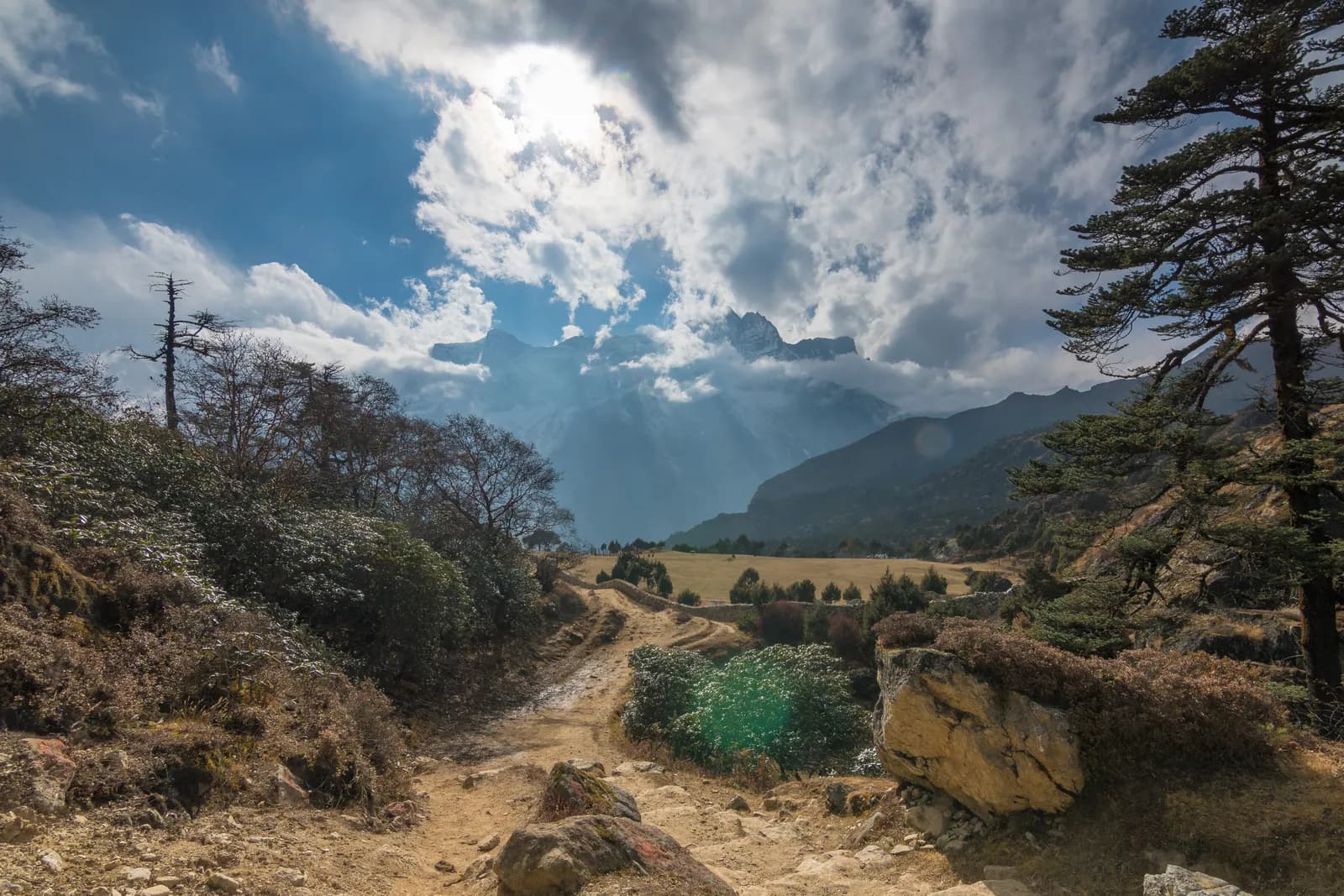
The Everest trail is not an empty mountain with lodges on it; it is the home valley of the Sherpa people, and walking it well means knowing where you are. The Khumbu is Sherpa country: Tibetan Buddhist of the Nyingma school, dotted with mani walls, chortens and monasteries, with Namche Bazaar as its trading hub and Tengboche as its spiritual centre. A handful of habits, passing mani walls with the wall on your right, removing shoes in a gompa, asking before you take a photograph and treating porters as colleagues, change how you are received and how much you take from the walk.
This guide describes the culture you meet on the Everest Base Camp route day by day, using our route and region pages and the Wikipedia article on the Sherpa people, then sets out etiquette, festivals and responsible choices. It is not a history of the Sherpa; it is a guide to walking through their valleys with respect. For the broader rules of the trail, read Nepal trail etiquette and culture and monastery etiquette.
رحلات مفتوحة في Everest Base Camp Trek
رحلات حقيقية نشرها متنزهون يبحثون عن شركاء.
Who the Sherpa are
The word Sherpa is both an ethnic name and, in everyday use, a job. Wikipedia says the Sherpa are descended from nomads who settled in the Himalayas near Mount Everest, in the Khumbu and Solu regions, with oral history describing four clans that migrated from Kham in eastern Tibet to Solukhumbu. The name derives from the Tibetan words for "east" and "people". Their language belongs to the Tibeto-Burman family and is mixed with eastern and central Tibetan dialects, and the large majority are Buddhist, following the Nyingma school, with local mountain deities and older Bon influences in their practice. Each clan, the article says, worships certain peaks and their protective deities.
The second meaning is the one many visitors know. Many Sherpas work as mountaineering and trekking guides, and the word is often used by foreigners for almost any Himalayan climbing guide whatever their ethnicity. Tenzing Norgay, who reached the summit of Everest with Edmund Hillary in 1953, is the best-known example. In the Khumbu, it is worth remembering that a Sherpa is a person and a community, not a job title, and that the lodge owner, the guide and the porter you meet may or may not be Sherpa.
The religious landscape
Our Everest region page says the Sherpa communities of Solukhumbu follow Tibetan Buddhism of the Nyingma school, and the landscape is full of markers:
- Mani walls are long banks of stones carved with the mantra Om Mani Padme Hum. Pass them with the wall on your right.
- Chortens mark village entrances and are walked around clockwise.
- Prayer flags carry blessings on the wind. Do not step over or sit on them.
- Prayer wheels are turned clockwise with the right hand. Do not touch them with your left hand.
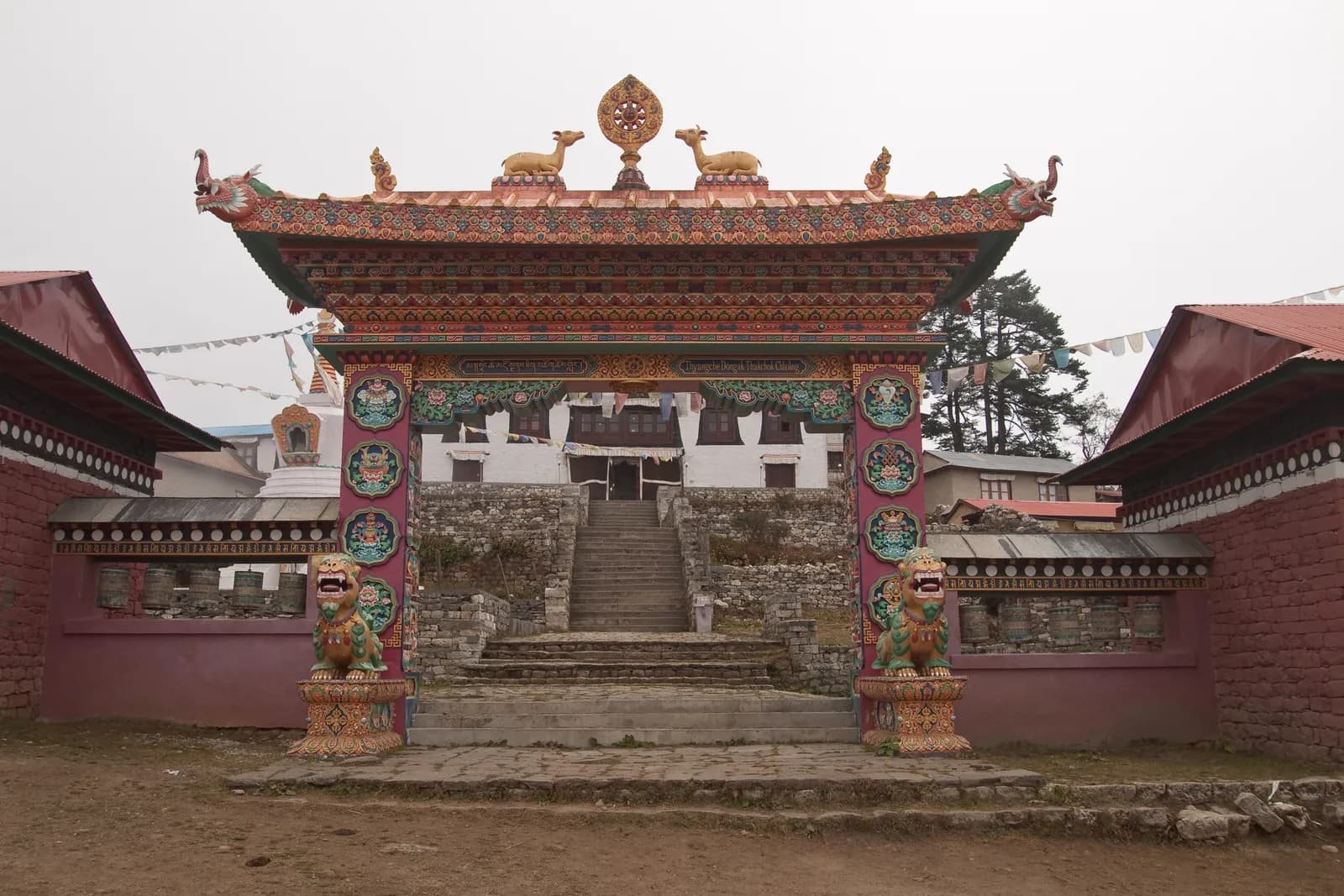
- Gompas welcome quiet visitors. Dress modestly, remove your shoes before entering and ask before taking photographs.
Mountain deities are respected here. Khumbila, above Khumjung, is considered a protective god, and climbing it is forbidden, according to our region page. The Sherpa name for Everest, as Wikipedia notes, is Chomolungma.
The trail through Sherpa villages
The standard route gives a series of encounters, all on our Everest Base Camp route page.
Lukla and Phakding (days 1 to 2). The first villages are strung along the Dudh Koshi, with mani walls and prayer wheels turned by streams. From Monjo, the gate of Sagarmatha National Park, you are in the park, which was established in 1976 and listed as a UNESCO World Heritage Site in 1979. See the Sagarmatha permit guide.
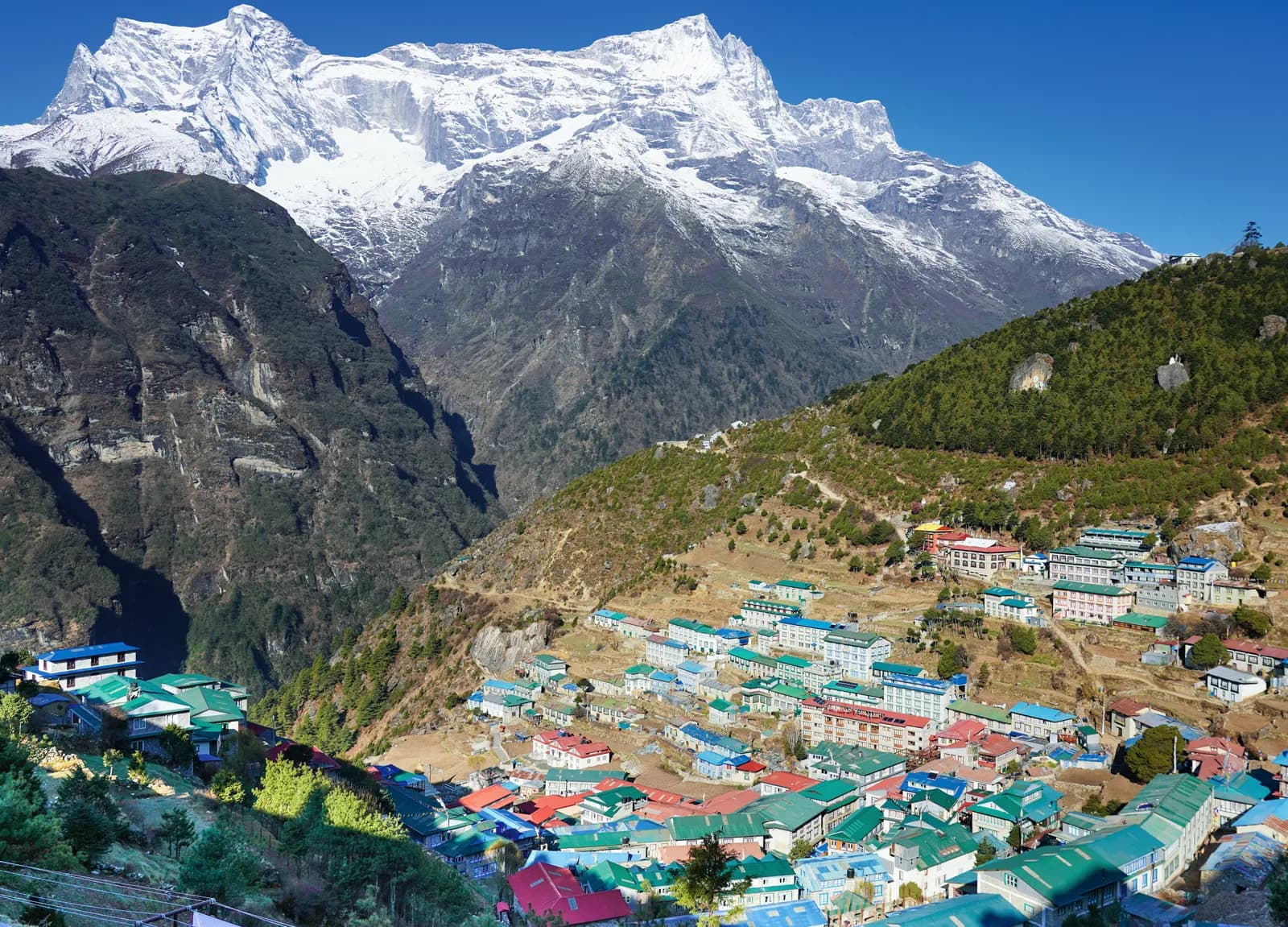
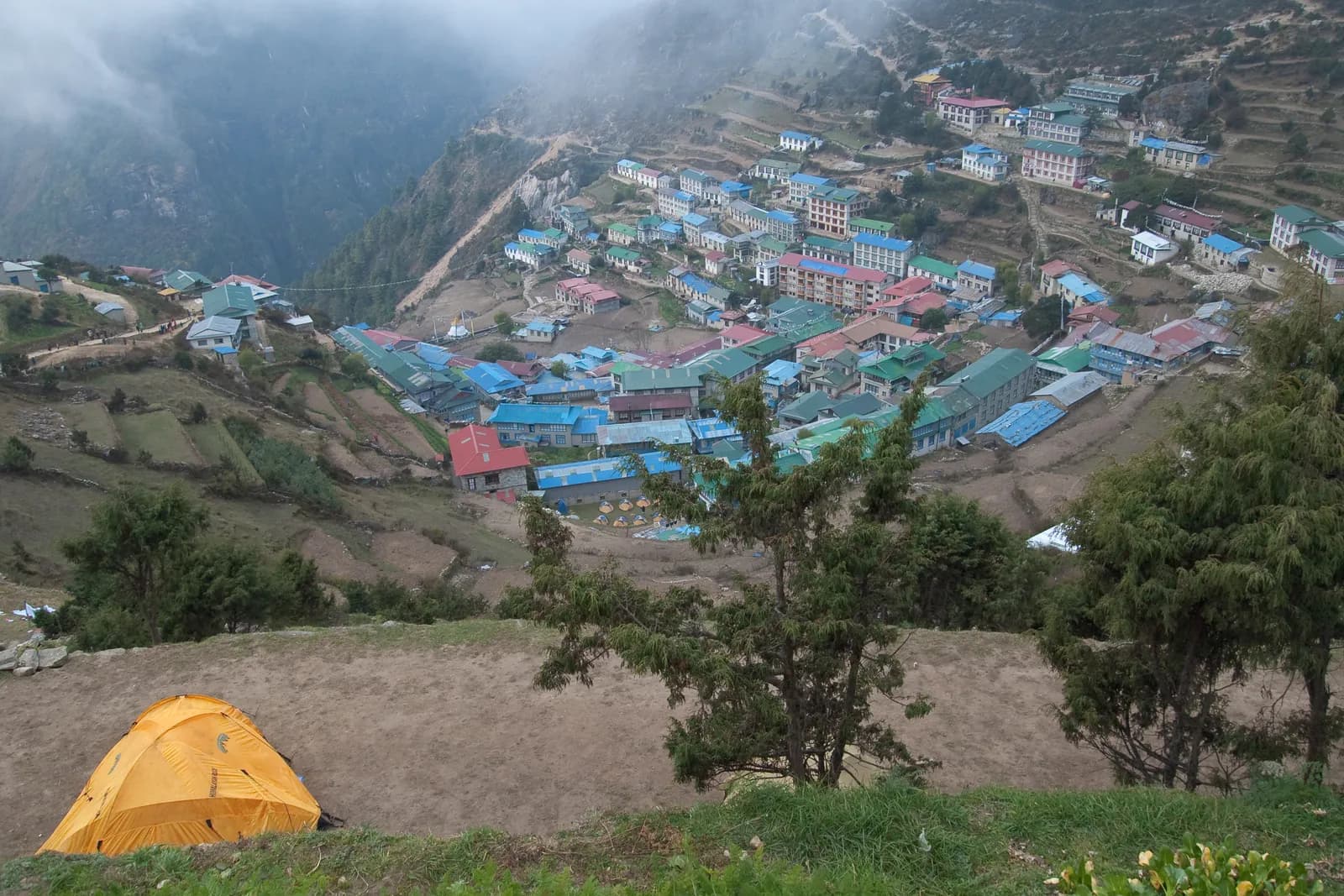
Namche Bazaar (days 2 to 3, 3,440 m). Namche is the Sherpa trading town, with bakeries, gear shops and a Saturday market, according to our route page. On the acclimatisation day the classic walk goes up to the Everest View Hotel and on to Khumjung and Khunde, where you can visit the monastery and the school Edmund Hillary helped build. There is also a Sherpa museum above Namche. Our region page notes that the Hillary-founded school and hospital at Khunde and Khumjung continue to serve the community.
Tengboche (day 4, about 3,860 m). The monastery, founded in 1916 and rebuilt after a fire in 1989, is the spiritual centre of the Khumbu, and visitors may watch afternoon prayers quietly. Sit quietly at the back, switch off your phone and leave a donation if you wish. Early morning and evening bring the best light on Ama Dablam.
Higher villages (days 5 to 9). Above Tengboche the villages are fewer and the lodges more basic, but the mani walls and prayer flags continue. The Himalayan monal pheasant, our route page notes, is often seen in the forest at Tengboche.
Festivals
Mani Rimdu, the festival celebrated at Tengboche monastery, falls in October or November, according to our seasons guides. Wikipedia lists it, alongside Losar, the Sherpa new year, among Sherpa festivals. Dates follow the Tibetan lunar calendar and change each year, so if you want to attend, ask your lodge or agency for the year's dates and book early, because the lodges fill. If you are there, watch quietly, do not block the courtyard, ask before photographing masked dancers and follow the monks' lead. Our October guide and November guide cover the season.
Etiquette in practice
- Dress modestly in villages. Cover your shoulders and knees, as our region page advises.
- Remove your shoes before entering a monastery or a lodge's prayer room, and do not step over religious objects.
- Ask before photographing people, and especially monks, nuns and ceremonies.
- Walk clockwise around mani walls, chortens and prayer wheels.
- Do not touch religious objects or step on prayer flags.
- Learn a few words. "Namaste" is understood everywhere; our trail etiquette guide has more.
- Be patient. Lodge owners and staff work long days at altitude, and dinner takes time.
Porters, guides and fair treatment
Our region page asks you to treat porters as colleagues and to check that your agency provides proper clothing, shelter and sensible loads. The Sherpa name for a mountain guide has become shorthand for that job, but it is also a reminder that guides and porters are often from the communities you are visiting. Ask your agency how staff are paid and equipped; agree tips at the start and give them directly at the end. Our region pages and guide versus porter roles guide explain the difference between the two jobs.
Responsible trekking in the park
Sagarmatha National Park has a serious waste problem at altitude, because everything carried up has to come back down. Our region page asks you to avoid single-use plastic by using refill stations and purification tablets, carry out batteries and wrappers, use toilets and not the trail side and never burn rubbish. In the high lodges, most heating comes from yak dung or imported fuel, because the forest is protected, so do not ask for a wood fire. Stay on the trail, because the pasture is fragile. Spend money in local lodges and bakeries, hire local guides and porters and buy local products.
A note on memory
In 2014 a serac collapse above the Khumbu Icefall killed 16 Nepalese Sherpa guides, according to Wikipedia, in what was then the deadliest disaster in Everest climbing history. Memorials along the trail remember climbers and guides, and the people who live and work in the Khumbu carry that history. Pass memorials quietly and do not climb on them or take selfies on them.
Where to go next
For the walk itself, read the Everest Base Camp day-by-day itinerary, the Everest region guide and Everest Base Camp versus Gokyo Lakes.