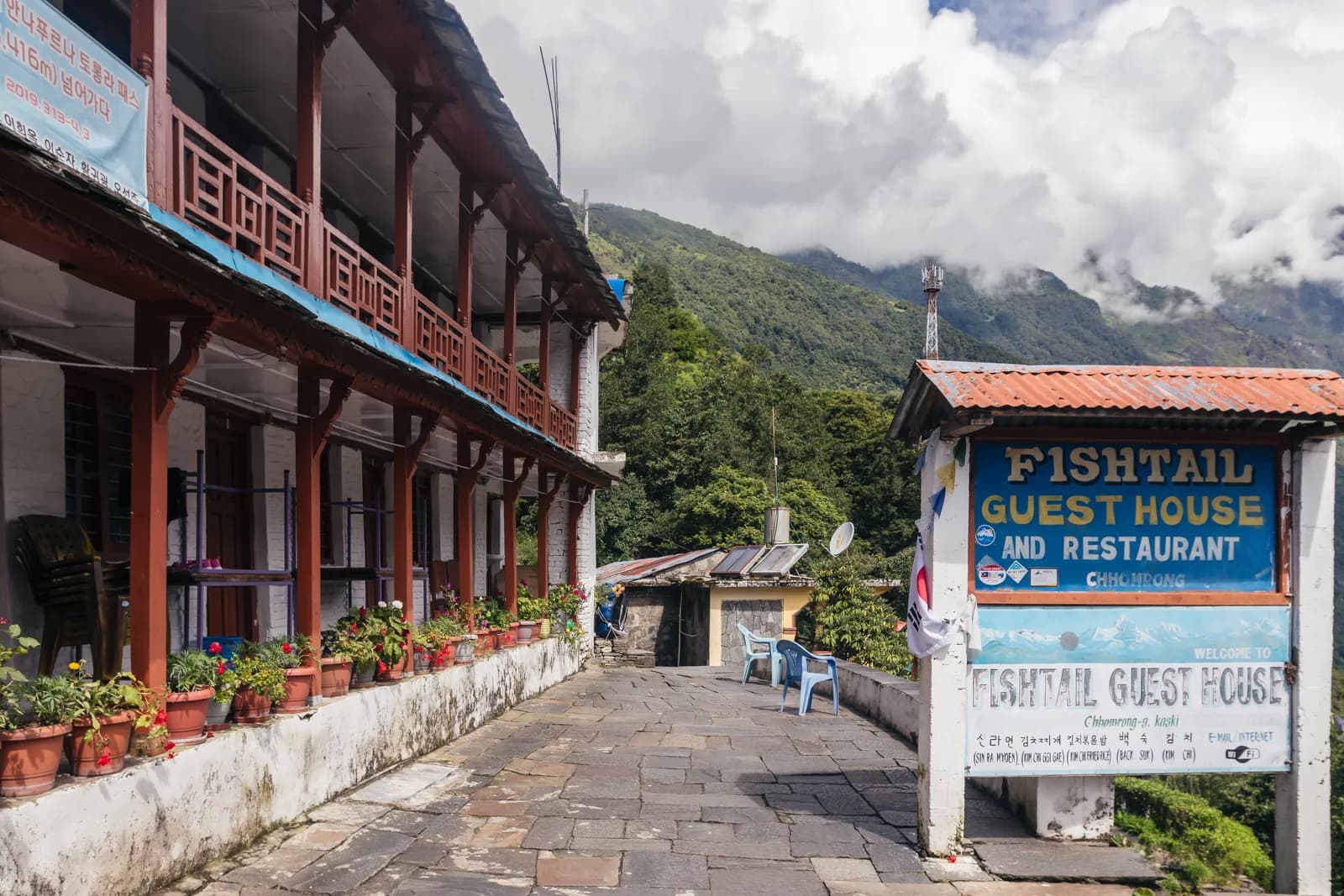
Dal Bhat and the Teahouse Menu Explained
What dal bhat is, why refills make it the best-value order, how the rest of the teahouse menu works, dated meal prices by altitude and region, how ordering and etiquette work and how to eat well on a long trek.

The teahouse menu is long and the sensible answer to it is short. Dal bhat, a plate of rice with lentil soup, a vegetable dish and pickle, is the staple of every Nepal trek, usually comes with refills and is almost always the best-value, freshest thing a lodge kitchen makes. The rest of the menu, noodles, fried rice, potatoes, eggs, soups, pasta and apple pie, is there for variety, and knowing which dishes to order at which altitude saves money and stomach trouble.
This guide explains what dal bhat is, how the rest of the menu works, what meals cost by altitude in our dated data, how ordering and eating work in a lodge and how to eat well across a two-week trek. It does not give medical advice on food hygiene; for that see our altitude and health guides. For the money side across regions, read teahouse prices by altitude.
رحلات مفتوحة في Annapurna Circuit Trek
رحلات حقيقية نشرها متنزهون يبحثون عن شركاء.

What dal bhat is
Dal bhat means "lentils and rice". Wikipedia describes it as a legume and rice dish made of dal (lentils) and bhat (rice), with common side dishes of tarkari (vegetables), achar (pickle), chutney and papadam. In Nepal it is sometimes called dal bhat tarkari, and the dal is often flavoured by frying jimbu, a Himalayan aromatic leaf, in ghee or oil. The same article notes that dal bhat was not traditionally the main daily meal in Nepal's hills and Himalayan regions, where people ate dhindo, a porridge of maize or millet, and that it spread as rice farming and trade improved. On the trail it is the dish every lodge cooks.
A trek plate has a few parts. The rice comes in a pile, the dal in a bowl or poured over it, and the vegetable curry, a small portion of pickle and sometimes a papad make up the rest. Our trail etiquette guide describes it as a plate of rice, lentil soup, vegetables and pickle, with refills normal. You can ask for more rice, more dal or more vegetables until you are full, and many lodges will bring a second round without being asked. That is the reason trekkers favour it: you pay once and eat as much as you need after a long day.
Why it is the best order
Our teahouse price guide and the Everest region page give the same advice in different words: dal bhat usually comes with free refills and is a sound choice. Other dishes are cooked individually from supplies that have travelled up the valley, often for days, and the quality falls as altitude rises. Lodge owners and many guides recommend vegetarian dishes at altitude because meat has to be carried without refrigeration; eggs, lentils, rice and vegetables are the safer choices. Dal bhat is also served hot and cooked all the way through, which matters when you are trying to avoid a stomach upset.
The practical rule is simple: dal bhat for dinner, and often for lunch too, with variety at breakfast.
The rest of the menu
Menus are broadly the same on every route, with local differences. Our teahouse guide lists the common categories:
| Type | Examples | Notes |
|---|---|---|
| Rice and lentils | Dal bhat, with vegetables, pickle, papad | Refills usual; best value |
| Noodles and soup | Thukpa, garlic soup, noodle soup | Popular at altitude |
| Rice and potato dishes | Fried rice, boiled or fried potatoes, Sherpa stew in the Everest region | Filling |
| Breakfast | Tibetan bread, porridge, eggs, chapati, pancakes | Cooked to order |
| Western dishes | Pasta, pizza, apple pie | Mostly at lower altitudes with ovens and tourist trade |
| Drinks | Tea, coffee, hot lemon | Charged per cup or pot |
Our Annapurna region page mentions apple pie in Marpha, and our Everest region page lists dal bhat, noodles, pasta, momos, eggs, potatoes and pancakes as the typical choices. Quality falls as the altitude rises, so order the plain things at the top of the trek and the baked things lower down.
What a meal costs
As of October 2026, our dated regional price bands give dal bhat at the following ranges, taken from 2026 operator guides and converted at NPR 134 to the dollar:
| Region and altitude | Dal bhat |
|---|---|
| Annapurna, below 2,500 m | NPR 500 to 1,000 |
| Annapurna, 2,500 to 3,800 m | NPR 700 to 1,200 |
| Annapurna, above 3,800 m | NPR 1,300 to 1,600 |
| Everest, 2,500 to 3,800 m | NPR 1,000 to 1,800 |
| Everest, above 3,800 m | NPR 1,200 to 2,000 |
| Langtang, 2,500 to 3,800 m | NPR 600 to 1,000 |
| Generic, below 2,500 m | NPR 500 to 900 |
| Generic, above 3,800 m | NPR 1,100 to 1,800 |
Because of the refills, one plate often replaces the starter, main and dessert you would order of anything else, and the saving over a la carte dishes grows with altitude. Our mid-range total of NPR 5,300 to 7,600 per person per night between 2,500 and 3,800 m in the Everest region, and NPR 6,300 to 9,000 above 3,800 m, includes breakfast, lunch, hot drinks, water and charging as well as the dinner, so dal bhat is only one part of that. Photograph the price board at each lodge and compare.
How ordering works
The lodge is a family home as well as a business. Greet the owner, sit where you are shown and order your evening meal early, because every dish is cooked from scratch on a small stove. If you are a group, agree a mealtime so the kitchen can plan. You order breakfast the evening before or when you wake, and pay for what you use, including charging and hot water, at the time or at the end of your stay. Check the total against the board.
Do not be surprised if a table of six who all order different dishes waits a long time, since each is cooked from scratch. Agreeing a mealtime, as above, helps the kitchen.
Etiquette at the table
Our trail etiquette guide gives the basics: eat with your right hand or a spoon, do not waste food and avoid touching shared food with the hand you eat from. Buy a hot drink at the lodge where you sleep, because lodges earn most of their income from meals. Take what you can eat, ask for a refill when you want one and leave the plate clean. In busy lodges the stove is the heart of the room, and the seat nearest it is often kept for the family.
A day of meals on the Everest trail
Take day 5 of our Everest plan, from Tengboche (3,860 m) to Dingboche (4,410 m). Breakfast at Tengboche is porridge or eggs with Tibetan bread and tea, ordered the night before so it is ready when you want to leave. Lunch is on the trail, in a lodge dining room somewhere along the five-hour walk, and a plate of dal bhat at that altitude is NPR 1,200 to 2,000 in our Everest high band, since both Tengboche and Dingboche are above 3,800 m. Dinner at Dingboche, in the dining room with the stove lit, is dal bhat again, or noodle soup if your appetite is poor, plus a pot of hot lemon and a refill of boiled water for the bottle. Three meals, plus drinks and small extras, are the reason our mid-range total for that band is NPR 6,300 to 9,000 a night. If you order one dal bhat, one soup and a pot of tea at lunch and dinner instead of à la carte dishes, the total sits at the low end of the range. The saving is not about being frugal; it is about eating what the kitchen does best.
Eating well on a long trek
- Eat a proper breakfast and dinner. You burn more than you think.
- Choose the plain dishes at altitude. Reduced appetite is on the NHS list of mild altitude sickness symptoms, so if you cannot eat, tell your guide.
- Drink boiled or filtered water and hot drinks regularly, and avoid alcohol while ascending, as the NHS advises.
- Carry snacks such as nuts or chocolate bought in lower villages, where they cost less.
- Be cautious with meat, salads and raw items, which have travelled far or may be washed in untreated water.
- Order the same as your guide if you are unsure; they know which kitchens are reliable.
For more on staying well, see the first-time trekking guide and what is a teahouse trek.
Regional touches
Menus change a little by region. The Everest page lists Sherpa stew; the Annapurna page mentions apple pie in Marpha and community-run lodges and hot springs at Jhinu Danda and Tatopani as rest stops; the Manaslu region page warns that menus are limited above Namrung and that lodges at Samagaun, Samdo and Dharamsala are smaller and more basic. In the Tsum Valley, simple lodges and homestays serve dal bhat, noodles, potatoes, tsampa and tea. Ask what is available before you plan a special meal.
Cost and sharing
If you travel with partners, order a few shared dishes and one dal bhat each; the refills mean that everyone is full and the table is cheaper. On a long trek the food line is the largest personal cost, as our cost guides explain, and it does not shrink as the group grows. See the cost guide and Annapurna Base Camp budget worksheet.