Losar and Lhosar: new year festivals on Nepal treks
How the Himalayan new year festivals work: Losar for Tibetan Buddhists, Sonam Lhosar for the Tamang, Tamu Lhosar for the Gurung and the Sherpa celebration, why the dates differ, what winter trekking means for lodges and routes, and how to be a good guest.

Losar is the Tibetan new year, a festival of Tibetan Buddhism celebrated on the first day of the lunisolar Tibetan calendar, which falls in February or March; in Nepal the Himalayan communities each keep their own version, called Lhosar, so you may meet Sonam Lhosar among the Tamang, Tamu Lhosar among the Gurung and a Sherpa celebration in Khumbu on quite different dates. For a trekker the practical rules are: dates vary by community and year, winter is quiet on the high routes, you join a celebration only if you are invited, and your guide or host is the authority. This guide explains what Wikipedia says about each festival, how they relate, where you might meet them and how to behave.
We write about this with caution. The festivals are community occasions, the calendars are lunar and different sources give different dates, so we give what Wikipedia says, mark where it differs and tell you to ask locally.
رحلات مفتوحة في Upper Mustang Trek (Lo Manthang)
رحلات حقيقية نشرها متنزهون يبحثون عن شركاء.
Losar: the Tibetan new year
Wikipedia describes Losar (Tibetan: lo-sar, "new year") as a festival in Tibetan Buddhism celebrated on the first day of the lunisolar Tibetan calendar, corresponding to a date in February or March. It is celebrated across the Tibetan Buddhist world, with local variations in Tibet, Bhutan, Nepal, Arunachal Pradesh, Sikkim and Ladakh. In 2025, it started on 28 February and was celebrated until 2 March. Losar is celebrated for 15 days with the main celebrations on the first three days; the second day is known as the King's Losar (gyalpo losar), and the first day involves a drink called changkol made from chhaang, a Tibetan-Nepali equivalent of beer.
Wikipedia adds some of the customs reported in Tibet: families clean their homes in advance, decorate with fragrant flowers and auspicious signs painted in flour, burn cedar, rhododendron and juniper branches as incense, settle debts and resolve quarrels, buy new clothes and make special foods such as kapse, fried twists. It says Losar predates Buddhism in Tibet and has roots in a winter incense-burning custom of the Bon religion. Those are customs from Tibet; practice in the Nepali Himalaya varies, so do not assume a particular village does all of them.
Lhosar in Nepal: Sonam, Tamu and others
Wikipedia's Losar article says the variation of the festival in Nepal is called Sonam Lhosar and is observed about eight weeks earlier than the Tibetan Losar. Its articles on individual communities give more specific dates:
- Tamang. Wikipedia says Sonam Lhosar is the main Tamang festival and is celebrated in the month of Magh (February to March) to welcome the Tamang new year. Saga Dawa, the Buddha's birthday, is another significant festival. The Tamang follow the Chinese lunar calendar of the 12-year cycle.
- Gurung. Wikipedia says Tamu Lhosar is the main Gurung festival and is celebrated every year on the 15th of Poush (December or January) to mark the new year. Lamas perform Buddhist rites at Lhosar in many Gurung areas.
- Sherpa. Wikipedia says the Sherpas are associated with Losar and enjoy it at high altitude in the Nepal Himalaya.
These statements do not line up neatly: Wikipedia's Losar article puts Nepal's Sonam Lhosar eight weeks before Tibetan Losar, while the Tamang article puts it in the month of Magh. We cannot resolve that from here; the sources simply do not agree, and communities and calendars differ. Ask your guide, who will know which festival is being held in which village in the year you travel. See our guides to Gurung culture, Tamang culture and Sherpa culture.
Where winter treks go
The new year festivals fall in the cold months, when most high routes are quiet. Our pages give the picture:
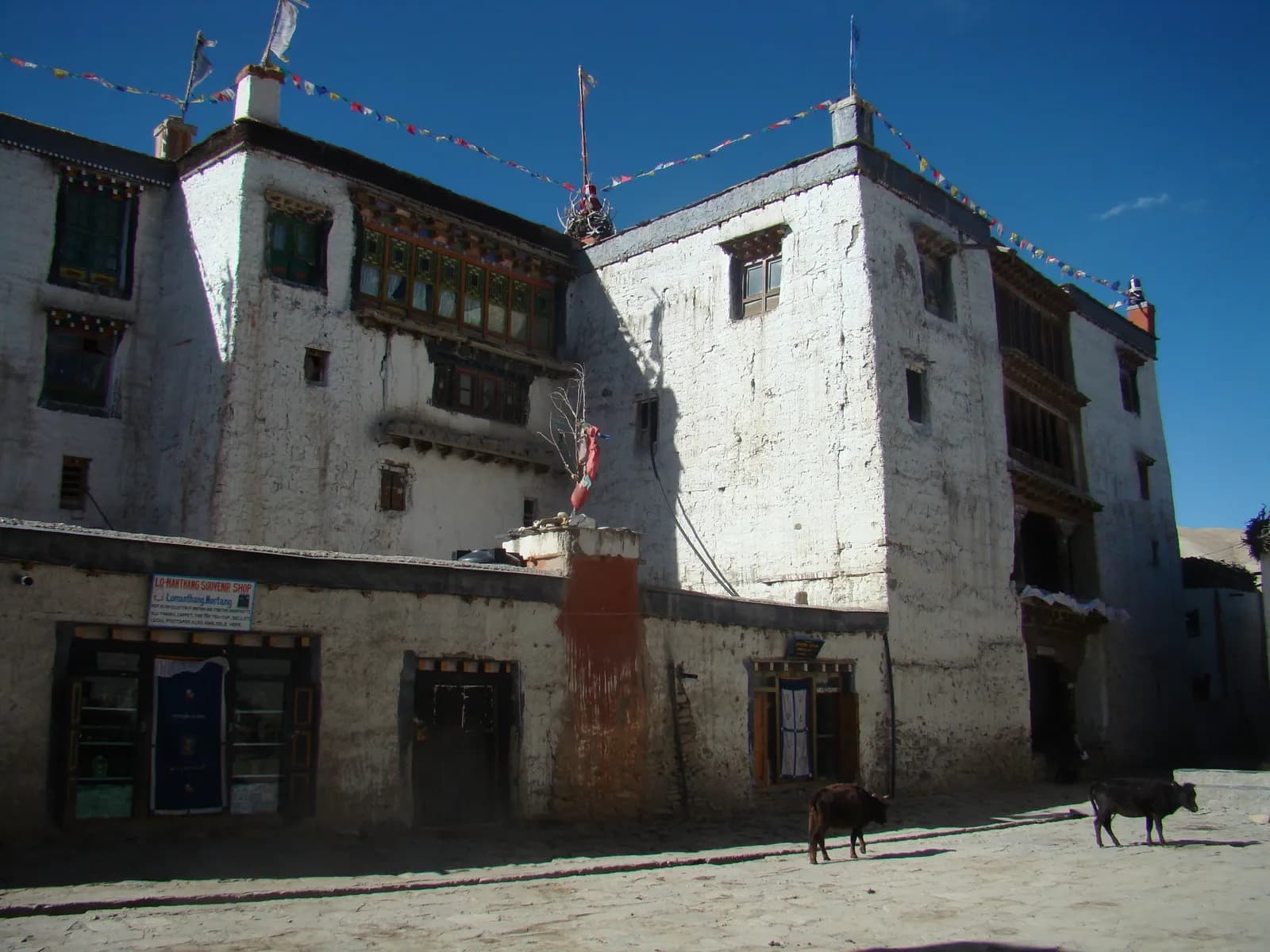
- Upper Mustang: winter is very cold, and most lodges are closed, according to the Upper Mustang route page. The Tiji festival, which the same page places in Lo Manthang in spring, is the better festival for a visit. See Tibetan Buddhist culture in Upper Mustang.
- Manaslu: from December to February the region is very cold with deep snow on the pass, and the upper villages are often empty, according to the region page.
- Kanchenjunga and Dolpo: the Kanchenjunga page says the upper villages are largely empty and winter is only for experienced winter trekkers with camping support, and the Dolpo page says Upper Dolpo's villages are empty with heavy snow on the trails.
- Langtang and the Tamang Heritage Trail: the route page says winter is cold but quiet, and that the low altitude makes the trail feasible. The Tamang Heritage Trail is the most natural winter route for Sonam Lhosar, though dates vary.
- Poon Hill and Ghandruk: the Annapurna region page says Poon Hill and Ghandruk stay walkable in winter, and the Ghandruk village trek is a short option around Tamu Lhosar. The Sanctuary has an avalanche risk, and Thorong La can be closed.
In winter, nights are freezing, lodges may be closed in higher villages and some villagers move to lower ground. Wikipedia notes for Mustang that harsh conditions cause a large winter migration into lower regions of Nepal. Check with your agency which lodges and homestays are open before you commit, and read the monsoon and January guides for the conditions.
If you are invited
Festivals are for the community. If you are invited into a home or a monastery, take it as a privilege and follow your host.
- Ask first. Your guide can ask whether visitors are welcome and where to stand or sit.
- Bring a small gift through your guide such as fruit, tea or a donation to the village committee, rather than sweets or money for children. See visiting local homes and gift-giving etiquette.
- Dress modestly and warmly, and take off your shoes where others do. See dress and modesty on the trail.
- Accept food and drink politely; the Tamang page says to accept tea or food with your right hand. Wikipedia mentions chhaang, a barley beer, in Losar customs; you do not have to drink it, and you can refuse politely.
- Ask before photographing, especially ceremonies and people in festival clothes. See photography etiquette.
- Keep your voice low and stay out of the way of dancers and ritual.
- Do not turn it into a performance. You are a guest, not an audience.
- Stay a short time unless pressed to stay longer, and thank your host.
At a monastery, the rules in monastery etiquette apply: walk clockwise, ask before entering, do not touch ritual objects, and do not use flash.
Planning a winter or late-winter trek
If you want to be in the mountains at new year:
- Choose a low route such as the Tamang Heritage Trail, Poon Hill, Ghandruk or a short Kathmandu Valley walk. Our short treks from Kathmandu and short treks from Pokhara have options.
- Confirm the date with your agency a few weeks before you travel, and again when you arrive.
- Book accommodation early if the village has few lodges, as visitors and returning families may fill them.
- Pack for winter. Our packing guides cover winter layers; see Nepal trek packing list.
- Keep spare days for weather.
- Be realistic about services. Some lodges, shops and transport run less often in winter.
- Respect the family time. A new year festival is a family occasion; do not expect a full tourist service, and be gracious if something is closed.
The guide rule applies in winter as in other seasons: the Nepal Tourism Board rule of April 2023 is enforced at checkpoints in Annapurna and Langtang and most parks, and restricted areas need a guide (checked 19 October 2026); see guide rule explained.
Planning and sharing
If you are looking for company on a winter trek, post your dates on the Tamang Heritage Trail partner page, the Ghandruk village trek partner page or the Upper Mustang partner page and agree winter plans in advance; see what to agree with trekking partners before you book. For the rest of the culture series, return to the trail etiquette and culture guide. The best way to meet a new year festival is slowly, with a guide who knows the village, a gift in your pocket and no expectation of a show.