

Visiting village homes in Nepal: homestays and gift-giving etiquette
Staying in a Nepali village home: take your shoes off, accept tea with your right hand, pay the agreed price and thank hosts with a school donation, not sweets.

When you are invited into a village home or stay in a homestay, the manners are the ones a good guest would use anywhere, adapted to Nepal: greet your hosts, take your shoes off at the door, accept tea or food with your right hand, ask before taking photographs, pay the agreed price without bargaining and give your thanks as a donation to the school or committee, not as sweets or money for children. Our route pages say the same in the same words: never give sweets or money to children, and if you want to help, give to the community through your guide.
This guide explains the habits, the reasons behind them and what to do when you are not sure, using the Tamang Heritage Trail, Ruby Valley and Upper Dolpo pages and the wider etiquette guide.
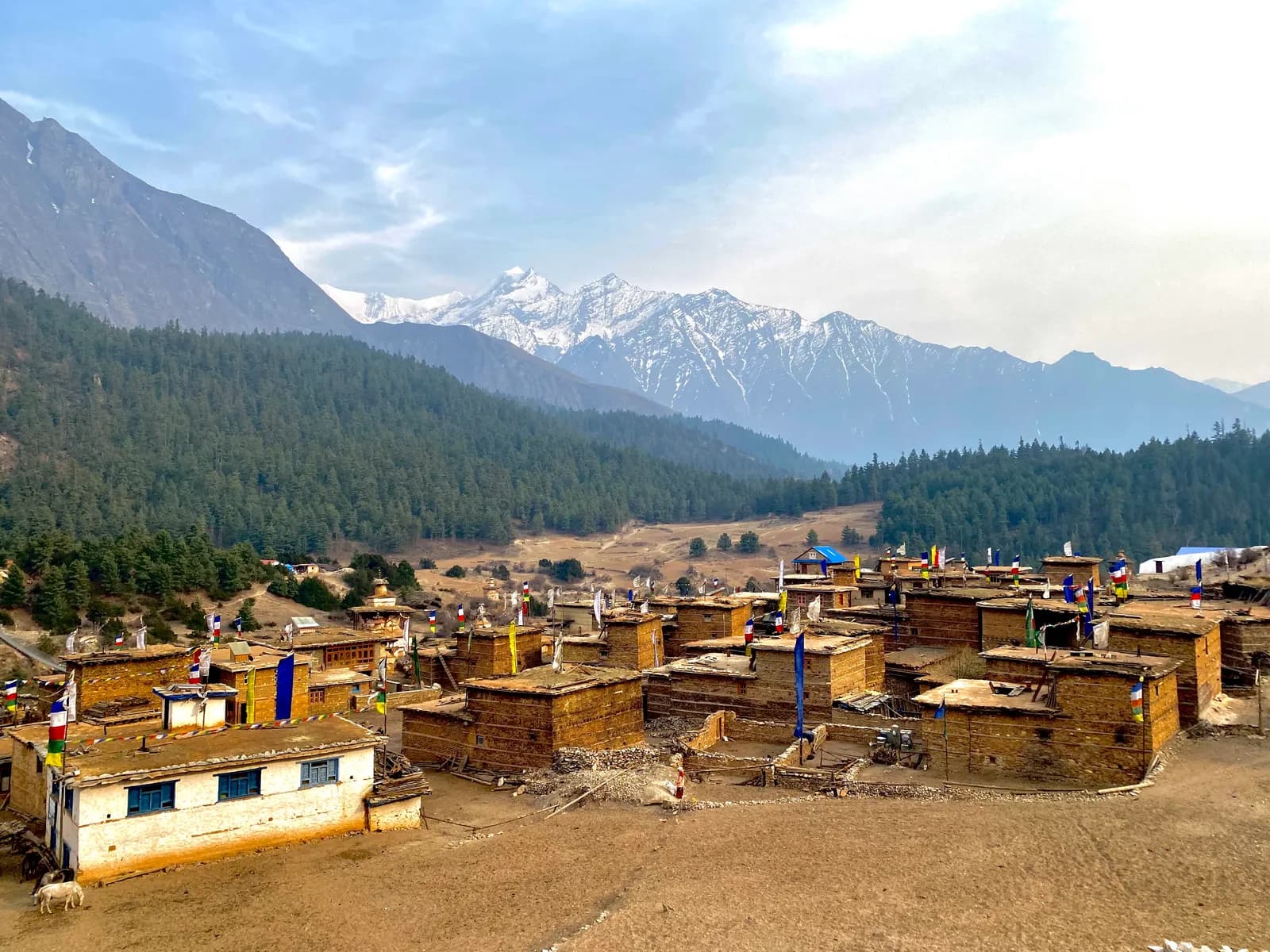
Homestays are common on the quieter routes. Our region pages describe them on the Tamang Heritage Trail, in the Ruby Valley, at Siti and Makarigaad on the Api Base Camp route, in parts of Rolwaling and Khaptad, around Pokhara (including the community homestay at Sidhane) and at Saldang and Namgung in Upper Dolpo. They give you a bed, a meal and a conversation, and they depend on guests who behave well.
Open trips on Tamang Heritage Trail
Real trips posted by trekkers looking for partners.
How homestays work
The Tamang Heritage Trail page is the clearest. Homestays there are run by village committees, and families take turns hosting visitors. Bookings and payments are made with the village committee or your guide. Homestays rather than commercial lodges are part of the character of the trek. The Ruby Valley page says homestays only work if guests spend locally, so you should eat where you sleep, carry your own plastic bottles out or use a filter and ask before taking photos of people. In the Ruby Valley, final descent villages such as Tipling and Chalish have homestays run by local families.
Two practical consequences follow:
- You pay the committee or the family through the arranged channel, not the first person who offers to take your money. Ask your guide how payment works in each village.
- You do not bargain. The Tamang page says to pay the agreed price and not to bargain. Accommodation and meals reflect what must be carried in and what the village has agreed.
Carry cash in rupees in small notes, because there are no machines on the trail and change can be hard to find. Our Ruby Valley page says to carry a modest amount of cash for tea, snacks, homestay bills and tips.
Entering a home
- Greet first. A namaste, with your hands together, is the customary greeting. See basic Nepali phrases for trekkers.
- Take your shoes off at the door, as the Tamang page advises. If others do not, copy what the household does.
- Wait to be shown where to sit. The household may have a particular place for guests and for family.
- Accept tea or food with your right hand, as the Tamang page says. Accept the first cup, even if you do not finish it.
- Do not wander. Kitchens, storerooms and household shrines are private. Ask before entering or taking a photo.
- Keep your belongings tidy. Rooms are small and shared.
- Be flexible about timing. Meals arrive when they are ready.
Food
Homestay food is simple. The Ruby Valley page lists dal bhat, vegetables, eggs, tea and noodles, with seconds of rice and lentils. On the Tamang Heritage Trail homestays prepare Tamang dishes such as dhindo, a thick millet or maize porridge with vegetable curry, potato dishes and chilli pickles, according to the region page. Eat what you can, say thank you and, if you liked it, say so. Our dal bhat guide and teahouse etiquette guide explain the menu and the habits.
Tell your guide about dietary needs before you arrive, not at the table. Waste as little as you can; everything was carried or grown with effort. You may be offered local drinks; you can decline politely.
Photographs in and around the home
Ask before photographing people or ceremonies, as the route pages say. A home is a private place: do not photograph inside without permission, and do not photograph family members who have not agreed. If a family asks for a picture with you, enjoy it. For the full guide to asking, see photography etiquette.
Why not to give sweets or money to children
This is the most repeated instruction in our region and route pages. The Tsum Valley, Upper Dolpo, Nar Phu, Helambu, Limi and Kanchenjunga pages all say not to give sweets or money to children, and the Dolpo region page says gifts should go through the local committee, not to children. The Tamang page says small gifts of notebooks or pens for children are fine but donating to the school or committee is better.
The reasons are practical. Handing things to children on the trail can encourage them to ask every visitor and sets expectations that families then have to manage. And a gift from a stranger is not a relationship; a donation to a school or committee is something the community decides how to use.
If a child asks you for something, smile, greet them and move on. If you want to give, do it through your guide, as below.
What to give instead
- A donation to the village committee or school. Hand it over in person with your guide, ask for a receipt if one is offered and ask what the community needs. The Tamang page says donating to the school or committee is better than gifts for children. The Everest region page notes that a school and hospital founded by Edmund Hillary at Khunde and Khumjung continue to serve the community, and the Annapurna region page says entry fees help fund trail maintenance, schools and clinics. The Khopra Ridge page says community-run lodges support schools and local projects, so staying there is itself a contribution.
- A donation to the monastery. The Tamang page says a donation to the monastery is welcome, and the Dolpo page suggests small gifts such as butter lamp donations. Hand it to the monk or caretaker, not to the altar; see monastery etiquette.
- A small gift for the host family, such as tea, fruit or something from home, handed over with both hands through your guide. Do not give anything you would not give to a friend.
- Your spending. Eat and sleep with local families, buy local products and hire local guides and porters. That is the most useful gift.
Ask your agency and your guide which school or committee needs support, and give through them.
What not to do
- Do not hand out medicine, food or gifts to people you do not know. If someone is ill, tell your guide.
- Do not promise to send money, photographs or a visa. Keep promises you can keep and avoid making others.
- Do not take over. If you want to help a school, ask what it needs, do not decide for it.
- Do not photograph a poor home as a picture of poverty. Ask yourself how you would feel.
- Do not treat a family as a show. They are hosting you, not performing.
- Do not argue about the price in front of the family. If you have a concern, raise it politely with your guide.
Leaving
Thank your hosts in person, and settle the bill through the agreed channel. Our region pages say tips for the guide and porters are customary at the end of a trek, according to the Manaslu page; for a homestay, ask your guide whether a small tip for the family is usual, and give it directly. A short note, a photograph sent through your guide later or a good review on your agency's page are kind ways to say thanks.
Planning and sharing
Homestay routes are quiet, and a partner makes the evenings easier: you share a guide, a room if the family has one and the conversation. Post your dates on the Tamang Heritage Trail partner page or the Ruby Valley partner page, and read what to agree with trekking partners before you book. The Tamang Heritage Trail, Ruby Valley and Upper Dolpo itineraries describe the villages. For the rest of the culture series, return to the trail etiquette and culture guide. The best thing you can bring to a village home is attention: a greeting, a clean pair of socks at the door and a willingness to be taught.
Plan this trek
- Langtang region guide
- Dolpo region guide
- Ganesh Himal region guide
- Tamang Heritage Trail trekking partners
- Trekking partner for Ruby Valley and Ganesh Himal Trek
- Upper Dolpo: Shey Phoksundo to Shey Gompa trekking partners
- Tamang Heritage Trail itinerary
- Ruby Valley and Ganesh Himal Trek itinerary
- Upper Dolpo: Shey Phoksundo to Shey Gompa itinerary


