Rara Lake region guide: Jumla, park and trek
A practical guide to the Rara region: Nepal's largest lake, its smallest national park, the Jumla walk, the Talcha flight out, seasons, lodges and the rules.
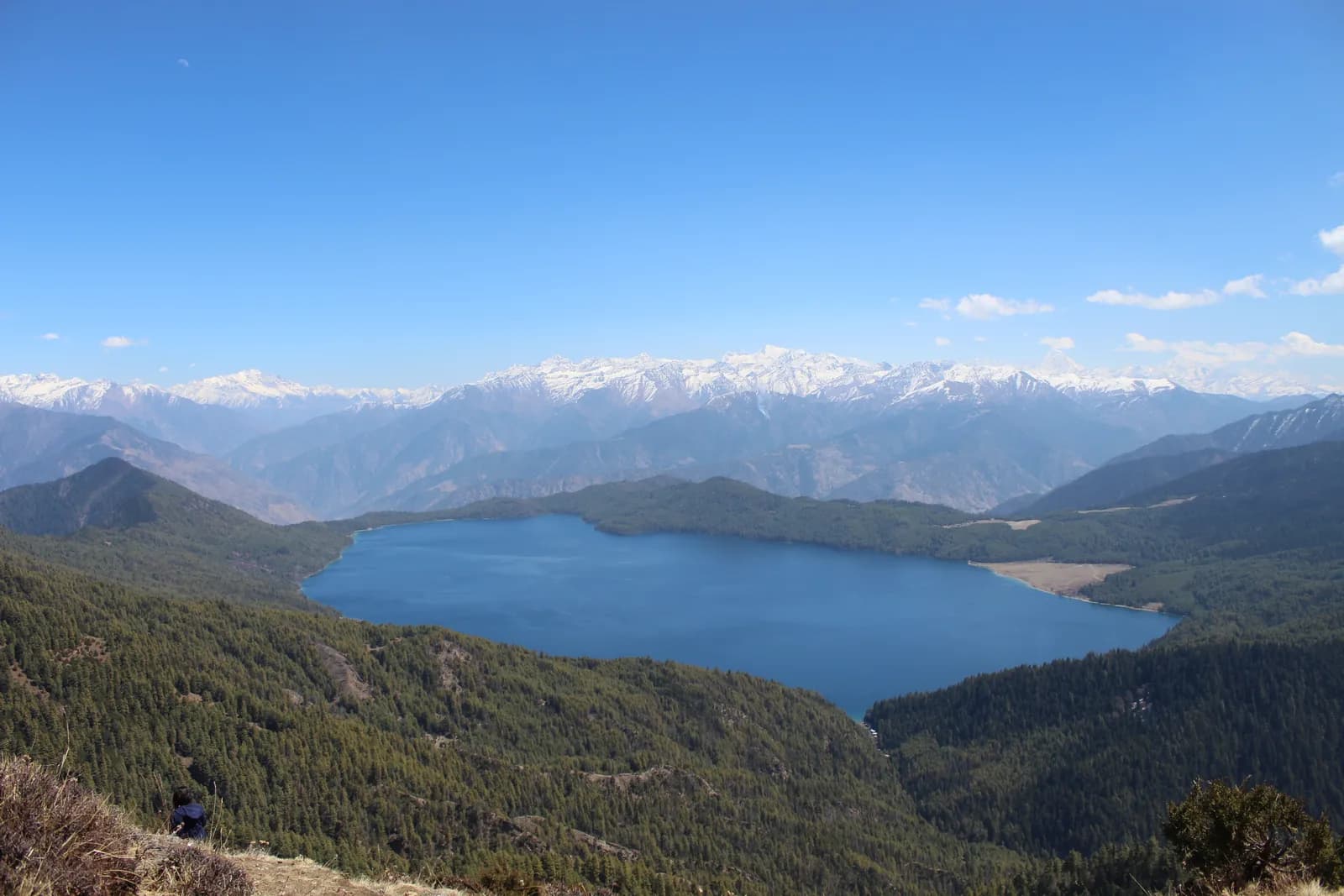
Rara is the far-west trek for people who want a quiet walk, modest altitude and an unusual part of Nepal. The classic route is a 10-day trip from Kathmandu: flights to Nepalgunj and Jumla, a five-day walk through Patmara, Chautha and Pina to the shore of Rara Lake at about 2,990 m, a rest day, a walk out to the Talcha airstrip and flights home. Rara Lake covers about 10.8 km2 and is 167 m deep, which makes it the largest lake in Nepal, and it sits inside Rara National Park, the country's smallest at 106 km2. You need a park entry permit and, in practice, a guide, and flights are weather dependent, so keep spare days. The Rara region page and the Rara Lake Trek page hold the reference data.
The rest of this guide explains who the trek suits, what the landscape and culture are like, and what can go wrong.
Rara Lake Trek的開放行程
由正在尋找夥伴的健行者發布的真實行程。
Who it suits
The region page rates Rara moderate, and the reasons are mostly about days rather than altitude. The viewpoint above the lake is the high point: the route page gives 3,550 m and the region page about 3,630 m for Murma, so treat it as roughly 3,600 m. The lake itself is at about 2,990 m, so altitude sickness is less likely than on higher treks. The walking days are long, though: day 4 from Patmara to Chautha is about 19 km with 1,090 m of climbing and 1,320 m of descent in 7 to 8 hours, and day 6 from Pina to the lake is about 16 km with 1,300 m of climbing in 6.5 to 8 hours. Lodges are few between the villages, and many agencies bring tents and a cook for Patmara and Chautha.
That makes it a good trek for someone who has walked several days in a row but does not want to cross high passes, for travellers with a few weeks in the west who want to combine Rara with Dolpo, and for anyone who likes forest and village walking. It is not a good choice if you want snow peaks all day: the lake is the reward, not a mountain panorama.
The lake and the park
Rara National Park was established in 1976 and ranges from about 2,800 m to just over 4,000 m at Chuchemara Danda. The lake is 5.1 km long and 2.7 km wide, drains into the Mugu Karnali through the Nijar Khola, and was designated a Ramsar site in 2007. The region page notes that its colour appears to change several times a day with the weather. Blue pine, spruce, fir and rhododendron surround it. The park is home to Himalayan black bear, musk deer, red panda, goral, leopard and tahr, as well as the Rara snow trout and the Rara frog, which exist only here. In 1976 the villagers of Chapra and Rara were resettled to Nepalgunj when the park was created, so there is no permanent settlement on the shore, and the Nepali Army protects the park, so you may pass checkposts.
Jumla and the walk
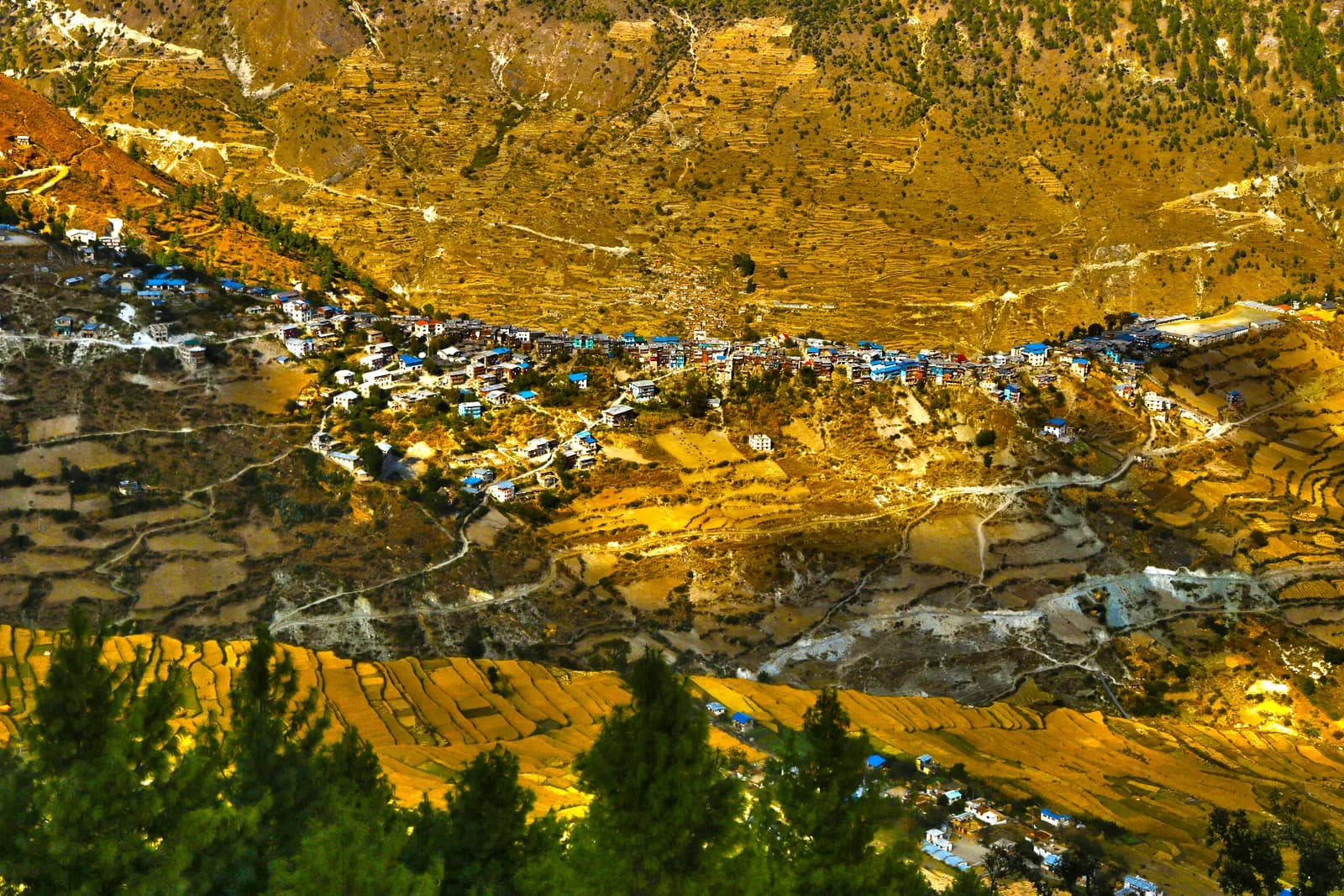
Jumla is a hill town at about 2,350 m, known for apples, walnuts and Marsi rice grown at one of the highest altitudes in the world. It is in Karnali Province, which has some of the lowest road density in Nepal. The route plan starts walking on day 3 with a gentle 10 km climb of about 950 m to Patmara at about 3,000 m, passing apple orchards on a mix of footpath and road. Day 4 is the long one to Chautha at about 2,770 m. Day 5 is a shorter descent to Pina at about 2,370 m, which has lodges and shops. Day 6 climbs to the Murma area beside the lake. Our Rara itinerary article walks through each day.
Part of the route shares the Karnali Highway, a rough road that links Jumla with Gamgadhi and Rara, and trekkers use footpath shortcuts to avoid road sections.
Seasons
April is the best spring month, with rhododendron in bloom and a bright blue lake, though Murma can still hold patches of snow. May is warmer and drier. June to August is monsoon: flights are unreliable and trails are slippery, though the meadows are green and few people visit. September is green but landslides can still disrupt roads. October is the most popular, with clear skies, warm days, frosty nights and autumn colour above the lake. November is cold and calm, lodges close toward the end of the month and the lake begins to freeze at the edges. From December to February the lake can freeze over, and heavy snow closes trails and flights.
Flights and weather risk
Two flight legs make this trek fragile. The first is Kathmandu to Nepalgunj (about an hour), where it can be extremely hot, and then Nepalgunj to Jumla (about 40 minutes). The second is the way out: Nepalgunj is also the hub for flights to Talcha, the airstrip beside Gamgadhi in Mugu District, which Wikipedia describes as an airport with a short 570 m runway whose Nepalgunj service has been intermittent; a September 2025 report said Nepal Airlines resumed flights after a four-month hiatus. We found no 2026 timetable, so confirm with the airline. Our getting to Rara guide explains the options and the fallback.
Lodges and food
Lodges and homestays exist in Jumla, at Pina, at the lake (Murma and the Rara Cultural Resort) and in Gamgadhi. Between them there are few, so camping is common. Dal bhat, noodles, fried rice, soup and eggs are standard, with apples in autumn and local trout when the park allows it. Boil or filter water, and buy snacks in Jumla or Nepalgunj, because supplies at the lake are limited. Jumla has limited cash machines, so bring cash from Kathmandu or Nepalgunj.
Rules in outline
Rara National Park charges an entry fee payable at the park office or checkpost. The area is not a restricted area. Fees for foreigners, SAARC visitors and Nepalis differ and have changed, so confirm them with your agency and the park. Our Rara permit guide covers the paperwork. Park rules also say no fires, no fishing, and no drones without permission, according to the route page.
Culture
Jumla was the seat of the medieval Khasa Malla kingdom, and the Sinja valley holds the ruins of its capital and early Nepali-language inscriptions. The Karnali region has Hindu temples such as Chandannath, and the Thakuri and Chhetri communities dominate. Many families farm apples, buckwheat and potatoes. Local people hold the lake in high regard, which is another reason not to swim in it or wash there.
What to pack
Broken-in boots, waterproof layers, a down jacket, a sleeping bag rated to about minus 10 C, gloves, a warm hat, sun protection, poles, a headlamp, water purification and a first-aid kit. In the monsoon add a rain cover and leech socks. Take rain gear even in October, because afternoon showers are common on the ridges.
Combining Rara with other treks
Rara can be paired with a Phoksundo Lake trek from Nepalgunj, because both use the same flight hub, or with a day in Jumla and a visit to the Sinja valley. Combining Rara with Dolpo or Humla is a long expedition and needs separate permits, according to the region page.
Safety
The nearest hospital is in Jumla or Gamgadhi, and evacuation is by helicopter or by flight from Talcha when weather allows, so your insurance must include helicopter rescue. Insurance should cover trekking to 4,000 m. In the monsoon the main hazards are rivers and slippery paths, and at the lake cold nights are common.
Next steps
If you are choosing between far-west options, our Dolpo region guide covers the other trek that uses the Nepalgunj hub, and the regions guide lists them all.