Winter Trek Gear List for Nepal
What to pack for a winter trek in Nepal: warmer sleeping bags, insulated boots and gloves, a hooded insulated jacket, sun and snow protection, and which low routes such as Poon Hill make sense when many lodges close.

For a winter trek in Nepal, take a sleeping bag rated for the coldest night, an insulated jacket with a hood, insulated boots or warm socks, warm gloves and hat, and sun protection for snow glare, and choose a low route such as Poon Hill, where lodges are more likely to be open and snow is less of a barrier. Winter in Nepal means cold clear mornings, quiet trails and some closed lodges; the gear is the same core list as in other seasons, only warmer and with a few additions.
This guide builds on the Nepal trek packing list and our January guide, and focuses on what changes in winter. The hub for gear is the gear and packing category.
Poon Hill Trek (Ghorepani)的开放行程
由正在寻找搭档的徒步者发布的真实行程。

What winter changes
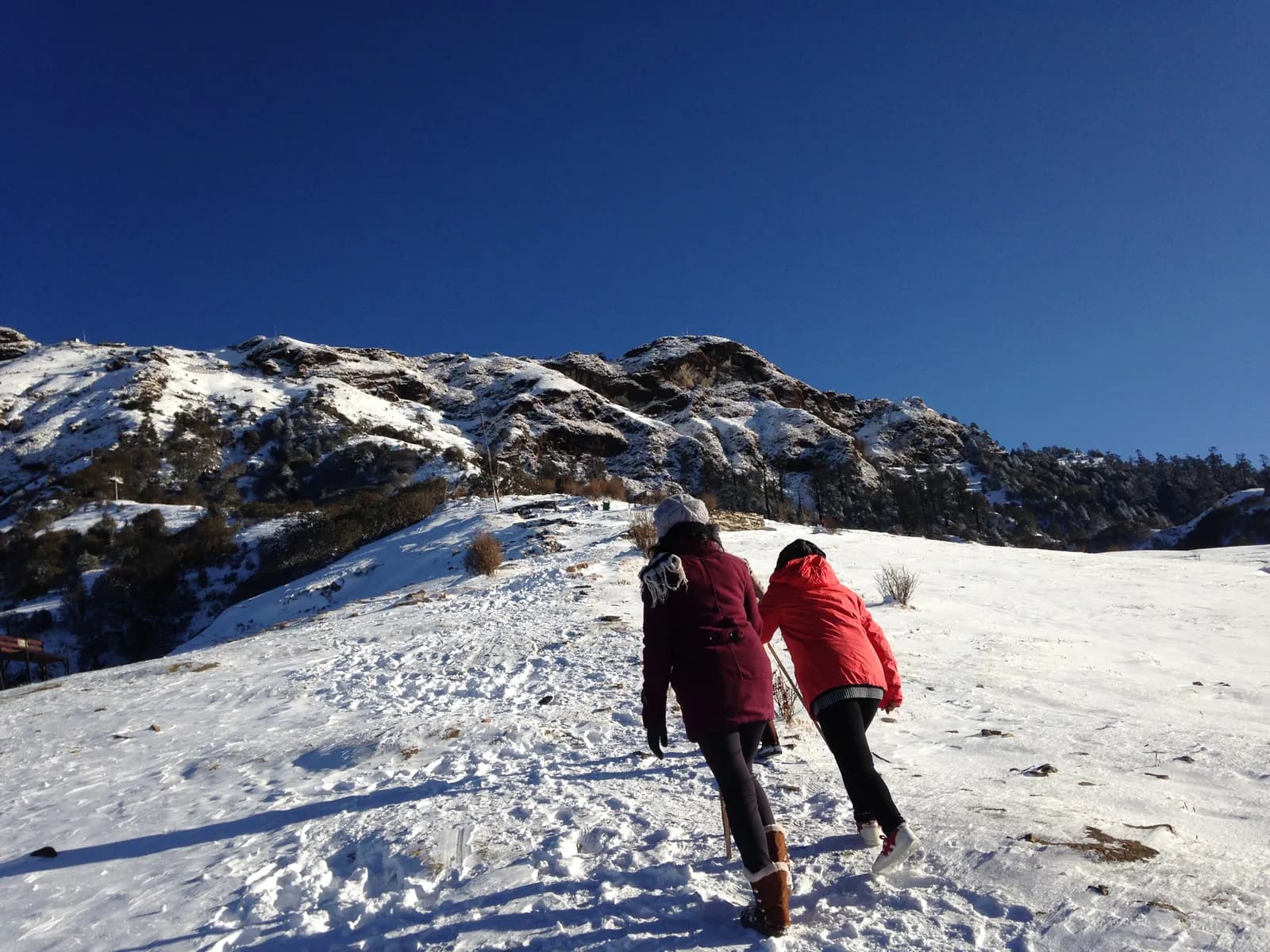
Winter has three effects on kit and planning. Nights are colder, so sleeping warmth matters more than at any other time. Daylight is shorter, so a headlamp and early starts matter. And some lodges close, especially higher up, so food and bed are less certain; our January guide says far fewer trekkers walk then, so lodges are easy to book, but some close and menus can be limited, and that the Annapurna Circuit's Thorong La can be closed by deep snow. The practical rule is to pick a route that stays low and confirm lodges before you go.
Routes that work in winter
| Route | Why it works | Winter notes |
|---|---|---|
| Poon Hill | Stays below about 3,210 m; Ghorepani is 2,860 m | Snow can fall near Ghorepani; some lodges may close |
| Ghandruk village trek | Two days, below 2,050 m | Mild by comparison |
| Langtang Valley | Moderate, lodges in villages | Cold, snow on high trails; Kyanjin is 3,870 m |
| Kathmandu Valley hikes | Low and short | Cold mornings, clear views |
Our Poon Hill comparison says Poon Hill is a good winter route because it stays low, though snow can fall near Ghorepani, while Mardi Himal's upper ridge is cold and snowy in winter. High routes such as Upper Mustang, the Annapurna Circuit and the Khumbu passes are poor winter choices; see the January guide for details.
The winter core list
Start from the core list in our general guide and upgrade.
- Sleeping bag: rated for your coldest night; rent one in Kathmandu or Pokhara if you trek once, and compare the rating with the route. See sleeping bag temperature ratings. A liner adds warmth.
- Insulated jacket with a hood: the single most useful winter layer; see down jacket: rent or buy.
- Base layers: merino or synthetic, two tops and a bottom, not cotton.
- Mid layer: a fleece, worn under the jacket in the evening.
- Shell: a windproof, waterproof jacket; wind is the main chill on exposed ridges.
- Trousers: warm walking trousers plus thermal bottoms for evenings and mornings; waterproof overtrousers if snow is possible.
- Hands and head: a warm hat, thin gloves and warm mittens, plus a buff or balaclava.
- Socks: three walking pairs and a warm pair for sleeping.
- Footwear: insulated or warm waterproof boots; trail shoes are a poor choice on snow. See boots versus trail runners.
Wear the layers in sequence rather than one thick item: base, mid, insulation, shell, and add or remove as you move. Our layering system guide explains the logic.
Winter extras
- Sun and snow protection: sunglasses with side protection, sunscreen and lip balm. Snow glare is strong, and the sun feels intense even on cold days. Goggles are a good idea if you expect snow, as our packing list says for altitudes above 4,000 m.
- Headlamp with spare batteries: days are short and pre-dawn starts, such as for the Poon Hill sunrise, are in the dark. Cold drains batteries, so keep spares warm.
- Hand warmers: useful on cold mornings; our list suggests them above 5,000 m but they help lower too.
- Insulated water bottle or a bottle cover: water can freeze on cold mornings; carry it inside your jacket or upside down.
- Microspikes: light insurance for icy or snowy stretches; ask your guide. See crampons and microspikes.
- Lip balm and moisturiser: air is dry and cold.
Sleeping and lodges
Lodge rooms are unheated, and the dining room is usually the only warm space. Spend the evening there, go to bed warm, and keep tomorrow's clothes in your sleeping bag so they are not frozen in the morning. Because some lodges close, ask your guide or agency which are open, and have a fallback village. Confirm before you leave Pokhara, not on the trail.
Health in the cold
Cold increases the risk of hypothermia and frostbite on high routes, which is why we steer winter trekkers to low routes. Keep food and water going, because eating and drinking maintain heat, and do not sit still in damp clothes. Altitude rules do not change in winter: the NHS advice to rest at the same height if symptoms appear and go down if they worsen applies as always; see altitude sickness basics. Dehydration is easy in dry cold air, so keep drinking.
Permits and the guide rule
Poon Hill and the Ghandruk trek are inside the Annapurna Conservation Area, so the ACAP permit (NPR 3,000 for foreigners as of October 2026) applies; for the Pokhara foothills our region page says sources disagree on whether the foothill walks need the permit, so confirm with your agency. A licensed guide through a registered agency is required in restricted areas (Department of Immigration) and, under the Nepal Tourism Board rule of April 2023, in national parks and conservation areas, where 2026 operator reports say checkpoints enforce it in Annapurna and Langtang but not in Khumbu (checked 19 October 2026). See /guide-rule-nepal.
What to rent and what to leave
Rent a sleeping bag, down jacket and poles in Kathmandu or Pokhara, checking warmth and condition; buy boots, socks and base layers beforehand. Leave cotton, extra shoes and anything you will not use. Pack a rain shell even in winter, because snow turns to wet quickly at the edges of the season.
Planning and timing
Winter days are short, so plan shorter stages and arrive at lodges by mid-afternoon. A spare day gives you room for snow or a closed lodge; see buffer days and itinerary flexibility. Read the Poon Hill itinerary day by day and short treks from Pokhara for options.
A winter Poon Hill plan and the kit by day
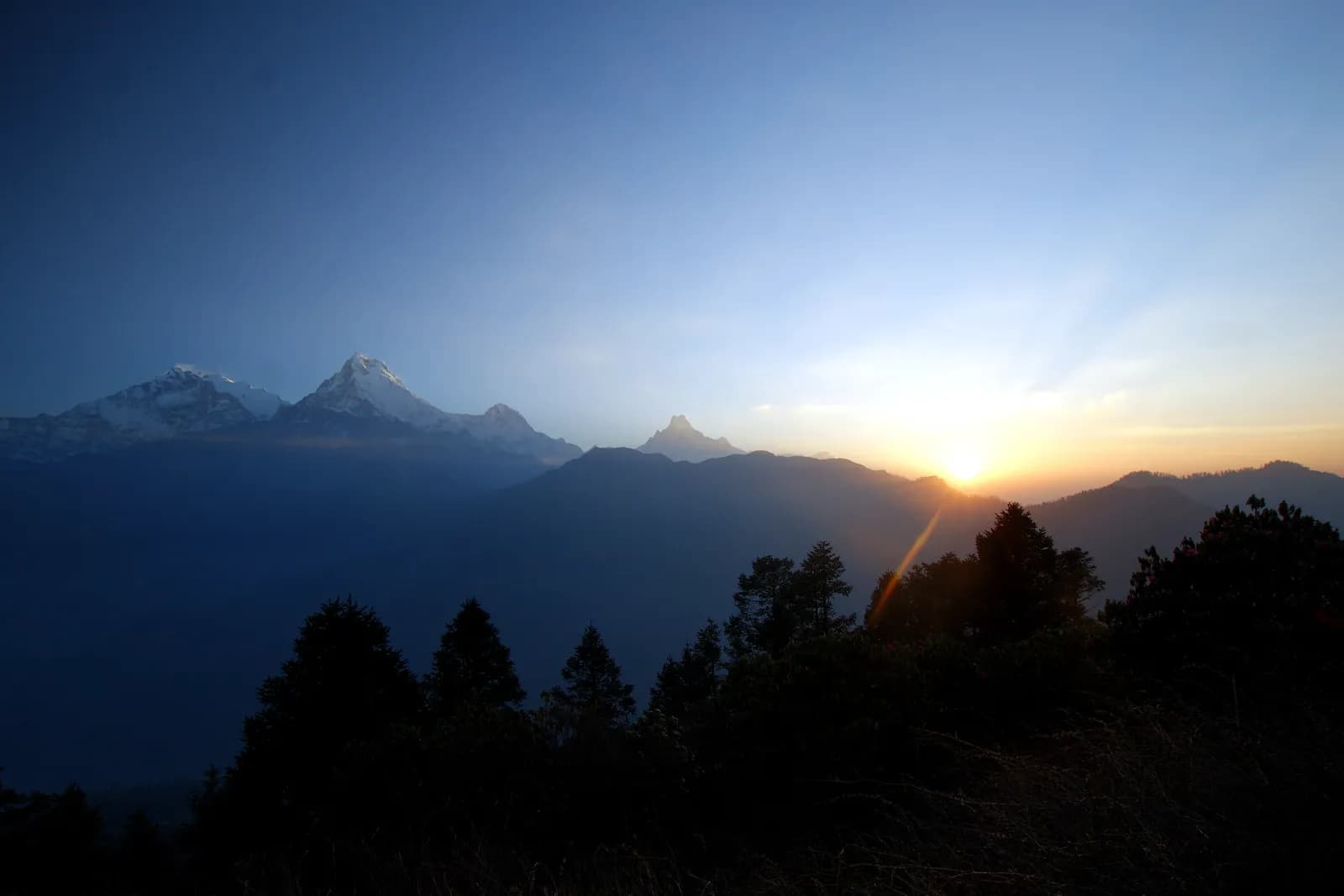
Our four-day Poon Hill plan shows how the kit gets used. Day 1 drives from Pokhara to Nayapul and walks to Ulleri (about 2,070 m) in five to six hours, so you start in base layers and a light shell and add the jacket at the lodge. Day 2 climbs the stone steps to Ghorepani (2,860 m) in four to five hours; in winter the evening there is cold, so the hooded insulated jacket, hat and gloves come out as soon as you arrive. Day 3 starts in the dark for the Poon Hill sunrise at about 3,210 m, which means a headlamp, mittens, a buff and the insulated jacket on over everything, and then a six-hour walk to Tadapani (about 2,630 m) in which you strip layers as the sun rises. Day 4 descends toward Pokhara in three to four hours, plus the drive. The pattern is the same on any winter trek: dress for the cold start, shed layers early in the climb, and put them back on at every stop.
Sharing winter treks
Fewer trekkers walk in winter, so finding a partner takes more planning. See how to find a trekking partner in Nepal safely and the Poon Hill partner page. Sharing a guide and porter also keeps the cost down when the group is small.