Rest days on Everest Base Camp and the Annapurna Circuit
Where the rest days belong on Everest Base Camp and the Annapurna Circuit, what to do on them, which villages suit them and when to add a third.

Both of Nepal's most popular high treks build in rest days, and both put them in the same logical place: the last big village before the route climbs above 4,000 m. On Everest Base Camp the rest days belong at Namche Bazaar (3,440 m) and Dingboche (4,410 m); on the Annapurna Circuit the one essential rest day belongs in Manang (3,540 m). This guide explains why those villages, what to do on the day and when to add another one.
A rest day is an acclimatisation day. It is not time off from the plan, and it is the cheapest insurance on the trek. For how the numbers work, read the acclimatisation schedule; this article is about using the days well. It is general information, not medical advice.
Chuyến đi đang mở tại Everest Base Camp Trek
Các chuyến đi thật do người trekking đăng để tìm bạn đồng hành.

What a rest day does
Your body adapts to thin air over days: you breathe faster, your blood chemistry changes and you make more oxygen-carrying cells. Sitting still at 3,500 m helps, but a short climb higher during the day and a return to sleep lower gives a stronger signal with the same night's rest. That is the "climb high, sleep low" habit that guides repeat, and the reason a rest day usually involves a hike rather than a lie-in.
Everest Base Camp: two rest days
Namche Bazaar (3,440 m)
You arrive on day 2 after the climb from the Hillary Bridge, usually tired and a little breathless. Namche is a good place to be forced to stay: it has bakeries, an ATM, gear shops, a Saturday market and enough trails to keep you busy.
Good acclimatisation hikes from here:
- Everest View Hotel ridge: a climb of roughly 400 m up to the Syangboche side, with a first long view of Everest, Lhotse and Ama Dablam on a clear morning. Walk back down to sleep in Namche.
- Khumjung and Khunde: a longer, fairly level loop with the Hillary school, monastery and quieter lanes.
- Museum and Sherpa Culture Museum area above the town: a gentle option if you are tired.
Dingboche (4,410 m) or Pheriche (4,371 m)
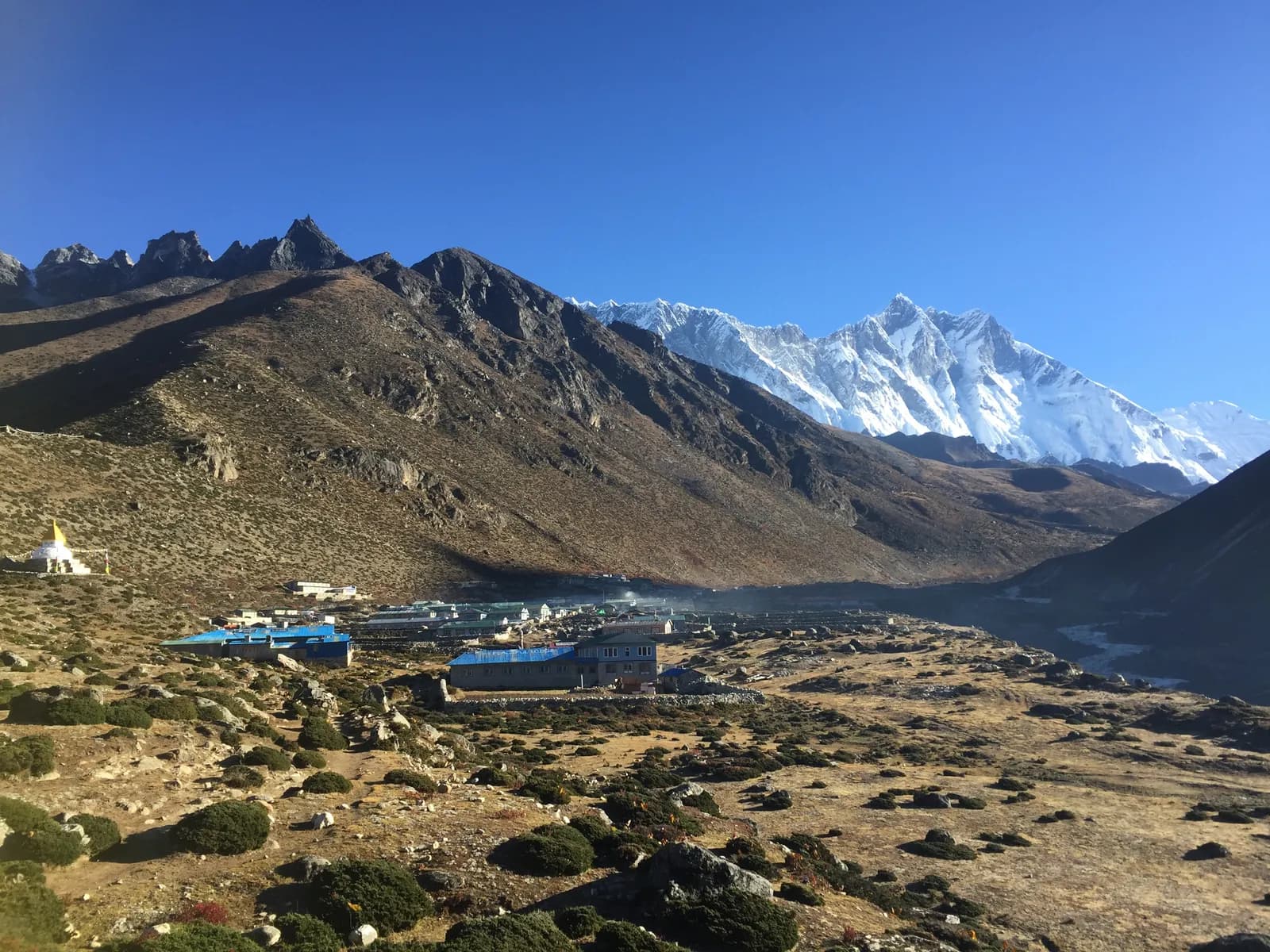
Day 6 is the one people underestimate. Above Pangboche the route leaves the forest and the nights get colder and thinner. The standard rest day is at Dingboche:
- Nangkartshang ridge (about 500 to 600 m above Dingboche at the top, though you only need to go as high as feels comfortable): a steady climb behind the village. Go high for an hour and turn round.
- Chhukhung Valley (4,730 m): a flat-ish walk of a few hours up toward Island Peak, then back to Dingboche for the night.
Some itineraries put the second rest day at Pheriche instead because of the Himalayan Rescue Association aid post there, which runs in the main seasons and is a good place to ask an experienced doctor how you are doing. Dingboche has the advantage of day-hike options that put you 500 to 600 m above your bed.
See the full plan in the Everest Base Camp itinerary and the Everest region page for how the villages are spaced.
Annapurna Circuit: Manang is the rest day
On the circuit you climb the Marsyangdi valley from about 760 m at Besisahar, so the early days are low and mild. By Chame (about 2,670 m) and Upper Pisang (about 3,300 m) the altitude is noticeable. Manang is where you stop.
Typical Manang rest-day options:
- Gangapurna Lake and the viewpoint above it: an easy morning walk with a clear view of the glacier.
- Praken Gompa: a short, steep climb to a small cave monastery above the village, which gives you roughly 350 m more than your bed.
- Ice Lake is a harder option that gains roughly 1,000 m. Most trekkers should treat it as a second rest-day hike only if they feel strong, and turn around if they have a headache.
- A day in Manang itself includes the Himalayan Rescue Association aid post with its talk on altitude illness in the main seasons, a bakery and a small cinema in some lodges. Check posted times on arrival, as they vary by year.
If you want a complete second acclimatisation day, you can use the side valley to Tilicho Base Camp, with the lake itself at about 4,919 m, but that is a separate trek of two or three days. It is a different plan, not a rest day.
After Manang, the nights are at Yak Kharka (about 4,050 m) and Thorong Phedi (about 4,540 m). Treat the schedule between them as fixed: do not compress it. Read the best time for the Annapurna Circuit and the pass-day conditions before you commit to a date for the crossing.
Rest days at a glance
| Route | Where | Sleeping altitude | Typical day hike | Altitude gain |
|---|---|---|---|---|
| Everest Base Camp | Namche Bazaar | 3,440 m | Everest View ridge or Khumjung | about 400 m |
| Everest Base Camp | Dingboche | 4,410 m | Nangkartshang ridge | about 400 to 600 m |
| Annapurna Circuit | Manang | 3,540 m | Praken Gompa or Gangapurna Lake | about 100 to 400 m |
When to add a third rest day
Add a day, without discussion, if any of these is true:
- you have a headache that does not respond to rest, water and food;
- you slept very badly two nights in a row;
- your appetite has gone;
- you cannot talk and walk at the same time on a gentle slope;
- you are the slowest person in the group and are climbing in a hurry to keep up.
On Everest the best place for an extra night is Dingboche or Pheriche. On the Circuit it is Manang, or Yak Kharka before the final step. If you are still unwell the next morning, descend. Altitude illness responds to going down, and the villages on both routes are within a day or two of lower ground.
Planning around rest days
A realistic window for each trek:
- Everest Base Camp: 12 days from Kathmandu with two rest days, 14 if you add a buffer and a Kala Patthar day.
- Annapurna Circuit: 12 to 16 days depending on whether you drive part of the route and whether you go over to Tilicho.
Add one spare day at the end for flights, and buy travel insurance that explicitly covers trekking to your maximum altitude and helicopter evacuation. For choosing between the two treks overall, see Everest Base Camp versus the Annapurna Circuit. If you are looking for a partner to share a slower pace, read how to find a trekking partner before you commit to dates.
The altitude and health hub links the rest of this series.
A rest-day routine that works
Many trekkers waste the day. A good routine takes about six hours of gentle activity and leaves you ready for the next climb:
- Wake at the usual time, drink a litre of fluid before breakfast, and eat properly even if your appetite is low.
- Walk for two to three hours to a viewpoint 300 to 500 m above the village. Go slowly enough to hold a conversation.
- Spend ten minutes at the top before going back down. You do not need to stay high for a long time to get the benefit.
- Return to the lodge by lunch, eat, and rest or read in the afternoon. Wash your hands and clothes if the sun is out.
- Eat early and sleep early. Check how you feel before bed. If your headache has gone, you are on track.
On an Everest rest day, add a call home from Namche's reliable connection if you need one, since the signal gets patchy higher up. On the Circuit, use Manang to catch up on the paperwork you will want in order before the pass: your permits, passport copy and insurance number.
Mistakes that waste a rest day
- Climbing too high. If your rest-day hike reaches 5,000 m, it is a training climb, not a rest day. Turn round when you are 500 m above the village.
- Day-long beer and card games. Alcohol disturbs sleep and breathing at altitude. Skip it on arrival nights and save it for after the pass.
- Skipping food. Dal bhat gives energy for the next day. If you cannot face a large meal, eat soup, noodles and snacks through the day.
- Hiding symptoms. If your guide asks how you feel, give the honest answer and not the answer that keeps your itinerary intact.
- Being the group's pace-setter. The person who feels worst is the one who decides the schedule.
Route pages: Annapurna Circuit and the Annapurna region.