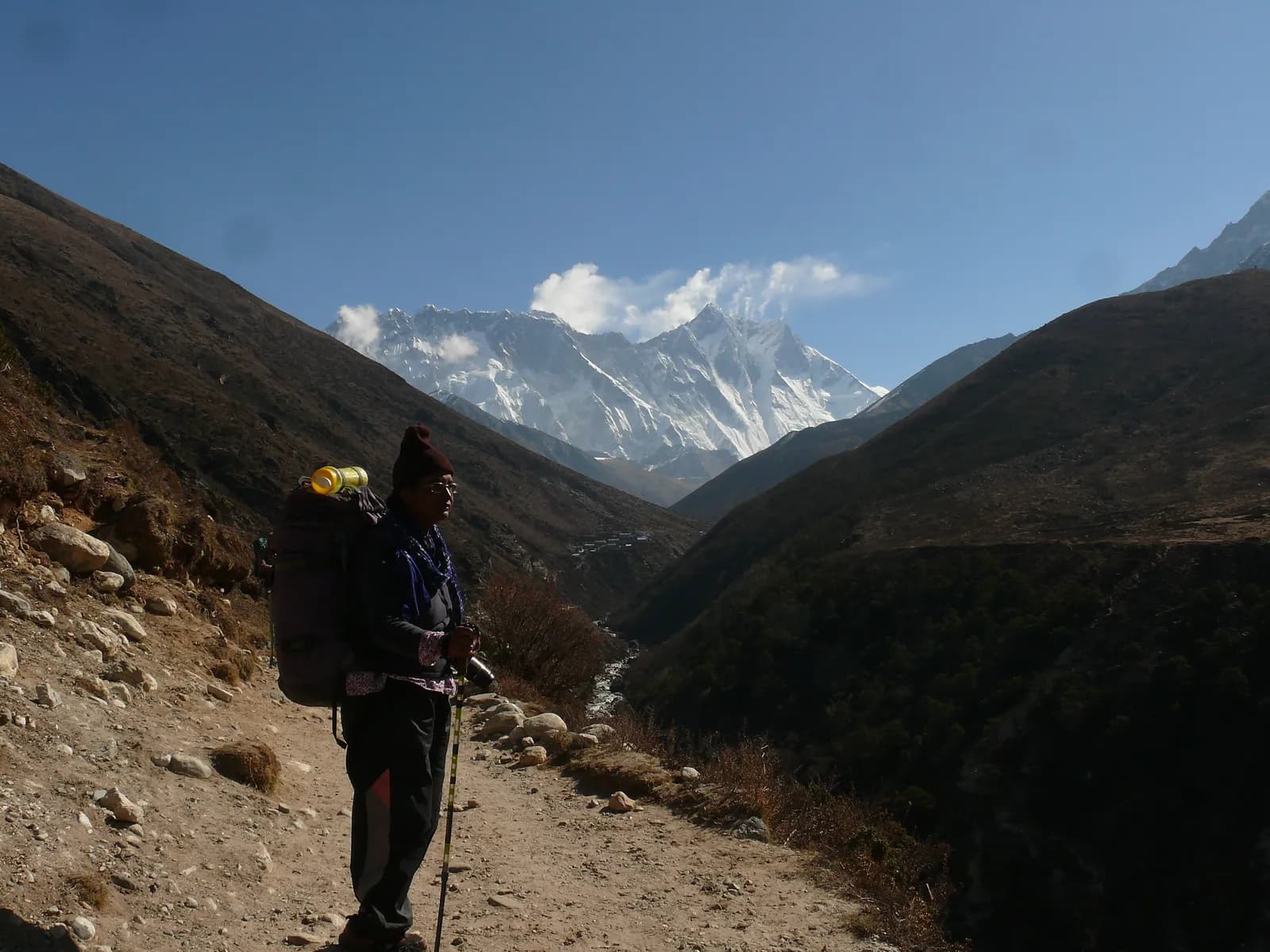
Trekking gear for women in Nepal: fit and hygiene
Practical gear advice for women trekking in Nepal: boots, packs and sleeping bags that fit, layers and sports bras, hygiene supplies and how to pack out waste, toilets on the trail, and modest clothing that works in villages.

Women trekking in Nepal need much the same gear as men, but three things deserve extra care: fit (boots, pack harness, sleeping bag and base layers cut for your body), hygiene (supplies for the whole trip and a plan to carry waste out) and clothing that works both in the cold and in villages where modest dress is the norm. None of this is complicated, but much of it is hard to fix once you are on the trail, because the shops in Namche or Manang have limited sizes and the lodges do not stock your usual products. This guide covers the practical choices, with a plain approach to hygiene, and points you to our packing list and safety guides for the rest.
We keep medical advice out of this post and stick to equipment and habits. For health questions, including anything related to altitude, medication or periods, talk to a doctor or travel clinic before you go, and read the CDC Yellow Book guidance for travellers.
Poon Hill Trek (Ghorepani) için açık geziler
Partner arayan trekkingcilerin paylaştığı gerçek geziler.

Fit first: boots, packs, bags and layers
Boots. Foot shape, volume and width vary more than a size label suggests. Try boots in the afternoon with your trekking socks and walk on a slope, as we explain in trekking socks, blisters and foot care. Women's-specific lasts are narrower in the heel and forefoot, and many women find them better; others prefer a men's or unisex shape. Choose by fit, not the label. Break the boots in for several weeks before you fly.
Backpack. A pack's harness, hip belt and back length matter more than its volume. A harness that is too long puts the weight on your shoulders, and a hip belt that sits on your ribs rather than your hip bones is painful by day three. Many manufacturers offer women's versions with shorter back lengths, narrower shoulders and hip belts shaped for wider hips. Try the pack with weight in it, adjust all the straps and walk around the shop. If a porter carries your main bag, you only need a comfortable daypack, so test that one in the same way.
Sleeping bag. Women's bags are usually cut shorter and wider at the hips, and often have extra insulation in the foot and torso. Read the rating as a limit, not a promise; see sleeping bag temperature ratings for Nepal for how to read comfort and limit ratings. If you tend to feel cold at night, add a liner and consider a bag with a lower rating than the coldest forecast, because nights get colder as you climb. Our region pages give the coldest nights by route: Annapurna Base Camp reaches 4,130 m, and the Everest route has you sleeping at Gorak Shep (5,164 m).
Base layers and a sports bra. For multi-day walking, choose seamless or flat-seam wool or synthetic base layers and a supportive, moisture-wicking sports bra that does not rub on a pack strap. Test them on a long hike with a loaded pack at home. Pack two or three, so you can rotate and dry them. Cotton holds moisture and chills.
Jacket and trousers. Try shells and down jackets over layers to check the length of the sleeves and the room across the shoulders and hips. A longer jacket that covers the hips is warmer at rest stops. Trousers that fit at the waist and thighs with room for a base layer, and a drawcord or belt, avoid constant tugging.
If you are renting in Kathmandu or Pokhara, sizes for women can run out; our guides to renting gear in Kathmandu and renting gear in Pokhara suggest going early in the day and bringing your own boots, base layers and bra.
Hygiene: plan for the whole trek
The trail is not the place to discover you are short of something. Bring what you use at home, in a quantity that covers the whole trek and a margin for delays, because our route pages say shops and machines thin out beyond the main villages, and prices rise with altitude. Pack:
- your usual hygiene products, in a waterproof pouch, kept in the duffel with a small supply in the day bag,
- sealable bags (several, opaque ones if you prefer) for used items,
- unscented wet wipes and a small quick-dry towel,
- hand sanitiser and a small bar or sheet of soap,
- toilet paper or tissues, in a plastic bag,
- a spare pair of underwear in your day bag, in a plastic bag.
Carry waste out. Many lodges have no disposal system for sanitary items, and burying or burning them is poor practice in fragile mountain areas. The Leave No Trace principles say to pack it in, pack it out, and that includes the things we would prefer not to think about. Seal used items in a bag, and carry them to a proper bin in Kathmandu, Pokhara or a lodge that has a disposal system and agrees to take them. Our Leave No Trace guide covers the wider rules for waste on Nepal's trails.
Reusable options. Some women use reusable products on a trek because they reduce what has to be carried out. Whatever you choose, trial it at home first, and carry a spare and a way to clean it with treated water.
Toilets, washing and privacy
Most teahouses have squat toilets or basic seats, some outside the building, and many lodges have only one or two for all guests. Carry your own paper and hand sanitiser, and a small bag for used paper if there is no bin. A headlamp makes night visits easier; see headlamps and night gear. Keep your toilet kit in your day bag, so you can reach it at a lunch stop, and not in the duffel that arrives later.
Hot showers exist on many routes but are often paid for and, higher up, are limited or absent; our Annapurna Circuit and Poon Hill pages mention solar showers and hot showers in some lodges, while the Everest page says hot showers cost extra and become more expensive higher up. A wet wipe wash and a change of base layer is often the most practical answer. A light sarong or wrap helps with privacy when washing or changing in shared lodge spaces.
On a camping trek, the crew provides a toilet tent. Ask before you go what the arrangement is, and see our camping trek gear guide.
Clothing in villages
The route pages are consistent: dress modestly in villages and religious places. The Tsum Valley page suggests carrying a scarf or shawl for monasteries, and the monastery etiquette guide says to cover shoulders and knees. In practice:
- Choose trekking trousers or long tights with a loose top that covers your shoulders; shorts and sleeveless tops are fine on a remote trail but less welcome in a village or at a monastery.
- Carry a light scarf or shawl that doubles as sun protection and a head covering.
- A light sarong or wrap serves as a skirt, a towel and a privacy screen.
- Choose a layer to throw on over your trekking clothes before you enter a village or a gompa.
For more, read dress and modesty on the trail and monastery etiquette. Dressing modestly is not a rule that applies only to women; it applies to everybody, but it is often noticed more in how women are treated.
Safety, privacy and companionship
Many women trek in Nepal alone, in pairs and in groups, and our guide to solo female trekking in Nepal covers safety measures in more depth. A few gear-related habits help:
- Carry a whistle and a headlamp.
- Use a lock on your lodge door where it can be fitted, and keep valuables on your body.
- Tell someone at home your daily plan and your guide's details.
- Choose lodges that look well run and are recommended by your guide or other trekkers.
- Share a room with a partner you trust, or ask for a single room where available.
If you want a woman as a trekking partner, say so when you post your dates on FindTrekkingPartner, talk to people before committing and agree what you will share and what you will not. Contact details stay hidden until both trekkers agree. The Poon Hill partner page, Annapurna Base Camp partner page and Everest Base Camp partner page are good places to start, and our guide to how to find a trekking partner in Nepal safely explains the process.
A women's kit summary
In the duffel: well-fitting, broken-in boots or a plan to keep them in the day bag, a warm bag and liner, two or three base layers and bras, a down jacket that fits, hygiene supplies for the whole trip, sealable waste bags, a wrap or sarong, wet wipes and a wash kit. In the day bag: a shell, a warm layer, a scarf, tissues, hand sanitiser, a small supply of hygiene products, a spare pair of underwear and a plastic bag for waste. For the rest, use the Nepal trek packing list and go back to the gear and packing hub. The trek is the same walk for everyone; the preparation just needs to fit the person doing it.
For route detail see the Annapurna region guide, the Poon Hill itinerary and the Everest Base Camp itinerary.