Manaslu Circuit vs Tsum Valley: Which Restricted Trek?
Manaslu Circuit or Tsum Valley? Compare the high pass with the hidden Buddhist valley: altitude, permits, dated costs, seasons and logistics from our route data, with advice on which suits you.
Both treks start on the same road at Machha Khola and walk the same first two days to Jagat, then they go different ways. The Manaslu Circuit is a high-pass circuit over Larkya La at 5,106 m; the Tsum Valley is a lower, deeper side valley whose highest point is Mu Gompa at about 3,700 m, with monasteries, nunneries and Tibetan-style villages and no pass at all. If you want a big mountain crossing, choose the Circuit. If you want culture, quiet and lower altitude, choose Tsum. And if you have the time and the money, you can do both in one long trip.
Both are restricted-area treks that need a registered agency, a licensed guide and their own permits, so the comparison is mostly about what you want to see and how much altitude, time and money you want to spend. This guide uses our route, region and cost data, as of October 2026, to compare them.
Manaslu Circuit Trek için açık geziler
Partner arayan trekkingcilerin paylaştığı gerçek geziler.
At a glance
| Manaslu Circuit | Tsum Valley | |
|---|---|---|
| Days in our plan | 14 | 13 |
| Highest point | Larkya La, 5,106 m | Mu Gompa, about 3,680 to 3,700 m |
| Difficulty | Hard | Hard, because of long days and steady altitude |
| Route shape | Circuit, finishing at Besisahar | Out and back to Machha Khola |
| Permit | RAP, MCAP and ACAP | RAP (Tsum) and MCAP |
| Highlights | Larkya La, Samagaun, Manaslu views | Mu Gompa, Rachen Gompa, the Milarepa cave area, Ganesh Himal views |
| Hazards | Pass weather, snow, altitude | Long days, landslide road, some lodges close off season |
What you see
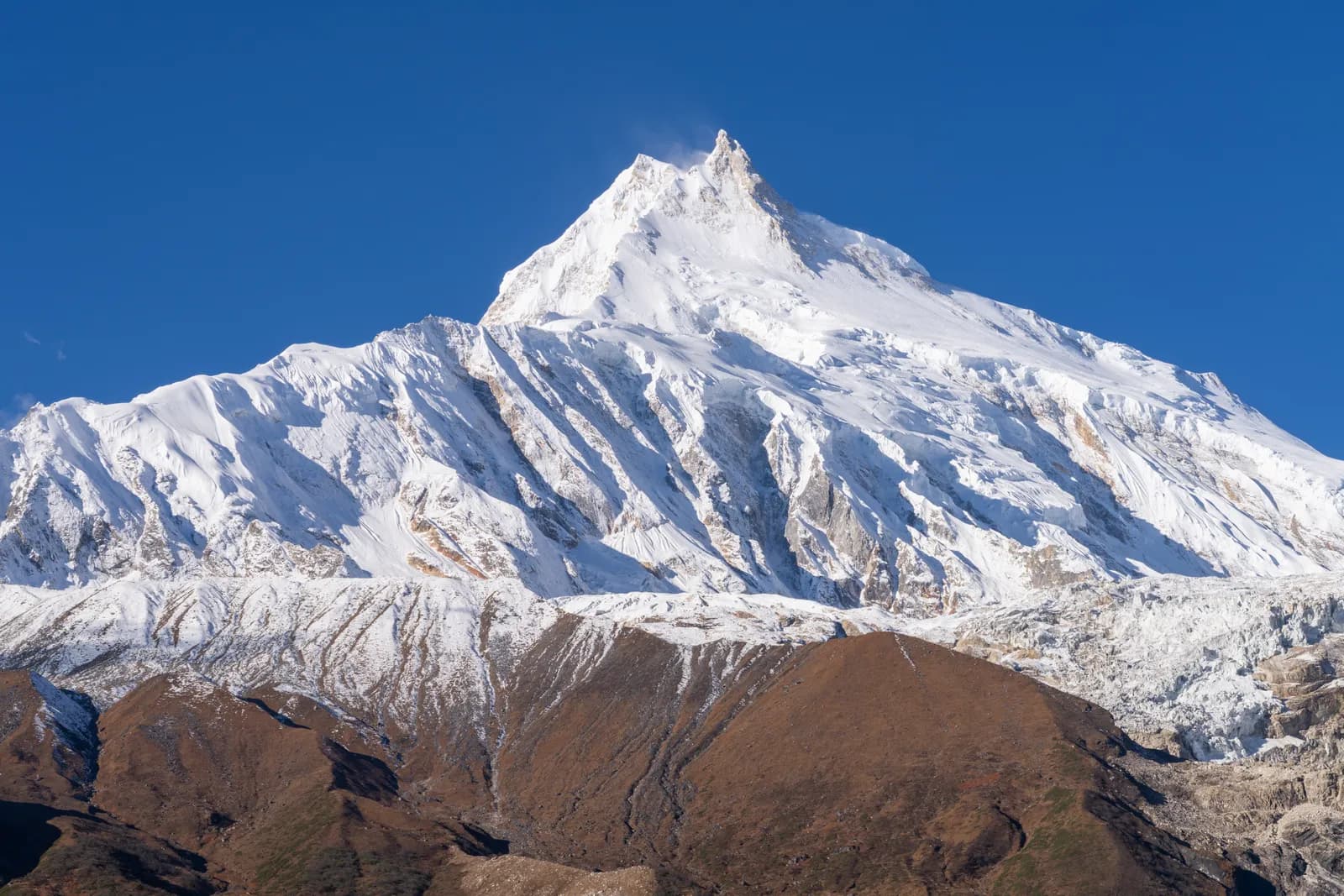
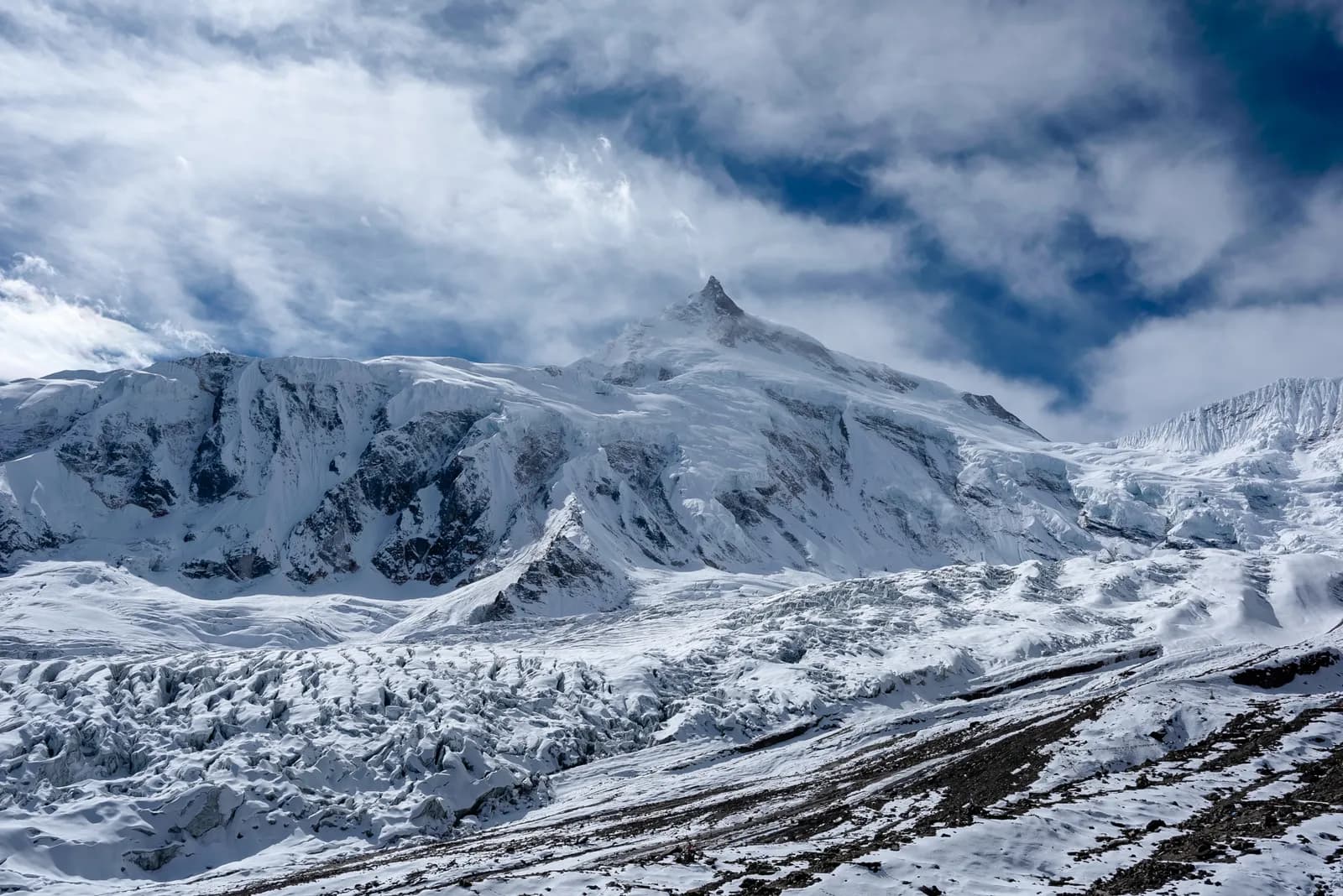
The Manaslu Circuit follows the Budhi Gandaki past Jagat, Deng and Namrung to Lho, Samagaun and Samdo, then crosses Larkya La and drops through Bimthang and Tilije to Dharapani. The valley turns from subtropical forest to Tibetan-speaking Nubri villages, with monasteries, long mani walls and chortens, and tahr on the slopes above Samagaun. It is a big, varied trek, with a high pass as the climax.
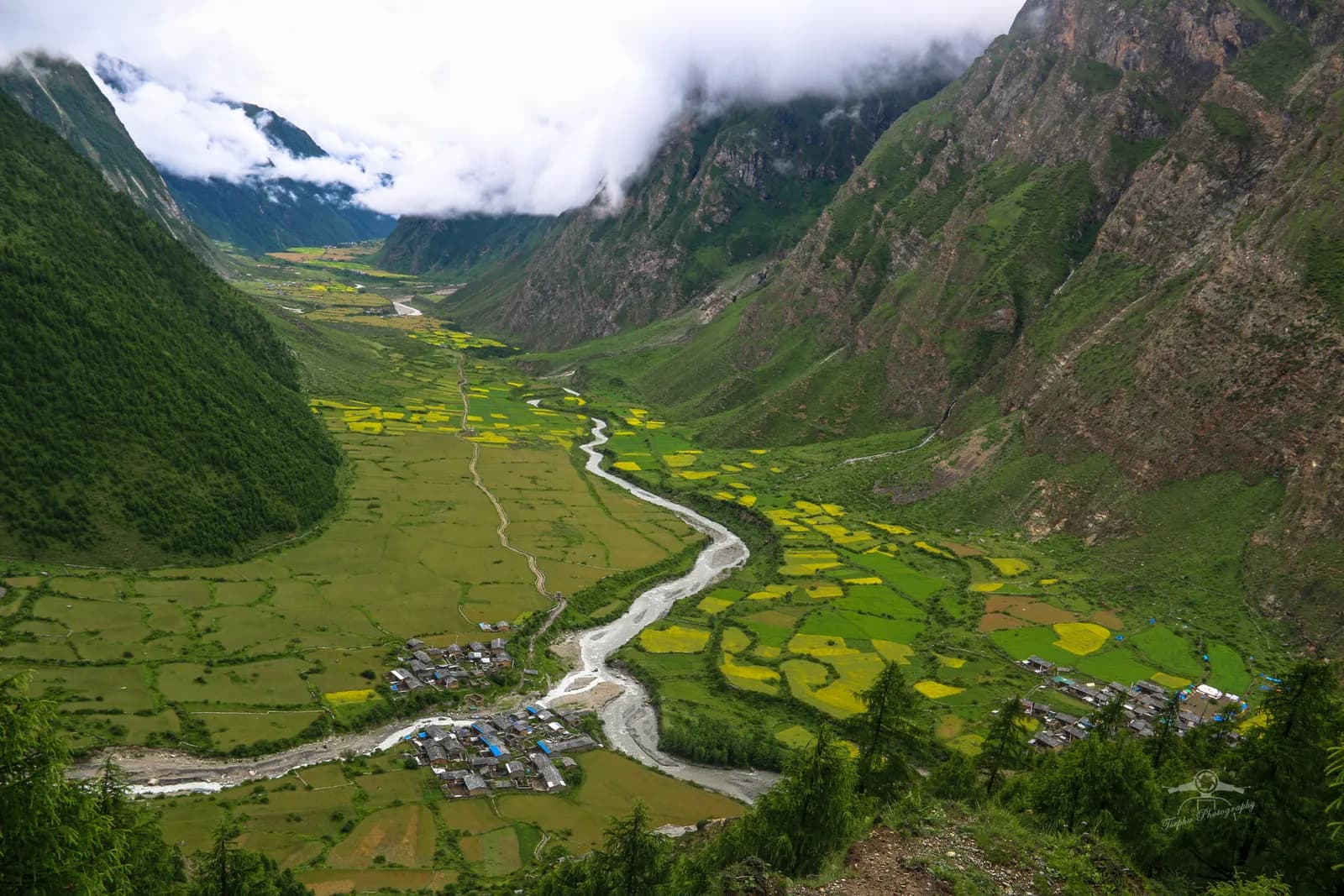
The Tsum Valley branches off at Philim and heads north to Lokpha and Chumling, the first Tsum village at about 2,360 m, then climbs to Chhokangparo (about 3,070 m), Nile (about 3,300 m) and Mu Gompa (about 3,680 m). The valley opens into terraces of barley and buckwheat, stone houses with prayer flags and long mani walls. Mu Gompa, near the Tibetan border, is the highest and most remote monastery of the valley and a centre of Buddhist learning. The return passes Rachen Gompa, a nunnery, with the Milarepa cave nearby. The valley opened to trekkers only in 2008, according to our route page, and few people walk it. It is a trek about culture, not a pass.
A closer look at the days
The first two days are the same: the jeep to Machha Khola and a long walk to Jagat, where your permit is checked. After that the plans diverge. On the Circuit the trail follows the Budhi Gandaki through Deng (1,860 m) and Namrung (2,630 m) to Lho (3,170 m), where the Tibetan-style villages begin, and reaches Samagaun at 3,530 m on day 6, with an acclimatisation day for Pungyen Gompa or toward Manaslu Base Camp. Day 8 is a short walk to Samdo (3,875 m), another rest day follows, and the crossing begins from Dharamsala.
On the Tsum branch, day 3 goes from Jagat to Lokpha (1,920 m) and day 4 to Chumling (2,360 m), where our route page says it feels like the start of a different culture. Day 5 climbs about 1,050 m to Chhokangparo (3,070 m), a big gain that you notice, and day 6 is a gentle walk to Nile (3,300 m) which helps acclimatisation. Day 7 is a short walk to Mu Gompa, and day 8 descends to Rachen Gompa at 3,220 m, where visitors are asked to be quiet and respectful because it is home to Buddhist nuns. The return then retraces the valley to Machha Khola. The Tsum trek has more short, culture-focused days; the Circuit has more long, scenery-focused ones.
Altitude and effort
Neither is easy. The Tsum route page rates it hard because of long days and steady altitude, covering about 131 km on foot with about 7,600 m of climbing over 13 days. The Manaslu Circuit is also hard, with a pass day of 8 to 10 hours from Dharamsala (4,470 m) over Larkya La to Bimthang (3,720 m), a descent of about 1,400 m on the far side. The difference is where the demand comes from. Manaslu asks for acclimatisation to 5,000 m; Tsum asks for stamina and legs.
Because Tsum stays below about 3,700 m, the altitude risk is smaller, though not zero. Our Tsum page still tells you to watch for headache, nausea and poor sleep, never to ascend with symptoms and to descend if they worsen. The Manaslu Circuit has two rest days, at Samagaun and Samdo, and the same guidance applies. Either way, the standard rule is above 3,000 m a sleeping-altitude gain of no more than 500 m a night and an extra night for every 1,000 m gained, per the CDC. See altitude sickness basics and the acclimatisation schedule.
Permits and rules
Both need a Restricted Area Permit from the Department of Immigration through a registered agency, and a licensed guide. Our region page says Tsum is a separate restricted area that needs its own permit, extra days and a guide familiar with it, and the Tsum route page says individual foreigners may now apply, according to reports of a March 2026 notice, though an agency and guide are still required. Fees as of October 2026:
| Permit | Manaslu Circuit | Tsum Valley |
|---|---|---|
| Restricted Area Permit, September to November | USD 100 per week plus USD 15 per extra day | USD 40 per week plus USD 7 per extra day |
| Restricted Area Permit, December to August | USD 75 per week plus USD 10 per extra day | USD 30 per week plus USD 7 per extra day |
| On our plan's permit days | 12 days: USD 175 autumn, USD 125 otherwise | 11 days: USD 68 autumn, USD 58 otherwise |
| MCAP | NPR 3,000 | NPR 3,000 |
| ACAP | NPR 3,000 | not needed |
Tsum's permit is far cheaper. See our Manaslu permit guide, the Tsum region guide and the permits page.
Cost
The permits are part of the difference, but not all of it. Our dated cost model gives per-person totals including lodging, the Kathmandu to Machha Khola transport, permits, guide and porters, excluding international flights, insurance, hotels and tips:
| Style | Manaslu Circuit | Tsum Valley |
|---|---|---|
| Budget lodges, guide, one trekker | USD 830 to 1,200 | USD 630 to 920 |
| Mid-range, two sharing | USD 990 to 1,450 each | USD 800 to 1,200 each |
| Mid-range, four sharing | USD 820 to 1,250 each | USD 630 to 930 each |
Tsum is cheaper by roughly USD 150 to 250 per person at mid-range, which comes from a cheaper permit, a route with no nights in the dearest altitude band and one fewer day. The guide is still the big shared line: NPR 3,400 to 4,700 a day. See the cost guide and splitting guide and porter costs.
Seasons
Both list October and November and March to May as best. Our region and route pages describe Manaslu's pass as snowy in March, usually clear in May and wet and icy early in September, with deep snow in winter. Tsum has no pass, so it is easier to stretch into awkward months, but it has its own limits: in winter there is snow around Mu Gompa and many lodges close, and in the monsoon the road, leeches and cloud are the problem. If you want a restricted-area trek in March, when Larkya La may not be passable until late in the month, Tsum is the sensible one. See March and best time for the Manaslu Circuit.
Logistics
Both start with the 8 to 9 hour jeep drive to Machha Khola, covered in our Machha Khola road guide. Tsum returns by the same road, so you drive it twice. The Circuit exits through Dharapani and Besisahar and then 6 to 7 hours to Kathmandu. Both warn about landslides in the monsoon and advise a spare day.
Visiting monasteries and villages well
Both treks pass through Buddhist communities, and the rules our region pages give are the same. Walk clockwise around mani walls, chortens and prayer wheels, dress modestly in villages and monasteries, and ask before photographing people or ceremonies. At Mu Gompa and Rachen Gompa, visit quietly and ask before you raise a camera. Buy from village shops and eat in family lodges where you can, because the income stays in valleys with few other sources. Our guides to monastery etiquette and trail etiquette cover the details. Tsum, with more monasteries per day of walking, makes this a bigger part of the trip than the Circuit does.
Which should you choose?
| If you want | Choose |
|---|---|
| A big pass and a circuit | Manaslu Circuit |
| Monasteries, nunneries and a hidden valley | Tsum Valley |
| Lower altitude | Tsum Valley |
| Lower cost | Tsum Valley |
| A trek that works in March | Tsum Valley |
| Views of Manaslu and a high crossing | Manaslu Circuit |
Combining them
Tsum branches from the Manaslu trail at Philim, and agencies sell combined treks of 20 days or more, according to our Tsum page, though each part needs its own permit. It adds days, cost and a need for more fitness, so decide before booking. If you are weighing other options, see which Nepal trek is right for you, the Tsum itinerary and the Manaslu itinerary.