Everest Base Camp versus the Annapurna Circuit
Everest Base Camp or the Annapurna Circuit: days, altitude, scenery, difficulty, access, crowds, cost drivers and season side by side, with a recommendation for each kind of trekker.
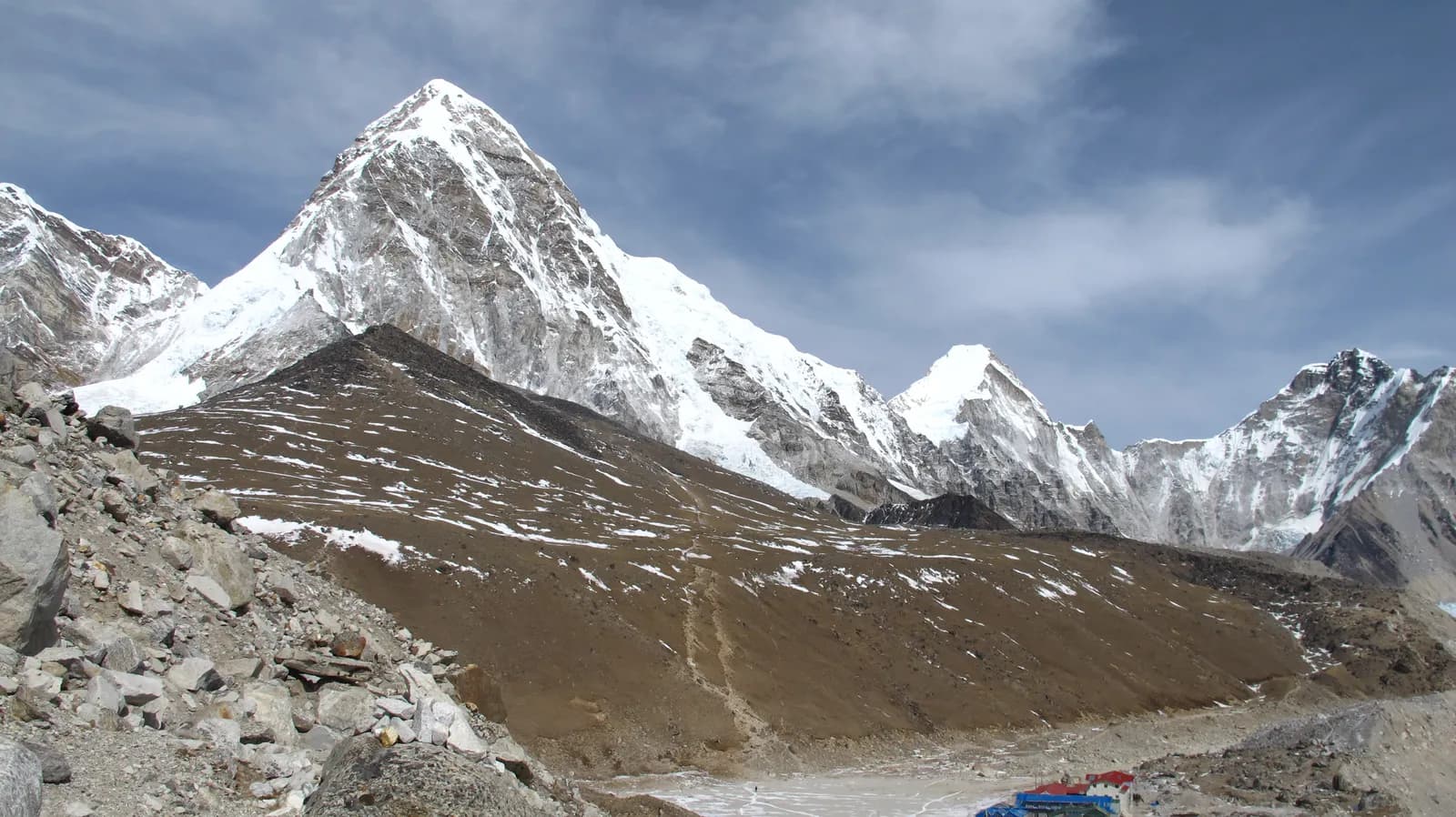
Everest Base Camp (EBC) and the Annapurna Circuit are Nepal's two best-known long treks, and they suit different travellers. EBC is a focused out-and-back to the foot of the world's highest mountain, reached by a flight to Lukla and peaking at Gorak Shep (about 5,160 m) and Kala Patthar (about 5,545 m). The Annapurna Circuit is a varied loop of a mountain massif, crossing Thorong La (5,416 m) and passing through very different landscapes. If you want the iconic goal and Sherpa culture, choose Everest. If you want variety, a pass crossing and a sense of travelling through a region, choose the Circuit.
This guide compares them on length, altitude, scenery, difficulty, access, crowds and costs. The day plans are in the Everest Base Camp itinerary and the Annapurna Circuit itinerary. For other comparisons, see the route choice hub.
Everest Base Camp Trek için açık geziler
Partner arayan trekkingcilerin paylaştığı gerçek geziler.

At a glance
| Factor | Everest Base Camp | Annapurna Circuit |
|---|---|---|
| Shape | Out and back | One-way loop |
| Typical length | 12 to 14 days from Kathmandu | 12 to 18 days |
| Highest sleeping point | Gorak Shep, about 5,160 m | Thorong Phedi, about 4,540 m (High Camp a few hundred metres higher) |
| Highest point | Kala Patthar, about 5,545 m | Thorong La, 5,416 m |
| Access | Flight to Lukla (or Ramechhap and a drive) | Drive to Besisahar and onward; jeep or flight from Jomsom |
| Landscape | Glacial valleys, Sherpa villages, big peaks | Subtropical valley, forest, alpine, high desert |
| Main hazard | Altitude, crowding, flight delays | Altitude, the pass day, road dust and traffic on parts |
| Permits | Sagarmatha National Park and local permit | ACAP, TIMS where required |
| Route pages | EBC | Circuit |
The routes
Everest Base Camp
You fly to Lukla (about 2,860 m), walk to Phakding, climb to Namche Bazaar (about 3,440 m), rest, then continue through Tengboche (about 3,860 m), Dingboche (about 4,410 m) and Lobuche (about 4,940 m) to Gorak Shep (about 5,160 m). Base camp itself is at about 5,364 m, and Kala Patthar gives the classic view of Everest. You return the way you came, usually by the same villages, with a flight back. Permits and the flight are covered in the Sagarmatha permit guide and the Lukla flight guide.
Annapurna Circuit
You start near Besisahar (about 760 m), follow the Marsyangdi valley through Chame (about 2,670 m) and Upper Pisang (about 3,300 m) to Manang (about 3,540 m), then climb via Yak Kharka and Thorong Phedi to cross Thorong La and descend to Muktinath and the Kali Gandaki valley, ending at Jomsom or beyond. Roads have changed the lower sections, and many trekkers use jeeps for parts. The permits are in the ACAP guide.
Difficulty and altitude
| Question | Everest Base Camp | Annapurna Circuit |
|---|---|---|
| Altitude gain | Steady, with two rest days | Gradual to Manang, then a big step to the pass |
| Hardest day | Gorak Shep, base camp and Kala Patthar | Thorong La day, 8 to 10 hours from Phedi |
| Acclimatisation | Namche and Dingboche rest days | Manang rest day |
| Escape options | Helicopter from villages; flights from Lukla | Road access on many sections; jeeps on the Jomsom side |
Both reward patience and punish haste. Read the acclimatisation schedule and the rest-days guide for how each plan works. The Circuit is often described as better for gradual acclimatisation, but the pass day is a serious challenge in its own right; see snow and high-pass conditions.
Scenery and culture
Everest is about scale: Ama Dablam, Lhotse, Nuptse, the Khumbu glacier and Everest itself, with Sherpa villages, monasteries and mani walls. Mountain views are close and constant above Namche.
The Circuit is about contrast: terraced rice fields and waterfalls at the start, forests and Gurung and Manangi villages, a high alpine basin at Manang, and then the stark, windy Kali Gandaki valley with Thakali villages and apple orchards. It gives a sense of travelling through a region rather than to a place.
Crowds
Both are busy in October and April. Everest has one main trail, so crowds concentrate at Namche, Dingboche and Gorak Shep, and flight constraints add pressure. The Circuit is spread over a larger area and more days, and road sections have jeeps and dust. Neither is a wilderness trek in peak months; for quiet, consider Langtang or Manaslu.
Cost drivers
| Cost line | Everest | Circuit |
|---|---|---|
| Transport to the trailhead | Flights (or Ramechhap and a drive) | Bus or jeep, and often a jeep or flight out of Jomsom |
| Permits | Two (park and local) | ACAP, TIMS where required |
| Days | 12 to 14 | 12 to 18, depending on road use |
| Food and lodging | Higher at altitude | Lower overall, higher near the pass |
Use the formula in the Everest cost breakdown with quotes for both and compare. Our cost guide explains how guide and porter lines change with group size.
Season
Both are best in October and November and in March to May. Everest is poor in the monsoon because of flights and cloud. The Circuit's southern section is wet in summer, but the upper valley is drier, and the pass is difficult in winter. See the best time for Everest Base Camp and the best time for the Annapurna Circuit.
Which to choose
- You want the iconic goal: Everest Base Camp.
- You want variety and a pass: Annapurna Circuit.
- You are worried about flights: the Circuit, which is mostly road access.
- You have limited time: Everest (12 to 14 days), or the Circuit with road shortcuts.
- You want to see Sherpa culture: Everest.
- You want to see varied landscapes: the Circuit.
Whichever you choose, plan partners and splits early; see how to find a trekking partner safely.
Sleeping altitudes side by side
Looking at the nights shows how differently the two treks build altitude. Figures are approximate.
| Stage | Everest Base Camp | Annapurna Circuit |
|---|---|---|
| Low start | Phakding, 2,610 m | Chame, 2,670 m |
| First notable night | Namche, 3,440 m | Upper Pisang, 3,300 m |
| Rest-day village | Namche, 3,440 m; Dingboche, 4,410 m | Manang, 3,540 m |
| Above 4,000 m | Dingboche, Lobuche, Gorak Shep | Yak Kharka, Thorong Phedi, High Camp |
| Highest bed | Gorak Shep, 5,160 m | Thorong Phedi, 4,540 m (High Camp a little higher) |
| After the high point | Same villages back down | Descent to Muktinath, about 3,800 m |
Everest keeps you above 4,000 m for four nights and puts the highest bed above 5,000 m. The Circuit keeps you above 4,000 m for only two or three nights but asks for a day of about 900 m up and 1,600 m down over the pass. That makes the two physiologically different: Everest is a sustained high-altitude trek with a gradual exposure, and the Circuit is shorter at height with a big single effort.
A realistic schedule for each
| Trek | Days | Plan |
|---|---|---|
| Everest Base Camp | 12 to 14 | Fly to Lukla; Phakding; Namche (rest); Tengboche; Dingboche (rest); Lobuche; Gorak Shep and Kala Patthar; return in 4 to 5 days; fly back |
| Annapurna Circuit, full | 15 to 18 | Drive to Besisahar; walk up the Marsyangdi; Manang (rest); Thorong La; Muktinath; walk or jeep down the Kali Gandaki; Pokhara |
| Annapurna Circuit, road-assisted | 11 to 13 | Jeep the lower valley, walk from Chame or Pisang; same upper section; jeep out of Jomsom |
The Circuit's flexibility is a real advantage: you can choose how much of the lower valley to walk. Everest has no such option, since the trail is the route, though you can choose to walk in from Phaplu or Jiri and add days.
Who each trek suits
Everest Base Camp suits you if:
- you want the best-known goal in trekking and are willing to plan around flights;
- you are interested in Sherpa culture, monasteries and the Khumbu;
- you are happy to retrace the same trail on the way down;
- you have the budget for flights and the days for a safe schedule.
The Annapurna Circuit suits you if:
- you prefer a loop with new scenery every day;
- you like cultural and landscape variety, from rice terraces to high desert;
- you want flexibility to shorten or lengthen the walk;
- you are prepared for a long pass day and some road dust.
Mistakes people make
- Choosing by photograph. Both are beautiful, so decide by days, budget and logistics.
- Underestimating the pass. Thorong La day is long and cold, and the weather window matters.
- Underestimating the flight. Lukla delays can eat your spare days.
- Skipping rest days. Both treks depend on them.
- Ignoring the road on the Circuit. The lower valley now has jeep traffic, and many people prefer to skip it and walk higher sections.
Partners and sharing
Both treks are well suited to partners, and sharing a guide and porter lowers the cost per person. The permits are the same per person in either group, so the saving comes from the guide, porter and transport. If you are looking for a partner, read how to find a trekking partner safely, and agree your pace and turnaround rules in advance.
Bringing it together
If you can only do one, pick the one that fits your time, budget and tolerance for logistics. A fit first-timer with 14 days and a careful schedule can do either. A traveller with more time and curiosity about landscapes will probably prefer the Circuit; a traveller who wants to stand at the foot of the highest mountain will choose Everest. For the broader set of options, see the regions guide.