

Solo versus group trekking in Nepal
Solo, partner, agency group or open group: which way of trekking in Nepal fits you, compared on cost, guide rule, flexibility, safety and company, with numbers for Everest, Annapurna and Poon Hill.
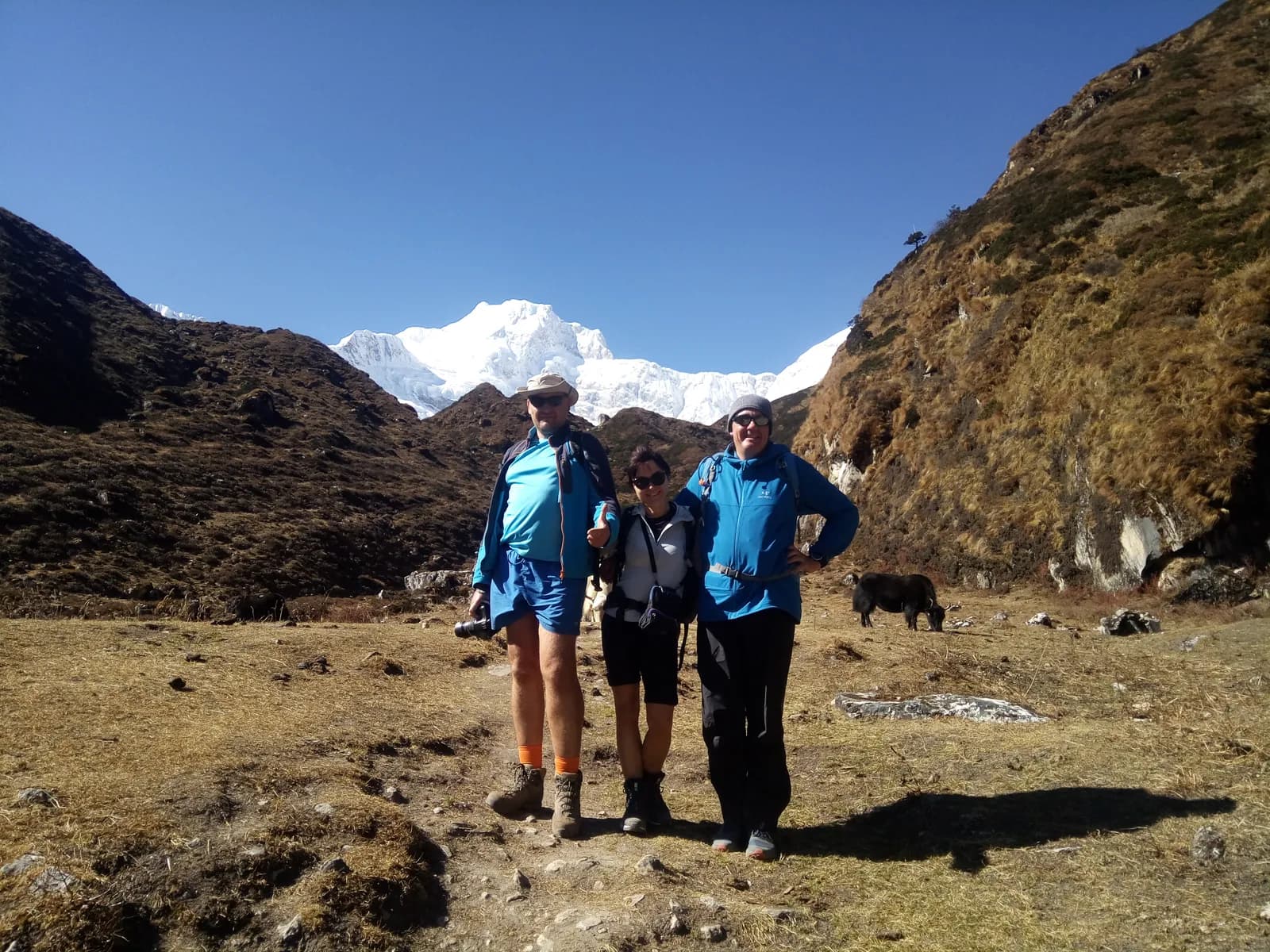
For most trekkers in Nepal the best choice is a small group of two to four that you assemble yourselves: the guide costs a fraction per person, there is company and a safety margin, and you still control the pace. Solo trekking suits experienced people on busy, low routes, but the guide rule means you will rarely walk without a guide anyway. An agency group departure suits people who want everything arranged and accept a fixed schedule. The sections below compare the four styles on the things that matter, with numbers from our dated cost data (checked 18 October 2026).
| Solo with a guide | Partner group (2 to 4) | Agency fixed group | Open meeting on the trail | |
|---|---|---|---|---|
| Cost per person | highest | much lower | package price | varies |
| Pace and route control | full | agreed between you | set by the operator | informal |
| Company | by chance | built in | built in | by chance |
| Effort to arrange | agency booking | agree split and rules | book a departure | none, no plan |
| Main risk | no one to notice altitude illness | mismatched partners | schedule too fast | no commitment |
Trip terbuka di Everest Base Camp Trek
Trip sebenar yang disiarkan oleh pendaki yang mencari rakan.

The guide rule decides how solo you really are
For national parks and conservation areas the written rule is the Nepal Tourism Board announcement of April 2023 (we found no separate Department of Immigration or DNPWC notice), and 2026 operator reports say checkpoints enforce it in Annapurna (ACAP), Langtang, the strictest, and most other parks, but not in Khumbu, where the municipality opted out and issues its own trek card (Kathmandu Post, 3 April 2023; checked 19 October 2026). In restricted areas (13 districts, including Manaslu, Upper Mustang and Upper Dolpo) a licensed guide through a registered agency is part of the permit, as the Department of Immigration reminded stakeholders in June 2026, and since 22 March 2026 one trekker can apply but the guide is still required. So on most routes except Khumbu you will walk with a guide whether you book alone or not, which makes the real question how many people split that guide. See the guide rule by region, the guide rule explainer and our solo trekking safety guide.
The numbers
The cost difference is the strongest argument for a group. The pack gives a licensed guide at NPR 3,400 to 4,700 a day for Everest, NPR 2,700 to 4,000 for Annapurna-region routes and NPR 2,100 to 3,400 for a porter. At NPR 134 per USD:
| Route and guide days | Solo (USD) | Two people, each (USD) | Four people, each (USD) |
|---|---|---|---|
| Everest Base Camp, 11 days | 279 to 386 | 140 to 193 | 70 to 96 |
| Annapurna Circuit, 14 days | 282 to 418 | 141 to 209 | 71 to 104 |
| Poon Hill, 4 days | 81 to 119 | 40 to 60 | 20 to 30 |
Porters and private vehicles shrink the same way when shared. Permits, flights and lodging do not. Our cost split guide works through a full example, and the Nepal trekking cost guide lists every line. The saving flattens beyond four people, because porters are added in step with the group and only the guide line keeps falling.
Flexibility and pace
Solo gives you full control, with the guide following your pace, but you pay for it. A partner group means agreeing pace, rest days and a turning-back rule. An agency fixed group sets those for you, which suits some people and frustrates others: if the departure schedule is tight, you may be unable to take the extra acclimatisation day your body wants. Our matching pace and fitness guide explains how to test compatibility before you commit.
Safety and company
Altitude illness, injury and weather are the main risks everywhere, and the main difference between solo and group is whether someone notices. A partner who sees confusion, clumsiness or a worsening headache can call a descent; alone, you may not. Read altitude sickness basics and what if your partner cannot continue. Company matters too: long evenings in teahouses are better with people you like, and a mismatched partner is worse than none, so vet them using the partner vetting checklist and watch for the red flags.
Restricted areas settle the question
On Manaslu, Upper Mustang and Upper Dolpo the question is mostly settled for you: a registered agency and a licensed guide are part of the permit, and the agency fee and guide wages are the biggest part of the budget. Since 22 March 2026 one trekker can apply, but you still pay for the guide, so a partner is the main way to cut the cost. The Manaslu Circuit guide alone is NPR 47,600 to 65,800 for 14 days, which is about USD 355 to 491 solo and USD 178 to 246 each for two. Our Manaslu permit guide explains the rules, and Annapurna Circuit versus Manaslu Circuit compares the two big circuits.
What you give up in each style
Solo gives up money and a second pair of eyes. A partner group gives up some freedom, because you must agree dates, pace and a turning-back rule, and gives up a little privacy, because you share the guide and often a room. An agency group gives up control: the schedule and price are set, and if you need an extra rest day the group may not be able to give it. Meeting people only on the trail gives up certainty: you may find a good partner at Manang or Yak Kharka, or you may not, and the plan, the cost split and the rules are then agreed on the fly. None of these is wrong. The cost of each is different, and the best choice depends on what you can afford to give up.
A middle path: try a short trek first
If you are unsure, test the group style on a short trek before committing to a long one. Walk Poon Hill or a Kathmandu ridge with the same person or people for three or four days, and see whether you walk at the same pace, eat at the same times and make decisions the same way. It costs little, and it turns a risky bet into a low-risk one. Our short treks from Pokhara and short treks from Kathmandu guides list the options, and the first-time trekking guide explains what to expect.
How to choose
Choose solo with a guide if you are experienced, the route is busy and low, and you value full control more than the price. Choose a partner group if you want to cut the guide and porter bill, have company and keep control of pace, and you are willing to agree the rules in writing. Choose an agency group if you want a fixed price, a fixed schedule and nothing to arrange. If you choose a partner group, post your trip on the trekking partner hub, compare your route on the Everest Base Camp partner page, and use what to agree with trekking partners. For a first trek, start with which Nepal trek is right for you.
Rancang trek ini
Foto
Soalan lazim
Sumber
- Nepal Tourism Board
- Do you need a guide to trek in Nepal (In Your Pocket)
- Himalayan Partner: Guide and porter price in Nepal 2026
- Kathmandu Post: Everest region, Nepal Tourism Board dispute over solo trek ban heats up (3 April 2023)
- Diplomat Nepal: Department of Immigration reinforces mandatory guide rule for trekking in restricted areas (13 June 2026)


