Packing list for Everest Base Camp in spring
A packing list for Everest Base Camp in March to May, organised by what you wear, sleep in and carry, with what to rent in Kathmandu, weight limits and what to leave at home.

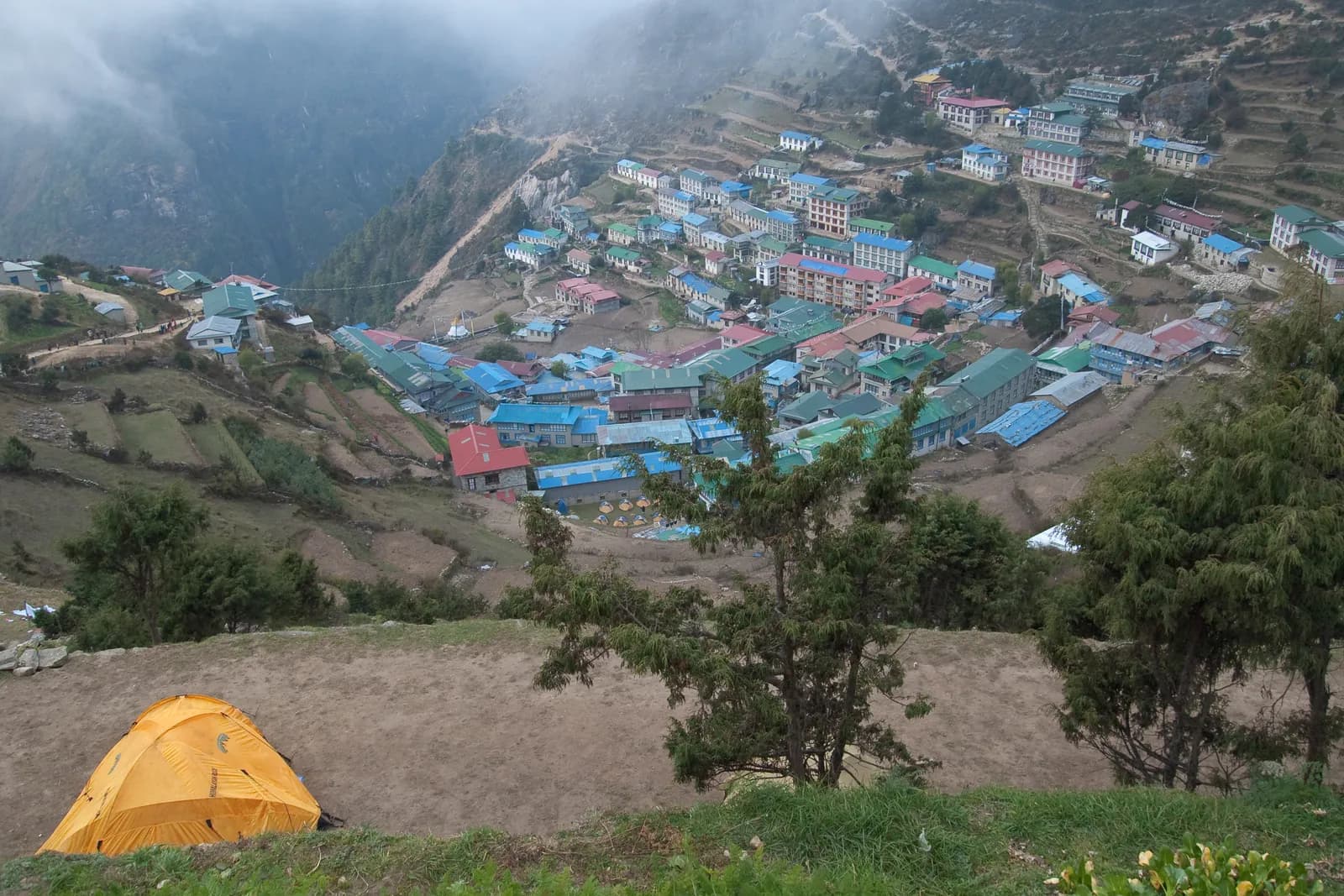
A spring Everest Base Camp trek asks you to pack for two climates at once. Low down, between Lukla (about 2,860 m) and Namche (3,440 m), March to May days are warm and sometimes humid; at Lobuche (about 4,940 m) and Gorak Shep (about 5,160 m), nights fall well below freezing. The list below is built around layers, so you can add and remove clothing as you climb, and it marks what is worth renting in Kathmandu.
For a general list covering all seasons, see the Nepal trek packing list. This version is specific to Everest in spring, with weight and flight limits in mind. The route itself is in the Everest Base Camp itinerary.
Trip terbuka di Everest Base Camp Trek
Trip sebenar yang disiarkan oleh pendaki yang mencari rakan.
What spring is like on the trail
| Zone | Altitude | Spring days | Spring nights |
|---|---|---|---|
| Lukla to Namche | 2,610 to 3,440 m | Warm, sometimes hot; afternoon cloud | Cool |
| Tengboche to Dingboche | 3,860 to 4,410 m | Cool to mild in sun; wind | Around or below freezing |
| Lobuche to Gorak Shep | 4,940 to 5,160 m | Cold in shade, bright sun | Well below freezing |
Spring brings afternoon cloud and, in late April and May, occasional showers or hail. Plan for sun, wind and cold in the same day.
Clothing: the layer system
| Layer | What to bring | Notes |
|---|---|---|
| Base | 2 or 3 synthetic or merino T-shirts, 1 or 2 long-sleeve tops | Avoid cotton; it stays wet |
| Mid | 1 fleece or light synthetic jacket | For cool mornings and evenings |
| Insulation | Down or synthetic jacket | Essential above Namche; rent if you do not own one |
| Shell | Waterproof, breathable jacket | Also a windbreaker |
| Trousers | 2 pairs of quick-dry trekking trousers; 1 pair of waterproof overtrousers | Zip-off legs are handy low down |
| Legwear | 1 pair of thermal leggings | For nights and the highest days |
| Underwear | 3 or 4 pairs, quick-drying |
The principle is to carry fewer, better layers and wear them in combination rather than carry a different outfit for each day. Wash socks and underwear in the sun at lower altitude.
Feet
- Boots: waterproof, mid-height, broken in before you leave. Boots are the item people most regret buying new.
- Socks: 3 or 4 pairs of trekking socks, plus one warm pair for sleeping.
- Camp shoes: light sandals or sneakers for the lodge.
- Gaiters: optional in spring but useful if there is old snow near Lobuche or Gorak Shep.
Blisters end more treks than altitude does. Bring blister plasters and tape, and treat hot spots as soon as you feel them.
Head, hands and face
- A sun hat with a brim, and a warm hat for evenings and early starts.
- Sunglasses with UV protection, and a buff or neck gaiter.
- Light gloves for walking and warm gloves or mittens for the highest days.
- Sunscreen (high factor), lip balm with SPF and a small mirror to check your face.
Spring sun at altitude burns quickly, even in cloud.
Sleeping
Lodge rooms are unheated, with a mattress and blankets. A sleeping bag rated for around minus 10 C comfort is common advice for spring on this route. Rent one in Kathmandu if you do not own one, and ask the shop to show you the rating and the condition. A liner adds warmth and keeps the bag cleaner. A silk or fleece liner is light.
Bags
- Duffel (about 60 to 80 L): carried by a porter or yak. A sturdy duffel with a padlock is standard.
- Daypack (about 25 to 35 L): for water, camera, snacks, rain shell and warm layer.
- Dry bags or liners: for the sleeping bag and electronics.
Agree the weight limits with your agency and the airline before you pack. Porters should not carry more than the limits suggested by groups such as the International Porter Protection Group, and flights to Lukla have baggage limits. See the Kathmandu to Lukla flight guide.
Health and hygiene
- Water treatment: tablets or a filter or a UV pen. Bottled water is expensive and adds plastic.
- First-aid kit: plasters, blister tape, pain relief, rehydration salts, antiseptic and any personal medication.
- Altitude medication: only after speaking to a doctor.
- Toiletries: toilet paper, hand sanitiser, wet wipes, a small towel.
- Insurance documents and a copy of your passport.
The acclimatisation schedule explains why the schedule matters more than the medication.
Electronics and money
- Power bank (10,000 mAh or more), since charging above Namche is paid by the hour and unreliable.
- Headlamp with spare batteries.
- Phone, camera and cables.
- Cash in rupees, in small notes.
- A plug adapter if your plugs differ from those in Nepal.
Rent, buy or skip
| Item | Rent in Kathmandu | Buy | Skip |
|---|---|---|---|
| Down jacket | Yes | If you will use it again | |
| Sleeping bag | Yes | If you trek often | |
| Trekking poles | Yes | Optional | |
| Boots | Rarely | Yes, and break in | |
| Duffel | Yes or buy cheaply | Optional | |
| Crampons or microspikes | Not needed on the standard route | Yes, unless you add passes |
Leave at home
Cotton jeans, heavy books, a hairdryer, multiple pairs of shoes, expensive jewellery and anything you would be upset to lose. You can leave spare luggage at your hotel in Kathmandu, which usually stores it for free if you return.
A final check
Pack your duffel a week ahead and weigh it. If it is over the limit, remove one layer you do not need and one item you will not use. Then plan with partners; if you are still looking for one, see how to find a trekking partner safely. The Everest region guide and the best time guide cover the rest.
What you wear, day by day
Knowing which layer comes out on which day makes it easier to decide what is worth carrying.
| Stage | Morning | Midday | Evening |
|---|---|---|---|
| Lukla to Phakding | T-shirt, light trousers | T-shirt, sun hat | Fleece |
| Phakding to Namche | Long sleeve, fleece in pocket | T-shirt, rain shell ready | Fleece, down jacket in the lodge |
| Namche rest day | Fleece | Long sleeve | Down jacket |
| Tengboche to Dingboche | Fleece, hat, light gloves | Long sleeve, sun hat | Down jacket, hat |
| Dingboche to Lobuche | Down jacket in the cold, then fleece | Long sleeve, windshell | Down jacket, thermal leggings |
| Gorak Shep and base camp | Everything warm, hat, gloves | Fleece and shell | Everything warm, in the dining room |
| Kala Patthar at dawn | Full kit including down jacket, warm hat, mittens, face cover | Remove layers on descent |
You will use the warmest layers on only a few days, which is why renting a down jacket makes sense for most people.
Sample weights
A rough guide to what a spring duffel and daypack weigh when packed well, with the numbers meant only as a check against your own limits.
| Item group | Approximate weight |
|---|---|
| Sleeping bag (rented, down) | 1.5 to 2.0 kg |
| Down jacket | 0.5 to 0.8 kg |
| Clothing for the trek | 3 to 4 kg |
| Toiletries and first aid | 1 kg |
| Duffel itself | 1.5 to 2 kg |
| Daypack contents (water, layers, camera) | 4 to 6 kg |
If your total exceeds the airline limit, the usual fixes are to wear your heaviest items on the plane, leave a bag at your hotel and carry electronics and valuables in your daypack. Check the allowance in advance; baggage limits at Lukla are strict because the aircraft are small.
Last-minute shopping
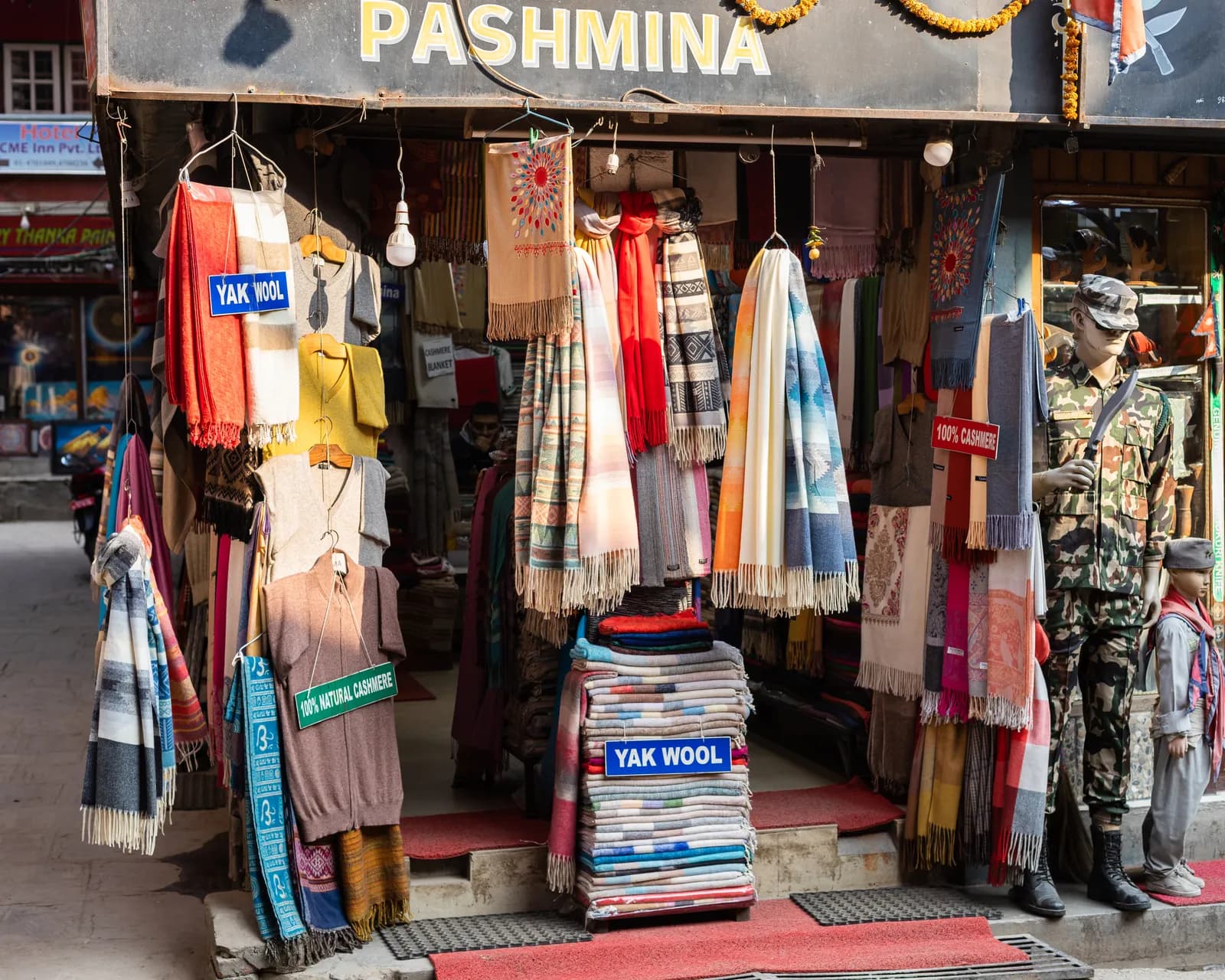
Namche Bazaar has gear shops, bakeries and a pharmacy, so a forgotten item is rarely a disaster. Lukla has a few basics. Prices are higher than in Kathmandu and quality varies, so do not rely on it for essential items. Buy in Kathmandu if you can, and check zips, seams and warmth ratings before you leave town. If a rented item is faulty, you can usually swap it before you go but not after.
Common spring packing mistakes
- Too many clothes. Most people wear the same two or three layers repeatedly.
- New boots. Blisters are the most common reason people turn back.
- No rain shell. Spring showers and hail are real, and a shell doubles as a wind layer.
- Not enough sun protection. Burnt lips and noses are common.
- Forgetting a power bank. Charging gets expensive and slow above Namche.
- Cotton clothing. It stays wet and cold.
How the list changes for other seasons
In autumn, the nights are colder by the end of the season, so add a warmer layer and consider a lower-rated bag if you are trekking late. In winter and early spring, add microspikes, a thicker down jacket and insulated boots. In the monsoon, add full waterproofs and leech protection and reconsider the route. The crampons and microspikes guide explains when traction is needed, and the best time guide compares the months.
Route pages: Everest Base Camp and the Everest region.