

Nepal trek packing list: what to bring, rent or buy
A layer-by-layer Nepal trek packing list, with what to add for each altitude and season, what to rent or buy in Kathmandu and Pokhara and what to leave at home.
A Nepal trek packing list is mostly a layering system. You start in warm valleys, sleep in unheated rooms above 4,000 m and cross passes where the wind chill is severe, so you need clothes that you can add and remove, not one heavy jacket. Pack for the highest and coldest night of your route, then rent what you only need once.
This list is organised by layer and shows what to add for altitude and season. It covers what to bring, rent in Kathmandu or Pokhara and leave behind. For route detail see the Everest Base Camp itinerary and the Poon Hill itinerary, which sit at the two ends of the spectrum.
Trip terbuka di Everest Base Camp Trek
Trip sebenar yang disiarkan oleh pendaki yang mencari rakan.

The core list
Clothing
- Base layers: two tops and one bottom in merino or synthetic. Not cotton.
- Mid layer: a fleece or light insulated jumper.
- Insulation: a down or synthetic jacket for evenings and the pass days.
- Shell: a waterproof, windproof jacket, and waterproof trousers for monsoon or snow.
- Trousers: two quick-dry walking trousers or one trouser and one zip-off pair.
- Socks: three pairs of walking socks and a warm pair for sleeping.
- Hat and gloves: a warm hat, a sun hat, thin gloves and warm mittens for high passes.
- Buff or neck gaiter for dust and wind.
Feet
- Boots: broken-in, supportive and waterproof for high routes. Trail shoes can work on low routes such as Poon Hill.
- Camp shoes: sandals or light shoes for the evening.
- Blister kit: tape and plasters, applied at the first hot spot.
Sleeping
- Sleeping bag: rated for your highest night, or rent one. A liner adds warmth and cleanliness.
- Lodges provide blankets, but a bag is warmer and more hygienic above 3,500 m.
Daypack and carry
- Daypack: 25 to 35 litres with a rain cover.
- Duffel for the porter: usually supplied by the agency, with a weight limit set by the agency.
- Water bottles: two one-litre bottles, plus a filter or purification tablets.
Health and extras
- Prescriptions and first aid: blister care, rehydration salts, pain relief and anything your doctor advises.
- Sun protection: sunglasses with side protection, sunscreen and lip balm.
- Headlamp with spare batteries for pre-dawn starts.
- Power bank and charging cables.
- Poles, for knees on descents.
- Documents: passport, permits, insurance details and photocopies in a waterproof bag.
What to add by altitude
| Highest night | Add |
|---|---|
| Below 3,000 m (Poon Hill) | Base layers, a fleece, a rain shell, light gloves |
| 3,000 to 4,000 m (Langtang, Mardi Himal) | Warm hat, insulated jacket, warmer sleeping layer |
| 4,000 to 5,000 m (Everest Base Camp, Annapurna Circuit) | Down jacket, warm sleeping bag, mittens, goggles |
| Above 5,000 m (passes, Kala Patthar) | Everything above, plus a balaclava or buff, spare gloves and hand warmers |
What to add by season
- Autumn and spring: the core list above, with a warm sleeping bag for November and March.
- Winter: a warmer sleeping bag, an insulated jacket with a hood, insulated boots and gloves.
- Monsoon: a serious rain shell, waterproof trousers, a pack cover, gaiters for leeches and quick-dry clothing.
What to rent or buy in Kathmandu and Pokhara
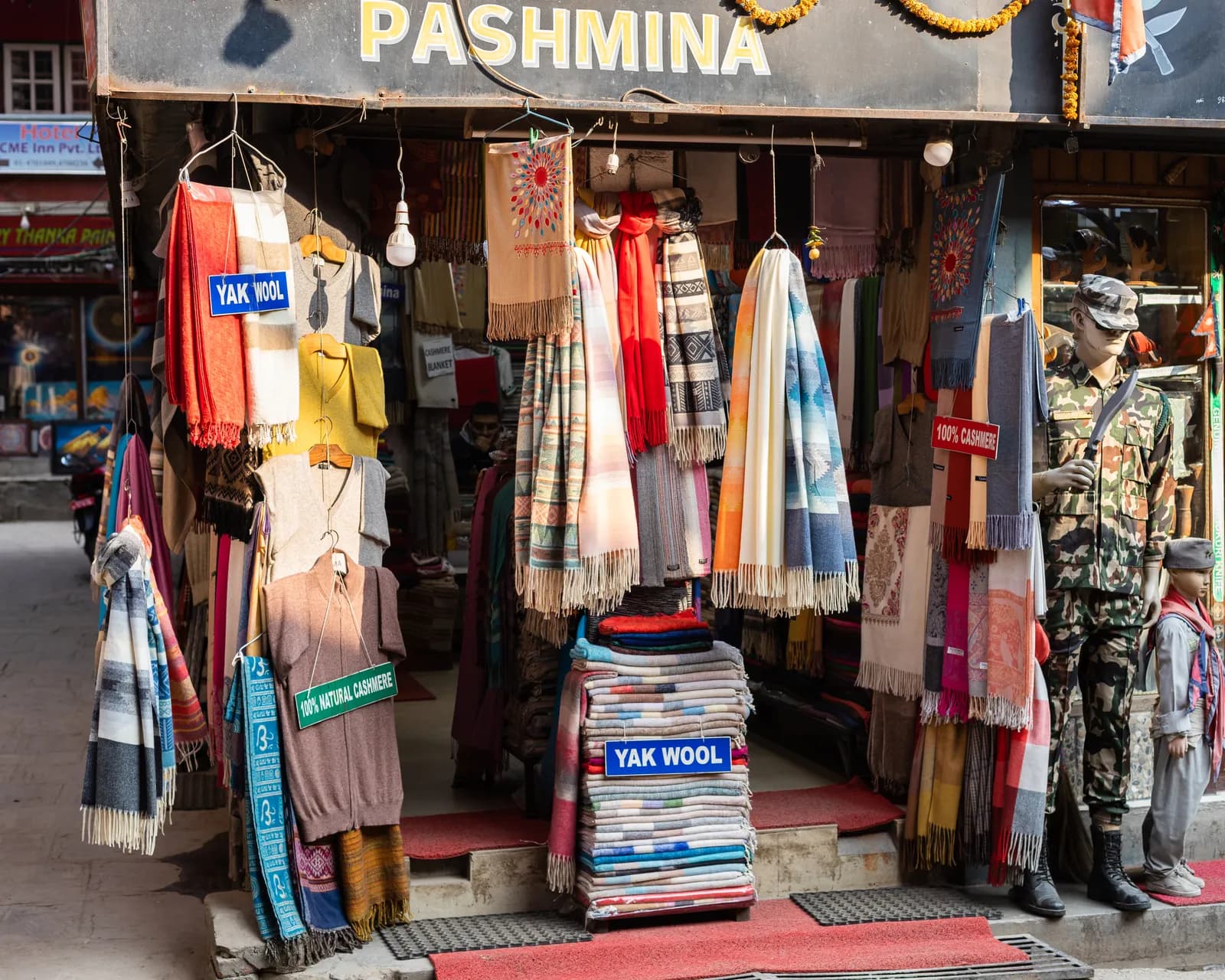
Thamel in Kathmandu and Lakeside in Pokhara have many shops that sell and rent trekking gear. Rent a down jacket, sleeping bag and poles if you trek once. Buy boots, socks and base layers in advance, because fit matters. Check the condition and zips of rental gear before you leave the shop, and compare the warmth of the sleeping bag with your highest night. Counterfeit branded gear is common, so judge a jacket by its warmth and construction, not the logo.
Health items that matter at altitude
Altitude changes what you need. Sunscreen and good sunglasses matter more at 5,000 m, and chapped lips and a dry throat are common. The CDC advises avoiding alcohol for the first 48 hours at altitude, and some travellers discuss acetazolamide (Diamox) with a doctor before they go. Read our altitude sickness basics and talk to a travel-medicine doctor.
What to leave at home
- Cotton clothing, heavy jeans and a second pair of boots.
- Big camera kits you will not carry daily.
- Valuables, jewellery and anything you would not want to lose.
- Bottled-water supplies: bring a filter instead.
- Too many toiletries: one small kit is enough.
A layering example for a high day
On a summit or pass day, such as Kala Patthar or Thorong La, you start in the dark in the coldest air of the trek and finish in strong sun. A workable system is: a base layer and a thin fleece under a windproof shell, the down jacket in your daypack for the first hour, warm hat and mittens on your hands before you feel cold, and goggles or sunglasses in a pocket. You take off a layer as soon as you feel yourself warming, because sweat that cools at the top is what chills you. At the top, put the down jacket on before you stop for photographs. Carry a spare pair of gloves, since a wet or lost glove is a real problem above 5,000 m. Pack a flask with a hot drink, and keep your water bottle inside your jacket so it does not freeze.
What goes where
Keep what you need during the day in the daypack: water, a rain shell, a warm layer, sunscreen, snacks, camera, passport copy, permits and a small first-aid kit. Put the rest in the duffel that your porter carries, and pack it in dry bags so the contents survive rain and river crossings. The duffel arrives at the lodge after you, and sometimes later than you expect, so do not put anything you need on the trail in it. Keep your sleeping bag in the duffel and your passport, money and insurance details on your body.
Weight and the porter limit
Agencies set a weight limit per porter, so ask what yours is before you pack. If you are carrying everything yourself, aim for the lightest list that is still warm enough: bring one change of trekking clothes and one set for the evening, rather than a fresh outfit each day. Laundry is possible in sunny villages, though clothes dry slowly at altitude. On short routes such as Poon Hill you can carry everything in one pack, while on the Everest Base Camp route a porter and a duffel make life easier.
A last check before you leave Kathmandu
Lay everything out the night before and check it against the list. Test the headlamp and the zips, charge the power bank, break in new boots on a walk and leave your unneeded luggage at the hotel. Confirm the permits and insurance are in your daypack and a photocopy is in a separate bag. Weigh the duffel so you know the weight before the flight to Lukla or Jomsom, because small aircraft apply baggage limits.
Packing for sharing
If you trek in a group, share the weight of group items such as the first-aid kit, a deck of cards and a filter. Agree who carries what before you start, and compare your lists so nobody is missing a key item. See how to find a trekking partner safely.
Seasonal planning
Your packing depends on your dates: check the best time to trek in Nepal before you finalise it. For region details see the Everest region guide and the Annapurna region guide.


