How to join a trekking group in Kathmandu: peer groups or agency departures
Join a trekking group in Kathmandu as a peer group (cheaper, flexible) or an agency fixed departure (simpler). Compare pros, costs and a vetting list.
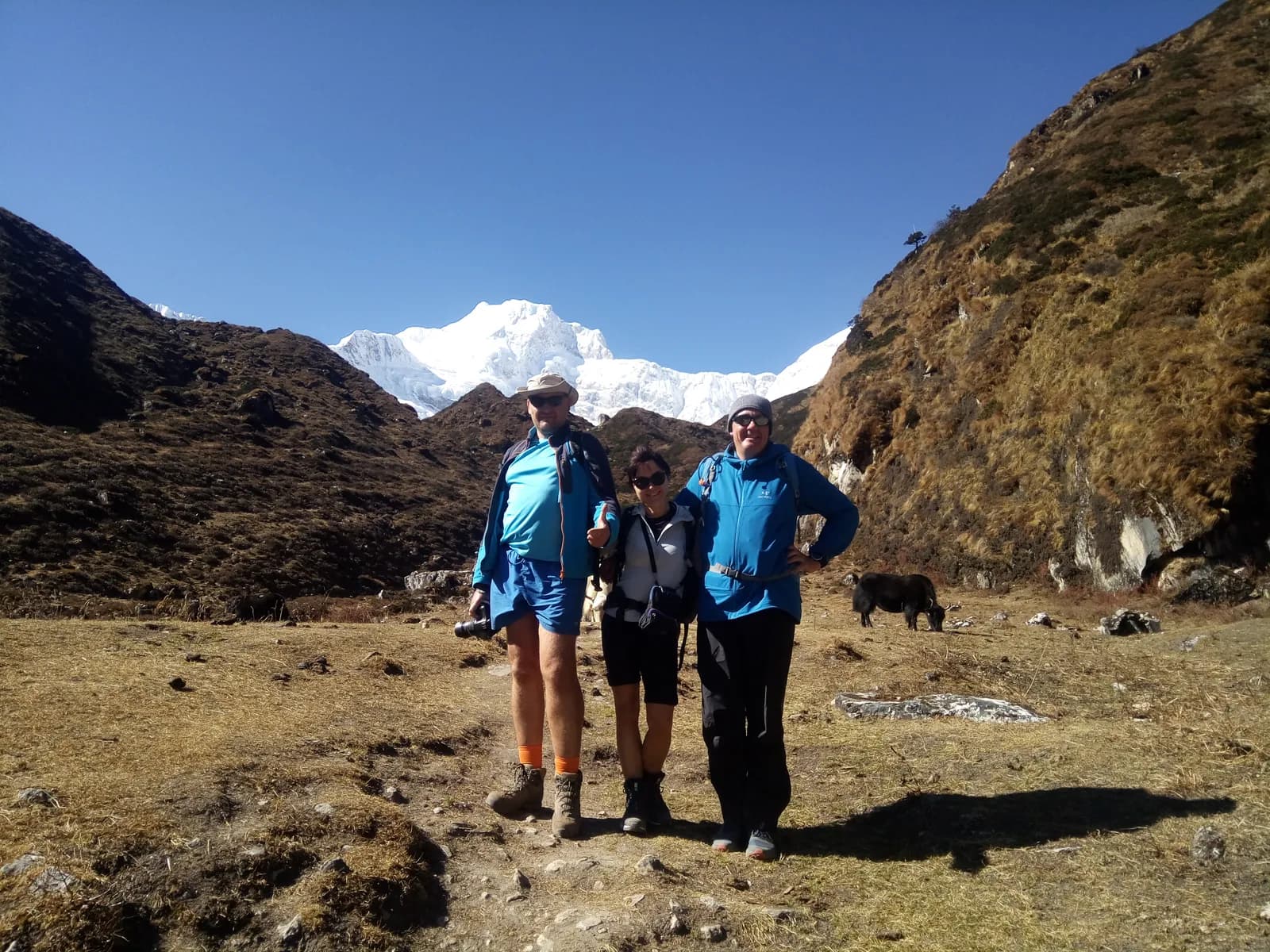
There are two ways to join a trekking group in Kathmandu. A peer group is trekkers who find each other, agree the plan and share a licensed guide, a vehicle and sometimes a porter.
An agency fixed departure is a trek with a set date and price that an operator runs, and you buy a seat. Peer groups usually cost less and bend to your dates, but you organise the guide, transport and money yourselves. Departures are simpler, because an operator handles permits, logistics and the guide, but you accept its dates, its group and its margin. Neither is safer by default: what protects you is a written quote, a licensed guide through a registered agency, an honest talk about experience and pace, and paying the agency rather than a person. This post compares both, shows how to vet each and explains how to find the people. Facts were checked on 21 October 2026.
To build a peer group, find a trekking partner in Nepal and agree the plan in writing.
Trip terbuka di Everest Base Camp Trek
Trip sebenar yang disiarkan oleh pendaki yang mencari rakan.

What is a peer group?
A peer group forms around a route and a window of dates. Three to eight people, often strangers at first, agree to walk together and book one licensed guide through a registered agency. They divide the guide's day rate, any porter and a private jeep or taxi, while food, lodging, permits, insurance and flights stay per person. Our per-person cost in a group of five post shows what splits and what does not, and splitting guide and porter costs fairly covers the awkward cases, such as one person who wants a porter and the others do not.
What is an agency fixed departure?
A fixed departure is an operator's scheduled group trek. The agency advertises a route, dates and a price per seat, fills the group from its own bookings and runs everything: guide, permits, transport and usually a lodge plan. You pay the agency, and it is the agency, not a fellow trekker, that you hold responsible if something goes wrong. Departures are most common on popular routes in the main seasons.
Peer group versus fixed departure
| Peer group | Agency fixed departure | |
|---|---|---|
| Dates | Yours, within what the group agrees | The operator's calendar |
| Who you walk with | People you meet and vet | People who booked the same seat |
| Cost | Guide and vehicle split directly, often lower | Includes the agency margin, sometimes lower seat costs |
| Organising | You do it, or one person does | The operator does it |
| Flexibility | High: route, rest days, pace | Low: set itinerary |
| Risk if a member drops out | Shares shift to the others | Usually the operator's problem, per its terms |
| Accountability | Between members and the agency you hire | The operator's registration and licence |
Neither column wins everywhere. A first-timer who wants fewer decisions may prefer a departure. A group of friends or colleagues, or Nepali trekkers who can pick their own weekend, often get more from a peer group.
What do they cost?
Our figures come from the same worked tables as our other cost posts, and the jeep price is illustrative. Guide rates in 2026 operator guides run from NPR 2,700 to 4,000 a day in the Annapurna region, and porters from NPR 2,100 to 3,400 a day (Himalayan Partner and other operators). We found no official minimum. In a peer group you pay these directly and divide them. In a fixed departure the price per seat already includes them, plus the operator's margin and whatever else the package bundles.
That does not make a departure bad value. An operator may negotiate vehicle and lodge rates, run bigger groups and absorb the cost of a seat that does not fill. What matters is what is in the quote. Ask for it line by line: guide, porter, permits, transport, lodging, meals, insurance, flights, and what is not included. Then compare two or three quotes, and compare them with the peer-group cost from our cost calculator. For the foreigner side, read cost of trekking solo versus through an agency. Nepali citizens pay lower park fees, covered in permit fees and guide rules for Nepali citizens.
Pros and cons in plain terms
Peer group, pros. Lower cost, your dates, a say in route and pace, and real friendships if it goes well. Cons. Someone must organise it, you carry the risk of strangers not matching, and a member who leaves changes everyone's share.
Fixed departure, pros. Little organising, an operator that is responsible for the plan, and a date to commit to. Cons. You may not choose your companions, the pace is the operator's, you pay for a margin and cancellation terms can be strict.
How do you vet a peer group?
Treat it the way you would any partner: meet first, in public, and take a short trial walk. Ask about experience, altitude, fitness and budget style. Agree costs, pace, rest days and a turn-back rule in writing. Our partner vetting checklist and what to agree before you book are the templates, and trekking buddy in Nepal: where to find one lists where people look. Never pay a deposit to a person you have not met.
How do you vet an agency departure?
Before you pay, ask for the agency's registration details and the guide's licence, and check them against what the Nepal Tourism Board and the Department of Immigration publish. Then ask:
- How many people are in the group, and what is the maximum?
- What exactly does the price include and exclude?
- What are the cancellation and refund terms if you or the operator cancel?
- What are the insurance and evacuation arrangements?
- Who is the guide, and how many years has he or she been licensed?
- What is the plan for acclimatisation days and a delayed flight?
Pay the agency's business account, keep the receipt and get the quote and terms in writing. Our questions to ask a trekking agency post lists more, and the Everest Base Camp itinerary and Annapurna Base Camp itinerary let you check a proposed schedule against a standard one.
What about the guide rule?
It applies to both routes. Our record, checked on 19 October 2026, reads: a licensed guide through a registered agency is required in restricted areas (Department of Immigration) and, under the Nepal Tourism Board rule of April 2023, in national parks and conservation areas, where 2026 operator reports say checkpoints enforce it in Annapurna and Langtang but not in Khumbu. For Nepali citizens we found no notice that exempts them, so confirm at the checkpoint. See the guide rule page for each region, and share a guide in Nepal for how a group divides one guide's day rate.
How do you find a group in Kathmandu?
For a peer group, start with where trekkers already gather: hostels and cafes in Thamel, social groups, clubs and trip posts. Our join a trekking group in Nepal page explains how groups form on FindTrekkingPartner, and the trips page lists open trips you can ask to join; contact details stay hidden until both sides agree. For a departure, ask two or three registered agencies for their scheduled dates and compare quotes.
How big should the group be?
Many guides and travellers prefer four to eight people. A bigger group walks at the pace of its slowest member, needs more beds on busy nights and is harder to keep together at river crossings; a pair has little slack if one person is ill. A group of five is a common size for splitting costs, but cost is only one factor. In a peer group you choose the size, so keep it small enough that everyone knows everyone before the trek. In a departure, ask for the maximum and the average, and whether solo travellers are placed in shared rooms. Our solo versus group trekking guide helps you weigh it.
Which should you choose?
Choose a peer group if you have flexible dates, a budget to protect and the patience to organise, or if you already have friends who want to go. Choose a departure if you have fixed dates, want an operator to carry the planning and accept the group you are given. You can also mix: assemble a peer group and book a single agency for the guide and logistics, which is how most small groups end up working. Whichever you choose, get the price and the plan in writing before you pay.
Before you commit
Check your own fitness against the route, buy insurance that covers the altitude you will reach, and read the altitude sickness basics. Then use the Nepali citizens guide for fees and the trip departures guide for 2026 and 2027 to plan the season.