Sagarmatha National Park entry and the Khumbu local permit
The two entry permits for the Everest region, the national park permit and the Khumbu Pasang Lhamu local permit, where they are bought and checked, what they pay for and what rules come with them.

Trekking to Everest Base Camp needs two entry permits: one for the national park and one from the local municipality. The Sagarmatha National Park permit is checked at the Monjo gate (between Phakding and Namche Bazaar), and the Khumbu Pasang Lhamu permit is collected near Lukla. Neither is expensive relative to the cost of the trip, but both are rules you cannot skip, and they are paid separately.
Trip terbuka di Everest Base Camp Trek
Trip nyata yang diposting trekker yang mencari teman.
What the permits cost (as of October 2026)
| Permit | Foreigners | SAARC nationals | Notes |
|---|---|---|---|
| Sagarmatha National Park entry | NPR 3,000 per person per entry (about USD 22) | NPR 1,500 | Children under 10 free. Source: Nepal Tourism Board park entry fees page |
| Khumbu Pasang Lhamu trek card | NPR 3,000 per person (about USD 22) | NPR 2,000 (SAARC countries and China) | Passport and a photo needed |
| TIMS card | Not required | Not required | TIMS is not required on the Everest route; the Khumbu trek card is what you pay here |
Together the two permits come to NPR 6,000 per foreign trekker, roughly USD 45 at NPR 134 to the dollar. Fees were checked on 18 October 2026. One caution: the municipality's own page returned an error that day, so the trek card figure comes from its archived copy of 13 June 2026; confirm it at the Tourist Information Centre in Lukla. Our permits page keeps the current table for every region, and the "What it costs" section of the Everest Base Camp route page adds these fees to lodging, flights and a guide.
The rest of this guide covers the practical side: who issues each permit, where you stop on the trail, what to carry and what the rules around the park expect from you.
Why there are two permits
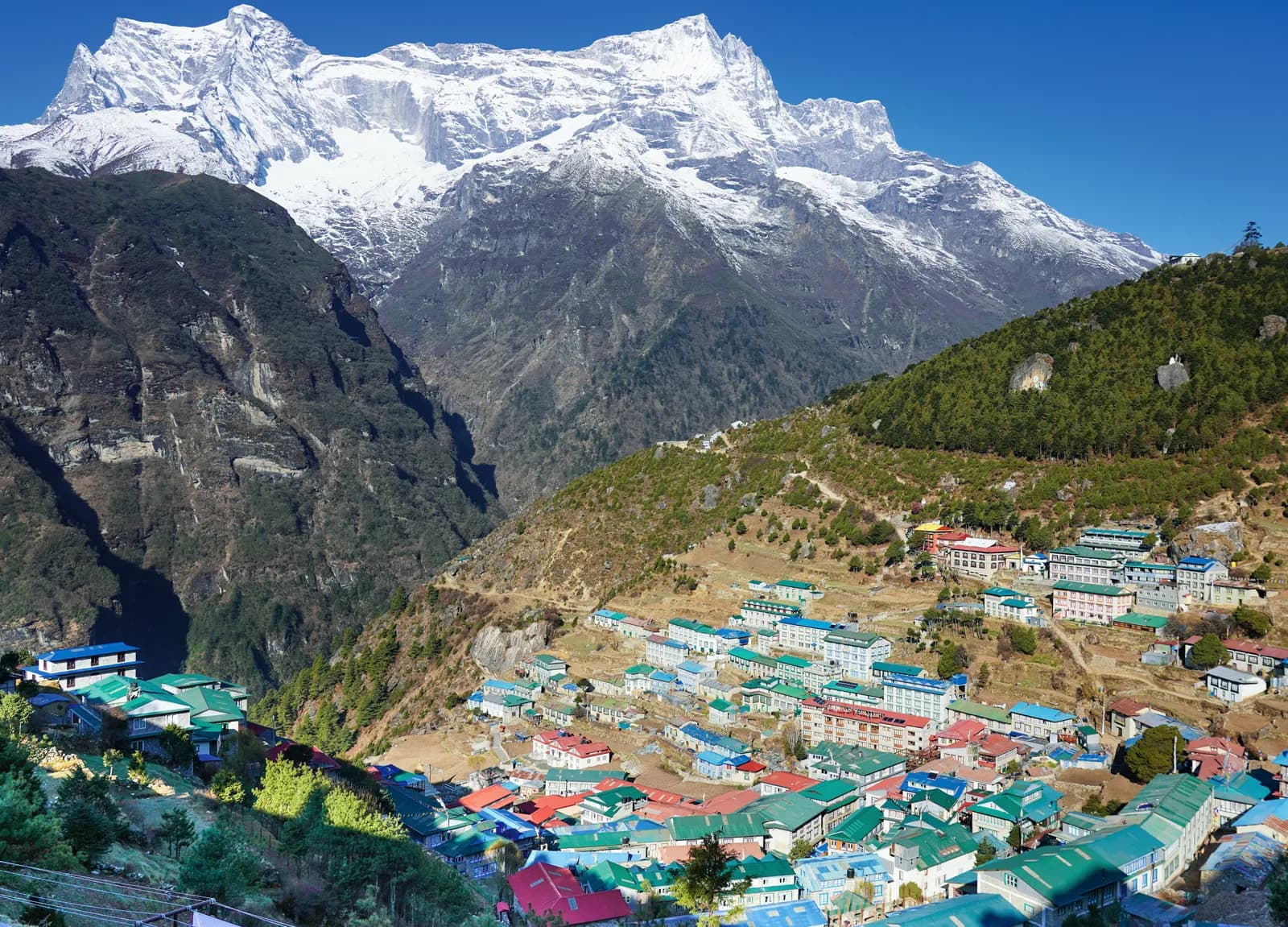
Sagarmatha National Park was established in 1976 and listed as a UNESCO World Heritage Site in 1979. It covers roughly 1,100 km2 of the upper Dudh Kosi, Bhote Koshi and Imja valleys, including Everest, Lhotse, Cho Oyu, Ama Dablam and the villages of the Khumbu. The park is run by the Department of National Parks and Wildlife Conservation (DNPWC).
The land inside the park lies within the Khumbu Pasang Lhamu Rural Municipality, which since Nepal's federal restructuring has its own authority to collect a local fee. That gives the two-permit system: one national, one local. The municipality fee funds local services in the Khumbu, such as trail maintenance and waste management. The park fee supports the national park system.
What each permit does
| Permit | Issued by | Where bought | Where checked |
|---|---|---|---|
| Sagarmatha National Park entry | DNPWC | Nepal Tourism Board office in Kathmandu, or at Monjo | Monjo gate; sometimes Namche |
| Khumbu Pasang Lhamu local permit | Rural municipality | Counter near Lukla | On the trail near Lukla and later checkpoints |
| TIMS card (if required for your dates) | Trekkers' Information Management System | Kathmandu | Possibly at Lukla or Monjo |
Rules on TIMS and the location of counters have shifted over the years. Ask the counter or your agency which applies to you, and keep any answer in writing.
Where you stop on the way
The first day of the standard route from Lukla (about 2,860 m) goes through Cheplung and Ghat to Phakding (about 2,610 m), then on the second day to Monjo and Namche Bazaar (3,440 m). The practical sequence is:
- Lukla: you arrive by air or on foot from Phaplu or Jiri. The local permit counter is in or near the village. Carry cash for it in rupees.
- Phakding and Monjo: the Sagarmatha National Park gate stands at Monjo, marked by an entrance arch. If you have not bought the park permit in Kathmandu, you can buy it here. Staff check your permits and register your passport details.
- Jorsale and Namche: there are sometimes additional registration points as you approach Namche. Keep your permit handy.
If you are flying to Lukla from Ramechhap, the sequence is the same. See the Kathmandu to Lukla flight guide for timings, and the Everest Base Camp itinerary for the days.
What to bring
- Passport and a photocopy of the photo page and visa.
- Passport photos if you buy at the Kathmandu office.
- Rupees in cash for the municipality counter and for the park permit if you buy at Monjo. There are ATMs in Lukla and Namche, but they can be empty or offline; do not rely on them.
- A zip bag for both permits and receipts. Keep a photo of them on your phone.
What the permits cover
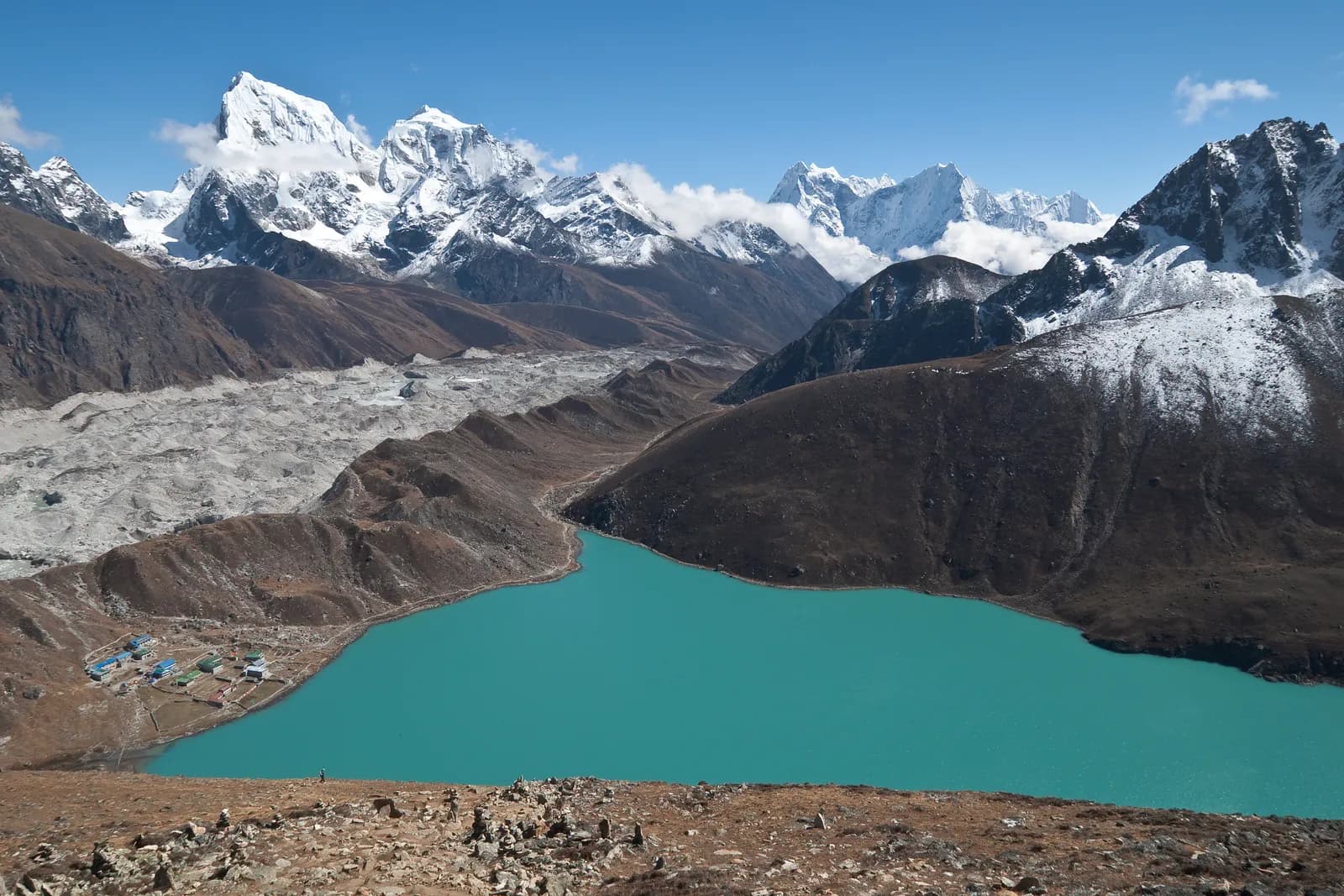
Both permits cover the whole park and municipality. The Everest Base Camp route, Gokyo Lakes and the Everest Three Passes trek all use the same pair. You do not need to buy extra permits to cross Cho La or Renjo La, but the permit dates should cover the longer itinerary, so tell the issuer if you plan to add days.
Park rules to expect
Sagarmatha National Park has rules that apply to every visitor:
- Waste. Carry out what you carry in. The municipality has restricted single-use plastic water bottles in parts of the Khumbu, and many lodges sell refilled boiled water or provide filtered water points. Bring a refillable bottle and purification tablets or a filter.
- Wildlife. Himalayan tahr, musk deer and the Himalayan monal (danphe) live in the park. Do not feed or approach animals, and keep to trails. Snow leopards are present but rarely seen.
- Yaks and dzopkyo. Yield on the uphill side of the trail, not the cliff side, so the animals can pass without pushing you off the path.
- Fuel. Cooking and heating use kerosene, gas and yak dung. Do not burn rubbish.
- Sacred sites. Walk clockwise around mani walls and stupas, keeping the structure on your right, and do not touch religious objects. See monastery etiquette.
- Drones and filming. Commercial filming needs permission, and drone use inside the park is restricted. Check before you travel.
Common mistakes
- Assuming one permit is enough. You need both the park and the local permit, and some lodges will not warn you.
- Not carrying cash. The municipality counter takes rupees, and a card will not help.
- Buying at Monjo without checking. It is possible, but queues are long in peak weeks; buying in Kathmandu saves a morning.
- Losing the receipts. You will be asked for them again, and the number of people who have to buy twice is not small.
- Booking dates that do not fit the permit. If you extend by a few days for weather or a rest day, tell the issuer.
If you are trekking with partners
Permits are per person. If you meet your partner in Kathmandu, buy them together so the dates match. If someone leaves early, they simply stop; there is no refund. For notes on how to coordinate this safely, see how to find a trekking partner.
Beyond the permit
The permit gets you onto the trail; what happens next depends on altitude and season. The Everest region guide lists the routes, and the best time for Everest Base Camp covers the months. For the broader permits picture across Nepal, see the permits hub.
The first two days, with permit stops
A concrete timeline helps you see when the paperwork matters. Altitudes are approximate.
| Day | Route | Permit moment |
|---|---|---|
| Before | Kathmandu | Buy the park permit at the Nepal Tourism Board, or leave it to your agency |
| 1 | Lukla (2,860 m) to Phakding (2,610 m), about 3 to 4 hours | Pay the local municipality permit near Lukla and keep the receipt |
| 2 | Phakding to Namche Bazaar (3,440 m), 5 to 6 hours | Park gate at Monjo; show permits and register |
| 3 | Namche rest day | None, but have the receipts accessible if asked |
The Monjo gate sits shortly before the long climb to Namche, which means you should have your documents out of your pack before you start the day, not at the bottom of a dry bag on a mule.
Cash planning for the Khumbu
Because the local permit is paid in rupees on the trail, a small cash buffer is essential. Withdraw in Kathmandu, break large notes into small ones, and keep a separate pouch for permits so you are not opening your main wallet in a crowded counter. Lodges, bakeries and hot-shower charges are also cash-only above Namche. For the wider money picture, including what everything costs, read the Nepal trekking cost guide and the Everest Base Camp cost breakdown.
What if the counter is closed
Counters open early, but on festival days or during flight disruptions they can shut or run with fewer staff. If you arrive at Monjo without the park permit and the post is not selling, your guide can usually explain the procedure; do not argue with the officers, and do not continue without a receipt. A day's delay costs less than a fine and a forced return.