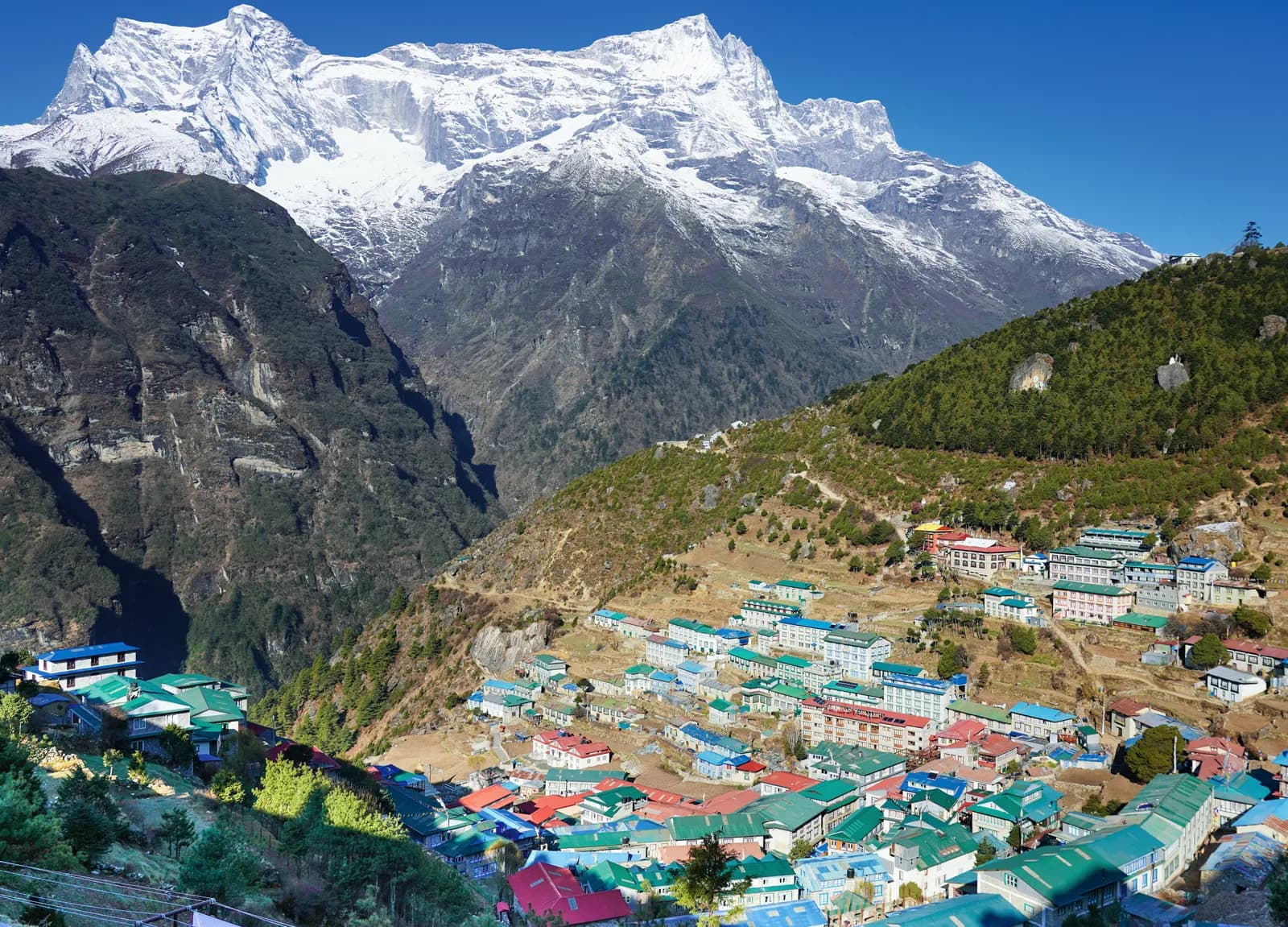
Everest Base Camp vs Gokyo Lakes: Which Trek?
Everest Base Camp or Gokyo Lakes? A comparison from our route data: views from Kala Patthar and Gokyo Ri, crowds, altitude nights, dated costs, seasons and how to do both on the Three Passes.
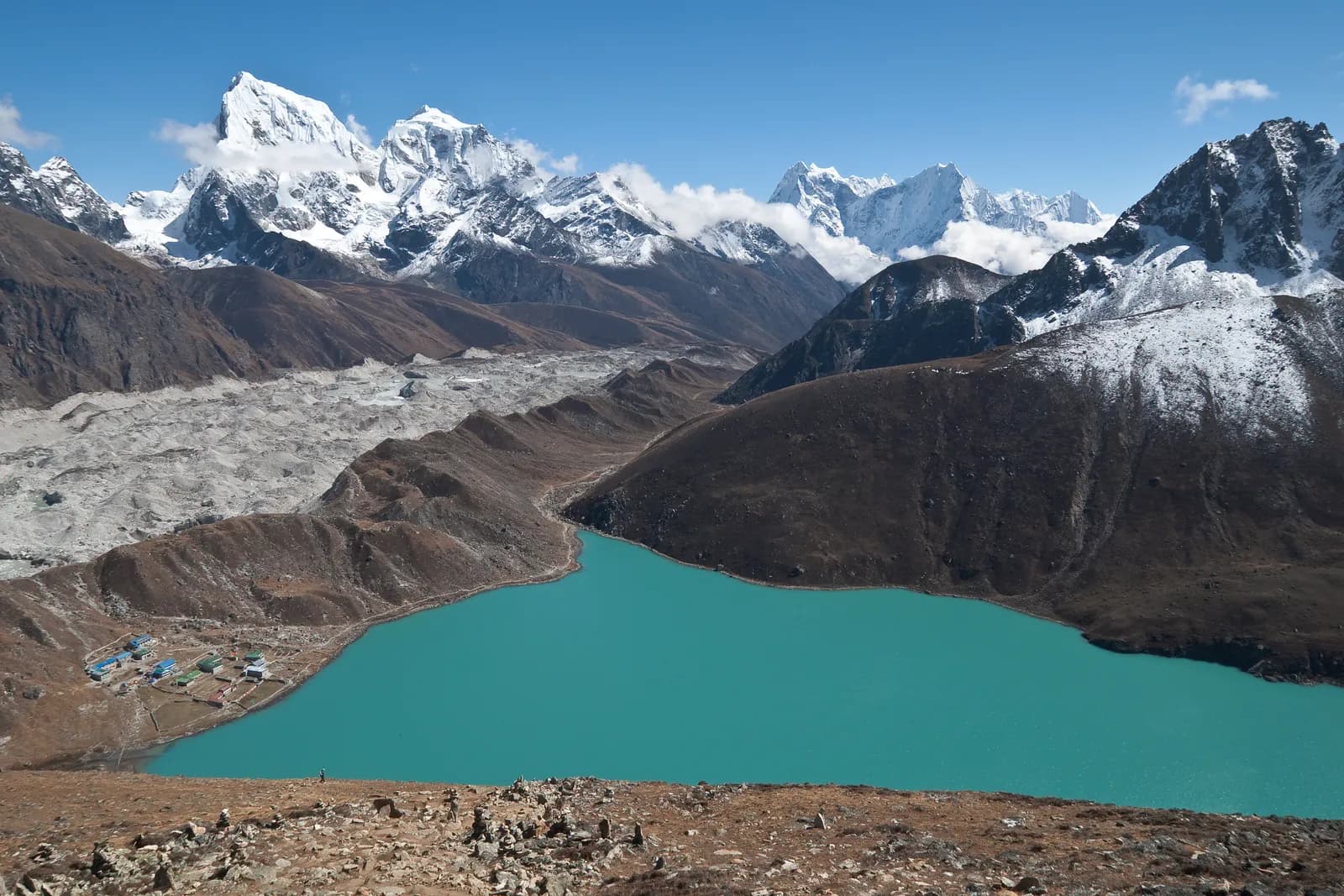
Both treks begin with the same flight to Lukla and the same two days to Namche Bazaar, and then they split. Everest Base Camp is the famous goal, with the trail's biggest crowds and the Kala Patthar view of Everest itself; Gokyo Lakes is the quieter valley, with turquoise glacial lakes and a Gokyo Ri summit at 5,357 m that looks across four of the world's highest peaks. Both are 12-day plans in our route pages, they cost almost exactly the same and they ask for similar fitness. The choice is about what you want to look at and how many people you want to share it with.
If you want the short answer: pick Base Camp if the goal itself matters to you and you are happy with a busier trail, and pick Gokyo if you want better mountain views, fewer people and a lake landscape, and you do not need to say you stood at Base Camp. This guide compares them point by point using our route and region data, so you can decide with the facts in front of you.
Trip terbuka di Everest Base Camp Trek
Trip nyata yang diposting trekker yang mencari teman.
At a glance
| Everest Base Camp | Gokyo Lakes | |
|---|---|---|
| Days | 12 | 12, with one spare day for delayed flights |
| Highest sleeping altitude | Gorak Shep, 5,164 m | Gokyo, 4,790 m |
| Highest point reached | Kala Patthar, 5,545 m (Base Camp about 5,364 m) | Gokyo Ri, 5,357 m |
| Difficulty on the route page | Moderate to hard | Moderate to hard |
| Rest days | Namche and Dingboche | Namche and Gokyo |
| Crowds | Far more trekkers | Quieter |
| Permits | Sagarmatha National Park and Khumbu trek card | The same two |
Views: what you actually see
The Base Camp trek ends at the foot of the Khumbu Icefall, but our route page is blunt that you cannot see Everest from Base Camp: it sits below the icefall and the summit is hidden behind Nuptse. The best view of Everest comes from Kala Patthar at about 5,545 m, a dawn climb from Gorak Shep. The reward of the route is therefore a combination of the arrival at Base Camp, among expedition tents in the spring climbing season, and a long close view of the Everest massif from Kala Patthar.
The Gokyo route trades that for a wider panorama. Our Gokyo page says Gokyo Ri at 5,357 m gives views of Everest, Lhotse, Makalu and Cho Oyu, four of the world's six highest peaks, with the Ngozumpa Glacier below and the lakes laid out beside it. The route's FAQ says Gokyo gives better views of those peaks from Gokyo Ri than you get at Base Camp. The other half of Gokyo's appeal is the lakes: three of them in sequence, each a different colour, in an area designated as a Ramsar wetland in 2007, and Gokyo village on the shore of the third lake, below the longest glacier in Nepal.
Crowds and atmosphere
Our region and route pages agree that Gokyo is quieter. The Gokyo page calls the trail quieter than the Base Camp route and lists fewer trekkers as a highlight, and the FAQ says Base Camp gets far more trekkers. In practice that means easier rooms in the lodges, a calmer dining room, and fewer queues at viewpoints. The Base Camp trail's lodges have a lively, international atmosphere that many people enjoy. If you prefer that, it is a plus.
Altitude and effort
The two routes are closer than people expect. Base Camp's plan sleeps at Phakding (2,610 m), Namche (3,440 m, two nights), Tengboche (3,860 m), Dingboche (4,410 m, two nights), Lobuche (4,940 m), Gorak Shep (5,164 m) and Pheriche (4,371 m). Gokyo sleeps at Phakding, Namche (two nights), Dole (4,040 m), Machhermo (4,470 m), Gokyo (4,790 m, two nights) and Dole again. By the day plans, each route has five nights above 4,000 m. Gokyo's highest bed is lower, though Gokyo Ri is a steep dawn climb of two to three hours from the village to 5,357 m, where Kala Patthar is a climb from Gorak Shep.
Our Gokyo page says the days are shorter but the altitude gain is similar, and that with rest days it is comparable. Machhermo is a short day on purpose, and you should not skip the rest day at Gokyo. The same altitude rules apply to both: above 3,000 m, a sleeping-altitude gain of no more than 500 m a night and an extra night for every 1,000 m gained, as the CDC cites from the Wilderness Medical Society. See the acclimatisation schedule and altitude sickness basics for both.
The days where the routes differ
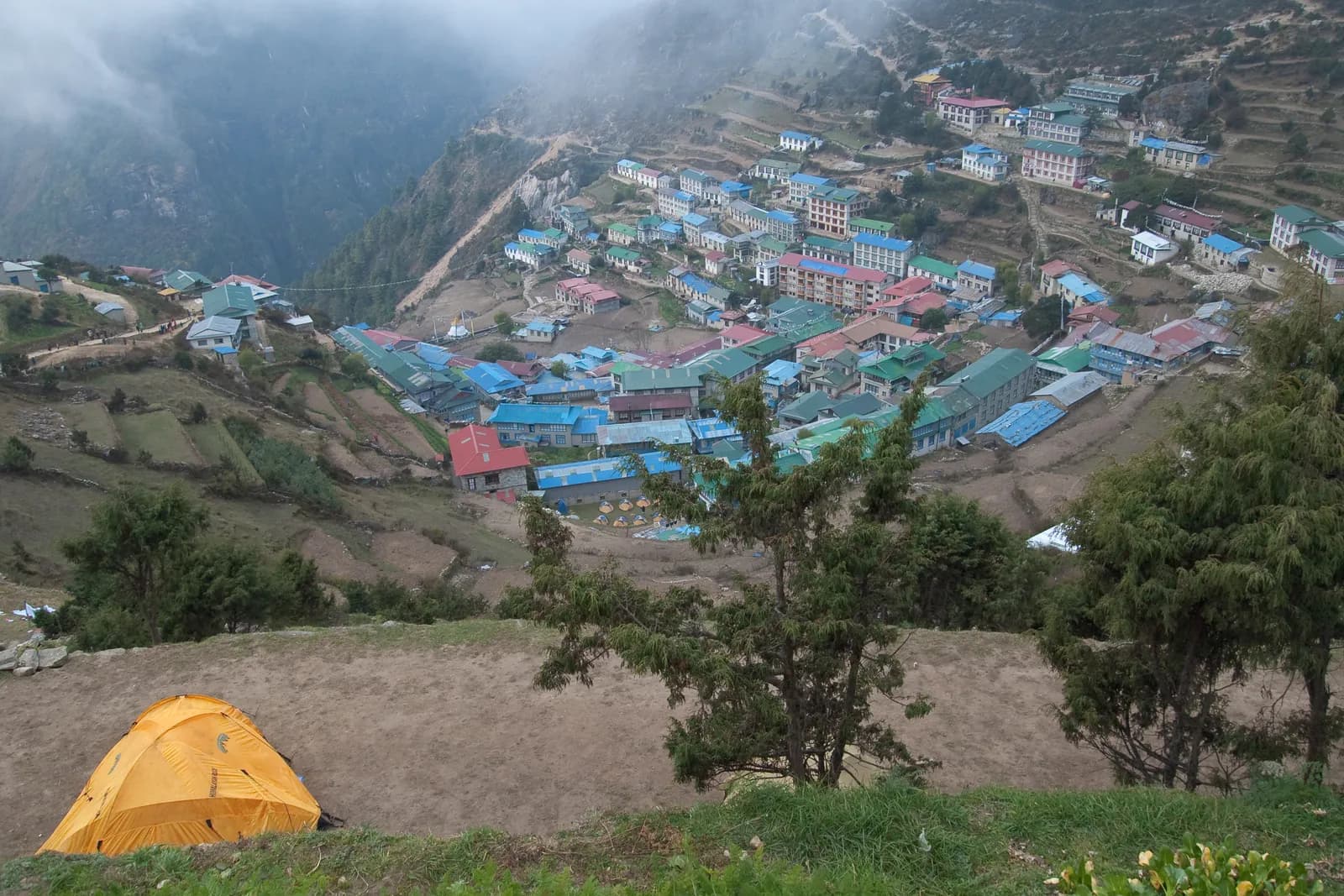
The trails are identical until Namche. From there the Base Camp plan heads up to Tengboche (3,860 m), where the monastery looks across to Ama Dablam, then to Dingboche (4,410 m) and Lobuche (4,940 m). The big day is day 8, a 7 to 8 hour walk from Lobuche to Gorak Shep and on to Base Camp at about 5,364 m and back, followed by Kala Patthar at dawn on day 9. The route is a long walk on well-made trails, with most days 4 to 7 hours, and the feeling is of a pilgrimage toward a single place.
The Gokyo plan leaves the main trail at Namche, climbs to the ridge above the town and takes the left fork, contouring through forest to Kyangjuma and Mong La, dropping steeply to Phortse Tenga on the river and climbing to Dole at 4,040 m, where our route page says altitude headaches are first common. Day 5 to Machhermo (4,470 m) is short by design, and the village is known for a yeti sighting reported in 1974. Day 6 climbs to the moraine edge of the Ngozumpa Glacier and passes the first two lakes to Gokyo, at 4,790 m on the shore of the third. Gokyo Ri is a dawn climb of about two to three hours on a steep, rocky path. The trail has shorter days and more varied ground, and the glacier moraine means more rubble underfoot than rock steps. It feels like a journey through a lake district, not a pilgrimage to a destination.
Neither is a technical walk. Both reward a guide or guide-porter for pacing and weather, and both are easier with poles on the descents, which our route pages mention for Gokyo's steep drops.
Cost
Permits, flights and the shape of the budget are the same on both routes, since they share Lukla and the park. As of October 2026, our dated cost model gives:
| Style | Everest Base Camp | Gokyo Lakes |
|---|---|---|
| Budget lodges, guide, one trekker | USD 1,050 to 1,450 | USD 1,050 to 1,450 |
| Mid-range, two sharing | USD 1,100 to 1,550 each | USD 1,100 to 1,550 each |
| Mid-range, four sharing | USD 1,050 to 1,450 each | USD 1,000 to 1,450 each |
These per-person totals include lodging, the return Lukla flight at USD 190 to 240 each way, the Sagarmatha park permit at NPR 3,000, the Khumbu trek card at NPR 3,000 and a guide and porters, and leave out international flights, insurance and tips. On this model the routes cost about the same, and Gokyo is not cheaper because it is quieter. See our Everest Base Camp cost breakdown and the permit guide.
Seasons
Both routes share the same best seasons: March to May and October to November. For Gokyo, the lakes are at their bluest in autumn, and in winter the upper lakes freeze and the upper lodges often close, per the route page. Base Camp in winter is very cold and some lodges above Dingboche shut. Our best time for Everest Base Camp guide covers the months in more detail. If you want expedition-camp atmosphere at Base Camp, spring is the season when teams gather.
Flights and delays
Both start with the Lukla flight, so both share its risks. Our Gokyo plan includes a spare day in Kathmandu at the end for delayed Lukla flights; the Base Camp plan does not, so add one. Read the Lukla flight guide, and for planning spare days see buffer days and itinerary flexibility.
Which should you choose?
| If you want | Choose |
|---|---|
| To stand at Everest Base Camp | Base Camp |
| The classic view of Everest from Kala Patthar | Base Camp |
| Fewer people and a quieter lodge | Gokyo |
| Lakes and a glacier landscape | Gokyo |
| The widest panorama from one summit | Gokyo Ri |
| A busy, social trail | Base Camp |
Doing both
You can combine them. The Everest Three Passes trek links the Base Camp and Gokyo valleys over Kongma La, Cho La and Renjo La in 18 days, with Base Camp on day 9 and Gokyo on day 12, and Cho La as the step between. It is a hard route for fit and experienced trekkers, and our route page rates it hard. Read the itinerary and snow and high pass conditions before you commit.
A word on guides and partners
Both routes use the same permit set, and the guide position is the same for both: the Khumbu Pasang Lhamu municipality opted out of the Nepal Tourism Board April 2023 guide rule, so it is reported not to be checked in Khumbu, and a licensed guide is strongly advised (checked 19 October 2026). Confirm the current position with an agency. Either route is easier and cheaper per person with a partner, since the guide cost is shared. See how to find a trekking partner safely and the Everest region guide.