Landslides and Flooded Rivers: Trail Safety in Nepal
How landslides and swollen rivers affect Nepal trek roads and trails, what the FCDO and CDC say about monsoon hazards, how to cross slide zones and streams, when to wait, and how to plan a buffer.
Landslides and swollen rivers are the quiet danger of the Nepali trails: they close roads, cut paths and wash out bridges, and they are worst when heavy rain falls. Check the forecast and the road status before you set out, cross slide zones quickly, one at a time, in daylight and never when stones are falling, do not wade a fast or knee-deep stream, and build a spare day into your plan so that you never have to take a risk to keep to a schedule. The UK FCDO says that travel during the monsoon season, normally June to October, can be hazardous, with flooding and landslides making roads impassable or cutting off towns for days. This guide covers how those hazards show up on real routes, how to cross, when to wait and what to do afterwards.
This is general safety information. Local conditions change daily; your guide, lodge owners and agency know more than any guide book, so ask and listen. For the season overview, see monsoon trekking in Nepal.
טיולים פתוחים בAnnapurna Circuit Trek
טיולים אמיתיים שפרסמו מטיילים שמחפשים שותפים.

Where and when it happens
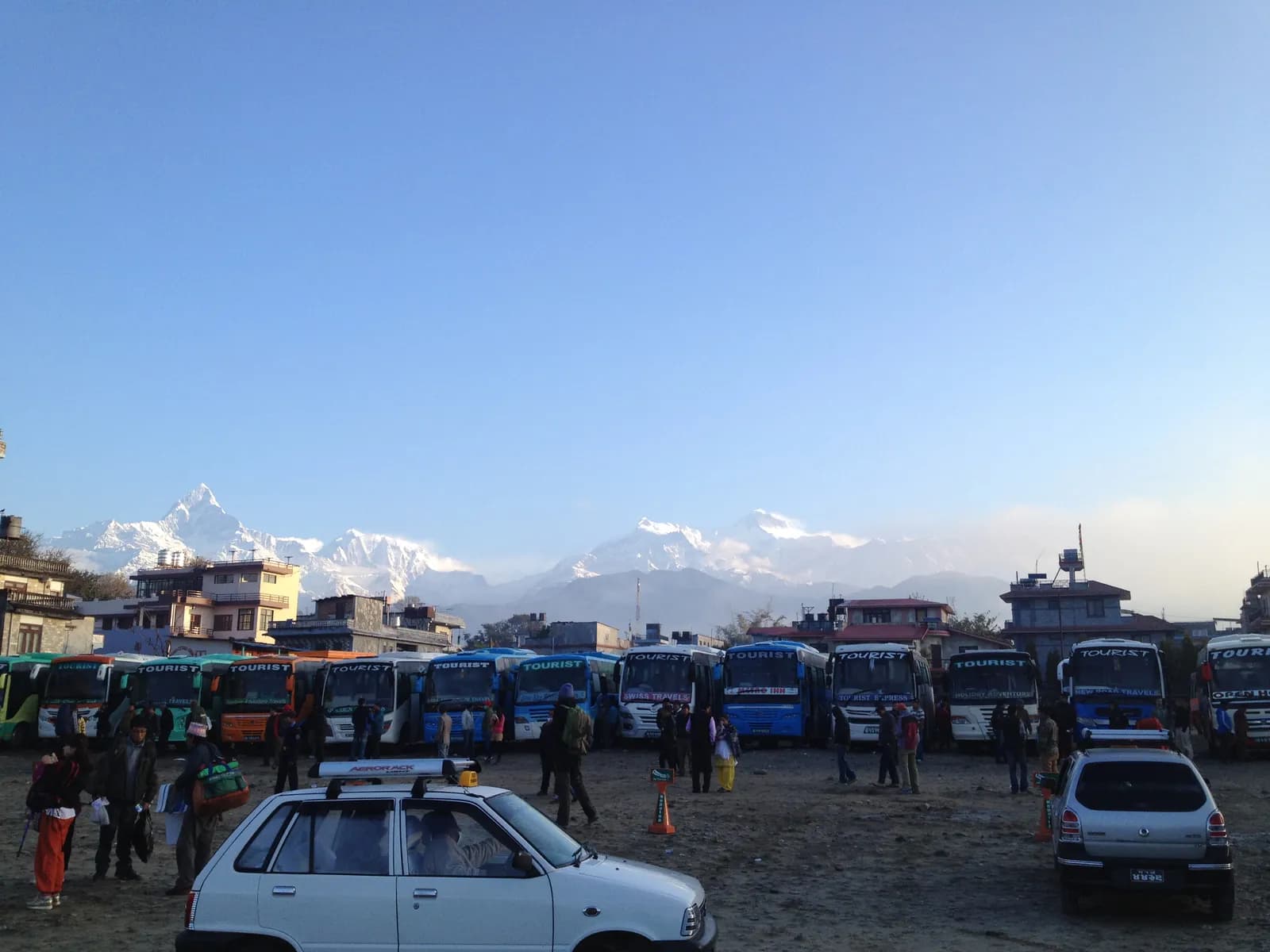
The FCDO says flooding and landslides can make roads impassable or cut off towns for days, that areas affected by flooding and landslides may remain unstable, and that further rain or an earthquake could trigger more. Most of the risk comes in the monsoon, but heavy rain at any time can cause slides on steep, cut slopes, and slides often happen hours after the rain stops. The drives to the trailheads are as exposed as the trails: the road from Kathmandu to Dharapani via Besisahar on the Annapurna Circuit, the jeep ride via Arughat and Soti Khola to Machha Khola on the Manaslu Circuit and the drive to Syabrubesi for the Langtang Valley all follow valleys with steep sides. Our route data gives these drives at 7 to 10 hours, and a slide can add many hours or close the road for a day or more. The FCDO also notes that flooding in Rasuwa district and the Nepal-China border area has damaged buildings, roads and communications, a reminder that conditions in Langtang can change.
Reading the slope
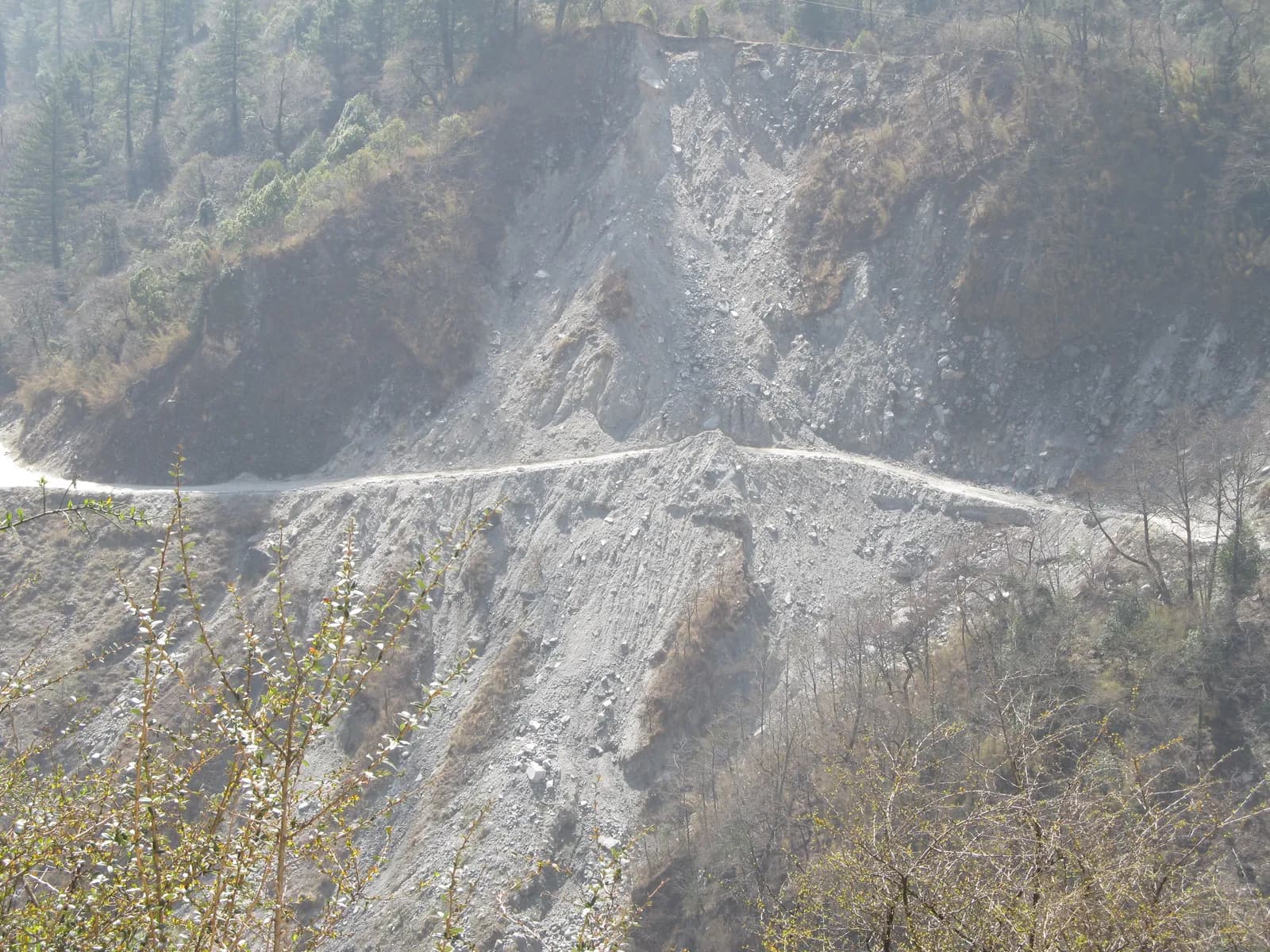
Learn to see the signs of an unstable slope: bare, scarred ground, fresh scars where the trail has been cut or washed out, loose rock and soil above the path, small stones falling, muddy streams after rain, trees leaning or fallen across the track. Slides are likelier on steep slopes with a lot of loose material, below rock faces and in gullies, and after rain. Look uphill before you cross a slope and listen for the sound of falling stones. A road cut that looks dry and stable in the morning can be a different place by afternoon. If the slope is steaming or the stream has turned brown, treat it as dangerous.
Crossing a slide zone
Stop before the zone and look. Is anything moving? Is it raining or has it rained heavily in the last hours? Ask a local or your guide whether it is passable and how it has been in recent days. If it is safe to cross, cross one person at a time, with the others watching from a safe place, in daylight, quickly and without stopping in the middle. Do not cross if anyone is below you on the slope. Keep a small gap and be ready to run to a safe point if a sound or movement warns you. Put your pack's hip belt loose so you can drop it if you fall. If the track has been cut by a slide, a local path may have been made across it: use it, and do not try to make a new one. If you are unsure, wait, ask and turn back; no schedule is worth it. If the slide has hit a vehicle road, ask your agency about alternatives, such as another jeep route or a walking diversion.
Rivers and streams
Many trails cross streams on bridges, but some use fords, especially off the main routes. Streams swell with rain and snowmelt, and they are often lowest in the early morning and highest in the late afternoon. Never cross water that is above your knees, brown, fast or carrying stones or branches. If you must cross, look for a wider, shallower point, use a pole for balance facing upstream, unfasten your hip belt and chest strap and cross at an angle with a partner or in a group, holding on to each other. If the level is rising, wait: most streams drop overnight. Do not cross on a bridge that looks damaged; ask the lodge. If a bridge has been swept away and the crossing is unsafe, a delay or a diversion is the only sensible choice. The yaks, mules and bridges guide covers suspension bridges and animal traffic.
Water, floods and health
The CDC's Nepal page tells travellers to avoid contaminated water and soil, and to avoid floodwater because of leptospirosis. In practice that means not wading when you can avoid it, covering cuts and blisters, keeping your boots on and washing carefully after contact. If you get a fever, aches, headache or red eyes in the days after contact with floodwater or muddy soil, see a doctor and mention the exposure. Flooding also contaminates drinking water, so treat all water more carefully than usual; see water purification on the trail and teahouse food hygiene.
Planning a buffer
Roads fail more often than people expect, so plan for it. Leave a spare day at each end of your trek, avoid booking a flight home the day after the trek ends and agree with your agency what happens if the road is closed: a longer walk, a different jeep road, or a delay. Our buffer days guide explains how many days to keep, and the getting to Nepal trailheads guide covers the options. Buy insurance that covers delays and missed flights, as described in our insurance guide. If you are already on the trail when a slide cuts it, stay at the lodge, talk to the owner and your guide, and wait for news; you will not be the only one stuck.
What to do if you are caught in one
If stones start to fall, move to the side, away from the slope and out of the path of the slide, and shelter behind a boulder or under a firm overhang if there is one. Do not run downhill along the path. After the fall, check each other for injury, call for help if needed and stay away from the area until it is stable: further falls often follow. For injuries, see the emergency steps guide. If a vehicle is hit or blocked, stay with it or in a safe place and call the driver's company and your agency.
Partners and decisions
The hardest thing in a group is agreeing to wait. Settle the rules before the trek: the guide's decision stands on crossings, anyone can call a stop and nobody is shamed for turning back. If one of you is in a hurry to catch a flight, remind them that the flight can be changed and a person cannot. The partner safety guide lists roles and signals, and when to turn back covers the weather rules. A licensed guide through a registered agency is required in restricted areas (Department of Immigration) and, under the Nepal Tourism Board rule of April 2023, in national parks and conservation areas, where 2026 operator reports say checkpoints enforce it in Annapurna and Langtang but not in Khumbu (checked 19 October 2026); see the guide rule by region. The partners and safety hub lists the rest of the series.