Nepal trek group departures 2026-2027: season by season
A season-by-season guide to Nepal trek group departures for 2026 and 2027: which routes suit October to November, winter, spring and the monsoon, and how to find or post a group departure for those months.
Nepal has two main windows for group treks, October to November and March to May, plus a quieter winter and a monsoon that suits only a few routes. Autumn gives the steadiest weather and the busiest trails; spring brings rhododendrons, warmer days and some afternoon cloud; December to February is cold and works best on low routes; from mid-June to early October most routes are wet except the rain-shadow ones such as Upper Mustang. This guide takes each season in turn for 2026 and 2027, says which routes suit it, and explains how to find or post a group departure. We do not list fake departures. Live departures posted by trekkers are on the trips page, which you can filter by region and dates, and agencies publish their own calendars. Facts were checked on 21 October 2026.
سفرهای باز Everest Base Camp Trek
سفرهای واقعی که ترکرهای جویای همراه ثبت کردهاند.

How do departures work?
A group departure is any trek with a fixed date that other people can join. Some are posted by trekkers, who set a route, dates and a budget style and invite others to share the guide and vehicle. Others are run by agencies that sell seats. Our post on how to join a trekking group in Kathmandu compares the two. On FindTrekkingPartner, open trips show a route, a month, a level and a pace, and contact details stay hidden until both sides agree. The month you choose decides which routes make sense, which is why this guide is organised by season.
Season by season
| Season | Months | Group-trek verdict |
|---|---|---|
| Autumn (post-monsoon) | Late September to November | Best: clear air, steady weather, crowded |
| Winter | December to February | Low and mid routes only, or experienced trekkers |
| Spring (pre-monsoon) | March to May | Very good: warm, flowers, afternoon cloud builds in May |
| Monsoon | June to mid-September | Avoid, except rain-shadow routes |
These verdicts come from our best time to trek in Nepal guide, based on Nepal Department of Hydrology and Meteorology data and our region pages.
October to November: the busiest window
October has the steadiest weather and the busiest trails, and November is colder but very clear. Everest, Annapurna, Langtang and Manaslu are all stable and clear in October, per our month-by-month table, and Upper Mustang is clear, mild and busy. That popularity is the catch: October is the busiest month in Nepal, with fuller lodges and pressure on flights and permits, and festival crowds around the Dashain and Tihar holidays. November is quieter than October but colder, and high lodges in Everest and Upper Mustang begin to close late in the month.
Routes that suit it. Everest Base Camp, the Annapurna Base Camp trek and the Langtang Valley are the standard choices, and it is the main window for the Annapurna Circuit and Manaslu. See best time for Everest Base Camp, best time for the Annapurna Circuit and best time for Manaslu.
Planning note. The normal monsoon withdrawal date is 2 October, but it left on 10 October in 2025, 12 October in 2024 and 15 October in 2023, so the clearest weeks often start in the last days of October. A departure planned for the first week of October can still meet rain. For 2026 you are already inside this window, so only late departures and short routes are realistic. For 2027, start looking early: our October guide and November guide give the details.
December to February: low routes and experienced groups
Winter is cold, dry and quiet, with some of the best visibility of the year, and the hardest conditions on high routes. Low and mid-altitude routes such as Poon Hill, Ghandruk, Helambu, the Pokhara foothills and the Kathmandu Valley rim stay walkable, while passes, glacier valleys and restricted areas are snowbound and lodges are often closed. Daylight in Kathmandu is about 10.4 to 11.2 hours, so groups walk shorter days.
Routes that suit it. Poon Hill, Helambu and Valley rim walks for most groups. Langtang Valley is for experienced walkers only, and Everest Base Camp, Gokyo, Annapurna Circuit, Manaslu and Upper Mustang are not recommended without winter experience.
Group note. A group helps in winter because someone can share a heavy sleeping bag decision, a dull cold afternoon and a go or no-go call. Read winter trekking in Nepal: what to expect and the winter gear list.
March to May: spring departures
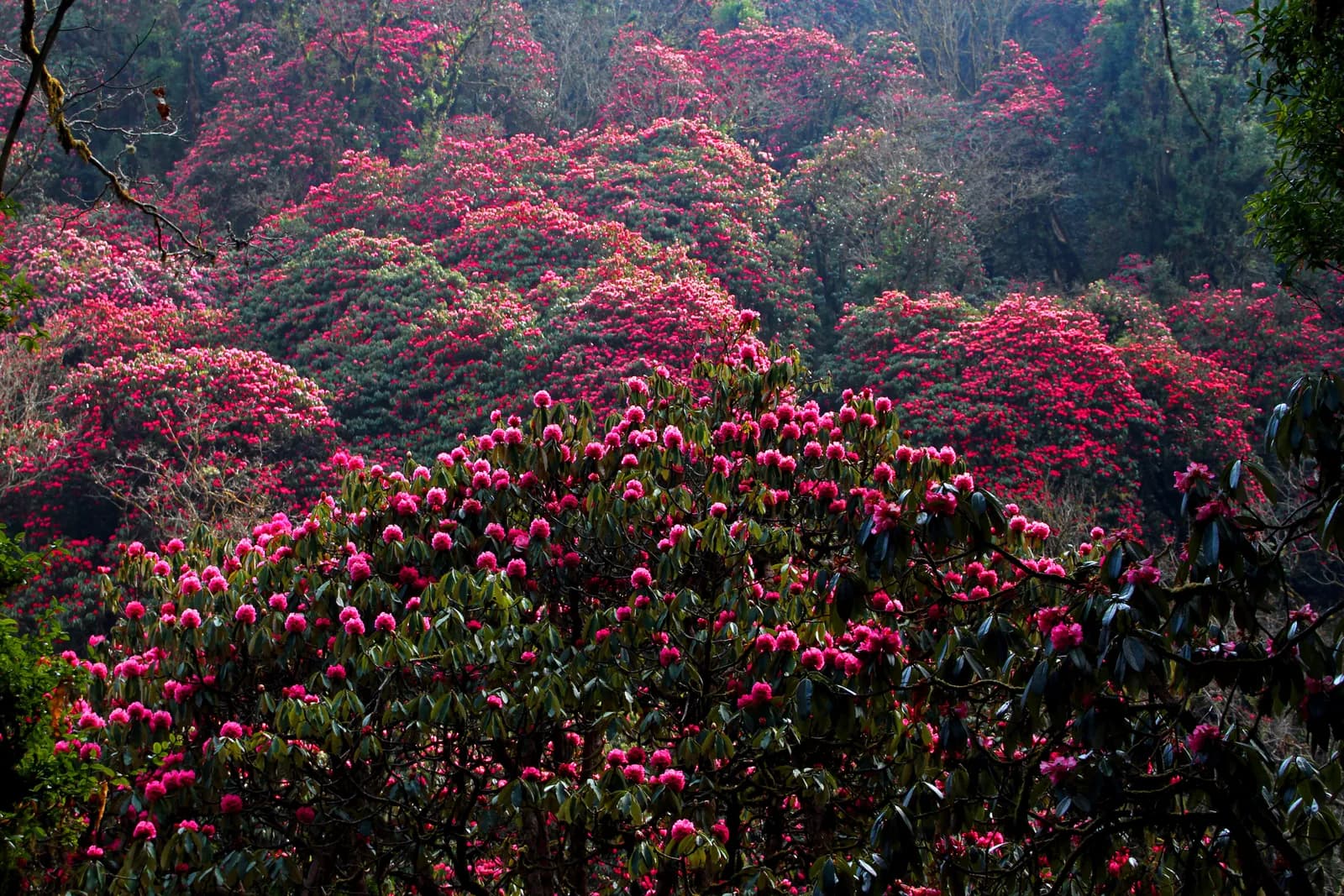
Spring is the second window. March has clear days and cold nights with snowy passes; April is the spring peak, busy, with rhododendron bloom at mid altitudes on the Poon Hill and Mardi Himal routes; May is warmer and hazier with afternoon cloud, and Upper Mustang's season opens in April. April is the second busiest month and the Lukla flight is the pressure point, so many flights leave from Ramechhap and a spare day at each end is wise.
Routes that suit it. Everest Base Camp, Annapurna Base Camp and Langtang in April; Poon Hill and Mardi Himal for flowers in March and April; Upper Mustang from April, with Manaslu's pass possibly snowy early. See spring versus autumn and rhododendron season.
Group note. If you hate crowds, aim for May, which is thinner after the April rush. Book lodges and flights early for April, and plan viewpoints for sunrise.
Monsoon: June to mid-September
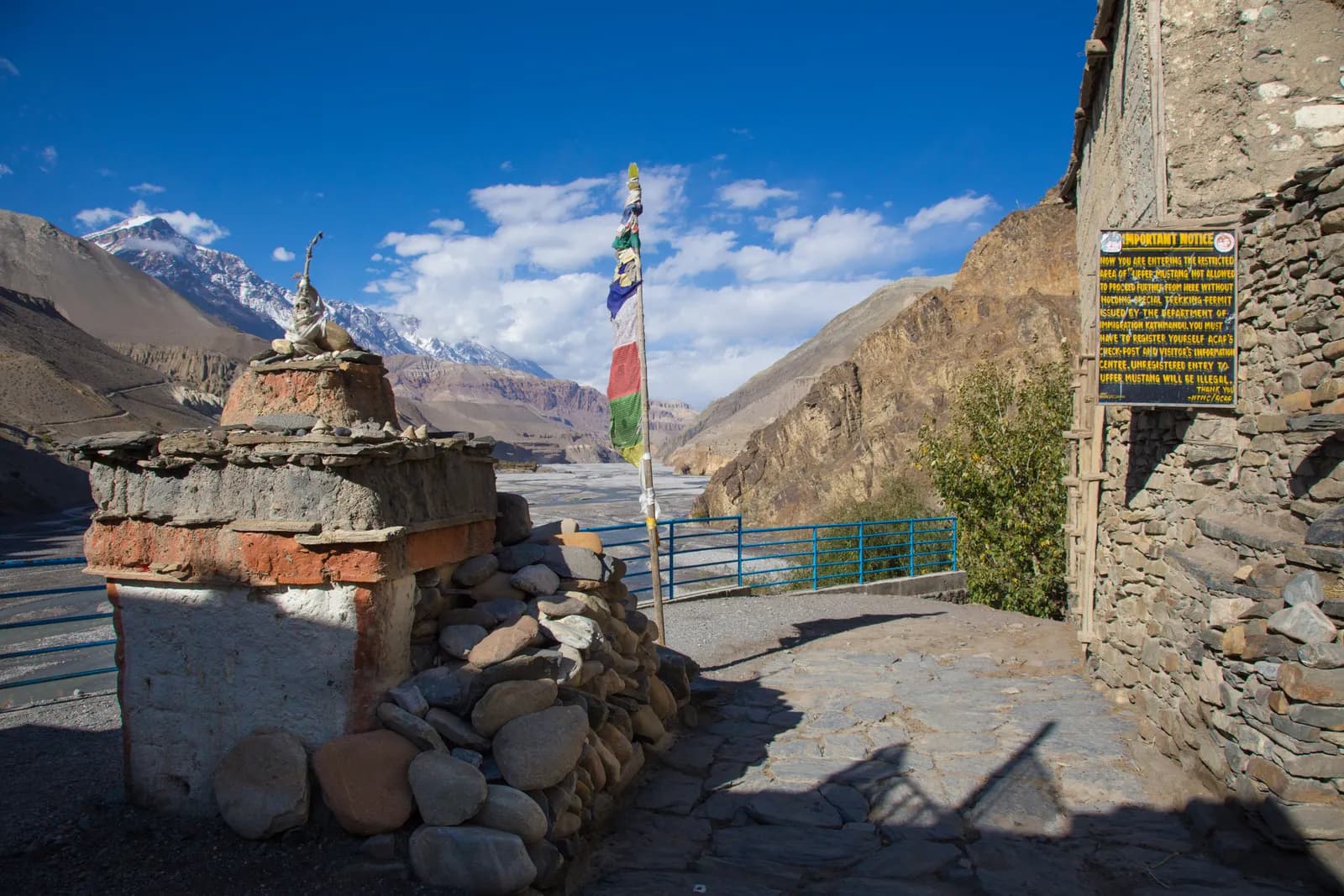
Most trails are wet, cloudy and landslide-prone, and roads and flights are the usual problem. A few north-side routes sit in the rain shadow and stay far drier: Upper Mustang is the standard answer, along with upper Manang, Nar Phu and Upper Dolpo, and the upper Langtang valley is less wet than the forest below. Our monsoon trekking guide explains the risks, and Upper Mustang is a restricted area, so a licensed guide through a registered agency is part of the permit, as the guide rule page explains. A group makes that cost affordable, but build in buffer days for cancelled Jomsom flights. See best time for Upper Mustang.
Which season suits which group?
First-timers and mixed-fitness groups do best in October, November or April on a standard route, where trails, lodges and help are plentiful, as long as they book early. Groups with flexible dates and a dislike of crowds can aim for May, late November or a quieter route such as Mardi Himal or the upper Langtang Valley. Nepali groups with a long weekend can use the low winter routes, which are cheap and quiet. Experienced groups with winter kit can try the mid-altitude winter routes or a monsoon rain-shadow trek. Our which Nepal trek is right for you guide helps you match the route to the group.
How do you find or post a departure?
- Browse. Open the trips page and filter by region, dates and level. You can start from a region, for example Everest, Annapurna, Langtang or Upper Mustang. Whether any trip is listed for a given month depends on what trekkers have posted, so check back.
- Post your own. If nothing fits, post a trip with the route, dates, pace and budget style. A clear post attracts compatible people.
- Ask agencies. For a seat on an operator's departure, ask two or three registered agencies for their calendars and compare written quotes.
- Agree before you book. Costs, pace, rest days and a turn-back rule, in writing. See what to agree with trekking partners.
What about the guide rule and costs?
For every season the guide rule is the same. Our record, checked on 19 October 2026, reads: a licensed guide through a registered agency is required in restricted areas (Department of Immigration) and, under the Nepal Tourism Board rule of April 2023, in national parks and conservation areas, where 2026 operator reports say checkpoints enforce it in Annapurna and Langtang but not in Khumbu. Splitting a guide in a group is how most small groups keep it affordable; see share a guide in Nepal and the cost per person in a group of five. Nepali citizens pay lower park fees, covered in our guide for Nepali citizens.
A planning timeline
For October and November 2027, begin looking in the summer of 2027 at the latest, earlier for Lukla flights and restricted permits. For spring 2027, begin before the winter ends. Pick your season first, then your route, then post or join. Check weather and flight news in the week before you go, because the dates in this guide are normals, not promises.
این ترک را برنامهریزی کنید
- راهنمای منطقه Everest (Khumbu)
- راهنمای منطقه Annapurna
- راهنمای منطقه Langtang
- راهنمای منطقه Upper Mustang
- Trekking partner for Everest Base Camp Trek
- Find someone to trek Annapurna Base Camp Trek with
- Find someone to trek Langtang Valley Trek with
- برنامه سفر Everest Base Camp Trek
- برنامه سفر Annapurna Base Camp Trek
- برنامه سفر Langtang Valley Trek