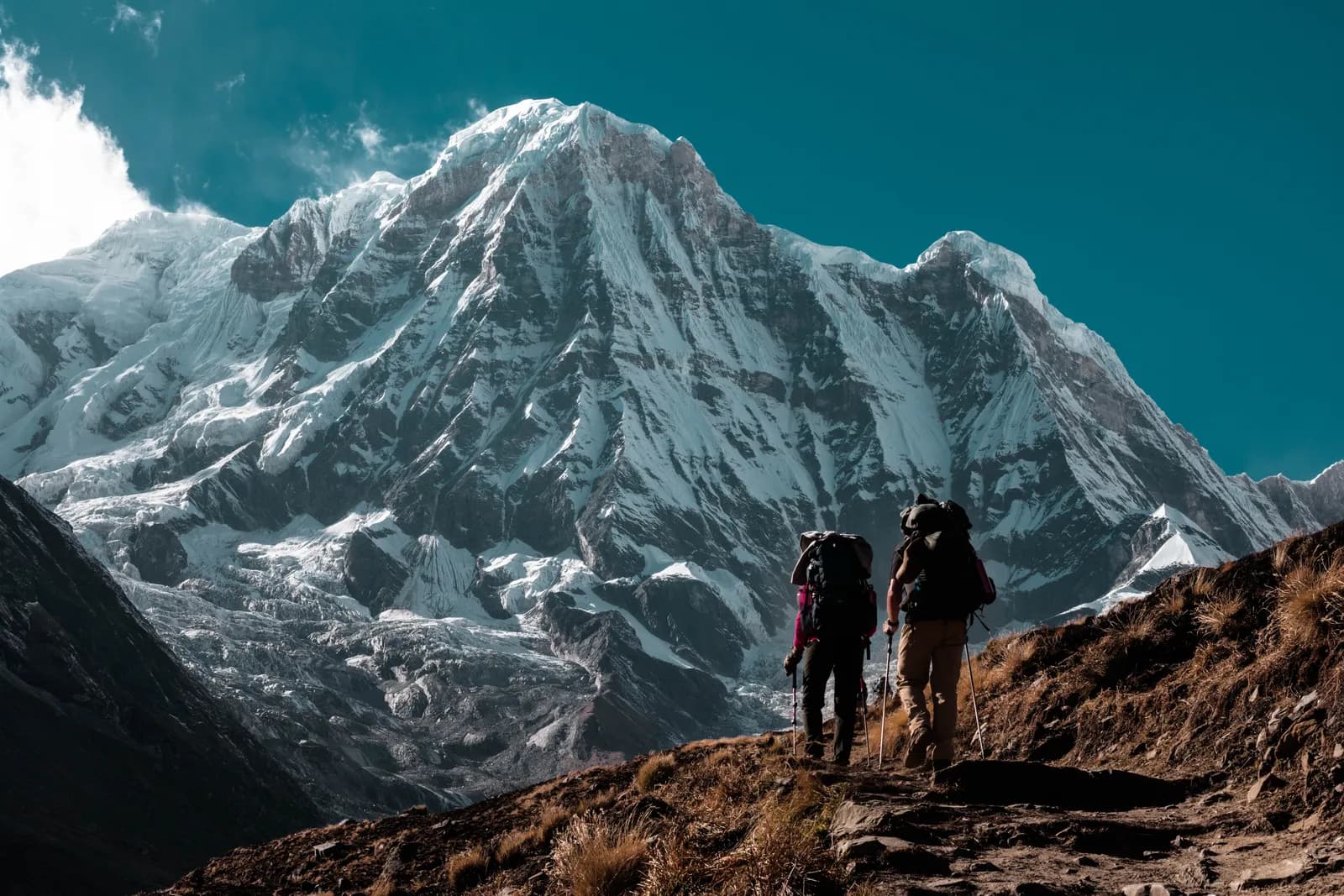
Two weeks in Nepal: a trek plus sightseeing itinerary
A 14-day Nepal itinerary that pairs the eight-day Langtang Valley trek with Kathmandu sightseeing and spare days, plus two alternatives built on Poon Hill and Annapurna Base Camp.
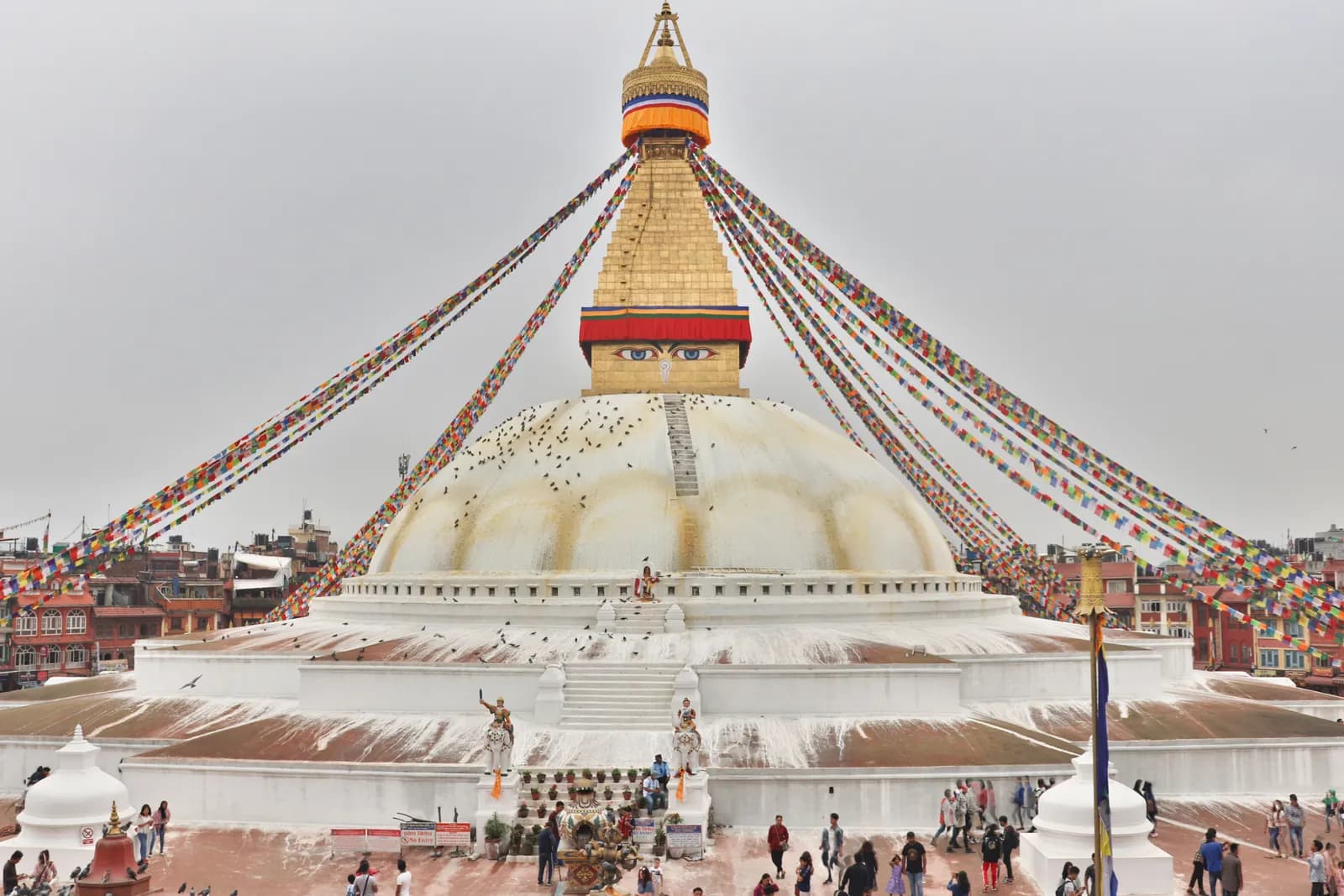
Two weeks in Nepal fits an eight-day trek, two or three days of sightseeing in Kathmandu Valley and a spare day or two to cover delays. The simplest version is the Langtang Valley trek, which starts and ends in Kathmandu, sandwiched between sightseeing at Boudhanath, Pashupatinath and Bhaktapur. If you prefer Pokhara, a Poon Hill or Annapurna Base Camp trek replaces it. This guide gives a day-by-day 14-day plan with the real trek stages, two alternatives and the practical points that make a short trip work: where to put spare days, how to order the sights and what to book.
رحلات مفتوحة في Langtang Valley Trek
رحلات حقيقية نشرها متنزهون يبحثون عن شركاء.

The plan at a glance
| Day | Plan | Notes |
|---|---|---|
| 1 | Arrive in Kathmandu | Rest, meet your agency |
| 2 | Boudhanath and Pashupatinath | Sightseeing, early to bed |
| 3 | Drive Kathmandu to Syabrubesi | 7 to 8 h drive, 1,460 m |
| 4 | Syabrubesi to Lama Hotel | 6 h walk, 2,470 m |
| 5 | Lama Hotel to Langtang village | 6 h, 3,430 m |
| 6 | Langtang village to Kyanjin Gompa | 3 h, 3,870 m |
| 7 | Rest day at Kyanjin Gompa | Short walk, cheese factory |
| 8 | Kyanjin Gompa to Lama Hotel | 6 h walk down |
| 9 | Lama Hotel to Syabrubesi | 5 h walk |
| 10 | Drive Syabrubesi to Kathmandu | 7 to 8 h drive |
| 11 | Spare day / rest | Weather, laundry, recovery |
| 12 | Bhaktapur and Patan | Durbar Squares |
| 13 | Swayambhunath and Thamel | Last shopping |
| 14 | Fly home | Buffer built in |
The trek days (3 to 10) come from our Langtang Valley plan. Day 1 of that plan is the drive to Syabrubesi, and day 8 is the drive back.
Days 1 and 2: Kathmandu first
Arriving in Kathmandu, you will want a quiet first day: hotel, a short walk and an early night. If your flight lands in the afternoon, do nothing more than meet your agency and check your gear. On day 2, go to Boudhanath, the great white stupa ringed by prayer flags, where pilgrims walk clockwise around the dome and the surrounding lanes are lined with monasteries and shops. Then visit Pashupatinath, the great Hindu temple complex on the Bagmati River. The main temple is closed to non-Hindus, but you can see the ghats and the surrounding temples from the opposite bank and watch the evening aarti ceremony. Our guide to rituals on the trail explains what you are seeing, and the monastery etiquette guide covers behaviour.
Keep day 2 relaxed. Many trekkers are tired from the flight, and a long day of sightseeing before a seven-hour drive is not a good start. Use the evening to meet your guide, check your permits and rent or buy any missing gear. Our first-timer booking guide covers what to confirm.
Days 3 to 10: the Langtang Valley
The Langtang Valley trek is a good first trek in a two-week trip because it starts at a road, climbs gradually and has a built-in rest day. Day 3 (plan day 1) is the 7 to 8-hour drive to Syabrubesi at 1,460 m. Day 4 walks six hours to Lama Hotel at 2,470 m. Day 5 climbs six hours to Langtang village at 3,430 m, the rebuilt village a short distance from the old one destroyed in 2015, and day 6 is a three-hour walk to Kyanjin Gompa at 3,870 m. Day 7 is a rest day, with a walk to a viewpoint and a visit to the cheese factory. Days 8 and 9 retrace the route to Lama Hotel and Syabrubesi, and day 10 is the drive back.
The rest day at Kyanjin Gompa fits the CDC's advice: above 3,000 m, raise your sleeping altitude by no more than about 500 m a night, with an extra night for every 1,000 m gained. Read our Langtang itinerary guide and best time for Langtang for details. Langtang needs the national park entry permit, and the guide rule applies: a licensed guide through a registered agency is required in restricted areas (Department of Immigration) and, under the Nepal Tourism Board rule of April 2023, in national parks and conservation areas, where 2026 operator reports say checkpoints enforce it in Annapurna and Langtang but not in Khumbu (checked 19 October 2026). Langtang is the strictest, so plan for a guide.
Days 11 to 14: spare day, then Patan, Bhaktapur and Swayambhunath
Day 11 is a spare. If the road is blocked or you are tired, you have a day in hand. If everything went to plan, use it to rest, wash your clothes and sleep late. Days 12 and 13 are for sightseeing: Patan's Durbar Square and Bhaktapur's squares, where, as the April 2015 earthquake damaged many monuments, you will see scaffolding at some temples as rebuilding continues. Swayambhunath, the hilltop stupa, and a last walk through Thamel make a good final day. Keep the final day before your flight free of tight commitments. Our earthquake recovery guide explains what you will see.
Alternative A: Poon Hill and Pokhara
If you would rather finish by a lake than in a capital, swap the Langtang block for Pokhara and Poon Hill. Spend days 1 and 2 in Kathmandu, travel to Pokhara on day 3 (the road takes about seven hours, and a tourist bus costs NPR 800 to 2,500 each way as of October 2026), walk the four-day Poon Hill trek on days 4 to 7, rest in Pokhara on days 8 and 9, and return to Kathmandu on day 10 for sightseeing and spare days. The Poon Hill route peaks at 3,210 m, and you can add a day for Australian Camp or Sarangkot. See our guides on short treks from Pokhara and Poon Hill versus Mardi Himal.
Alternative B: Annapurna Base Camp
For a bigger challenge in two weeks, replace the trek with the seven-day Annapurna Base Camp trek, which starts at Jhinu Danda near Pokhara, reaches 4,130 m on day 4 and returns by Bamboo. Fly or drive to Pokhara on day 3, trek from day 4 to day 10, and leave days 11 to 14 for Pokhara, the return and spare days. It is a harder route, with stairs and several six-hour days, so build in extra buffer. Our Annapurna Base Camp itinerary and which trek is right for you will help you choose.
What about Everest Base Camp?
Everest Base Camp takes 12 days in our plan, including the flight to Lukla, and with two days in Kathmandu either side it fills 14 days with no slack. Flights to Lukla are often delayed, so a 14-day Everest trip with no spare days is a gamble. If you want Everest, allow at least 16 to 18 days, or choose a different route. Our Everest Base Camp itinerary and days needed guide explain.
Where the plan can go wrong, and how to protect it
Two weeks is generous for one trek and sightseeing, but not for a bad run of luck. The weak points are the two long drives to and from Syabrubesi, each seven to eight hours, which can be delayed by landslides or traffic, and the Kathmandu airport itself, where a missed connection costs a day. If the drive out is delayed, you lose a day at the start, and the plan's spare day on day 11 absorbs it only if you do not also need it for the drive back. For that reason, treat day 11 as a real reserve, not a bonus, and avoid booking anything non-refundable in the last three days.
If you find yourself ahead of schedule, you do not have to fill the time. A quiet morning in a Thamel cafe, a walk to Swayambhunath at dusk or a visit to a museum are better than a rushed day trip. If you find yourself behind, drop Bhaktapur or Patan rather than rushing, and keep the buffer before your flight.
Also think about how you feel. After eight days of walking, your legs may be sore and your stomach unsettled, and a day of stairs at a temple complex is not necessarily relaxing. Choose sightseeing that suits your energy: Boudhanath is flat and good for a slow evening walk, while Swayambhunath has a long staircase. Drink plenty of water, wash your hands and eat well to recover.
Choosing between the three versions
If you want a gentle first trek with an easy road at each end, the Langtang version fits best and has the advantage of a built-in rest day at Kyanjin Gompa. If you want the famous sunrise and a lakeside finish, the Poon Hill version is shorter on the trail and longer on rest. If you are fit and want a bigger altitude and the amphitheatre of peaks at the Annapurna Sanctuary, the Annapurna Base Camp version is the most demanding of the three and suits people who have done a long day hike before. All three can be arranged through the same registered agency, and all three use real stages from our route pages, so you can check the days against the day-by-day guides before you commit.
Practical tips for a two-week trip
- Book early for October and April, including hotels and the agency.
- Keep spare days at the end, not in the middle of a trek.
- Order the sights so the long, tiring days do not fall right before a drive.
- Rent bulky gear in Kathmandu or Pokhara, which saves luggage.
- Buy insurance that covers trekking to your highest altitude and helicopter evacuation.
- Leave your valuables and spare clothes in the hotel while you trek.
For more ideas, see combining a trek with Chitwan and Kathmandu sightseeing, the first-time trekking guide and the first-timers hub. If you want to share a guide and costs, see the Langtang Valley partner page.