Trekking in Nepal at 60 plus: routes, fitness and precautions
How trekkers over 60 can plan a safe, enjoyable Nepal trek, with realistic routes, a medical check, a slower pace, a porter, insurance and sensible rules on altitude and medication.
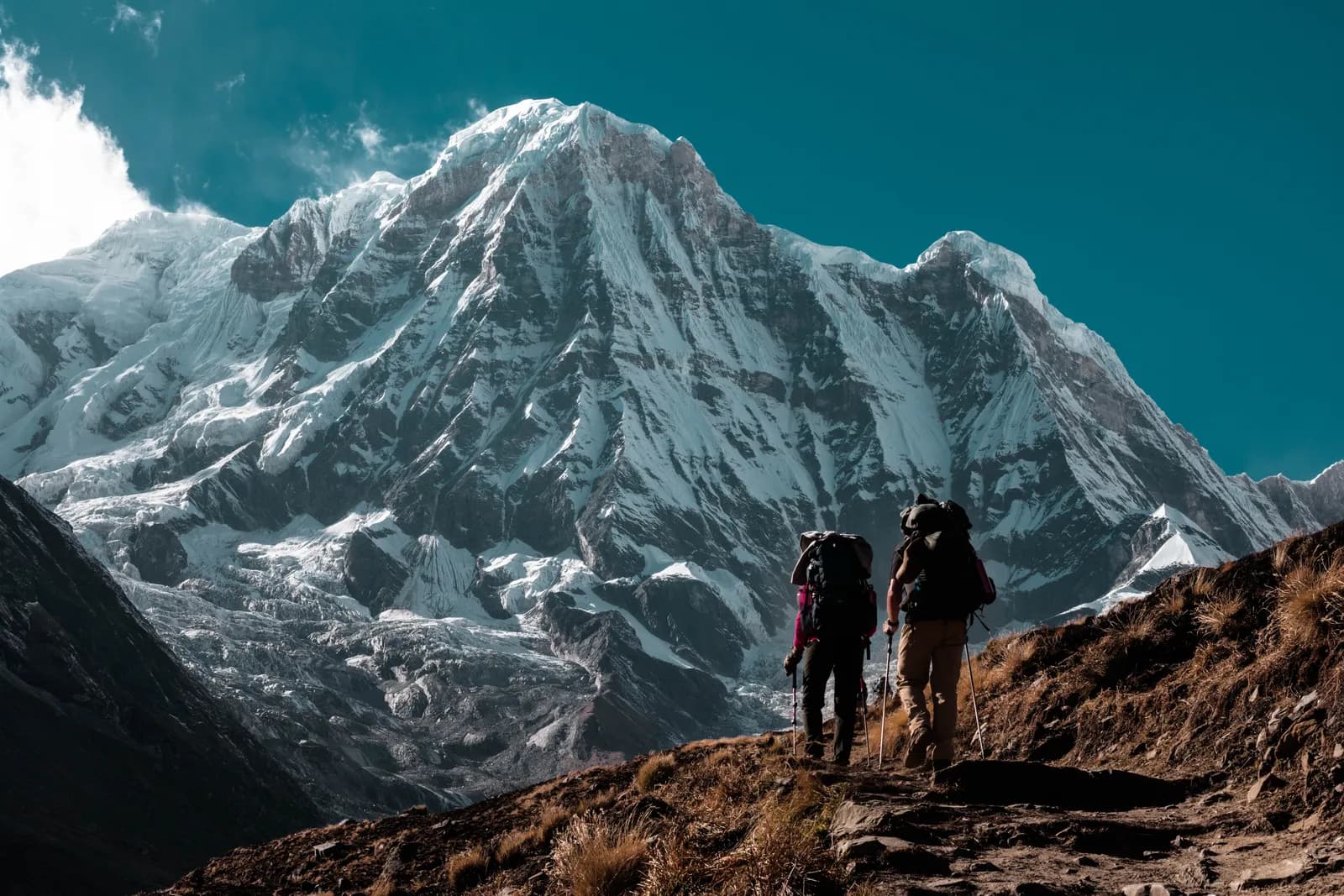
People over 60 trek in Nepal every season, and the best way to do it is to choose a lower route such as Ghandruk, Poon Hill or the Langtang Valley, see a travel-medicine doctor before you book, walk slowly with extra rest days, hire a porter, buy insurance that covers your age, your conditions and helicopter evacuation, and be ready to turn back. Age is not a barrier in itself; the things that decide whether a trek goes well are your health, your fitness, your route and the pace you set. This guide covers each, with route options and precautions.
رحلات مفتوحة في Poon Hill Trek (Ghorepani)
رحلات حقيقية نشرها متنزهون يبحثون عن شركاء.

Age is not the deciding factor
There is no upper age limit for trekking in Nepal, and guides regularly look after trekkers in their sixties, seventies and beyond. What matters is your overall health and fitness, any conditions or medication, your experience of walking day after day and how well you accept a slow plan. A fit 65-year-old who walks hills weekly and takes the route slowly often does better than a younger person who rushes. At the same time, conditions that become more common with age, such as heart disease, high blood pressure and lung problems, matter at altitude, which is why a medical check is the first step.
Start with a medical check
See a doctor with travel-medicine experience before you book, and take along the itinerary with the highest altitude. Ask about:
- Heart and blood pressure, including whether you should have tests before travelling.
- Lung conditions such as asthma or COPD.
- Diabetes and how altitude, cold and irregular meals affect it.
- Medication: how to carry it, whether any affects altitude tolerance and whether you should carry a drug for preventing altitude illness. Our guide to Diamox on Nepal treks explains how it is used.
- Joint problems, especially knees, hips and ankles, which are tested by the stairs.
- Vision, hearing and balance, which matter on uneven ground.
- Vaccinations and general travel health. The NHS Fit for Travel page for Nepal and the CDC's Yellow Book give general guidance.
Carry your medicines in your daypack, with a list of what they are and the doses, and tell your guide and partners about any condition that matters in an emergency. If you were told to avoid altitude, believe it.
Choose the route to match
Lower, shorter routes let you enjoy Nepal at a gentle pace.
- Ghandruk village trek: two days, about 2,050 m, four to six hours the first day and two to three the second. A large Gurung village with stone paths and Annapurna views.
- Poon Hill: four days, 3,210 m, with a sleep at Ghorepani at 2,860 m. The stairs are the hard part, and you can take extra time.
- Langtang Valley: eight days, up to 4,773 m, with a sleep at Kyanjin Gompa at 3,870 m and a rest day there. It can be done at a gentle pace with extra days.
- Annapurna Base Camp: seven days, 4,130 m, with several days of six hours and long staircases. It is possible for fit older trekkers who add spare days.
Avoid high passes and routes with big altitude gains unless you are very fit and well acclimatised. Our which trek is right for you guide compares options, and short treks from Pokhara lists the gentlest.
Go slowly and add rest days
The CDC suggests, above 3,000 m, raising your sleeping altitude by no more than about 500 m a night, with an extra night for every 1,000 m gained. Many older trekkers find that extra rest days make the trek more comfortable, so ask your agency to add one or two days to a standard plan, and do not cut them to save time. Our acclimatisation schedule and altitude sickness basics cover the rules.
Walk at a pace at which you can talk. Take short breaks every 45 to 60 minutes and a proper lunch stop. Let the guide set the pace and be honest about how you feel. If you are slower than your partners, agree in advance that you will walk at your own speed and meet at the lodge.
Take care of your knees and feet
Stairs and descents are the most common cause of trouble for older trekkers, particularly knees. Use trekking poles, which take weight off your joints, and practise with them before you go. Walk downhill slowly with bent knees, and take shorter steps. Wear well-fitting, broken-in boots and good socks, and treat blisters early. A knee support or tape may help if you have a history of problems, and a physiotherapist can advise. Train for the trek with stairs and hills; our home training plan shows how, and our guide on how fit you need to be sets the standard.
Hire a porter, and consider a guide
A porter carries your main bag so that you walk with a light daypack, which saves energy and protects your joints. The porter day rate in our cost data is NPR 2,100 to 3,400 and the guide rate NPR 2,700 to 4,000 in the Annapurna and Langtang regions (as of October 2026), and splitting costs with a partner reduces your share. On the guide rule: a licensed guide through a registered agency is required in restricted areas (Department of Immigration) and, under the Nepal Tourism Board rule of April 2023, in national parks and conservation areas, where 2026 operator reports say checkpoints enforce it in Annapurna and Langtang but not in Khumbu (checked 19 October 2026). A guide also keeps an eye on how you look and can make decisions about turning back. Our guide and porter roles guide explains the difference.
Insurance for older trekkers
Read the policy closely. Many travel policies have age limits or higher premiums over a certain age, exclude pre-existing conditions unless declared and cap the altitude at which trekking is covered. Look for cover that includes the highest altitude of your route, helicopter evacuation and repatriation, and declare every condition. Carry the policy number and the insurer's emergency number, and give a copy to your guide. If your insurer will not cover you, choose a different route or insurer.
Know the warning signs and have a plan
Altitude illness can affect anyone, regardless of age or fitness. Learn the signs: headache, nausea, dizziness, poor sleep and loss of appetite are early signs, and breathlessness at rest, a wet cough, confusion or loss of coordination are emergencies. If symptoms worsen, descend. Our guides on HAPE and HACE warning signs and what normal looks like at altitude give detail, and the Himalayan Rescue Association clinics at Manang and Pheriche can advise in season.
Agree beforehand with your partner and guide what you will do if one of you cannot continue. Our guide on what if your partner cannot continue explains the options. Build spare days so that turning back does not ruin the trip.
Comfort and logistics
Lodges are simple, and cold nights can be hard on stiff joints. Bring a good sleeping bag, a warm hat for bed, a hot water bottle and your own pillow slip. Choose lodges with a sunny terrace and ask for a lower-floor room if stairs are difficult. Carry your medication in your daypack, keep a spare supply, and have a plan for charging devices that you rely on. Our teahouse rooms guide and packing list help you prepare.
A sensible approach
Start with a shorter route and see how you feel. If you enjoy it, plan a longer one next year. Travel with someone who matches your pace, or hire a guide who will adapt. Share your itinerary and health information with your partner and guide, and be ready to change the plan. The goal is to enjoy the mountains, not to prove anything.
For more, read the first-time trekking guide, the first-timers hub and, to find a like-minded partner, the Poon Hill partner page.
خطط لهذه الرحلة
- دليل منطقة Annapurna
- دليل منطقة Langtang
- دليل منطقة Pokhara
- Trekking partner for Poon Hill Trek (Ghorepani)
- Trekking partner for Ghandruk Village 2-Day Trek
- Find someone to trek Langtang Valley Trek with
- Find someone to trek Annapurna Base Camp Trek with
- مسار Poon Hill Trek (Ghorepani)
- مسار Ghandruk Village 2-Day Trek
- مسار Langtang Valley Trek
- مسار Annapurna Base Camp Trek