Trekking in Nepal in January
What January is like on the trail: clear cold mornings, short days, quiet lodges and which routes suit winter. Poon Hill, Mardi Himal, Langtang and Helambu, and the high routes to leave for spring.
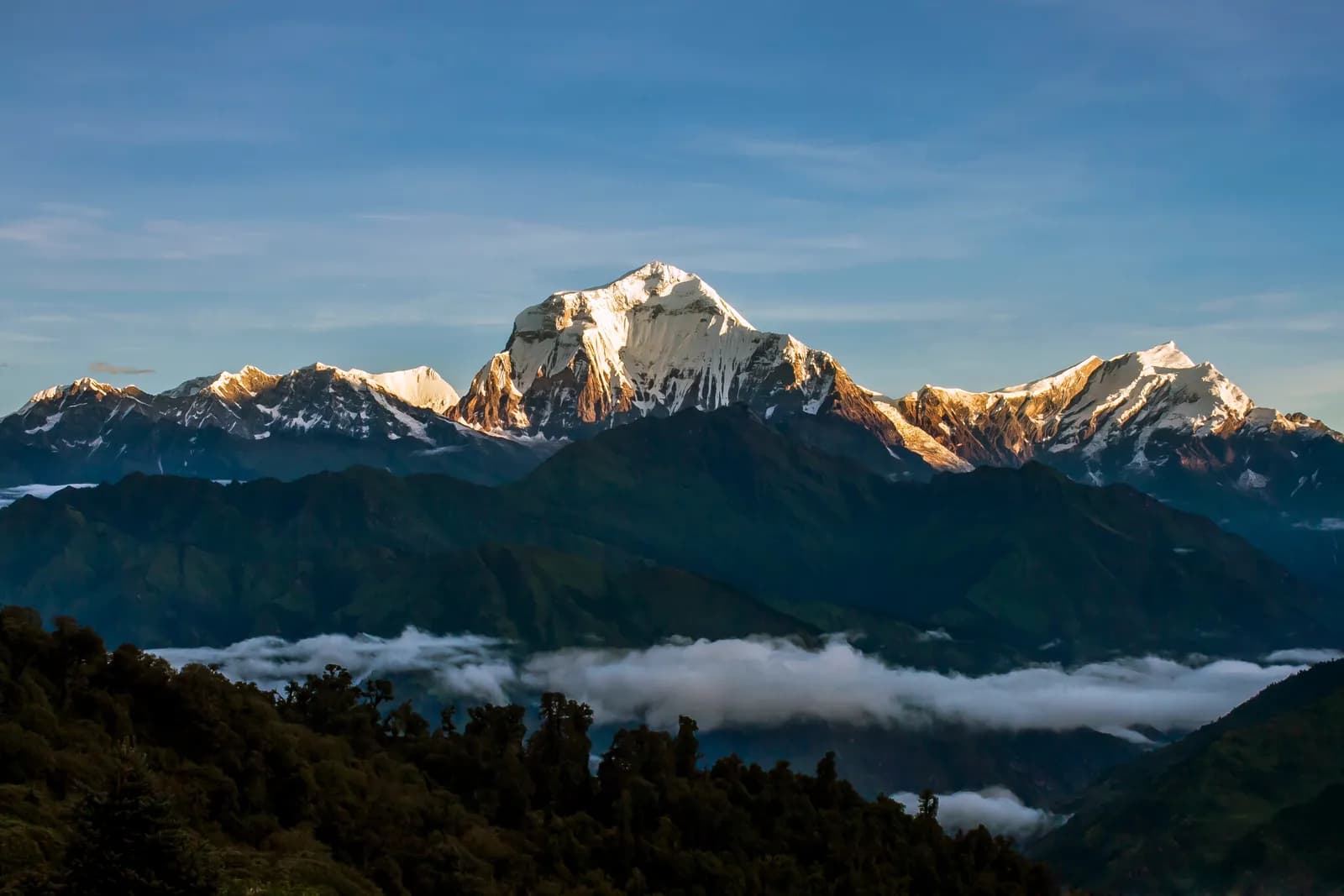
January is a real trekking month in Nepal, but only for the right routes. Low and mid-altitude walks such as Poon Hill, Ghandruk, Mardi Himal's lower sections and the Helambu foothills are open and clear, while high passes, glacier valleys and most restricted areas are not worth attempting without winter experience. Mornings are crisp and cold, skies are often sharp and blue, and the trails are quiet, but nights above about 3,000 m are far below freezing, days are short and some lodges at the top of the valleys shut for the season.
If you have a free January, plan around altitude rather than a famous name. A four-day Poon Hill loop reaches 3,210 m and finishes at the roadside, so a snowfall costs you a day, not your safety. The Langtang Valley to Kyanjin Gompa climbs to 3,870 m and has avalanche paths and snow on the upper trail in winter, so it suits people who are comfortable with cold and a flexible plan. Everest Base Camp at 5,364 m and the Annapurna Circuit's Thorong La at 5,416 m are a different undertaking altogether in January. This guide sets out what the month is like, which routes make sense and how to prepare.
Poon Hill Trek (Ghorepani)的開放行程
由正在尋找夥伴的健行者發布的真實行程。

What January is like on the trail
January sits in the dry winter season, after the monsoon has long gone. Our regional pages describe December to February as cold, with deep snow on the high routes. The practical effects are the same across regions:
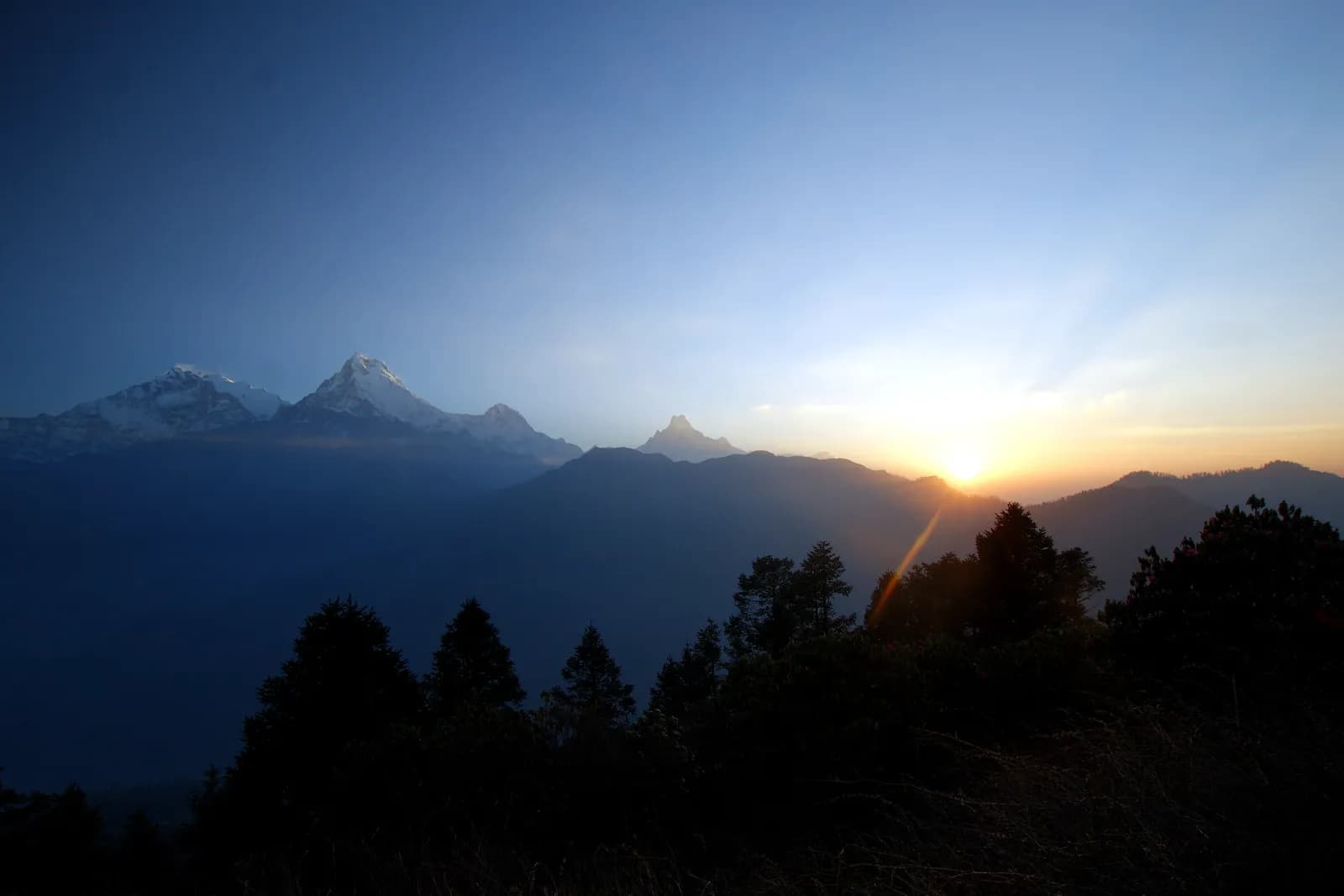
- Clear mornings, cloud later. Winter mornings are often the clearest of the year, which is why the Poon Hill sunrise is a winter favourite. The Poon Hill route page lists December to February as "cold, clear" alongside the spring and autumn seasons.
- Cold nights and frozen water. Water pipes and bottles can freeze overnight at altitude, and bedrooms in teahouses are unheated. Warm sleeping gear matters more than anything else you pack.
- Short days. You have fewer hours of daylight to cover a given distance, so schedule shorter walking days and start at first light.
- Quiet trails. Far fewer trekkers walk in January, so lodges are easy to book and villages feel like themselves. The other side of that is that some lodges close and prices or menus can be limited.
If you want the whole-year picture, the best time to trek in Nepal guide has a month-by-month table, and our packing list covers the kit.
Routes that suit January
Poon Hill and Ghandruk
The Poon Hill route is the standard winter choice. It runs four days from Pokhara: a drive to Nayapul and a walk up the Ulleri steps to Ulleri (2,070 m), then Ghorepani (2,860 m), the sunrise climb to Poon Hill at 3,210 m, and a descent via Tadapani (2,630 m) and Ghandruk to a road back to Pokhara. The Annapurna region page notes that Poon Hill and Ghandruk stay walkable in winter. The route is easy in the plan, but January snow changes that. Ghorepani can hold snow and the Ulleri stone steps are slippery when icy.
Mardi Himal, with caution
The Mardi Himal route climbs to a High Camp at 3,550 m and a viewpoint at about 4,500 m. The first two nights are at Forest Camp (2,500 m) and Low Camp (2,970 m). The Annapurna region page warns about avalanche risk in the Sanctuary after snowfall and in winter. Mardi Himal is a ridge, not the Sanctuary, but the principle holds: ask lodge owners about snow before climbing, and treat the upper viewpoint day as optional.
Langtang Valley, with a plan B
The Langtang Valley is an eight-day trek from Kathmandu to Kyanjin Gompa (3,870 m), with Kyanjin Ri at 4,773 m as the side trip. The Langtang region page describes winter as cold, with snow on the high trails, and says the walk is for experienced walkers, with lodges at the top possibly closed. Avalanche paths cross the upper valley, and you should not stop or camp in them. The positives are the road access, with no flight to cancel, and the quiet.
Helambu and low hill walks
The Helambu trek reaches 3,650 m at Tharepati, with most nights between 2,180 m and 2,580 m, and it starts a one-hour drive from Kathmandu. It is the lowest of these options and the easiest to adapt: you can stop at any village and take a bus or jeep back. Expect cold at Tharepati.
Routes to avoid in January
| Route | Why January is difficult |
|---|---|
| Annapurna Circuit | Thorong La (5,416 m) can be closed; deep snow on the high sections |
| Everest Base Camp, Gokyo and the Three Passes | Very cold, temperatures far below freezing at altitude, some lodges shut above Dingboche; passes unsafe in snow |
| Manaslu Circuit | Deep snow on Larkya La; upper villages often empty |
| Upper Mustang | Very cold, heavy snow possible and most lodges closed |
Our snow and high pass conditions guide explains how snow affects the passes in more detail. If a high route is the dream, wait for April or October instead.
Safety and altitude in the cold
Cold does not remove altitude effects. The sleeping altitude rule is the same in January as in October: above 3,000 m, the Wilderness Medical Society guidance cited by the CDC recommends gaining no more than 500 m of sleeping altitude per night, with an extra acclimatisation night for every 1,000 m gained. Poon Hill's highest overnight is Ghorepani at 2,860 m, so altitude illness is unlikely, but Mardi Himal's High Camp at 3,550 m and Kyanjin Gompa at 3,870 m are above that threshold. Read the altitude sickness basics before you go.
Cold adds its own risks: hypothermia if you are wet and still, and frostbite on fingers and toes at altitude, which is why layers and a dry change of socks matter. Carry a headlamp, because you may finish a winter day after dark.
What to pack differently
You do not need expedition gear for Poon Hill, but you do need more warmth than in autumn. The essentials:
- A sleeping bag rated well below the coldest night you expect. You can rent one in Kathmandu or Pokhara, but check it is clean and dry.
- A down jacket, a warm hat and insulated gloves, plus a thin pair for hands-on tasks.
- Waterproof boots with warm socks, and microspikes if your guide expects ice. Our crampons and microspikes guide explains when they help.
- A thermos or insulated bottle, because a hot drink is the best heater available.
- Sun protection for the glare off snow.
Costs and permits in January
Permits do not change with the season for open-area treks. As of October 2026 the Annapurna Conservation Area permit is NPR 3,000 for foreigners (about USD 22) and the Langtang National Park permit is NPR 3,000, with ACAP charged double at a check post, per the NTNC and Nepal Tourism Board pages. Our cost data puts a mid-range Poon Hill trek, including lodging, permit and a guide with one porter per two people, at about USD 240 to 370 for one trekker, USD 170 to 260 each for two and USD 150 to 230 each for four, excluding some transport legs. January lodge prices are not separately tracked, so ask at check-in. A quiet month does not mean a cheap month; many lodges simply have fewer supplies. See our permits page for the current table.
A sample January plan
- Day 0, Pokhara. Buy your ACAP permit and check the forecast and snow reports with your agency or lodge.
- Days 1 to 3. Walk the Poon Hill loop, taking the Poon Hill climb before dawn with a headlamp and warm layers. If snow has fallen overnight, delay or skip the climb and spend the morning in Ghorepani.
- Day 4. Descend to Ghandruk and drive to Pokhara.
- Extra days. Leave one or two spare days at the end for road or weather delays, as you would on any trek.
With a spare week, add the lower Helambu loop from Kathmandu, or stay in the Pokhara valley and do day walks while waiting for a clear window.
Who should and should not go
January suits people who like quiet and cold, who are happy to change plans and who have a decent sleeping bag. It does not suit first-time trekkers who want a high-altitude goal, people with poor circulation or anyone who cannot accept a day lost to snow. For a first trek, read the first-time trekking guide and the guide on which trek is right for you.