Nepal versus Bhutan for Trekking: Which Country?
Nepal offers the widest choice of treks, lodges and budgets; Bhutan limits visitors and charges a daily fee. How the two compare on freedom, cost, trail infrastructure, culture, crowds and what each is best for.
For trekking, Nepal is the better choice if you want the widest range of routes, lodge-to-lodge walking, flexible budgets and the highest mountains; Bhutan is the better choice if you want a small, controlled, culture-heavy trip and are happy to pay a daily visitor fee and follow a fixed arrangement. Nepal is an open trekking country with dozens of routes from half a day to three weeks; Bhutan is a deliberately limited destination, where tourism has been shaped by a "high value, low impact" policy since the 1970s. They suit different travellers, and this guide sets out the main differences so you can choose.
We write mainly about Nepal, so the Nepal side here rests on our own route and cost data, and the Bhutan side is deliberately limited to points we can cite; check Bhutan's official tourism bodies before you plan. The comparison hub is which Nepal trek is right for you.
Everest Base Camp Trek的開放行程
由正在尋找夥伴的健行者發布的真實行程。

At a glance
| Factor | Nepal | Bhutan |
|---|---|---|
| Visitor policy | Open; permits by area | Controlled; daily Sustainable Development Fee (check current rules) |
| Trek choice | Dozens of routes, 1 to 20 days | Fewer, mostly longer and remote routes |
| Infrastructure | Lodges every few hours on main trails | Remote, usually camp-based on long treks |
| Highest trek points | About 5,000 to 5,500 m on passes and viewpoints | Up to about 5,000 m on the Snowman Trek |
| Budget range | From low (lodge treks) to high (restricted areas) | Fixed daily fee plus costs |
| Crowds | Heavy on the classics in spring and autumn | Few visitors |
| Culture | Many peoples and traditions | One national Buddhist tradition |
Visitor policy and fees
Nepal has no daily fee for visitors. You pay for permits by area: as of October 2026, NPR 3,000 for the Sagarmatha National Park, Langtang and the Annapurna Conservation Area, and for restricted areas a Department of Immigration permit such as USD 50 per day for Upper Mustang (the Nepal Tourism Board figure). Many lodge treks need only a park or conservation-area permit and a card.
Bhutan's policy is different. Wikipedia's article on tourism in Bhutan explains that the government restricted the level of tourist activity from the start, preferring what it called "high value, low volume" tourism, renamed "high value, low impact" in 2008, and that visitors pay a daily fee, given there as US$100 per person per day, except for Indian, Maldivian and Bangladeshi nationals. Bhutan sets and changes its fee and booking rules, so check the current figure and whether you must book through a licensed Bhutanese operator on the official Department of Tourism pages, which we could not verify for this article. For a trekker on a budget, a fixed daily fee is a different cost structure from Nepal's pay-as-you-go lodges.
Trek choice and infrastructure
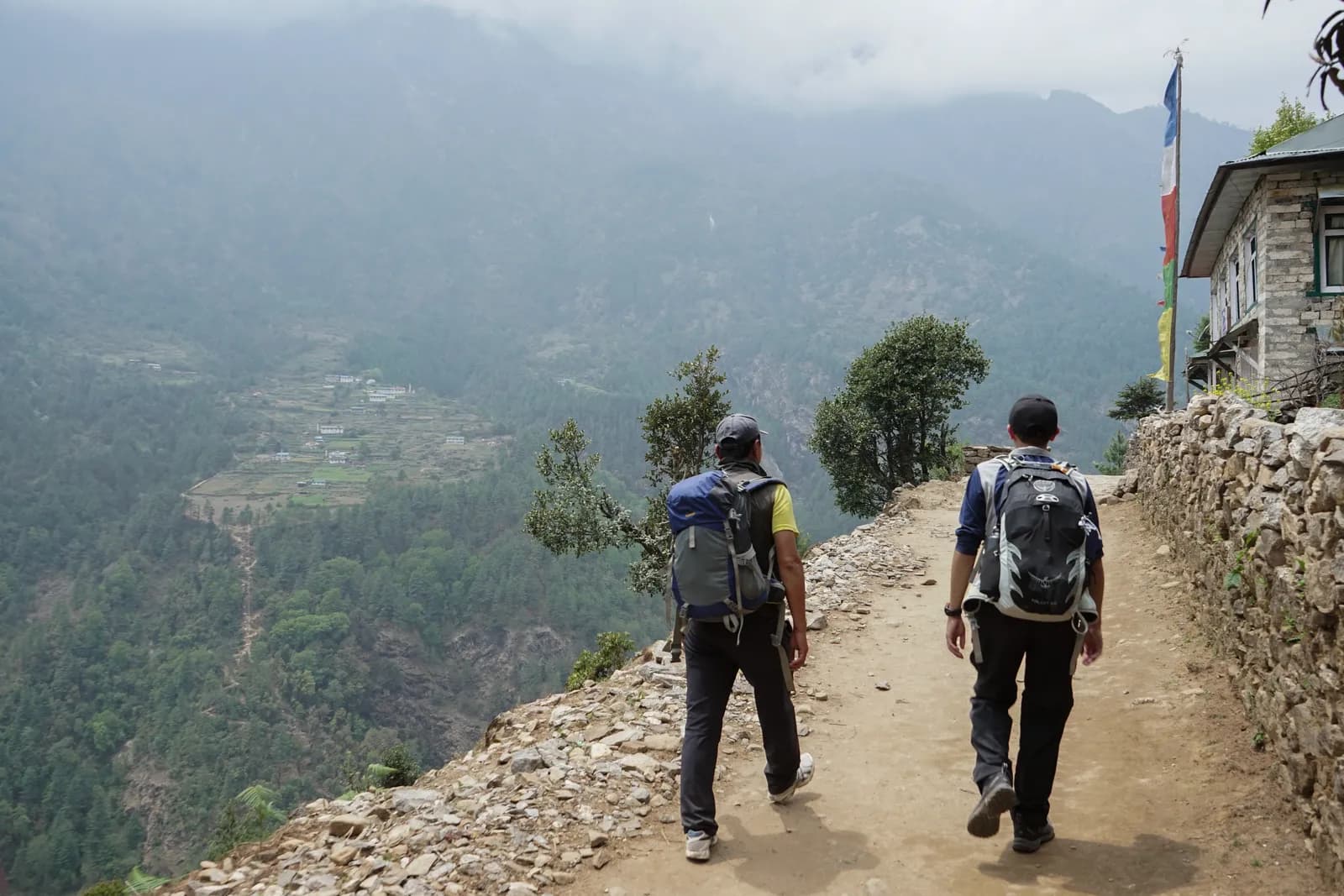
Nepal's strength is range. In our data alone there are 43 routes in 19 regions: day hikes in the Kathmandu Valley, four-day Poon Hill, 12-day Everest Base Camp, 14-day Manaslu and Annapurna circuits, and remote camping treks such as Dhaulagiri and Upper Dolpo. Lodges stand every few hours on the main trails, so you can walk with a daypack and sleep indoors. See Nepal treks day by day.
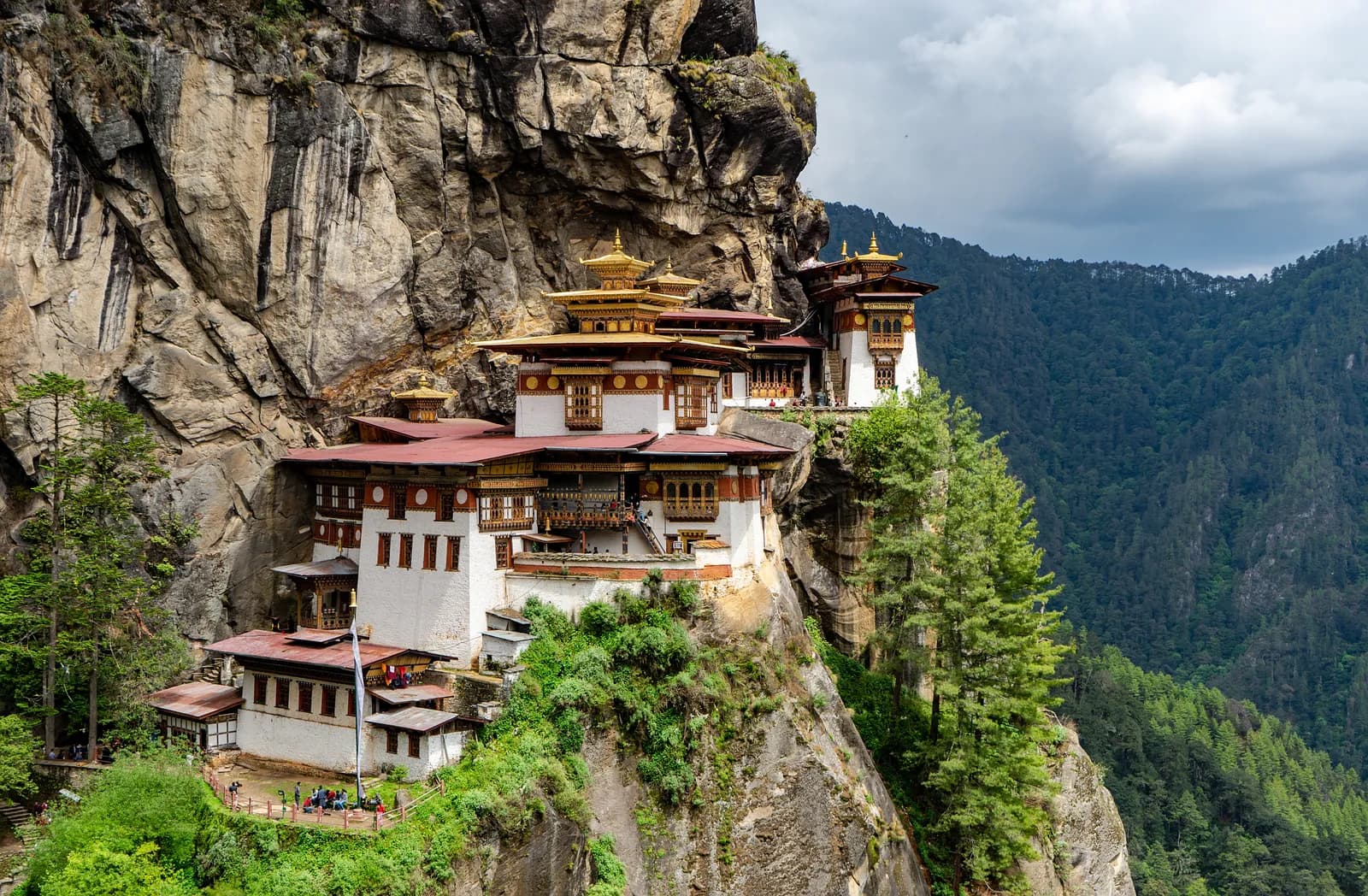
Bhutan's best-known long trek, the Snowman Trek, is described by Wikipedia as the longest trail in the country and one of the hardest in the world because of weather, duration and altitude, with eleven passes and highs of around 5,000 m, and most trekkers do not complete it. Its remote nature and lack of lodges mean camp-based trips with a crew. Shorter treks exist, and the Tiger's Nest monastery, Paro Taktsang, built into a cliff in the upper Paro valley, is the country's most famous walk. For lodge-based flexibility, Nepal wins.
Mountains and altitude
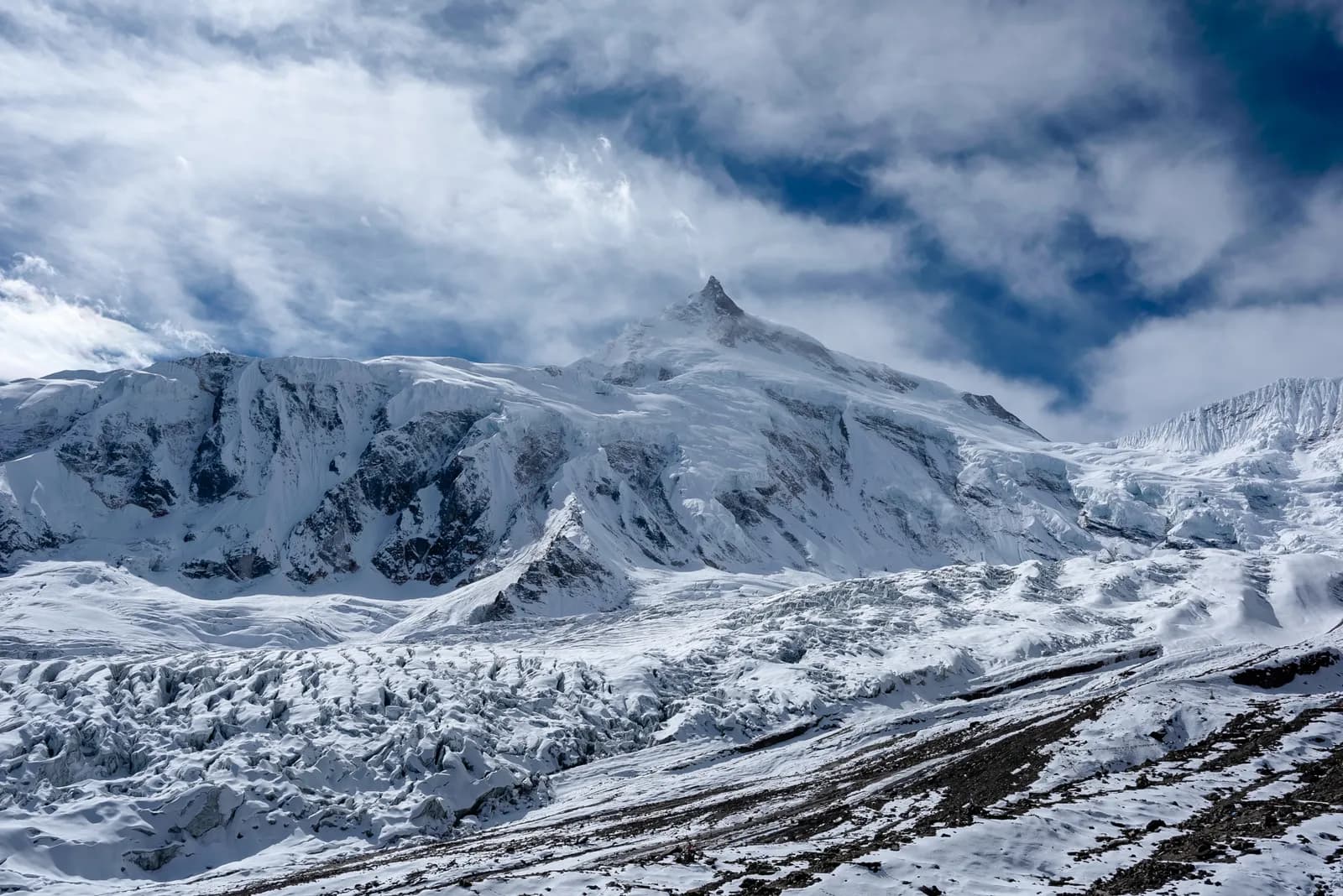
Nepal holds Everest and a run of other 8,000 m peaks, and its trekking routes reach 5,000 to 5,500 m on passes and viewpoints, for example Thorong La at 5,416 m on the Annapurna Circuit and Kala Patthar at about 5,545 m on the Everest Base Camp trek. Jomolhari, which straddles Bhutan's border with Tibet, has a north face that rises over 2,700 m above the plains, and Bhutan's Snowman Trek reaches up to about 5,000 m. The altitude problems are the same in both: follow slow-ascent advice such as the NHS rule not to sleep more than 500 m higher than the night before once above 3,000 m, and read altitude sickness basics.
Culture
Both countries are Himalayan Buddhist cultures with monasteries, prayer flags, festivals and a strong sense of place, and both reward travellers who go with respect; our monastery etiquette guide applies in spirit. Bhutan has a single national identity expressed in its architecture, dress and festivals; Paro Taktsang, for example, is the best known of thirteen "tiger lair" caves associated with Padmasambhava. Nepal offers a patchwork: Sherpa culture in the Khumbu (see Sherpa culture on the Everest trail), Tibetan-influenced communities in Tsum and Mustang, Gurung and Magar villages around Poon Hill, and Hindu pilgrimage sites such as Muktinath. If you want variety, Nepal; if you want a concentrated, curated Buddhist kingdom, Bhutan.
Freedom and rules
Nepal's rules vary by area. A licensed guide through a registered agency is required in restricted areas (Department of Immigration) and, under the Nepal Tourism Board rule of April 2023, in national parks and conservation areas, where 2026 operator reports say checkpoints enforce it in Annapurna and Langtang but not in Khumbu (checked 19 October 2026). Individual applications for restricted-area permits have been possible since 22 March 2026, but a guide is still required. See /guide-rule-nepal and guide rule explained.
Bhutan's rules are set nationally and change, so check them early. In Nepal, on lodge routes in unrestricted areas, you can adjust your plan day to day; that flexibility is a feature of Nepal's trekking culture that is hard to match elsewhere.
Crowds and season
Nepal's classic routes are busy in spring and autumn, with October the busiest month, and lodges and flights fill; see best time to trek in Nepal and spring versus autumn. Quieter options exist, such as Mardi Himal, the upper Langtang Valley and the restricted-area treks. Bhutan, by design, has far fewer visitors, which suits people who dislike crowds but also means fewer options and less spontaneity.
Cost
A fair comparison needs like-for-like costs. In Nepal, as of October 2026, operator guide ranges in our data are NPR 2,700 to 6,000 a day depending on region and porters NPR 2,100 to 3,400, with lodges costing a few hundred to a couple of thousand rupees a night, so a lodge trek can be cheap. In Bhutan a fixed daily fee applies on top of other costs, so the minimum spend per day is higher. For Nepal budgets, see the Nepal trekking cost guide and Everest Base Camp cost breakdown.
Which should you choose?
- First Himalayan trek, flexible budget, many options: Nepal.
- Highest mountains and classic routes: Nepal.
- Small, curated, culture-first trip and a daily-fee budget: Bhutan.
- A long remote challenge: Nepal's Dhaulagiri or Kanchenjunga, or Bhutan's Snowman Trek for the experienced and well-supported.
- Both: plan them as separate trips with separate rules.
What this comparison cannot tell you
We are a Nepal-focused site, and the Bhutan side of this guide is deliberately thin. We cannot give you Bhutan's current fees, booking rules, trek permits or seasons, because they are set by the Bhutanese authorities and change, and the official tourism pages we tried were not reachable when we wrote this. Before you plan, check the Department of Tourism or the Tourism Council of Bhutan for the current visitor fee, the visa process, whether you must book through a licensed operator, and which treks are open when. Then ask Bhutanese operators for an itemised quote and compare it with a Nepal itinerary of the same length on the same terms: days, guide, accommodation, meals, transport and permits. That comparison, not a general impression, is the useful one.
Finding a partner
If you choose Nepal and want to share costs, a partner halves the guide and porter bill. See how to find a trekking partner in Nepal safely and browse the Manaslu Circuit partner page or Everest Base Camp partner page. For more comparisons, see the comparisons category.