Best time for Everest Base Camp, month by month
When to go to Everest Base Camp: a month-by-month guide to weather, crowds, flights, lodges and snow, with a short answer (April-May or October-November) and the trade-offs behind it.
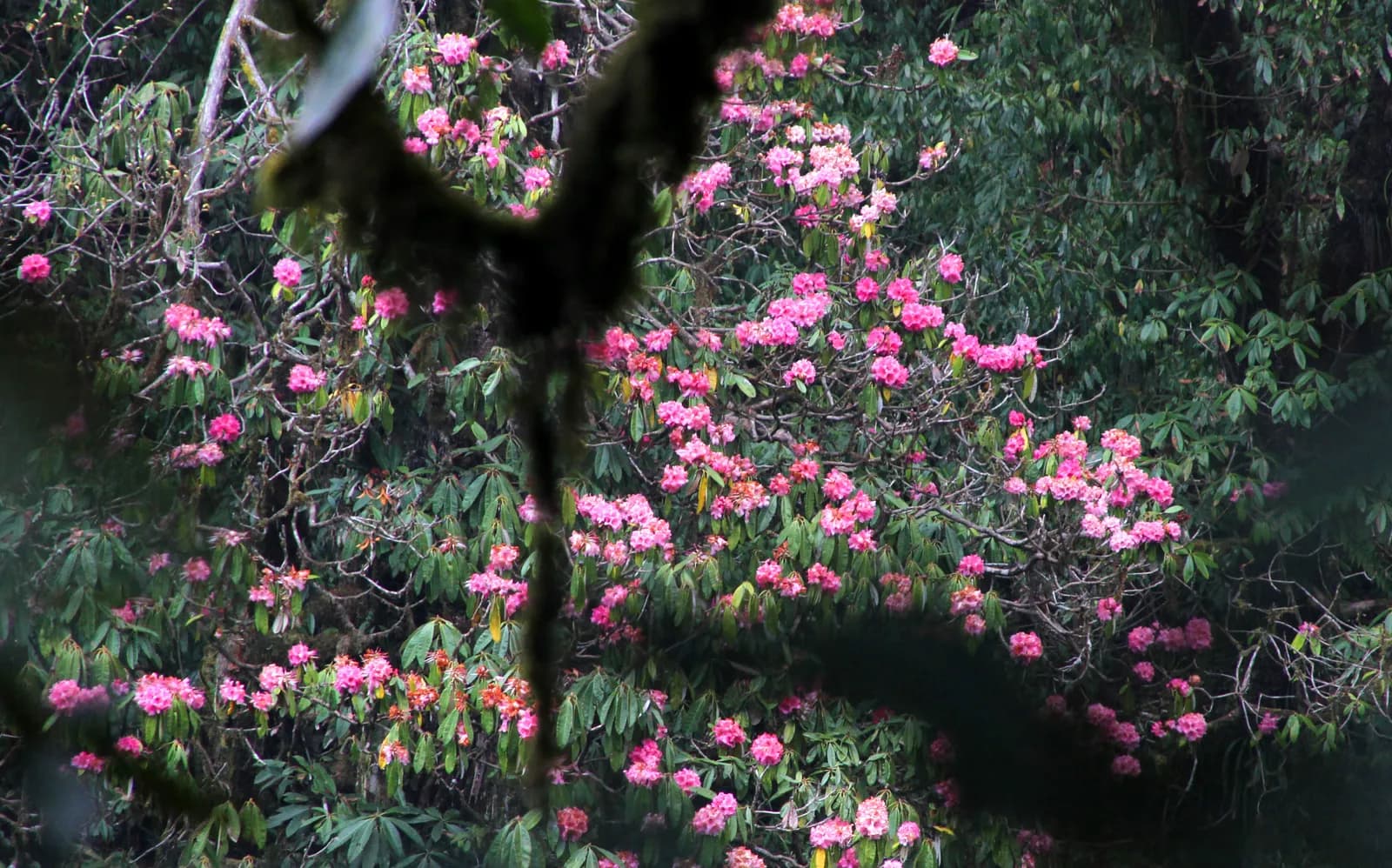
The best time for Everest Base Camp is October to November or April to May. October gives the steadiest weather and the busiest lodges, November is colder but very clear, and April is the spring peak, when rhododendrons flower below Namche. Avoid June to August, when flights to Lukla are cancelled often and the views are mostly cloud, and treat December to February as a winter expedition.
This guide compares the months in turn, explains what changes with altitude and tells you how to choose. Day-by-day detail for the route is in the Everest Base Camp itinerary, and the Everest region guide covers permits and logistics.
Everest Base Camp Trek的開放行程
由正在尋找夥伴的健行者發布的真實行程。
The short answer by priority
| If you want | Go in | Why |
|---|---|---|
| The most reliable skies | October | The steadiest weather of the year, but the busiest trail |
| Very clear air, fewer people | Late November | Cold, but clear, and lodges are quieter |
| Flowers and expedition atmosphere | April | Rhododendrons below Namche, teams at Base Camp |
| Quiet and warm-ish | Early March or May | Fewer trekkers, but cloud and haze or lingering cold |
| Cheapest and emptiest | Winter | Only if you are properly equipped and flexible |
Month by month
| Month | Conditions | Verdict |
|---|---|---|
| January | Very cold, short days, snow possible, some lodges shut high up | Experienced only |
| February | Very cold, slightly longer days | Experienced only |
| March | Cold nights, clear days, rhododendron starting low down, passes may hold snow | Good, quieter than April |
| April | Spring peak: flowers below Namche, expedition teams at Base Camp, lodges fill from mid-month | Very good, busy |
| May | Warmer and hazier, afternoon cloud building | Good before the monsoon |
| June | Monsoon, wet trails, leeches low down, flight cancellations | Avoid |
| July | Monsoon | Avoid |
| August | Monsoon | Avoid |
| September | Monsoon fades, trails drying, air clears by the end | Fair, improving |
| October | Steadiest weather, busiest lodges | Excellent, crowded |
| November | Colder but very clear, high lodges begin to close late in the month | Excellent, quieter |
| December | Very cold, far below freezing at altitude | Experienced only |
The monsoon in numbers
Nepal's Department of Hydrology and Meteorology gives 13 June as the normal onset of the monsoon and 2 October as the normal withdrawal, a normal season of 112 days. Recent years have run late: withdrawal came on 10 October in 2025, 12 October in 2024 and 15 October in 2023, with onset on 29 May in 2025. That is why early October can still be unsettled and why the clearest weeks are often the last days of October and November.
Spring versus autumn
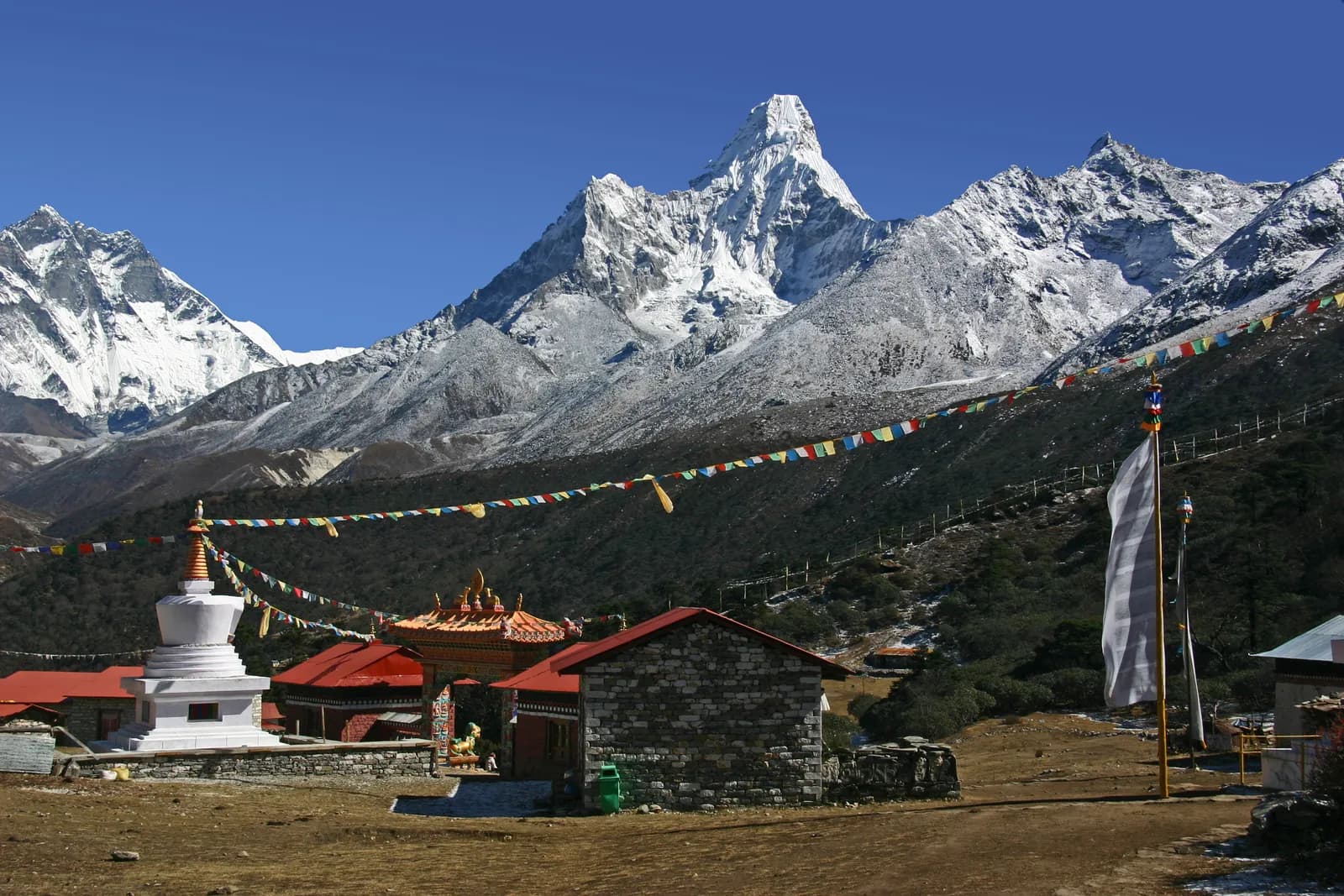
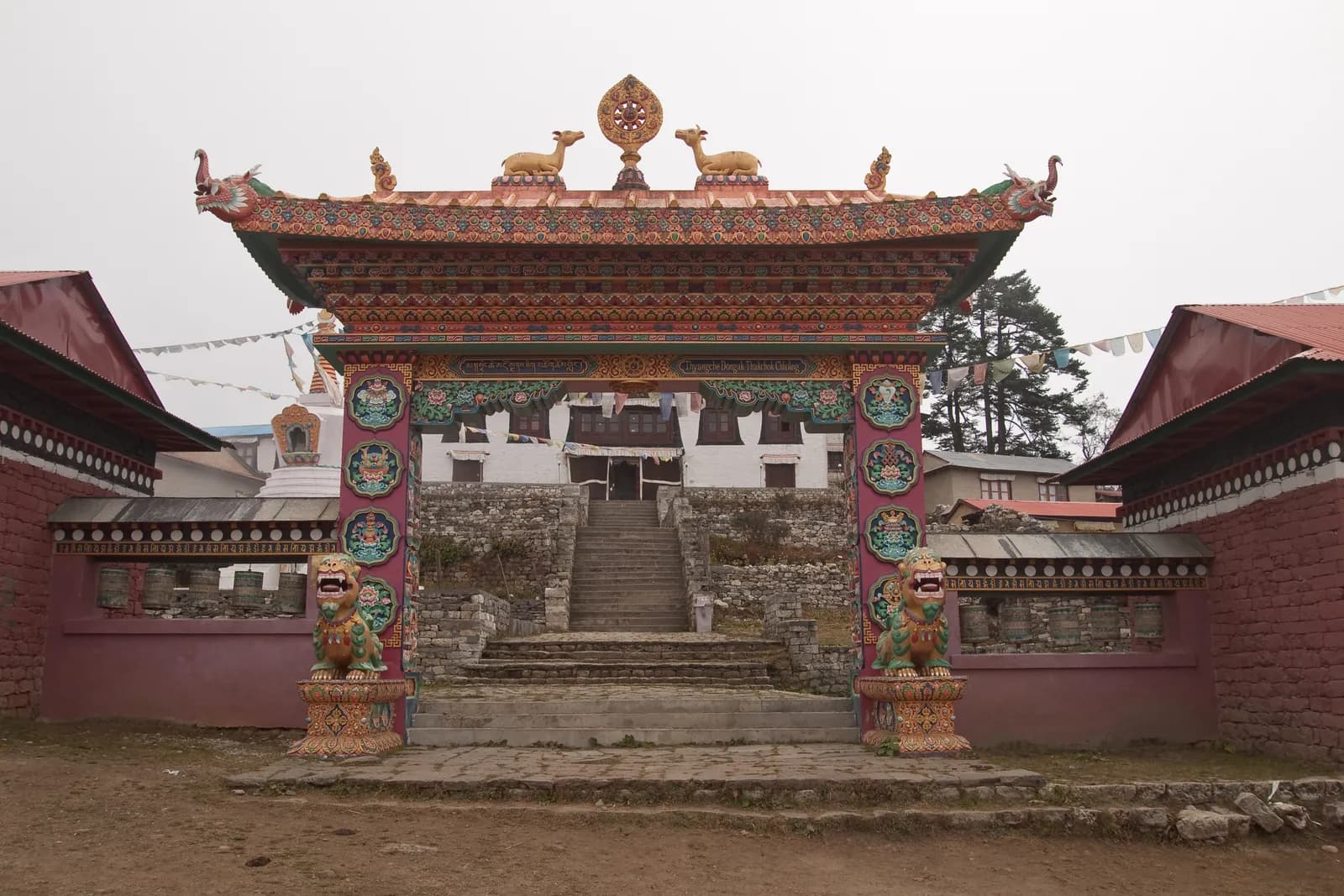
Autumn (October to November) has the best chance of stable, clear mornings and the colour of freshly washed air after the monsoon. Mani Rimdu, the monastery festival at Tengboche, is held in October or November, which adds culture and crowds. Nights at Gorak Shep are very cold in November, and the high lodges start to close late in the month.
Spring (March to May) is warmer at night as the season goes on. April brings rhododendron below Namche and the tent city at Base Camp, May brings more haze and afternoon cloud. Spring is also when climbing expeditions use the route, so the trail carries yaks and porters with loads alongside you.
Flights and logistics by season
Flights to Lukla depend on morning visibility. In the monsoon cancellations are frequent. In the busy months many flights leave from Ramechhap (Manthali), which is a four to five hour drive from Kathmandu and means a pre-dawn start. At any time of year, keep one to two spare days at each end of the trek. If a spare day is not possible in your schedule, consider driving to Phaplu or Jiri and walking in, which adds time but avoids the flight.
Winter in more detail
Between December and February temperatures fall far below freezing at altitude, days are short and some lodges close above Dingboche. The trails are quiet and the views can be superb, but you need a proper sleeping bag, down layers and a flexible schedule, and the passes are unsafe in snow. Treat winter as an experienced trekkers' season, and read our altitude sickness basics before any high-altitude trek.
What busy actually means
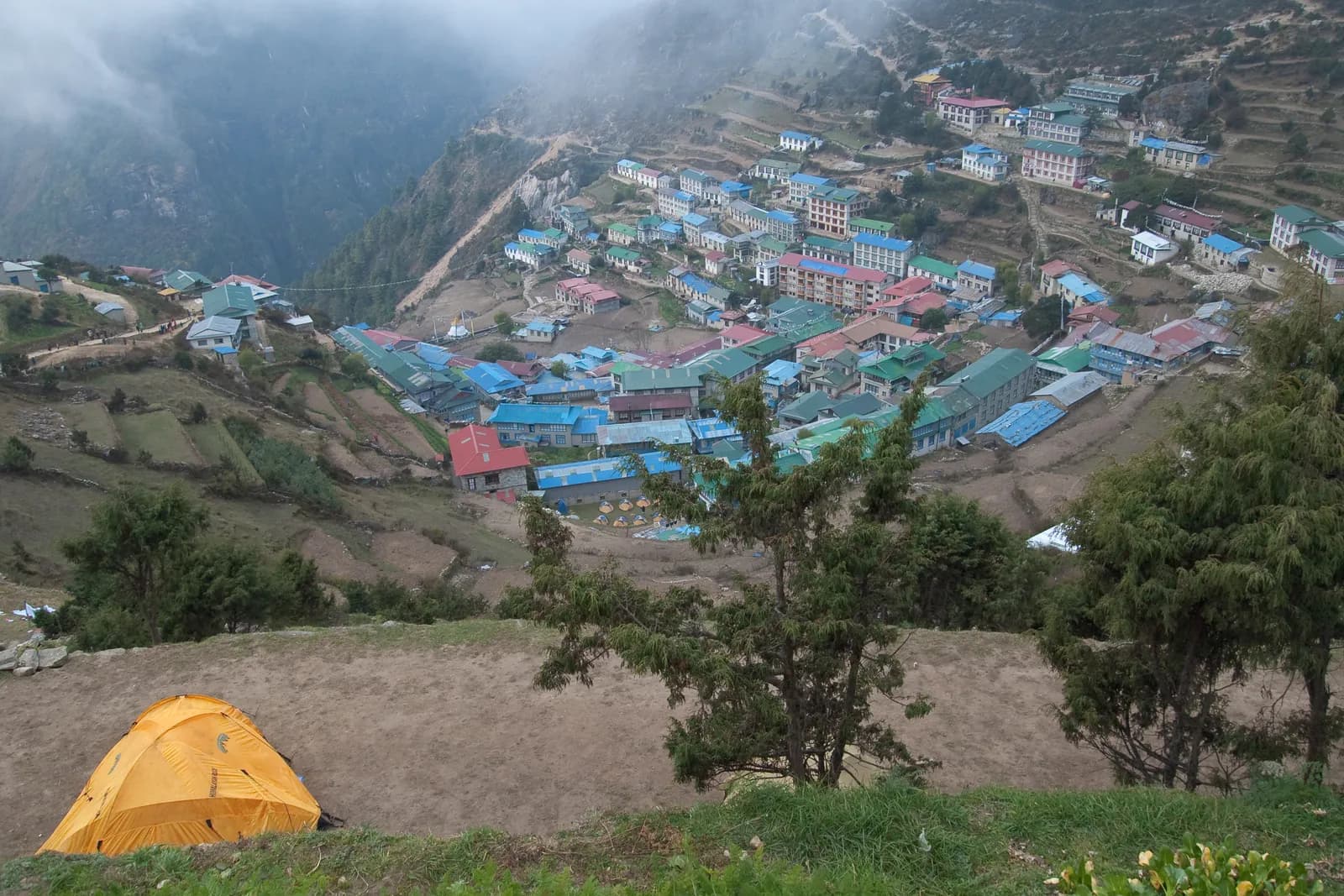
In October and mid-April the main trail between Lukla and Namche is a procession of trekkers, porters, yaks and mule trains, and lodges at Dingboche, Lobuche and Gorak Shep fill up by mid-afternoon. In practice that means you may not get your first-choice lodge, rooms near the stove are taken early and you queue for the washroom. You can reduce the effect by walking early, stopping for the night before the crowd arrives and booking ahead through your guide or agency. If you want solitude, choose late November or early March rather than the peak weeks, and accept colder mornings.
If your dates are fixed
- Early March: expect very cold nights and snow on the higher sections. Carry a warmer sleeping bag than you think you need.
- Late April: book lodges ahead, and expect Base Camp to be a working camp full of expedition tents.
- May: start early to get the views before afternoon cloud, and add a spare day for flights.
- September: the trails are green and quiet but still wet, so waterproofs and a flexible schedule are essential, and the Lukla flights remain unreliable early in the month.
- Early December: the lodges that stay open are friendly but the nights are very cold, so a quality sleeping bag and down jacket are non-negotiable.
Planning around the festival and the expeditions
Two calendar events shape the Khumbu in the peak months. Mani Rimdu at Tengboche is a monastery festival with masked dances, held in October or November, and it fills local lodges, so if you want to see it, ask your agency for the date and book ahead; if you would rather avoid the extra crowds, plan to pass Tengboche a few days either side. In spring the expedition teams gather at Base Camp, which makes April and May lively: the tent city is the best reason to go then, because you see the camp as a working place rather than just a rocky moraine. If you would rather see Base Camp quieter, autumn is usually better, because the big spring teams are not there.
What to wear by season
Autumn and spring need the same layered kit: base layers, fleece, a down jacket for the evenings above Dingboche, a rain shell and a warm hat and gloves. In winter add a warmer sleeping bag, an insulated jacket with a hood and insulated boots. In the monsoon add serious waterproofs and gaiters for the leeches. Our packing list breaks the kit down by altitude and season.
How to choose
For the route itself, see the Everest Base Camp route page and the Gokyo Lakes alternative.
- Decide whether crowds or weather matters more.
- Pick the month, then book the Lukla flights and lodges as early as you can for April and October.
- Build in spare days.
- Read the other seasons and regions in our guide before locking in your dates.
- If you are travelling with partners, agree the dates first. Our partner guide shows how.