Gokyo Lakes trek itinerary, day by day
A 12-day Gokyo Lakes itinerary from Kathmandu via Namche, Dole and Machhermo to Gokyo (4,790 m) and Gokyo Ri (5,357 m), with two rest days, a spare day and the sleeping altitudes that matter.
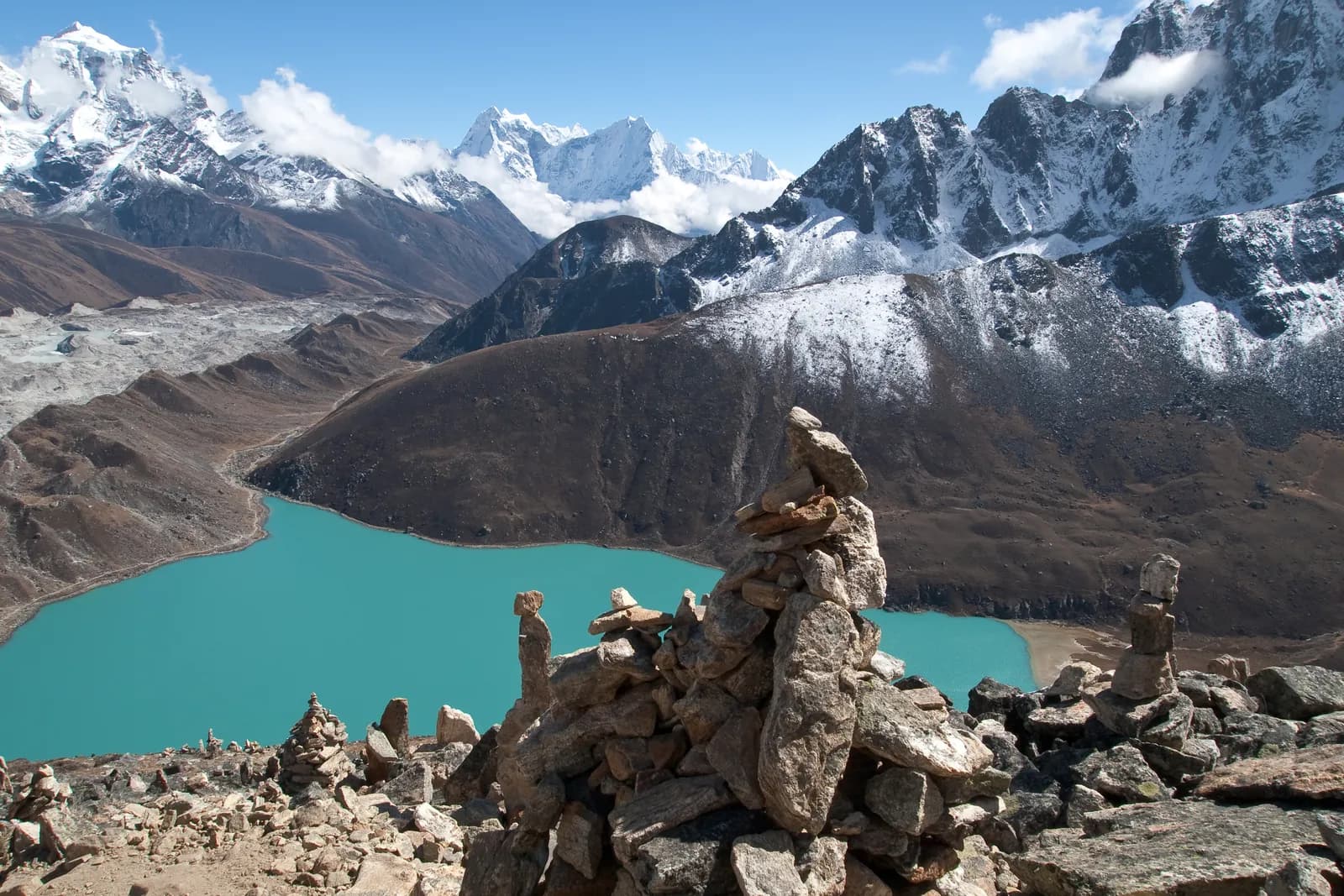
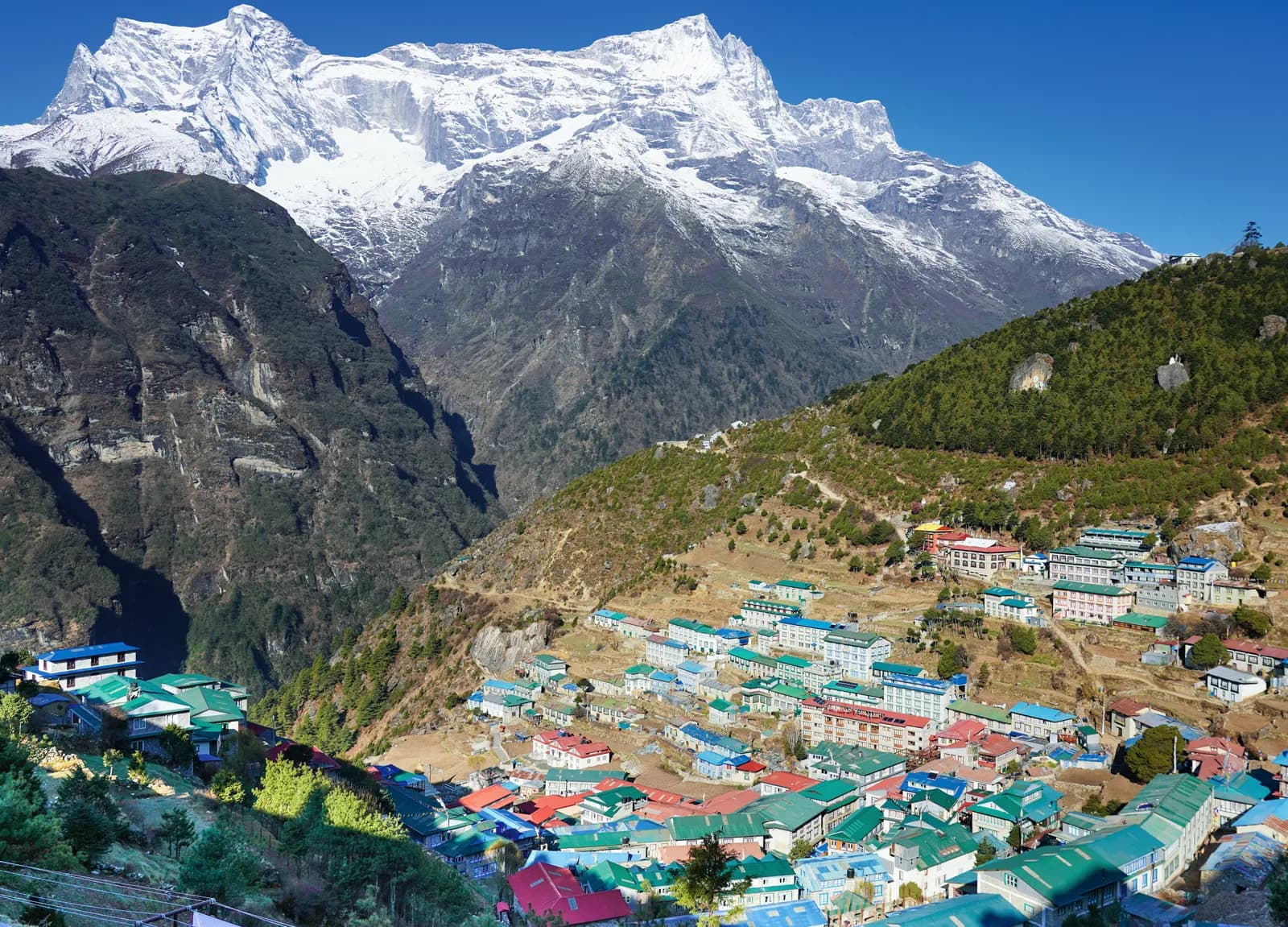
The Gokyo Lakes itinerary here takes 12 days from Kathmandu. You fly to Lukla and walk to Phakding (2,610 m), climb to Namche Bazaar (3,440 m) for a rest day, then follow the western branch of the Dudh Koshi through Dole (4,040 m) and Machhermo (4,470 m) to Gokyo (4,790 m). A rest day there includes the dawn climb of Gokyo Ri (5,357 m). Four days of descent and a spare day bring you back. It is the quieter alternative to Everest Base Camp, with big views and shorter days but real altitude.
The route data is on the Gokyo Lakes route page, and the choice against Base Camp is discussed in Everest Base Camp versus Gokyo Lakes.
Chuyến đi đang mở tại Gokyo Lakes Trek
Các chuyến đi thật do người trekking đăng để tìm bạn đồng hành.
The 12 days at a glance
| Day | From - to | Time | Sleep |
|---|---|---|---|
| 1 | Kathmandu - Lukla flight, walk to Phakding | 3-4 h | 2,610 m |
| 2 | Phakding - Namche Bazaar | 6 h | 3,440 m |
| 3 | Namche rest day, Everest View Hotel | 3 h | 3,440 m |
| 4 | Namche - Dole | 5-6 h | 4,040 m |
| 5 | Dole - Machhermo | 4-5 h | 4,470 m |
| 6 | Machhermo - Gokyo | 4-5 h | 4,790 m |
| 7 | Gokyo, Gokyo Ri at dawn | 3-4 h | 4,790 m |
| 8 | Gokyo - Dole | 5-6 h | 4,040 m |
| 9 | Dole - Namche Bazaar | 5-6 h | 3,440 m |
| 10 | Namche - Lukla | 7 h | 2,860 m |
| 11 | Lukla - Kathmandu flight | 1,400 m | |
| 12 | Spare day in Kathmandu | 1,400 m |
Days 1 and 2: Lukla to Namche
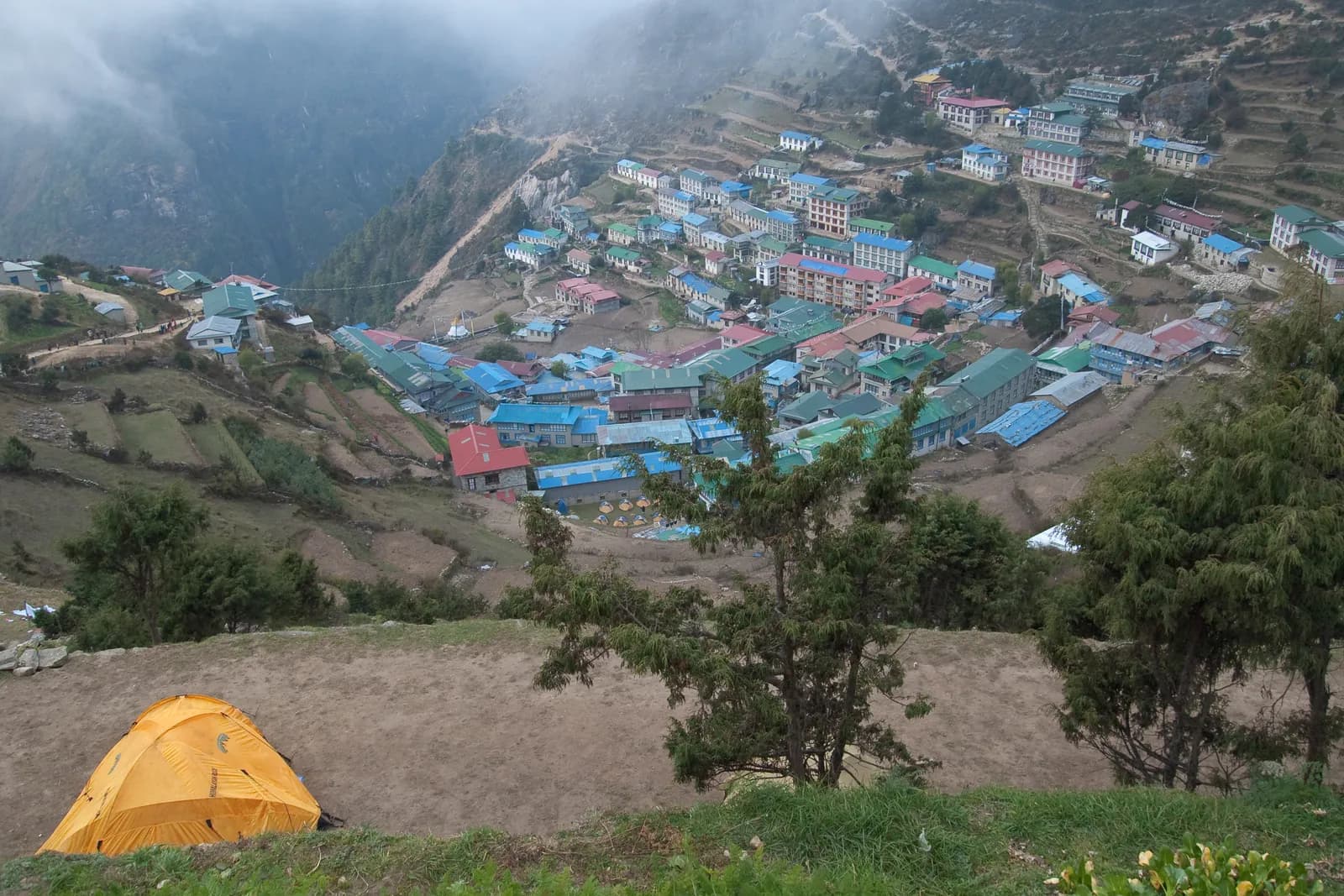
Fly early from Kathmandu to Lukla, about 35 to 40 minutes, and walk down the Dudh Koshi valley through Cheplung and Ghat to Phakding. If your flight leaves from Ramechhap, expect an early start and a long drive first. Day 2 crosses suspension bridges, enters Sagarmatha National Park at Monjo, where your permits are checked, and climbs steeply for about two hours from the Hillary Bridge through pine forest to Namche Bazaar, the trading centre of the Sherpa community with bakeries, shops, a bank machine and a Saturday market. You stay two nights. See the Kathmandu to Lukla flight guide.
Day 3: rest day at Namche
Walk up to the Everest View Hotel at about 3,880 m for the first wide view of Everest, Lhotse and Ama Dablam, then continue to Khumjung and Khunde, where the school, hospital and monastery are among the lasting results of Hillary's work. Return to Namche. Do not climb more than about 500 m above the town; the point is to sleep low after climbing high. For an easier day, visit the Sherpa museum above town.
Days 4 to 6: up the western valley
Day 4 climbs to the ridge above Namche and takes the left fork toward Gokyo, leaving the Base Camp route. The path contours through forest to Kyangjuma and Mong La, with views of Ama Dablam and Kangtega, drops steeply to Phortse Tenga and then climbs through rhododendron and juniper to Dole (4,040 m). The forest ends here, and this is the first night where altitude headaches are common.
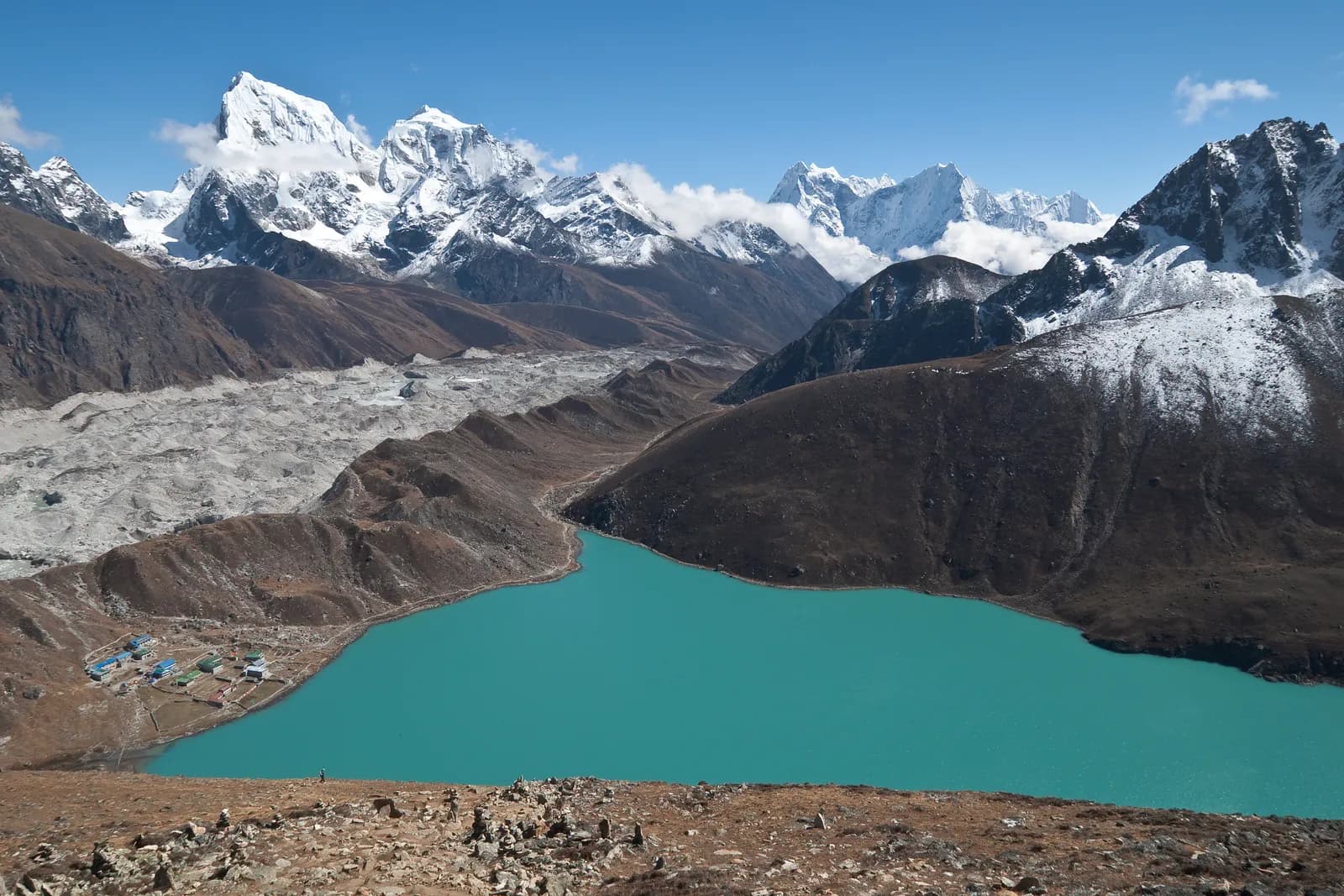
Day 5 is a short day by design: scrub and yak pastures past Lhabarma and Luza to Machhermo (4,470 m), where the valley opens and Cholatse and Tawache appear. The village is famous for a yeti sighting reported in 1974. Walk up the hill behind the lodges in the afternoon, then rest. Day 6 climbs out of Machhermo to the ridge, follows the moraine edge of the Ngozumpa Glacier past the first lake, Longponga Tsho, and the second, Taujon Tsho, and reaches Gokyo on the shore of the third, Dudh Pokhari, at 4,790 m.
Day 7: Gokyo Ri
Start before dawn and climb the ridge above the village in two to three hours. The path is steep and rocky, and at the top, at 5,357 m, you see Everest, Lhotse, Makalu and Cho Oyu, with the Ngozumpa Glacier below and the lakes laid out beside it. It is bitterly cold before the sun comes up, so bring a warm jacket, gloves and a hat. After breakfast, rest and wander along the lake shore. Some trekkers walk to the fourth and fifth lakes in the afternoon, which is sensible only if you feel well.
Days 8 to 12: down and out
Day 8 retraces the route to Dole, fast, with thicker air helping sleep. Day 9 descends to Phortse Tenga, climbs to Mong La and drops into Namche, a long day that is hard on the knees. Day 10 follows the Dudh Koshi downstream through Monjo and Phakding to Lukla, about seven hours on an easy path busy with porters and animals, so stand on the uphill side. Day 11 is the morning flight to Kathmandu, weather permitting. Day 12 is the spare day, and do not book an international flight for it or the day before.
The nights that matter
The sleeping gains are the key to this plan. Namche to Dole is a gain of about 600 m, then Dole to Machhermo about 430 m, then Machhermo to Gokyo about 320 m. After Namche, the plan stays close to the 300 to 500 m a night that the Wilderness Medical Society and CDC Yellow Book suggest above 3,000 m, and day 5 is a short day on purpose. The rest day at Gokyo is not needed for acclimatisation itself, but you want a good night at 4,790 m before Gokyo Ri. Do not skip it. If you have a headache that does not clear, do not climb. Our acclimatisation schedule and altitude sickness basics cover the rules.
The lakes and the glacier
The Gokyo Lakes are a chain at about 4,700 to 4,950 m, designated a Ramsar wetland in 2007. Gokyo sits below the Ngozumpa Glacier, the longest in Nepal. The glacier is covered with rubble and mounds, so the path across the moraine shifts as the ice moves; a local guide knows the current route. Do not wash in or near the lakes and carry out your waste. See the Sagarmatha National Park guide for the park rules.
Permits and the guide rule
You need a Sagarmatha National Park entry permit, NPR 3,000 for foreigners per entry as of October 2026 (NPR 1,500 for SAARC nationals, children under 10 free), and a Khumbu Pasang Lhamu Rural Municipality trek card, NPR 3,000 (NPR 2,000 for SAARC countries and China), plus travel insurance that covers evacuation above 5,000 m. TIMS is not required on the Everest route. See Sagarmatha National Park entry and the Khumbu local permit.
On guides, a licensed guide through a registered agency is required in restricted areas, and under the Nepal Tourism Board rule of April 2023 in national parks and conservation areas, where 2026 operator reports say checkpoints enforce it in Annapurna and Langtang but not in Khumbu, because the Khumbu Pasang Lhamu municipality opted out and issues its own trek card (checked 19 October 2026). A guide is strongly advised but not required here. See the guide rule by region.
Season, cost and extensions
October is when the lakes are at their bluest; November is colder and clear; March to May is the second window. The upper lakes freeze in winter, high lodges may close and the monsoon brings cloud and unreliable flights. See best time for Everest Base Camp. As of October 2026 the Everest cost data gives the Lukla flight at about USD 190 to 240 each way, a guide day of NPR 3,400 to 4,700 and a porter day of NPR 2,100 to 3,400 as operator market ranges, not official rates, and a dal bhat of NPR 1,200 to 2,000 above 3,800 m. The route data counts 11 guide days and 11 porter days. If you want more, you can walk to the fifth lake, cross Renjo La to Lungden and Thame for a loop, or continue over Cho La to the Base Camp trail, as in the Everest Three Passes itinerary.
Sharing
The guide and the porter are the shared costs; the flight, permits, food and rooms are each person's own. Post your dates on the Gokyo Lakes partner page and read splitting guide and porter costs fairly between partners. More plans are in the route guides category and the day-by-day itineraries hub, and the Everest region trekking guide puts Gokyo beside the other two treks.
The regional data is on the Everest region page, and the shared first days appear on the Everest Base Camp route page.