First time trekking in Nepal: a beginner's guide
Everything a first Nepal trek needs: which route to pick, how fit you must be, what a day on the trail is like, altitude basics, permits, booking and how to find a partner.
A first Nepal trek is within reach of most active people, provided you pick the right route, allow time for altitude and book sensibly. The usual first treks are Poon Hill (four days, easy, highest point 3,210 m), Mardi Himal (five days) and the Langtang Valley (eight days). Everest Base Camp is possible for a first trek if you have two weeks and keep spare days. The most important decisions are how many days you have, which season you travel and whether you go alone or with partners.
This guide covers choosing a route, fitness, what a day on the trail feels like, altitude, permits, booking and common beginner mistakes, with links to the full plans.
Chuyến đi đang mở tại Poon Hill Trek (Ghorepani)
Các chuyến đi thật do người trekking đăng để tìm bạn đồng hành.

Choose a route that matches your time
| Days available | First-trek options | Highest point |
|---|---|---|
| 4 to 5 | Poon Hill or Mardi Himal | 3,210 m or about 4,500 m |
| 7 to 8 | Annapurna Base Camp or Langtang Valley | 4,130 m or 4,773 m |
| 12 to 14 | Everest Base Camp with buffer days | 5,545 m |
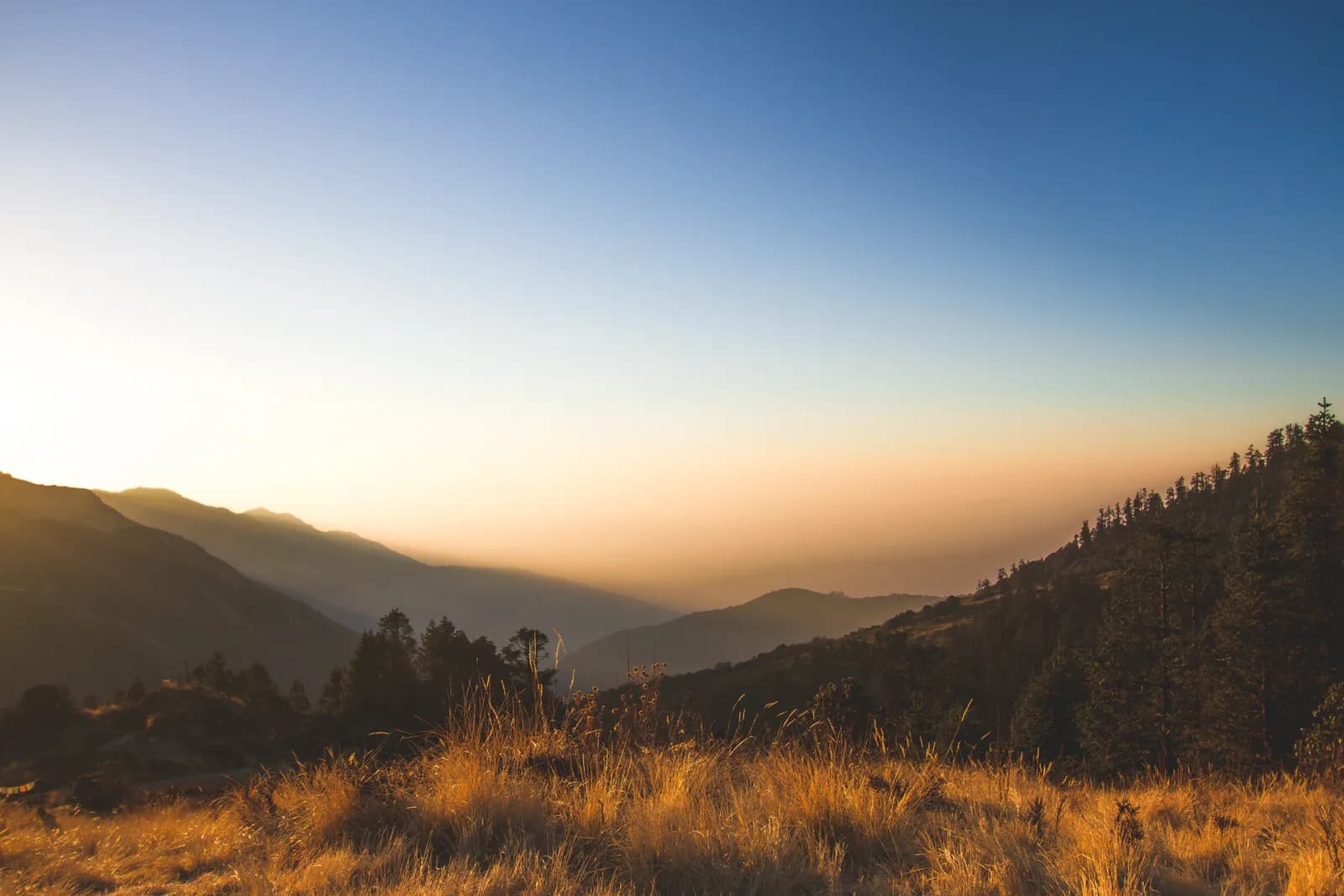
If you are unsure, choose the lowest option that you will still be proud of. Poon Hill is a real Himalayan trek, with a sunrise over Dhaulagiri and the Annapurna range, and it shows you how you cope with several days of walking before you commit to something bigger. Our decision guide compares all 13 routes, and the itinerary index links the day plans.
How fit do you need to be?
You need to be able to walk five to seven hours a day, uphill and downhill, on stairs and rough paths, for several days in a row. The challenge is cumulative fatigue, not speed. A sensible preparation is:
- Walk or hike regularly for two to three months, building to a full day with a loaded pack.
- Climb stairs: the Ulleri staircase on Poon Hill and the long steps on the Annapurna Base Camp route are the hardest sections for many beginners.
- Train in the boots you will wear, so that blisters are solved before Nepal.
- Include a few back-to-back long days.
Fitness does not protect you from altitude sickness, which is why a slow itinerary matters more than strength.
What a day on the trail feels like
Most days start with an early breakfast, a morning walk of three to four hours, a lunch stop in a village and an afternoon walk to the next lodge, arriving by mid-afternoon. You carry a daypack with water, layers, a camera and valuables, and a porter or the agency carries the rest. Lodges are simple, with twin rooms, a shared washroom and a dining room with a stove in the evening. Dal bhat is the staple and refills are normal. Evenings are early, and you go to bed before nine. The pace is steady, with tea stops, and the days run on weather and light.
Altitude basics
Altitude can affect anyone. Above about 3,000 m the CDC, citing Wilderness Medical Society guidance, suggests not raising your sleeping altitude by more than about 500 m a night and adding an extra night for every 1,000 m gained. Poon Hill stays below 3,300 m, and most first-time routes stay below 4,800 m, but Everest Base Camp goes above 5,000 m. Symptoms such as headache, nausea and poor sleep mean rest, not going higher. Breathlessness at rest or confusion means descend and get help. Read the altitude sickness basics before you go.
Permits and guides
Most treks need a national park or conservation area entry permit, and some need a TIMS card or a local municipality permit. Manaslu and Upper Mustang need a Restricted Area Permit through a registered agency. For protected areas, the Nepal Tourism Board April 2023 rule requires foreign trekkers to use a licensed guide in national parks and conservation areas, and 2026 operator reports say checkpoints enforce it in Annapurna (ACAP), Langtang (the strictest) and most other parks, but not in Khumbu, where the municipality opted out (checked 19 October 2026). For a first trek a guide is a good idea regardless, because they manage the pace, the lodges and the weather. See the permits explainer and the guide rule article.
When to go
Spring (March to May) and autumn (October to November) are best. October is the busiest, April has the flowers and November is colder and clear. The monsoon makes most routes wet, with Upper Mustang the exception. See best time to trek in Nepal.
What to pack and book
You need layers, a rain shell, good boots, a warm sleeping bag for the highest night and a daypack. Rent a down jacket and sleeping bag in Kathmandu or Pokhara if you trek once. Our packing list breaks it down by altitude. Book your agency, flights and first and last hotel nights early for April and October, and build in spare days for flights and roads. The transport guide explains each trailhead.
Budget in outline
A first trek has the same cost lines as any other: permits, guide, porter, transport, lodging, food, insurance and extras. Ask for written quotes and check permits on official pages. As of October 2026 most permits for first-trek routes are NPR 3,000 for foreigners (Poon Hill, Mardi Himal and Annapurna Base Camp need the ACAP permit; Langtang needs the national park permit), and our permits page shows the full table. Our cost guide lists each line and how to build your budget.
Going alone or with partners
You can trek alone with a guide, but partners share the guide, porter and transport costs and give you company and a second pair of eyes. Read how to find a trekking partner safely for the checks, and use the first-call checklist before you commit.
A simple training outline
| Weeks before | Focus | Example |
|---|---|---|
| 12 to 9 | Base | Three walks a week, one longer on weekends, stair climbing twice a week |
| 8 to 5 | Build | Add a loaded pack, a long weekend walk of four to five hours and hills |
| 4 to 2 | Specific | Two back-to-back long days, wear your boots and pack, practise descents with poles |
| Last week | Rest | Short walks only, sort gear, sleep |
This is a general outline, not medical advice. If you have a health condition, talk to a doctor who knows travel medicine before you book.
Insurance and emergencies
Buy travel insurance that covers trekking to the highest altitude of your route and helicopter evacuation, ideally to 6,000 m, and carry the policy number and the insurer's emergency number. Know where the Himalayan Rescue Association aid posts are on your route: they operate seasonally at places such as Pheriche and Manang. Tell someone at home your itinerary, share your permits with your partners and photograph your passport and insurance details.
Mentally preparing for the trail
The hardest part for many first-timers is not the climbing but the routine: early starts, cold evenings, simple food and days where weather changes the plan. Expect a day when you are tired and cranky, accept that the pace will be slower than you hoped and keep reminding yourself that the aim is to arrive healthy. Walk with someone who can tell you honestly how you look. Take a book or cards for the long evenings, and keep a small bag of favourite snacks for the days when your appetite fades.
Common beginner mistakes
- Choosing a route that is too long for the time available.
- Skipping rest days to save money.
- Wearing new boots.
- Packing too much.
- Leaving no spare day for flights.
- Ignoring early altitude symptoms.
- Forgetting insurance that covers helicopter evacuation.
Your first steps
- Pick a route from the table and read its day-by-day plan.
- Choose your month.
- Check permits and the guide position with a registered agency.
- Arrange insurance, flights and spare days.
- Start training now, and look for partners early.
Lên kế hoạch cho chuyến trek này
- Hướng dẫn vùng Everest (Khumbu)
- Hướng dẫn vùng Annapurna
- Hướng dẫn vùng Langtang
- Trekking partner for Poon Hill Trek (Ghorepani)
- Find someone to trek Langtang Valley Trek with
- Find someone to trek Mardi Himal Trek with
- Trekking partner for Everest Base Camp Trek
- Lịch trình Poon Hill Trek (Ghorepani)
- Lịch trình Langtang Valley Trek
- Lịch trình Mardi Himal Trek
- Lịch trình Everest Base Camp Trek