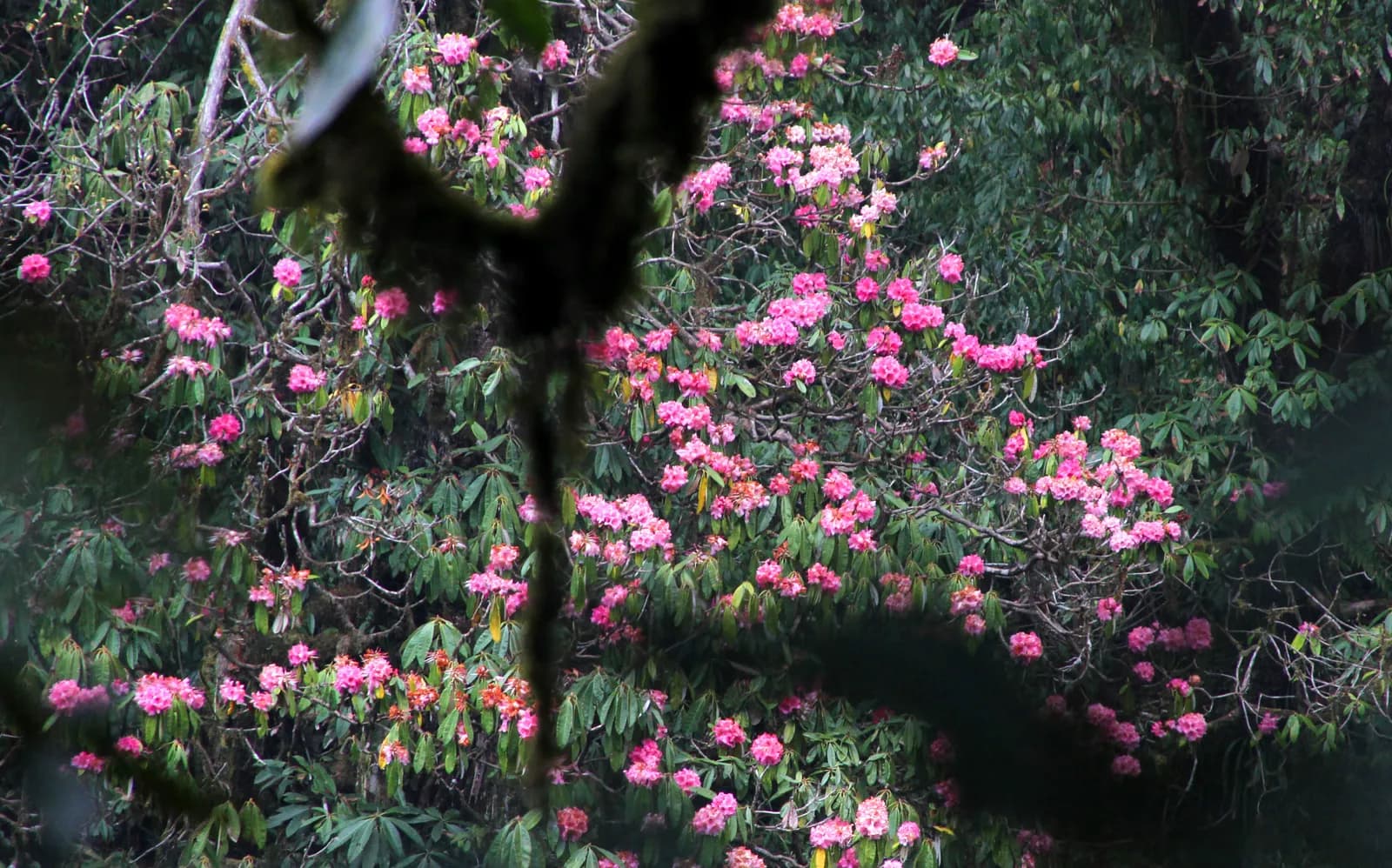
Trekking in Nepal in April
What April is like on Nepal's trails: rhododendron bloom, warm days, hazy views, afternoon storms, Everest expedition traffic and which routes suit the month best.
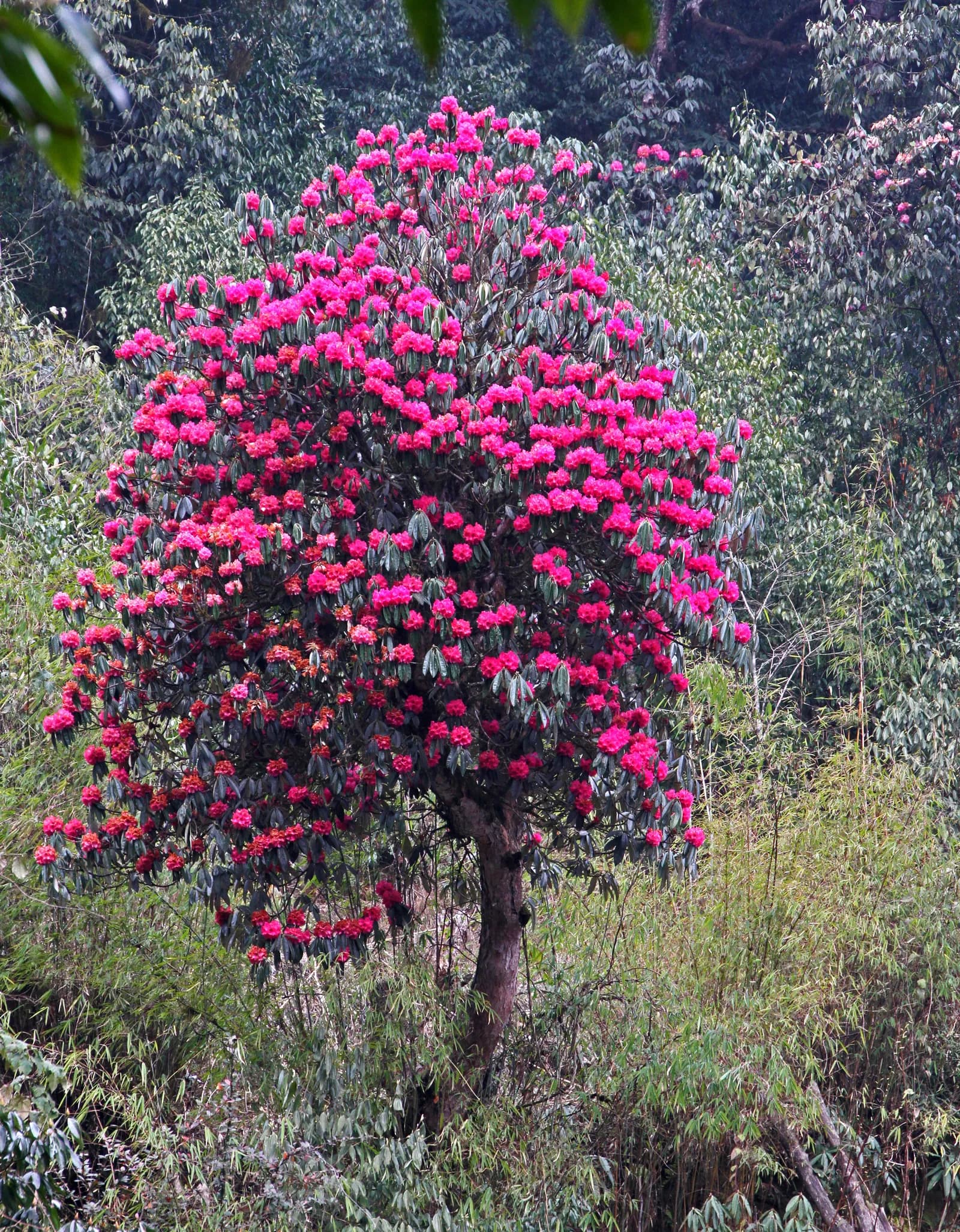
April is the second great trekking month in Nepal, after October. Rhododendron forests flower at mid altitudes, days are warm and long, and the high trails are mostly clear of snow. The trade-offs are hazier views than in autumn, afternoon cloud and occasional thunderstorms, and heavier traffic on the Everest trail from the spring climbing season.
This guide covers what April is like, which routes suit it and how to avoid the main drawbacks. For other months and regions, see best time to trek in Nepal.
Poon Hill Trek (Ghorepani) için açık geziler
Partner arayan trekkingcilerin paylaştığı gerçek geziler.

What the weather does in April
April is the transition from the dry cold of winter to the pre-monsoon heat. In most years:
- Early April: cool, dry and clear. Snow can linger on the high passes, and rhododendron buds are opening at mid altitudes.
- Mid-April: warm days, flowers at their best and the first afternoon build-ups of cloud.
- Late April: hotter at low altitude, more cloud and occasional thunderstorms. Mornings are still the best time to see mountains.
The haze that builds in spring comes from dust and smoke, and it softens distant views compared with October. Plan summit views and viewpoints for early morning.
Rhododendron season
The rhododendron is Nepal's national flower, and in April the forests glow red, pink and white. Timing is controlled by altitude: lower forests bloom first, usually from late March, and higher ones follow through April and into May. The best-known display is on the trail between Ulleri and Ghorepani and on to Poon Hill, where rhododendron forests cover the ridge. Langtang and Everest's lower forests also bloom. The best time to trek in Nepal hub shows how flowering follows altitude across the regions.
If flowers matter to you, go in the first half of the month and choose a route below about 3,500 m.
Route by route
| Route | April conditions | Notes |
|---|---|---|
| Poon Hill | Excellent: flowers, clear dawns, warm days | Busy; book lodges ahead at Ghorepani |
| Annapurna Base Camp | Good; avalanche-prone snow can linger early | Busy at Deurali and ABC |
| Annapurna Circuit | Good; Thorong La may still have snow early | See pass conditions |
| Everest Base Camp | Good; busy with expeditions | Haze above Dingboche, cold nights |
| Langtang Valley | Very good: flowers and fewer crowds than autumn | Clear mornings |
| Manaslu Circuit | Good; pass usually crossable | Agencies busy |
| Upper Mustang | Good; wind and dust strongest | Start early each day |
The Everest spring season
April is also when climbing teams reach Everest Base Camp for the spring expedition season, which peaks in May. For a trekker that means:
- The trail has more yaks and porters moving equipment, and lodges are busy.
- Base camp itself has a tent city; trekkers go in as day visitors from Gorak Shep and see climbers in training.
- Helicopters operate more frequently.
The route is lively and the views from Kala Patthar are good in the early morning, but the pace of other groups can be tempting. Stay on your own schedule. The Everest Base Camp best-time guide compares April with other months, and the packing list for Everest Base Camp in spring covers gear.
Temperatures and gear
April is warm low down and cold high up, so layers matter more than bulk.
| Altitude | Typical April feel |
|---|---|
| Below 2,500 m | Warm to hot; shorts and T-shirt by midday |
| 2,500 to 3,500 m | Mild days; cool nights |
| 3,500 to 4,500 m | Cool in sun; nights around or below freezing |
| Above 4,500 m | Cold; nights well below freezing |
Bring a sun hat, sunscreen, a light rain shell for afternoon storms and a sleeping bag for freezing nights. See the packing list.
Afternoon storms
Thunderstorms and hail become more frequent in late April, especially in the middle hills. They usually build after noon. The practical rule is to walk early, reach your village by lunchtime or mid-afternoon, and avoid exposed ridges in the afternoon. On Poon Hill, the dawn climb is clear most days, and the afternoon descent should be done before the cloud builds.
Crowds and booking
April is busy, though less so than October. Book Lukla flights, restricted-area permits and lodges in popular villages in advance. Nepali New Year in mid-April closes offices for a day or two, so get permits and cash beforehand.
Who should choose April
- Flower lovers: go early in the month on a mid-altitude route such as Poon Hill.
- Warmth seekers: April days are warm and nights are milder than in autumn at mid-altitudes.
- People who want long days: daylight is generous in spring.
- Not for you: if you want crystal-clear peaks, October is better.
Compare with the autumn pick in trekking in Nepal in October, and read the first-time guide if this is your first trek.
A sample April plan for the Annapurna foothills
The foothill treks are the best use of April, because the flowers are on the trail and the altitude is gentle. A four-day Poon Hill loop looks like this:
| Day | Route | Sleeping altitude | What April adds |
|---|---|---|---|
| 1 | Pokhara to Nayapul, walk to Ulleri | about 2,070 m | Warm, humid, terraced fields and waterfalls |
| 2 | Ulleri to Ghorepani | about 2,860 m | Rhododendron forest thickens above Ulleri |
| 3 | Poon Hill at dawn, then on to Tadapani | about 2,630 m | Clear sunrise views of Dhaulagiri and Annapurna |
| 4 | Tadapani to Ghandruk and out to Pokhara | 820 m | Forest in bloom, then terraced villages |
The exact itinerary and alternatives are in the Poon Hill itinerary. The Poon Hill sunrise is the highlight, and in April the clearest views are usually before 7:30, so start the climb in the dark with a headlamp.
Health and comfort in the heat
Warm weather brings its own issues.
- Dehydration. Hot, humid days at low altitude can leave you drained even though you are not high. Drink steadily and add electrolytes.
- Sunburn. The sun is strong at 3,000 m and above. Use sunscreen on your ears, neck and the back of your hands.
- Stomach bugs. Warm weather and busy kitchens raise the risk. Use purified water and eat freshly cooked food.
- Dust and haze. Dry trails kick up dust, and some trekkers get a cough. A buff over the mouth helps on busy stretches.
The same altitude rules apply as in any season; read the acclimatisation schedule if you are heading above 3,000 m.
Wildlife and nature
April is a good month for birds and for flowering shrubs. The Himalayan monal (danphe), Nepal's national bird, can be seen in the forests of Sagarmatha National Park and the Annapurna region. Langurs and macaques are active in the lower forests, and you may see Himalayan tahr on the Everest trail. Keep a respectful distance, and do not feed animals.
Costs and demand
April demand is lower than October's but still strong. Flights and lodges are busy around the Nepali New Year and public holidays, so check dates and book early. Prices on the trail are broadly the same as in autumn, and the cost guide explains how guide and porter lines scale with group size. If you want partners, spring is the second-best time to find them.
Common April mistakes
- Assuming it is warm everywhere. Nights above 4,000 m are still freezing.
- Starting late. The best views and the safest weather are in the morning.
- Ignoring the afternoon storms. Be off ridges and passes by early afternoon.
- Booking too late for Everest flights. Spring is busy at Lukla and at Ramechhap.
- Forgetting sun protection. Spring sun at altitude burns quickly.