

Kathmandu to Lukla flight guide
How the Kathmandu to Lukla flight works: the airport, the Ramechhap alternative, what a flight day looks like, baggage, delays and how to protect your schedule.
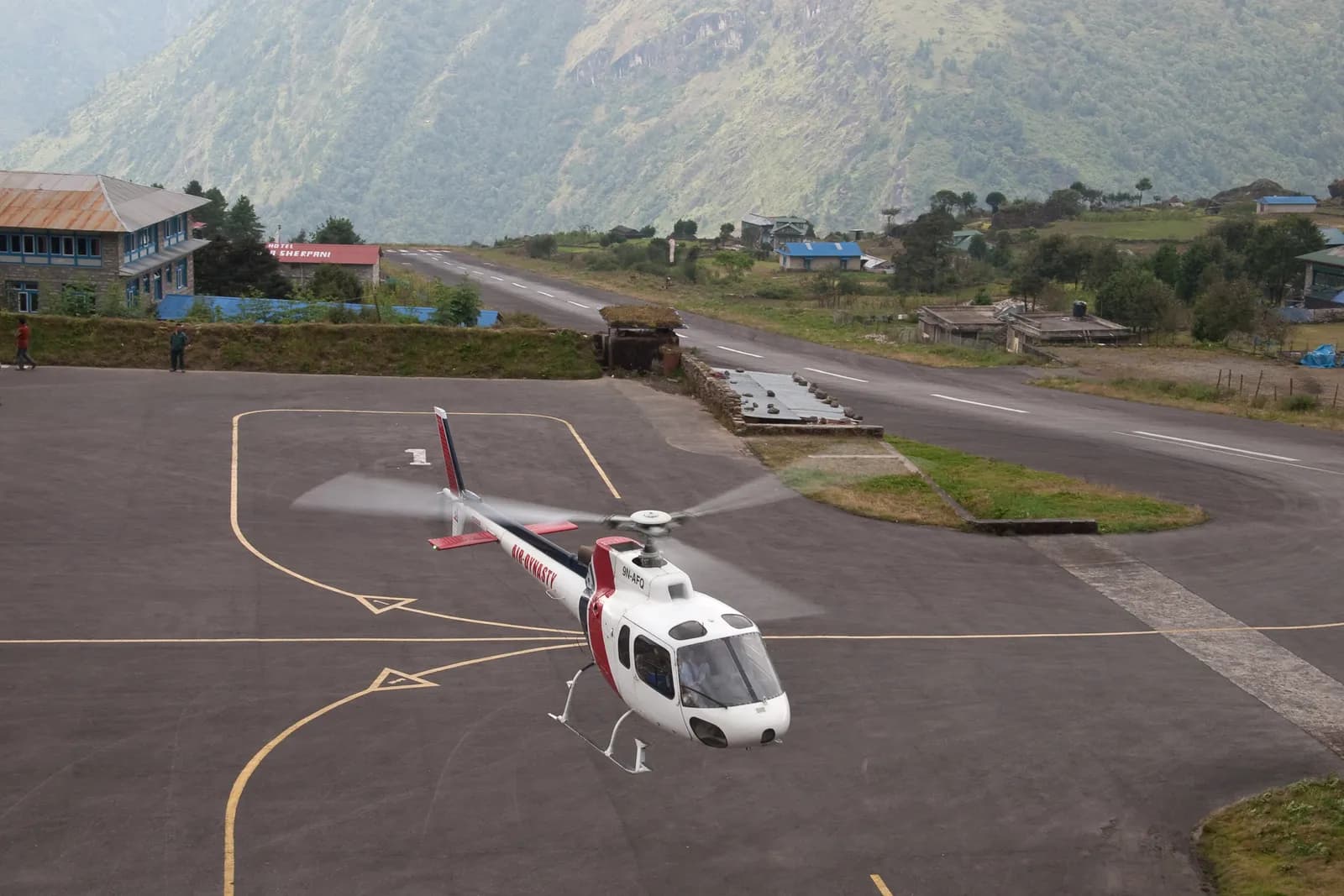
The flight from Kathmandu to Lukla takes about 35 to 40 minutes and is the standard way to start the Everest trek. In the busiest trekking months many flights depart from Ramechhap (Manthali) instead of Kathmandu, which means a four to five hour drive and a pre-dawn start, and any flight can be delayed by weather. Plan for both, and keep spare days.
This guide explains how the flight works, what a flight day looks like, how to handle delays and what the alternatives are. As of October 2026, 2026-dated operator pages quote a one-way fare of about USD 226 to 240 per foreign passenger from Kathmandu and about USD 160 to 190 from Ramechhap, with return tickets at about USD 350 to 480; ranges vary by airline, season and booking channel, and the airlines and CAAN set the official fares. The trek itself is in the Everest Base Camp itinerary.
Everest Base Camp Trek için açık geziler
Partner arayan trekkingcilerin paylaştığı gerçek geziler.
The airport
Lukla's airport is officially the Tenzing-Hillary Airport. It sits at roughly 2,860 m on a ledge above the Dudh Kosi valley, with a short, steeply sloped runway that rises as aircraft land and falls away as they take off. A mountain wall is at one end and a drop at the other. That is why only specially trained pilots and small aircraft such as Twin Otters and Dornier planes operate there, and why flights wait for good visibility.
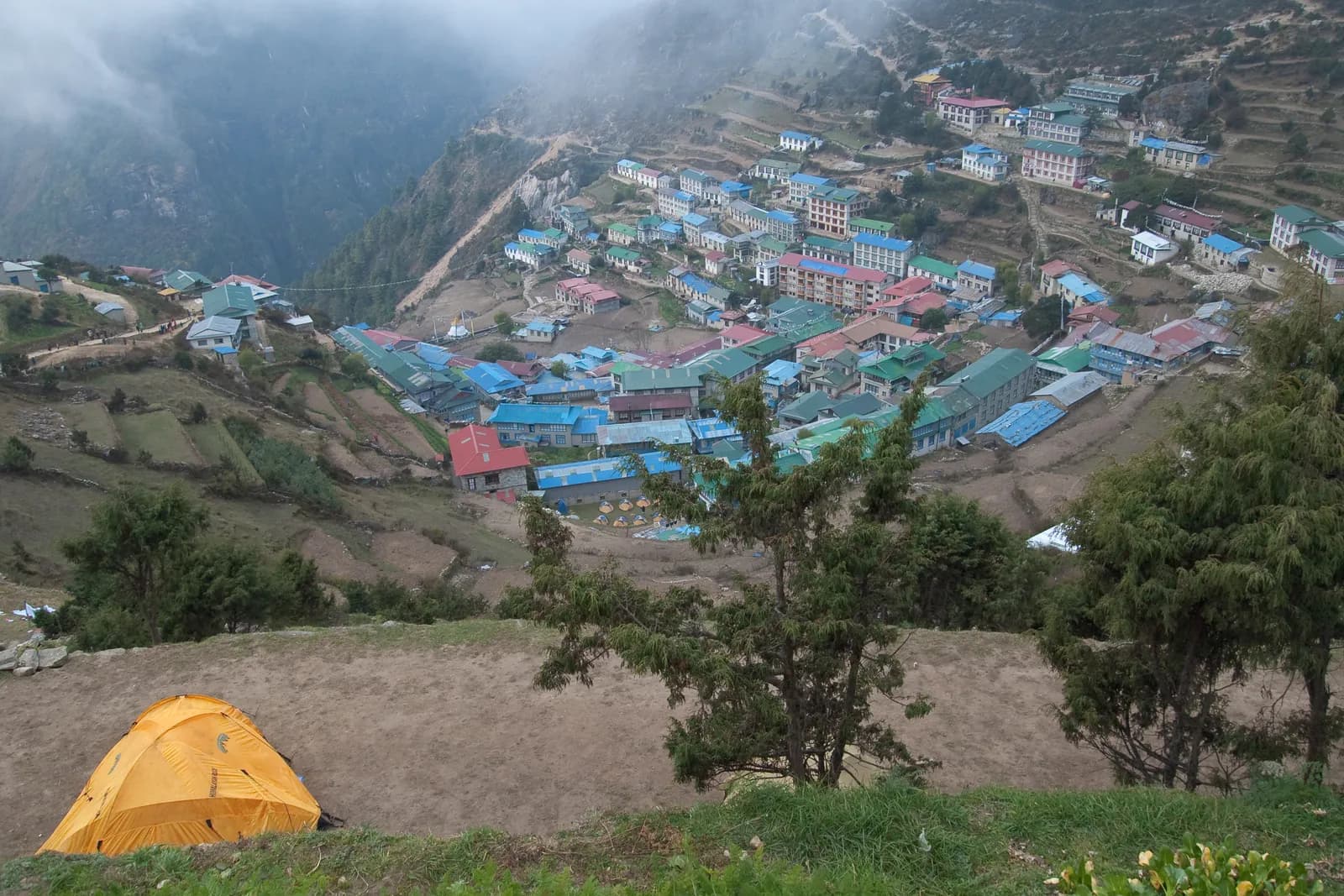
Lukla is the usual start of the trek, from which the route goes on to Phakding (about 2,610 m) and Namche Bazaar (about 3,440 m). It also has an ATM, shops, bakeries and lodges, so you can sort a few things on the first day. See the Sagarmatha permit guide for the permits you will need near the airport.
Kathmandu or Ramechhap
| Departure | Distance and time | Why used | What to expect |
|---|---|---|---|
| Kathmandu (Tribhuvan International Airport, domestic terminal) | Short transfer from the city | Quieter months; some flights all year | Flights from mid-morning; limited slots |
| Ramechhap (Manthali) | About four to five hours by road from Kathmandu | Busy months when Kathmandu cannot handle all Lukla flights | Pre-dawn departure; waiting room; flights as soon as weather allows |
Most trekkers do not choose between them: the airline or agency assigns the departure, and the arrangement can change at short notice. Ask your agency which airport applies to your date, and whether the transfer to Ramechhap is included. Plan the day before accordingly: a 2:00 or 3:00 start from Kathmandu is common in the busy months, and you want to be rested.
A typical flight day
- Evening before. Confirm your flight time and the airport. Pack your duffel and weigh it.
- Early morning. Transfer to the airport, either the Kathmandu domestic terminal or by road to Ramechhap.
- Check-in. Bring your passport and ticket. Your bag is weighed, and your daypack too if it is in the cabin.
- Waiting. Flights depend on visibility at Lukla, which is usually best early. A queue builds if earlier flights are delayed.
- Boarding and flight. The plane is small, with views of the Himalaya on a clear day.
- Landing. The landing is short and steep. Collect your bag, meet your guide and start walking.
Flights stop for the day when cloud builds, which is usually from late morning. If you miss the window, you may wait until the next day.
Baggage
Small aircraft have strict weight limits. Tara Air's published policy gives a free allowance of 10 kg checked baggage plus 5 kg hand carry, 15 kg in all, and 7 kg for children under 12. Summit Air's and Yeti Airlines' public pages do not state a mountain-sector allowance (Summit's policy page only states a liability limit, and Yeti's baggage page lists per-kilo excess rates for other sectors only), so we could not verify a figure for Sita, Summit or Yeti; trekking operators describe the same 10 kg plus 5 kg split for Lukla flights, and one operator notes it can arrange extra weight up to 15 kg checked. Excess baggage may be charged, or left behind if the aircraft is full, so confirm with your airline in writing. To manage it:
- Weigh your duffel and daypack together before you leave your hotel.
- Leave non-essential items in Kathmandu. Most hotels store luggage free for returning guests.
- Wear your heaviest layers and boots on the plane if you are over.
- Keep valuables and medication in your daypack.
The packing list for Everest Base Camp in spring shows how to fit the essentials in the limit.
Delays and cancellations
Weather at Lukla is the main cause. Morning cloud, poor visibility at the destination or wind can stop flights for a day or more, and a backlog follows. The practical advice:
- Add buffer days at both ends: one before the flight in case it is delayed, and one or two at the end before your international flight.
- Do not book a tight onward flight. Leave at least a day and preferably two between your last Lukla flight and your flight home.
- Keep your passport, ticket and cash accessible. Delays often mean rebooking at the counter.
- Ask about helicopter options. Some trekkers share a charter when flights stop, which costs more but gets you moving. Whether it is worth it depends on your budget and schedule.
- Check your insurance. Some policies cover delay costs and others do not.
Coming back
The return flight is as uncertain as the outward one, and a delayed return can mean missing your international departure. Most agencies advise a spare day or two in Kathmandu. If you are delayed at Lukla, there are lodges and a bakery there, and the airline will rebook you on the next available flight.
Alternatives to flying
- Drive and walk. A road reaches Jiri and Phaplu. Walking in from Jiri adds roughly a week to the trek; from Phaplu, a few days. These routes are quieter and let you acclimatise slowly.
- Fly from Phaplu. Some travellers drive to Phaplu (Salleri) and fly or walk from there; availability depends on operators.
- Helicopter. Direct helicopter flights to Lukla or higher exist, charged per seat or charter, and are subject to weather too.
Each of these changes your schedule, so see the acclimatisation schedule if you are altering the standard plan.
Booking
Most trekkers book through their agency, which handles tickets and the Ramechhap transfer. If you book yourself:
- Use the airline's own site or a reputable agent, and check the airline is licensed.
- Make sure the name matches your passport exactly.
- Ask which airport the flight uses and how early you need to arrive.
- Keep the confirmation and the airline's contact details.
Splitting the trip
If you travel with a partner, one person should handle the booking, and you should agree who pays for any delay costs. If you are looking for partners, see how to find a trekking partner safely. For the money picture, read the Everest Base Camp cost breakdown, and for other trailheads, the trailheads hub.
Flight reliability by season
| Season | Weather at Lukla | Flight pattern |
|---|---|---|
| March to May | Mostly clear mornings, afternoon cloud and wind | Busy; Ramechhap routing common; delays on cloudy days |
| June to August | Monsoon cloud and rain | Frequent cancellations; fewer flights |
| October to November | Clearest of the year | Busiest; Ramechhap routing and long queues |
| December to February | Cold, often clear, occasional fog | Fewer trekkers; fog can cause morning delays |
A rule of thumb that holds in every season: the earlier the flight, the likelier it is to go. If you have a choice of departures, take the first one.
A realistic schedule around the flight
| Day | Plan | Note |
|---|---|---|
| 0 | Arrive Kathmandu; gear check and permits | Keep the evening free |
| 1 | Fly to Lukla; walk to Phakding (about 2,610 m) | Early start; short walk of three to four hours |
| 2 | Phakding to Namche (about 3,440 m) | The first long climb |
| ... | Trek and return | See the itinerary |
| Last | Fly Lukla to Kathmandu | Spare day in Kathmandu before your international flight |
If your flight to Lukla leaves from Ramechhap, add a half-day for the road and treat Day 0 as a quiet evening. Many travellers sleep badly before a 2:00 departure, so do your packing in the afternoon.
Your first hour in Lukla
When you land, you will be met by your guide or, if independent, walk from the airport into the village. The local municipality permit counter is near here, and there are shops, an ATM and cafes. The first walk down to Phakding is gentle and mostly downhill, which is deliberate: it lets your body begin adjusting. Do not rush the first day. Read the acclimatisation schedule for the pace of the days that follow.
Safety and sensible expectations
Lukla's reputation is dramatic, but the airport is operated by experienced pilots who cancel flights rather than land in marginal conditions. As in all small-aircraft operations, incidents have occurred, and it is reasonable to read the airline's record and your insurance cover. Wear your seatbelt, follow the crew's instructions and keep your bag light. If the flight makes you nervous, the road-and-walk alternatives are real options, though they take longer.
Questions to ask your agency
- Which airport and which time will my flight use, and who confirms it?
- Is the Ramechhap transfer included, and who arranges it?
- What happens if the flight is cancelled: who pays for the extra night?
- Is my return flight booked, and what is the plan if it is delayed?
- What is the baggage limit, and how will extra weight be handled?
Route pages: Everest Base Camp and the Everest region.
Bu trekkingi planla
Fotoğraflar
Sık sorulan sorular
Kaynaklar
- Tenzing-Hillary Airport (Wikipedia)
- Civil Aviation Authority of Nepal
- Nepal Tourism Board
- Sagarmatha National Park (Wikipedia)
- Tara Air baggage policy
- Summit Air policies
- Yeti Airlines extra baggage charges
- Kathmandu to Lukla flight ticket cost (Nepal Trek Adventures)
- Everest Base Camp trek cost, updated July 2026 (Nepal Hiking Team)
- Everest Base Camp trek cost 2026 (Himalayan Hero)
- Excess baggage on Lukla flights (World Expeditions)

